Lawsuit Over Wyoming Elk Feeding Seeks Sooner Phase Out

just wait til CWD gets a foothold at the feedgrounds. Then we're gonna have a serious problem on our hands.

You don’t know that to be true anymore than I know it to be false. You are willing to disrupt a system that has worked rather well to potentially stop a possible problem. I am not
 
Brucellosis may not be killing elk at the feedgrounds right now... just wait til CWD gets a foothold at the feedgrounds. Then we're gonna have a serious problem on our hands. I think it would be awful smart to try and mitigate that disaster before it happens rather than after.

I could make a stronger argument that CWD will not be a serious threat on feed grounds than you can that it will be.

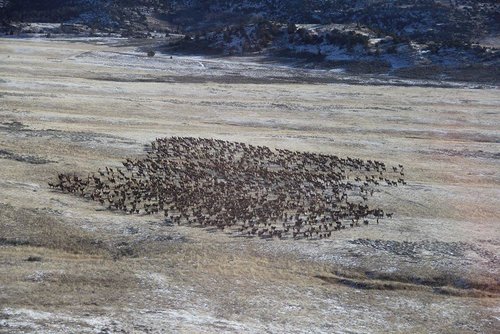
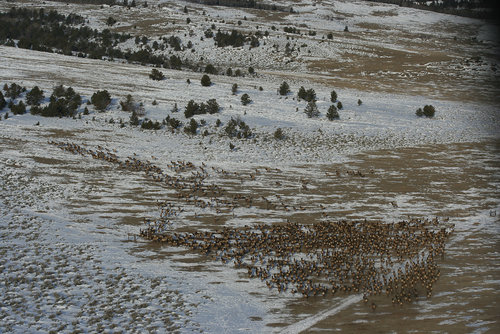
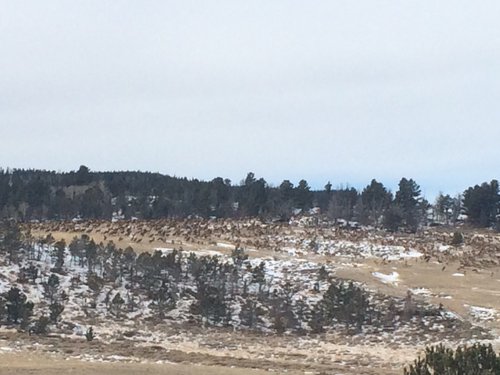
Elk infection rates in the Laramie Range, ground zero for CWD, are around 3-5 percent. I would reckon that there are elk herds with several hundred, maybe even a couple thousand, that concentrate in areas very similar to what the feed grounds experience. Yet, elk infection rates are still low.

There's no doubt that when CWD reaches the feed grounds it will impact elk, but I don't know that I'd be comfortable or bold enough to declare it a "serious problem".
 
I'm aware of that Buzz. As always, you're well informed. I'd love to be wrong on this one, but I'm not comfortable looking at the two scenarios and declaring that CWD on the feedgrounds will be a non issue and that we shouldn't be proactive about trying to phase them out over time to try and mitigate the disease risks. A lot of these feedgrounds are more of a landowner relations tool than a keeping elk from starving tool anyways. Often times, there's plenty of feed out there that would keep the elk from congregating as bad as they do on feedgrounds, we just dont want to let them be where they're naturally supposed to be because it would cause problems with ranchers.

Also, I'm not even sure the GF has that much confidence in their prevalence rates for elk. I'd be curious to see their confidence intervals on those prevalence numbers. Wasn't there a big push to get more samples from harvested elk this year? Why would they do that if they felt they had a good sample size? How many people actually successfully bring out a lymph node or head for testing with elk? I recall you talking about that in an earlier thread this year. I would imagine you are in a small minority of hunters who took the time to learn how to extract a lymph node and successfully did so. It isn't rocket surgery, but it isn't the easiest thing in the world to do either if you don't know what you're doing and do it with some regularity.

Western Wyoming has what...20 + feedgrounds? SE Wyoming has none. I'm aware that elk congregate naturally in places like the Laramie range. I'd venture to guess they don't congregate anywhere near as bad as they do at a place like Soda Lake where the elk congregate in the exact same place for months on end, year after year, and the feed line is grazed/trampled to the point that there's hardly any vegetation left. Elk in places like SE Wyoming have at least some variation in where they winter based on conditions , whereas feedgrounds will concentrate them in close proximity in the same places year after year, allowing for a progressive build up of prions over time. That's what worries me.

To the prior poster who doesn't think CWD will be a big deal because Brucellosis and TB didn't make the sky fall. Brucellosis and TB are both bacterial. Prions persist on the landscape in a way that bacteria never will. That's what concerns me more than anything else.

You guys ever talk to the people at Sybille? I remember going there a couple times in college. Bringing animals into that place is a death sentence. They brought a group of elk in from the NER to do a brucellosis study and every single one got CWD. Presuming those elk had low or no CWD prevalence, it's fair to assume the exposure was largely environmental, at least at first. I know that's more of a concentration than feedgrounds will be, and I know that those elk will still reproduce before CWD gets them. But it's still scary to see what can happen. I don't want to see a high prevalence of CWD in feedground elk if we can help it. Maybe we wait and see and you guys are right. That would be great. Maybe we wait and see and it does become a problem. Then we might have missed our best chance at mitigating the problem.

I don't have all the answers, nor does anyone else. But I'd prefer a more cautious, proactive approach over a reactive one.

You guys make fair points. I don't mean to come off like I know all the answers, and I probably shouldn't have been so absolute in my original statement. Just giving you guys some of my reasons for being so concerned about the issue.
 
Different pictures, different winters, same elk herd in the Laramie Range. I can show you range that you can't take a single step without stepping on another pile of elk pellets. We've had CWD here for over 30 years that we know of, most likely longer. We have some of the highest prevalence rates on deer than anywhere. But the elk remain 3-5% prevalence and the herd is over objective. Claiming that CWD will be a disaster on a feed ground, is denying what we already know about elk and CWD.
unnamed-35 copy.jpg
img_5010-png.127446
Muddy%20Mnt.jpg
 

Attachments

  • IMG_5010.PNG
    IMG_5010.PNG
    3.7 MB · Views: 190
Last edited:
Always a tough issue when it comes up. Nobody I know, and I suspect nobody posting here, has feed grounds as their preference over undisrupted migration corridors to traditional winter ranges where elk could naturally/historically disperse. But, by this lawsuit, it seems some litigators think it is a pretty easy issue to solve. Until we move some cities, reservoirs, interstate highways, and some other industrial-style impacts to the land, removing feed grounds is going to be a huge negative for elk numbers.

When you talk to Wyoming managers, they wish there was a better solution, but this is the hand they have been dealt thanks to "human progress." To a person, not a single Wyoming manager I have talked to prefers the feed grounds as a solution. But, when one considers the factors that led to feed grounds and the lack of feasible alternatives, it leaves Wyoming game managers with feed grounds as the best of the least preferred possible options.

Living in Montana, I often get an earful that Wyoming is "the problem" due to their feed grounds. In Montana politics, it is almost as popular to blame every wildlife issue on Wyoming feed grounds as it is in Utah to blame wolves. I don't debate the fact that feed grounds are an unnatural situation, that they do not allow for elk movements as historically happened, etc. Nobody in their right mind would argue in favor of feed grounds as a preferred or "best practices" solutions.

When I ask the critics what they propose as the alternative to keep elk from crashing, nobody has an answer. Given it is not a resource they need for their food, recreation, or livelihood, it doesn't surprise me that critics have not given much consideration to the alternatives that keep elk populations from crashing.

Some argue that feed grounds keeps populations artificially high. Not in an historical context, they don't. Many people like to shorten the historical period when using the measurements of "historical context." Feed grounds keep the numbers higher than they would be without feed grounds, but not anywhere near the estimated numbers before places like Jackson were built in the middle of large migration corridors, before American's energy demands created huge disruptions to the wintering grounds, before domestic livestock were granted preference over native species for food/space/water/advocacy, and the list of human impacts and decisions is far longer than I can post here.

Everyone of those human caused outcomes has a negative impact on elk that requires one of two options; 1) let elk numbers dwindle and accept that as a "cost of progress," or 2) use policy solutions that try to accommodate for the impacts human activities have on elk numbers, in this case, feed grounds. As imperfect as it is, I am on board with #2 until a better idea is crafted AND funded.

The CWD issue is a huge concern and is the spear most often used by Montanans wanting to see the Wyoming feed grounds closed. Nobody discounts that CWD is a huge concern. Yet, now we see CWD popping up in Montana in places/species that are not even close to the Wyoming elk feed grounds. Does that mean we are going to close Dome Mountain, Wall Creek, Bear Creek, Indian Creek, Blacktail, and all the other Montana winter ranges where elk congregate, albeit in lower densities than on Wyoming feed grounds? I seriously doubt that will be Montana's solution to prevent the spread of CWD, yet due to human "progress" Montana does have artificially congregated elk numbers.

For the cries to come so loud from Montanan is not without irony, at least from my perspective. Due to human impacts, elk cannot migrate out of YNP and follow the course of historic dispersal along the Paradise Valley. The elk end up highly concentrated in the upper end of the valley on Dome Mountain. The same in the Gallatin. The same (insert Montana valley here). Yeah, those are different than the Wyoming feed grounds, but still a human manufactured solution that I am thankful for that allows elk numbers to stay higher than they would be if not for these wintering grounds. And I am thankful for these solutions, even if elk are congregated in higher densities and in different locations than would naturally happen without the human landscape disruptions.

We need energy. We aren't going to move entire cities like Jackson. We aren't going to remove highways or reservoirs. The world isn't going to stop eating beef. So, what is the alternative the litigating groups propose that will keep elk numbers from dropping further as a result of all these human impacts we call "progress?"

Litigators, such as those in the article that started this post, and legislators who live elsewhere, don't have to bear the burden of such changes being demanded of Wyoming. They can litigate and legislate, possibly prevail, then walk away feeling they have done good for their ego/bank accounts/constituents, none of whom are elk or Wyoming residents who have made the best of a bad situation for elk.

I don't have an answer. I've spent a lot of time being lobbied to have me, or organizations I served for, advocate for closing the feed grounds. Until someone comes up with a better solution than the imperfect solution of feed grounds, I'm not inclined to support imposing demands on Wyoming and watch their elk number tank without having alternatives in place and fully funded. Given it is now being litigated, it will likely have an even less perfect outcome than feed grounds, given the lack of understanding judges and attorneys have on this extremely complex issue. If the plaintiffs win in court, odds are elk will be the biggest losers, not the defendants.

It will be interesting to see how this lawsuit unfolds. Whatever the outcome, I hope consideration is given to the needs of elk that are trying to exist on a landscape that is vastly altered by the demands of humans.

 
Last edited:
Does anyone have current data on the cost of operating the feed grounds? Curious how it stacks up to the wild horse feed numbers.
 
I'm aware of that Buzz. As always, you're well informed. I'd love to be wrong on this one, but I'm not comfortable looking at the two scenarios and declaring that CWD on the feedgrounds will be a non issue and that we shouldn't be proactive about trying to phase them out over time to try and mitigate the disease risks. A lot of these feedgrounds are more of a landowner relations tool than a keeping elk from starving tool anyways. Often times, there's plenty of feed out there that would keep the elk from congregating as bad as they do on feedgrounds, we just dont want to let them be where they're naturally supposed to be because it would cause problems with ranchers.

Also, I'm not even sure the GF has that much confidence in their prevalence rates for elk. I'd be curious to see their confidence intervals on those prevalence numbers. Wasn't there a big push to get more samples from harvested elk this year? Why would they do that if they felt they had a good sample size? How many people actually successfully bring out a lymph node or head for testing with elk? I recall you talking about that in an earlier thread this year. I would imagine you are in a small minority of hunters who took the time to learn how to extract a lymph node and successfully did so. It isn't rocket surgery, but it isn't the easiest thing in the world to do either if you don't know what you're doing and do it with some regularity.

Western Wyoming has what...20 + feedgrounds? SE Wyoming has none. I'm aware that elk congregate naturally in places like the Laramie range. I'd venture to guess they don't congregate anywhere near as bad as they do at a place like Soda Lake where the elk congregate in the exact same place for months on end, year after year, and the feed line is grazed/trampled to the point that there's hardly any vegetation left. Elk in places like SE Wyoming have at least some variation in where they winter based on conditions , whereas feedgrounds will concentrate them in close proximity in the same places year after year, allowing for a progressive build up of prions over time. That's what worries me.

To the prior poster who doesn't think CWD will be a big deal because Brucellosis and TB didn't make the sky fall. Brucellosis and TB are both bacterial. Prions persist on the landscape in a way that bacteria never will. That's what concerns me more than anything else.

You guys ever talk to the people at Sybille? I remember going there a couple times in college. Bringing animals into that place is a death sentence. They brought a group of elk in from the NER to do a brucellosis study and every single one got CWD. Presuming those elk had low or no CWD prevalence, it's fair to assume the exposure was largely environmental, at least at first. I know that's more of a concentration than feedgrounds will be, and I know that those elk will still reproduce before CWD gets them. But it's still scary to see what can happen. I don't want to see a high prevalence of CWD in feedground elk if we can help it. Maybe we wait and see and you guys are right. That would be great. Maybe we wait and see and it does become a problem. Then we might have missed our best chance at mitigating the problem.

I don't have all the answers, nor does anyone else. But I'd prefer a more cautious, proactive approach over a reactive one.

You guys make fair points. I don't mean to come off like I know all the answers, and I probably shouldn't have been so absolute in my original statement. Just giving you guys some of my reasons for being so concerned about the issue.

Hey bullbugle we do talk with the folks at Sybille, the ranch we work for actually shares a fence with the research unit, spouse worked there too back with Tom Thorne and Beth Williams. Maybe the spouse was working when you were there in college.
I do not doubt their estimates on prevalence, have yet to have a deer or elk test positive from the ranch property that borders the unit, we have however found elk in the throws of CWD and called them to come out it down. The prion are in the ground but yet our elk herd is expanding, the pics JM posted are not even close to the size of some herds in the area south of Laramie Peak, thousands get together every year and go to the exact same place to winter and escape hunting pressure.
As JM77 stated this disease has been around, actually recognized, for over 30 years, I betting it was here all along but that's another argument.
Yes every animals that can get CWD at Sybille will die of it but, how would you know the elk from the NER did not have it when they got there, no test for live animals that I know of yet ?
 
One issue is that the NER gets pulled into the Jackson/GTNP/YNP vortex, and I think some people expect all the feedgrounds to look like that one. It's pretty unique among the whole; some feegrounds would rarely if ever hold an elk if they didn't feed, some are adjacent to pretty excellent winter range. NER is also the only one that literally a million + people go by each year. I bet most people who drive past the Alpine feedground on the way to Yellowstone don't even realize it.
 
Feed grounds were established to keep elk off of private lands correct? So the dicotamy seems to be you can either maintain the status quo or stop artificial feedings and get more of a MT approach were ag complains about elk damage and thus the social tolerance is reduced.

But that doesn't have to be the case right? We the people, or more actually in this case, the people of Wyoming, could decide on different solutions where both high elk numbers are maintained and people have to deal with harboring wildlife in the winter.

I highly doubt that I state that has less people than 600k people total, is simply out of winter range, a simple glance at an aerial photo and this doesn't pass the smell test.

And from a hunters standpoint, I don't think most people here are interested in shooting livestock, but when we artificially feed them, when they come running to the hay truck, does everyone still get that sense of awe that accompanies a truly wild creature?
 
Feed grounds were established to keep elk off of private lands correct? So the dicotamy seems to be you can either maintain the status quo or stop artificial feedings and get more of a MT approach were ag complains about elk damage and thus the social tolerance is reduced.

But that doesn't have to be the case right? We the people, or more actually in this case, the people of Wyoming, could decide on different solutions where both high elk numbers are maintained and people have to deal with harboring wildlife in the winter.

I highly doubt that I state that has less people than 600k people total, is simply out of winter range, a simple glance at an aerial photo and this doesn't pass the smell test.

And from a hunters standpoint, I don't think most people here are interested in shooting livestock, but when we artificially feed them, when they come running to the hay truck, does everyone still get that sense of awe that accompanies a truly wild creature?
Regardless of what your view from GE shows you, high quality, public land, winter range is not in an over abundant supply in western wyo. But the bigger problem in regards to these elk is there ability to get to that winter range. Much of the migration corridor is cut off. The herds that spend their winter on the refuge, used to winter in the Red Desert. The reason they even started feeding elk in the refuge was because the elk stopped migrating and stayed in JH. This migration was attempted to get started again in the mid 1900's. Elk were captured in the JH area and transported to the prior RD winter Range. Those elk, with no knowledge of the prior migration routes stayed put in the RD. This was the start of the RD herds we have now. Those corridors are even more developed than they were in the early 1900's and the knowledge of those corridors is even further removed. So much has been learned by the work of the Montieth Shop in regards to migrations in the last 10 years that it is not as simply as just saying the animals will figure out where to go on there own.

A further problem with simply saying the elk should just be allowed to go to public land winter range is the competition with MD on that winter range. While its commonly thought that with MD being browsers and elk grazers they do not compete for food in the winter. I just sat through a talk by Kevin Monteith regarding the Little Mountain area and he briefly spoke about his findings about deer and elk interactions on winter range. The final report isn't out but he hinted that they are finding much more competition for food than had previously been believed.

If someone had a better solution than the feedgrounds then i would be all for it. I don't think just shutting them off and seeing what happens is better than the current system.

I am fairly confident that every Gen unit elk I have killed in Wyo, somewhere around 25 or so, has spent some time in its life at one of the feedgrounds. I never thought less of them or the experience. Did you when you were hunting your Wyo Gen tag?
 
Living in Montana, I often get an earful that Wyoming is "the problem" due to their feed grounds. In Montana politics, it is almost as popular to blame every wildlife issue on Wyoming feed grounds as it is in Utah to blame wolves.

Wait...I thought we were blaming 1) the camera guy, 2) wolves, and then 3) Obamacare?
 
Really not too much to add other than saying Bigfin, JM77, and Mulecreek pretty well covered this issue.

I also fear that the only loser in this whole thing is going to be the elk populations on the West Side of Wyoming. There will be cascading impacts from reduced opportunity, wolf dispersal, potential LQ elk areas, crowding in other general units, and a number of other issues.

We'll likely be unfortunate enough to see how this all shakes out...
 
Really not too much to add other than saying Bigfin, JM77, and Mulecreek pretty well covered this issue.

I also fear that the only loser in this whole thing is going to be the elk populations on the West Side of Wyoming. There will be cascading impacts from reduced opportunity, wolf dispersal, potential LQ elk areas, crowding in other general units, and a number of other issues.

We'll likely be unfortunate enough to see how this all shakes out...
Absolutely, nothing happens in a vacuum. I expect the good old days of elk opportunity over here are right now.
 
Regardless of what your view from GE shows you, high quality, public land, winter range is not in an over abundant supply in western wyo. But the bigger problem in regards to these elk is there ability to get to that winter range. Much of the migration corridor is cut off. The herds that spend their winter on the refuge, used to winter in the Red Desert. The reason they even started feeding elk in the refuge was because the elk stopped migrating and stayed in JH. This migration was attempted to get started again in the mid 1900's. Elk were captured in the JH area and transported to the prior RD winter Range. Those elk, with no knowledge of the prior migration routes stayed put in the RD. This was the start of the RD herds we have now. Those corridors are even more developed than they were in the early 1900's and the knowledge of those corridors is even further removed. So much has been learned by the work of the Montieth Shop in regards to migrations in the last 10 years that it is not as simply as just saying the animals will figure out where to go on there own.

A further problem with simply saying the elk should just be allowed to go to public land winter range is the competition with MD on that winter range. While its commonly thought that with MD being browsers and elk grazers they do not compete for food in the winter. I just sat through a talk by Kevin Monteith regarding the Little Mountain area and he briefly spoke about his findings about deer and elk interactions on winter range. The final report isn't out but he hinted that they are finding much more competition for food than had previously been believed.

If someone had a better solution than the feedgrounds then i would be all for it. I don't think just shutting them off and seeing what happens is better than the current system.

I am fairly confident that every Gen unit elk I have killed in Wyo, somewhere around 25 or so, has spent some time in its life at one of the feedgrounds. I never thought less of them or the experience. Did you when you were hunting your Wyo Gen tag?
Again I disagree with the idea that a few cows or a few fields or even ranchettes have taken up all this winter range and now offer conditions that are that much different that historically. Again, I'm doing a lot of projecting from several states away with out a handful of trip to WY, but it just doesn't pass the smell test.

The loss of migration knowledge and ability seems much more likely to be a significant population level limiting factor.

Competition with MD is going to happen, why would we not support this natural interaction? Predators each elk too, but are going to advocate to remove that pressure (some I know would)?

I spent most of yesterday thinking about your last question. No I did not, but I know I won't hunt a herd here in WA that I know winters on a feed lot/ground. I've avoided ever going to one. We have a couple in WA and I do not support them and have zero interest in seeing elk act like livestock nor in hunting those elk. I honestly have a pretty hard time understanding why people support of them.

The idea that you need them to have these large elk #s seems to be contradictory logic to that used with wolves. If the only reason to have feed grounds is to have more elk then why not kill all the wolves,? But there are members here that adamantly support a natural ecosystem with a health predator population but then turn around and advocate for these completely unnatural feed grounds because.... we need more elk. I see a lack of consistency. Almost seems to align with the early 1990s northern yellowstone populations, depending on who you ask those were certainly the "good old days" up there.
 
Again I disagree with the idea that a few cows or a few fields or even ranchettes have taken up all this winter range and now offer conditions that are that much different that historically. Again, I'm doing a lot of projecting from several states away with out a handful of trip to WY, but it just doesn't pass the smell test.

The loss of migration knowledge and ability seems much more likely to be a significant population level limiting factor.

Competition with MD is going to happen, why would we not support this natural interaction? Predators each elk too, but are going to advocate to remove that pressure (some I know would)?

I spent most of yesterday thinking about your last question. No I did not, but I know I won't hunt a herd here in WA that I know winters on a feed lot/ground. I've avoided ever going to one. We have a couple in WA and I do not support them and have zero interest in seeing elk act like livestock nor in hunting those elk. I honestly have a pretty hard time understanding why people support of them.

The idea that you need them to have these large elk #s seems to be contradictory logic to that used with wolves. If the only reason to have feed grounds is to have more elk then why not kill all the wolves,? But there are members here that adamantly support a natural ecosystem with a health predator population but then turn around and advocate for these completely unnatural feed grounds because.... we need more elk. I see a lack of consistency. Almost seems to align with the early 1990s northern yellowstone populations, depending on who you ask those were certainly the "good old days" up there.

I'm not trying to be a smarta$$ but maybe more you should brush up on the facts of elk migration, it's limitations and the history of feeding elk in the Jackson Hole area. Personally, I would not undertake commenting on a similar issue in Washington state that I did not have the knowledge on or actually seeing the relevant information pertaining to the issue.

One way or the other, we are going to find out what happens when the elk on the refuge are no longer being fed. The results of that will undoubtedly make for much fodder on this and other forums and social media.
 
Again I disagree with the idea that a few cows or a few fields or even ranchettes have taken up all this winter range and now offer conditions that are that much different that historically. Again, I'm doing a lot of projecting from several states away with out a handful of trip to WY, but it just doesn't pass the smell test.

We will just have to agree to disagree on this point. This is very easy for me to say this since I am positive I am correct and you are not.

Competition with MD is going to happen, why would we not support this natural interaction? Predators each elk too, but are going to advocate to remove that pressure (some I know would)?

Call me selfish, I want more elk and deer to hunt. I am confident the feedgrounds have and do provide more elk for me to hunt and indirectly more MD to hunt. In regards to predators, we do remove some of the predators. Not all, but some. Just like the feedgrounds, not every elk winters at them but some do.

I spent most of yesterday thinking about your last question. No I did not, but I know I won't hunt a herd here in WA that I know winters on a feed lot/ground. I've avoided ever going to one. We have a couple in WA and I do not support them and have zero interest in seeing elk act like livestock nor in hunting those elk. I honestly have a pretty hard time understanding why people support of them.
Fair enough. If it maters to you then who am I to say your opinion is wrong. For me, the manner in which the elk I hunt survive the winter has little if any bearing on my enjoyment of hunting them. To each his own.

The idea that you need them to have these large elk #s seems to be contradictory logic to that used with wolves. If the only reason to have feed grounds is to have more elk then why not kill all the wolves,? But there are members here that adamantly support a natural ecosystem with a health predator population but then turn around and advocate for these completely unnatural feed grounds because.... we need more elk. I see a lack of consistency. Almost seems to align with the early 1990s northern yellowstone populations, depending on who you ask those were certainly the "good old days" up there.
For me, I like having wolves in Wyo. My like of wolves is not because they provide a more natural ecosystem, but rather that I just think they make wild country a better place to hang out. Same logic applies to grizzly bears. I think they both just make the parts of Wyoming that have them a more badass place to explore. Kind of the same reason I like hunting AK and parts of Canada. I see your thoughts on a lack of consistency and you are not wrong, but my desire to have more elk and deer to hunt trumps my eco-conscience on the feedground issue.
 
Back
Top