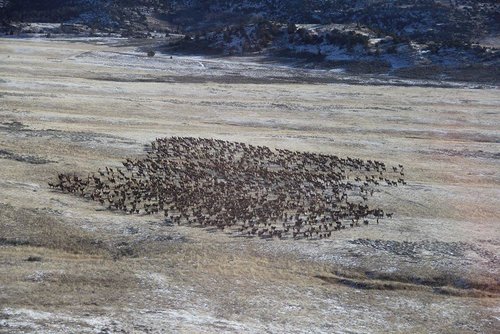
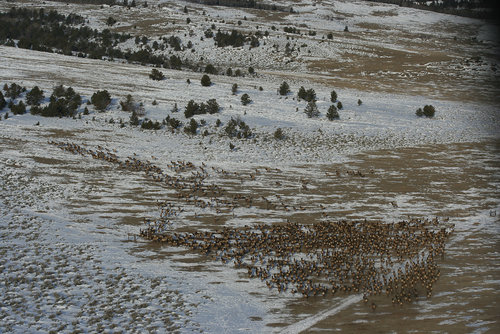
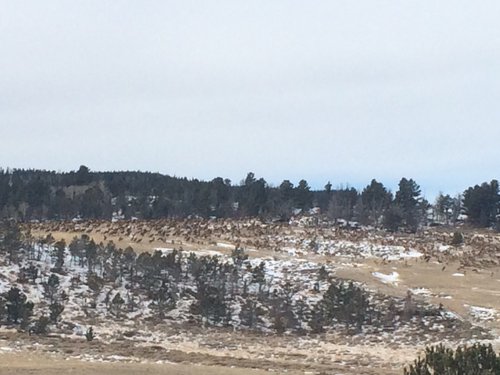
Always a tough issue when it comes up. Nobody I know, and I suspect nobody posting here, has feed grounds as their preference over undisrupted migration corridors to traditional winter ranges where elk could naturally/historically disperse. But, by this lawsuit, it seems some litigators think it is a pretty easy issue to solve. Until we move some cities, reservoirs, interstate highways, and some other industrial-style impacts to the land, removing feed grounds is going to be a huge negative for elk numbers.
When you talk to Wyoming managers, they wish there was a better solution, but this is the hand they have been dealt thanks to "human progress." To a person, not a single Wyoming manager I have talked to prefers the feed grounds as a solution. But, when one considers the factors that led to feed grounds and the lack of feasible alternatives, it leaves Wyoming game managers with feed grounds as the best of the least preferred possible options.
Living in Montana, I often get an earful that Wyoming is "the problem" due to their feed grounds. In Montana politics, it is almost as popular to blame every wildlife issue on Wyoming feed grounds as it is in Utah to blame wolves. I don't debate the fact that feed grounds are an unnatural situation, that they do not allow for elk movements as historically happened, etc. Nobody in their right mind would argue in favor of feed grounds as a preferred or "best practices" solutions.
When I ask the critics what they propose as the alternative to keep elk from crashing, nobody has an answer. Given it is not a resource they need for their food, recreation, or livelihood, it doesn't surprise me that critics have not given much consideration to the alternatives that keep elk populations from crashing.
Some argue that feed grounds keeps populations artificially high. Not in an historical context, they don't. Many people like to shorten the historical period when using the measurements of "historical context." Feed grounds keep the numbers higher than they would be without feed grounds, but not anywhere near the estimated numbers before places like Jackson were built in the middle of large migration corridors, before American's energy demands created huge disruptions to the wintering grounds, before domestic livestock were granted preference over native species for food/space/water/advocacy, and the list of human impacts and decisions is far longer than I can post here.
Everyone of those human caused outcomes has a negative impact on elk that requires one of two options; 1) let elk numbers dwindle and accept that as a "cost of progress," or 2) use policy solutions that try to accommodate for the impacts human activities have on elk numbers, in this case, feed grounds. As imperfect as it is, I am on board with #2 until a better idea is crafted AND funded.
The CWD issue is a huge concern and is the spear most often used by Montanans wanting to see the Wyoming feed grounds closed. Nobody discounts that CWD is a huge concern. Yet, now we see CWD popping up in Montana in places/species that are not even close to the Wyoming elk feed grounds. Does that mean we are going to close Dome Mountain, Wall Creek, Bear Creek, Indian Creek, Blacktail, and all the other Montana winter ranges where elk congregate, albeit in lower densities than on Wyoming feed grounds? I seriously doubt that will be Montana's solution to prevent the spread of CWD, yet due to human "progress" Montana does have artificially congregated elk numbers.
For the cries to come so loud from Montanan is not without irony, at least from my perspective. Due to human impacts, elk cannot migrate out of YNP and follow the course of historic dispersal along the Paradise Valley. The elk end up highly concentrated in the upper end of the valley on Dome Mountain. The same in the Gallatin. The same (insert Montana valley here). Yeah, those are different than the Wyoming feed grounds, but still a human manufactured solution that I am thankful for that allows elk numbers to stay higher than they would be if not for these wintering grounds. And I am thankful for these solutions, even if elk are congregated in higher densities and in different locations than would naturally happen without the human landscape disruptions.
We need energy. We aren't going to move entire cities like Jackson. We aren't going to remove highways or reservoirs. The world isn't going to stop eating beef. So, what is the alternative the litigating groups propose that will keep elk numbers from dropping further as a result of all these human impacts we call "progress?"
Litigators, such as those in the article that started this post, and legislators who live elsewhere, don't have to bear the burden of such changes being demanded of Wyoming. They can litigate and legislate, possibly prevail, then walk away feeling they have done good for their ego/bank accounts/constituents, none of whom are elk or Wyoming residents who have made the best of a bad situation for elk.
I don't have an answer. I've spent a lot of time being lobbied to have me, or organizations I served for, advocate for closing the feed grounds. Until someone comes up with a better solution than the imperfect solution of feed grounds, I'm not inclined to support imposing demands on Wyoming and watch their elk number tank without having alternatives in place and fully funded. Given it is now being litigated, it will likely have an even less perfect outcome than feed grounds, given the lack of understanding judges and attorneys have on this extremely complex issue. If the plaintiffs win in court, odds are elk will be the biggest losers, not the defendants.
It will be interesting to see how this lawsuit unfolds. Whatever the outcome, I hope consideration is given to the needs of elk that are trying to exist on a landscape that is vastly altered by the demands of humans.