Kansas 2026 Pronghorn

KDWP now has WIHA for the fall active online. This plus any private land permissions will be what I’m working with later this fall.


IMG_5680.jpeg

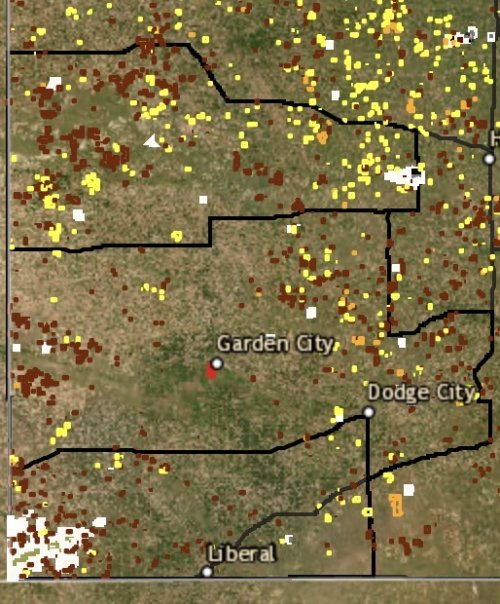
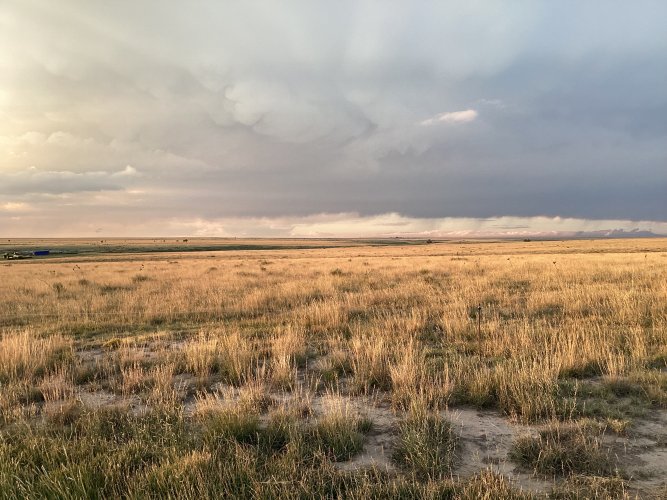
Geographically unit 17 is the largest of the three firearms zones. West and north of Garden City will be areas to concentrate to find pronghorns.
 
A friend who grew up in the Garden City area asked his brother about finding pronghorn…… And now I have my first pin for OnX. Going with a “green for go” color scheme for 2026 antelope (with any and all suggestions welcomed).

I will also be using this adventure as scouting for a future mule deer hunt as well as seeing for the first time some pretty good pheasant country.
 
A friend who grew up in the Garden City area asked his brother about finding pronghorn…… And now I have my first pin for OnX. Going with a “green for go” color scheme for 2026 antelope (with any and all suggestions welcomed).

I will also be using this adventure as scouting for a future mule deer hunt as well as seeing for the first time some pretty good pheasant country.
I pheasant hunt some in the Ulysses area see alot big muleys!
 
A friend who grew up in the Garden City area asked his brother about finding pronghorn…… And now I have my first pin for OnX. Going with a “green for go” color scheme for 2026 antelope (with any and all suggestions welcomed).

I will also be using this adventure as scouting for a future mule deer hunt as well as seeing for the first time some pretty good pheasant country.
Good luck!
 
For the first time in forever, the forecast called for cooler temperatures after a strong front rolled through Saturday. I was going to drive out to lay eyes as a hunter on the unit. From my home to the Colorado border it’s about 260 miles as a bird flies. And the further west you go, the antelope population is supposed to increase in density.

Friends have given me several pins on OnX, with one decent population of antelope between Dodge City and Garden City to be explored first. This area has little WIHA lands, so I would hunting these pronghorn at the generosity of the landowners.

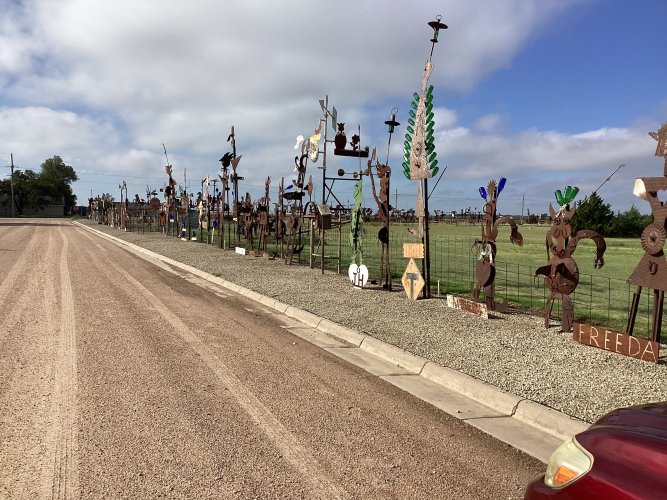
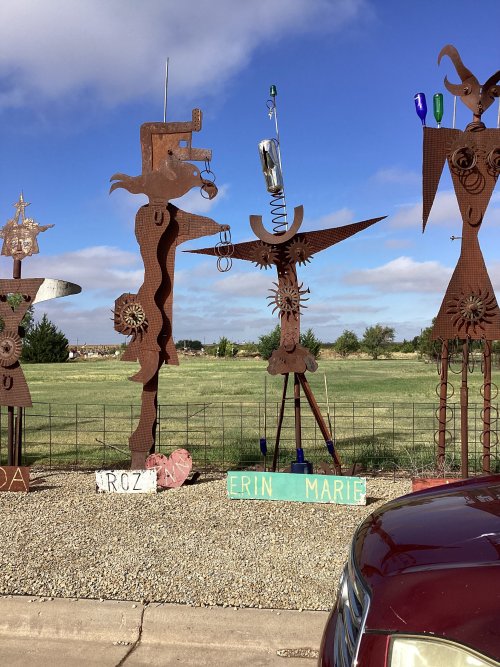
Eccentric sculpture artist in Mullinville

IMG_5877.jpeg
IMG_5878.jpeg


IMG_8422.jpegIMG_8423.jpeg
As I was out of the SUV glassing a far off hillside, I had a nice lady
slow down and stop, asking if everything was ok. I replied that I was looking for the antelope, she said she had not seen them for weeks, but where she does see them they are close to the highway (redacted).

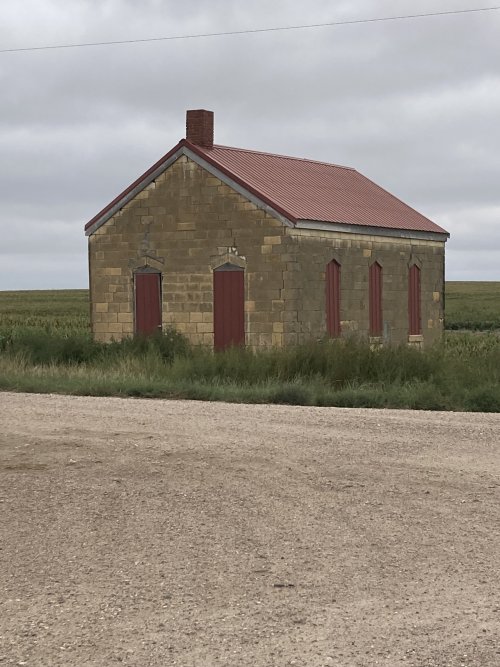
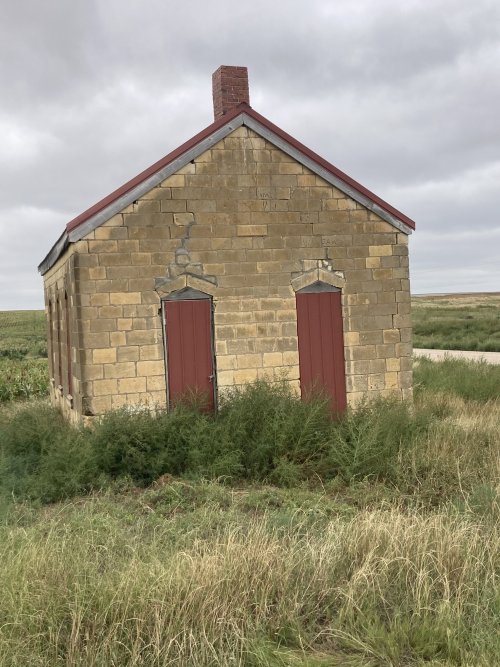
Reminders of olden days….school buildings like this one dot the prairie.
 
Once back on the highway I continued west.

My low tire pressure warning would go on and off all day, with the driver side rear tire being the lowest. I pulled over and added air with the 12 volt air pump (Scout moto: Be Prepared!) and motored onward.

I had some intel about a chunk of private land that usually saw antelope on it, and where a friend and his friends had been successful on the farm or on nearby WIHA lands.

Doves were everywhere, while I saw a fair number of teal sitting on farm ponds and state lakes, with a fair amount of quail and of course pheasants crossing the road, but still no antelope. There were several times I got fooled by shrubs shaped like a head/sheaths sticking up in a long ago cut wheat field, but the binoculars proved that I had been tricked again.

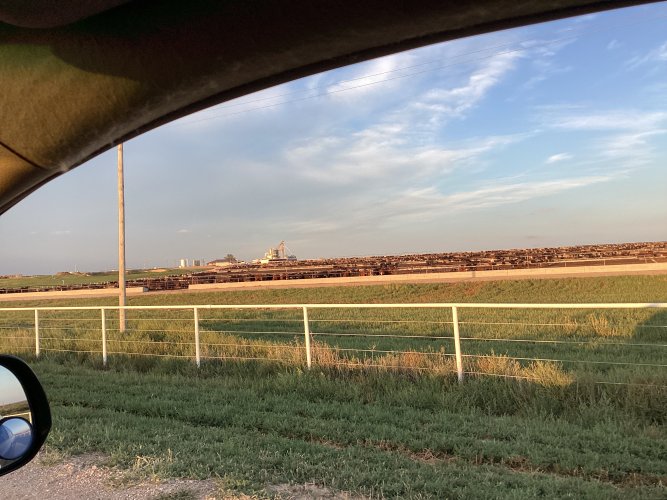
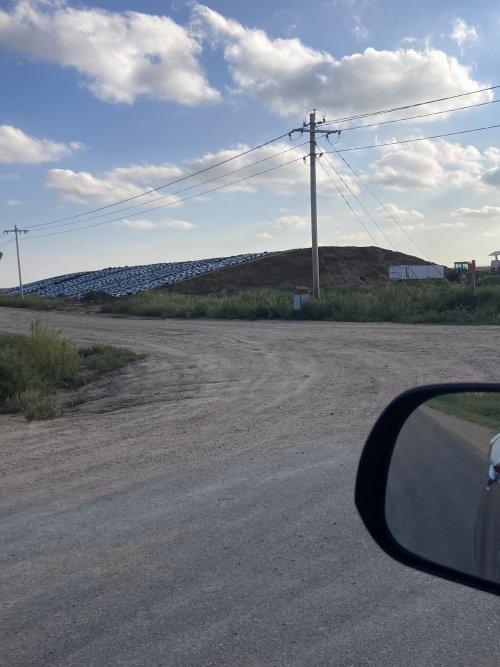
A large part of the local economy resolves around cattle. Feedlots occupy high ground, and next to the feedlots are huge piles of silage. These mounds are covered, with old tires used to hold the covers in place.

IMG_5879.jpeg

IMG_8427.jpeg
 
Heading back to Syracuse I debated heading directly west for 10 minutes so that I could say I went all the way to Colorado. Instead I decided to go north of town to check out the WIHA spots that come November will see long lines of orange clad hunters walking across the land awaiting the rise and cackles of a pheasants taking off.

With recent heavy rains, some of the county roads got a little bit slippery, but nowhere as slippery as Great Basin bentonite roads that I’m more accustomed to be driving while searching for antelopes.

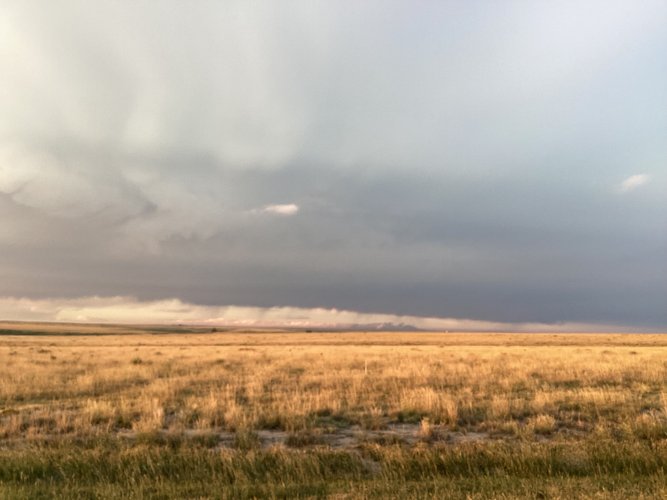
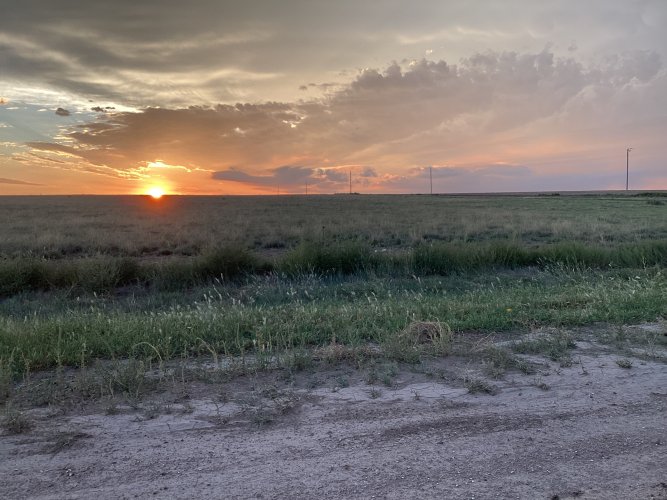
As the evening light began to soften the shadows, I still held out hope that I would still see an antelope or two before I had to turn east and home. With very little topography to work with on most of the WIHA lands, I really felt how difficult this coming week might be. When I locate my buck (it’s an “antelope tag” with no requirement to be gender specific) how am I going to close the distance? Knee pads and heavy gloves will help should I be forced to crawl (hundreds??) of yards. Patience will be a must. Any buck found on accessible land will need careful stalking to prevent spooking the quarry.

IMG_5880.jpeg

IMG_5881.jpegIMG_5882.jpeg
 
Heading back to Syracuse I debated heading directly west for 10 minutes so that I could say I went all the way to Colorado. Instead I decided to go north of town to check out the WIHA spots that come November will see long lines of orange clad hunters walking across the land awaiting the rise and cackles of a pheasants taking off.

With recent heavy rains, some of the county roads got a little bit slippery, but nowhere as slippery as Great Basin bentonite roads that I’m more accustomed to be driving while searching for antelopes.

As the evening light began to soften the shadows, I still held out hope that I would still see an antelope or two before I had to turn east and home. With very little topography to work with on most of the WIHA lands, I really felt how difficult this coming week might be. When I locate my buck (it’s an “antelope tag” with no requirement to be gender specific) how am I going to close the distance? Knee pads and heavy gloves will help should I be forced to crawl (hundreds??) of yards. Patience will be a must. Any buck found on accessible land will need careful stalking to prevent spooking the quarry.

View attachment 417789

View attachment 417792View attachment 417793

Beautiful landscape
 
Back
Top