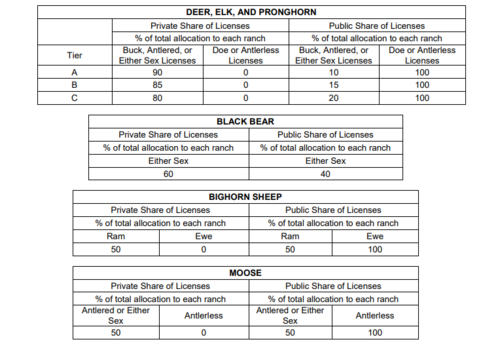
Yesterday I connected with the lead instructor for the program and had a pretty wide ranging hour long conversation.
It's hard to explore the details of things via a forum, and I think it says a lot that someone like Everett is willing to take that kind of time to talk to a non-resident, who probably will never participate in the program.
I want to share some of my big take away's but I also want to qualify from the go that these take away's are partly my interpretation and maybe my misunderstand, I'm not quoting Everett or the website please don't interpret these comments as such.
First and foremost after our conversation, I see the program now as continued hunter education. If you won't want to learn more it's probably not for you, you are going to get what you put into it and if you think you know everything it's a waste of your time. The class is not for everyone. So I'm still consistent in my thinking that a lot of hunters will have to swallow their pride to participate and therefore wont want to do it, there is probably stuff in here for very seasoned hunters, but the class is probably going to appeal most to more recent additions to the hunting community.
Access is a benefit, but it's not the primary thrust of the program. There are a lot of people who did this class, and said they found it very valuable,
(in Montana) who primarily hunt public.
(according to the instructor)
My thinking has shift slightly, I think initially I was thinking the end goal was similar to the German Jagdschein, I now think the goal of the Montana program is to more to create a
hunting ambassador, i.e., a competent hunter, that has spent time not only learning how to find stalk and kill animals, but also has spent time learning how to navigate and speak to the political hunting landscape in Montana. All western states have similar problems in bringing all the stake holders together, and it is important for hunters to understand the animal husbandry component of land use in order to help find a middle ground between hunters and landowners. This doesn't mean buddying up to landowners and advocating for their interests, but if more hunters understood the needs of landowners I think it would make it easier for us to create mutual beneficial solutions.
I think if I was helping design curriculum for the program I might include some class time in how to communicate to non-hunters about the efficacy of hunting, keeping the critters in check is not an effective rhetorical strategy IMHO, and giving hunters more effective arguments is valuable. For instance a conversation about food is a much better tactic.
----------------------------------
As for the access component, because I don't want to gloss over it at that is a huge part of this discussion that bit is tricky. Landowner do want hunters on their property, but they want responsible individuals. There are also public lands hunts that could happen... but individuals need to be very cognizant of politics and image and act with those in mind.
Colorado has chosen to tackle this problem in an adhoc manner here are two examples
If you want to hunt elk in boulder you have to attend and orientation class and a shooting proficiency class.
www.bouldercounty.org
If you draw a sheep tag for Waterton Canyon you can only hunt during the week and have to take an orientation class.
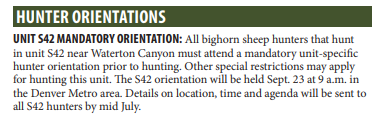
This is comparable to this MT hunt,
https://www.hunttalk.com/threads/roundup-mt-urban-deer-hunt-live.294161/
Essentially these are two different strategies to achieve the same end, I prefer both to using hired shooters. To be honest I'm not sure which is more egalitarian, I do think hunters need more training to do any of these as there is huge potential to shoot holes in our boat. On the private side... I do like this program better than RFW, it's not monetizing wildlife which is my primary complaint with that system.
I still think that a program, a program that ties public land hunts or other hunting access to a class, needs to be made accessible to everyone, not just via the cost and actually allowing anyone who wants to participate, but actually marketing it in a way in which everybody feels like they can do it.
If you make it unintentionally exclude people because they feel like they don't have the ability to participate skills/money/time/scholastic aptitude you are still excluding people, but I understand it's a balancing act.
(A pure education class is a bit different... but if you are tying public resources to a class it needs to be available to everyone)
------------------------------
The person I talked first and foremost had their heart in the right place (IMHO) I feel comfortable saying that this organisation or at the very least individuals in the organisation are really trying to move the ball down the field and help hunters.