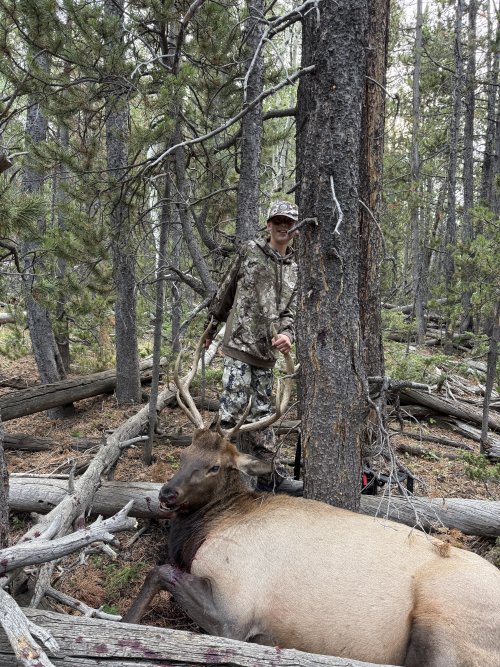
Great picture! Thanks for sharing.My #1 huntin’ buddy and I got it done in Montana! Kid hunted like a man for two weeks. Duct tape on blisters and everything
View attachment 393322


Navigation
Install the app
How to install the app on iOS
Follow along with the video below to see how to install our site as a web app on your home screen.
Note: This feature may not be available in some browsers.
More options

You are using an out of date browser. It may not display this or other websites correctly.
You should upgrade or use an alternative browser.
You should upgrade or use an alternative browser.
Elk .... Let's see them!!!
- Thread starter Big Fin
- Start date

Highground
Well-known member
2022 Bull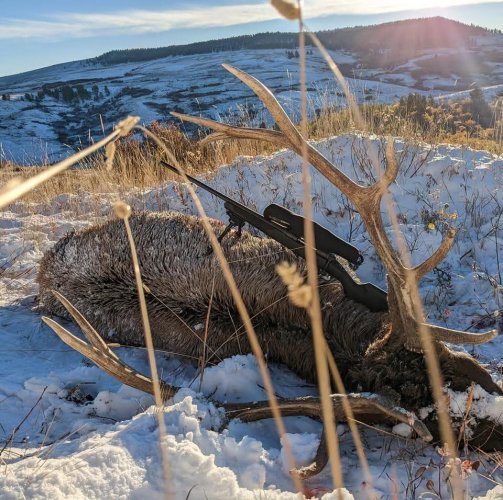

Badger_55
Active member
- Joined
- Feb 21, 2016
- Messages
- 321
2025 public land archery bull
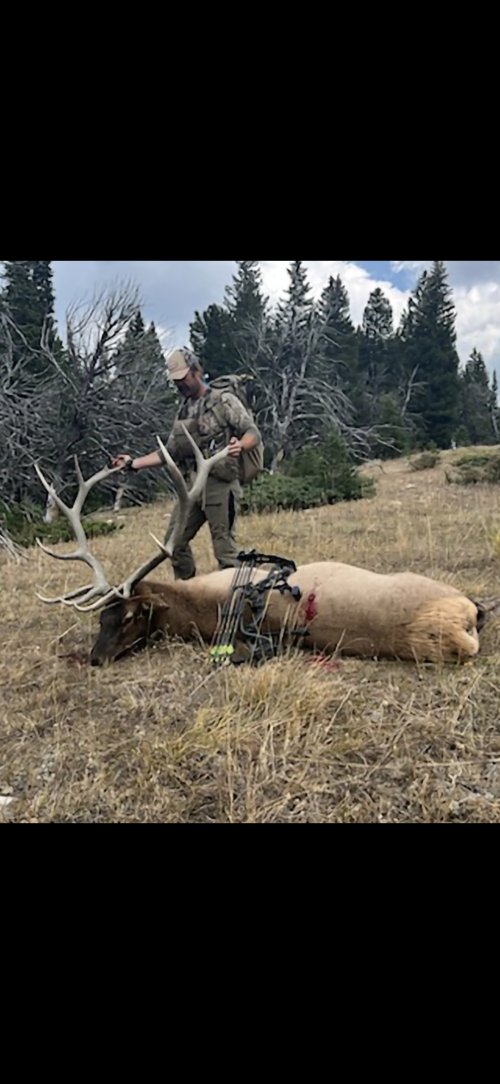
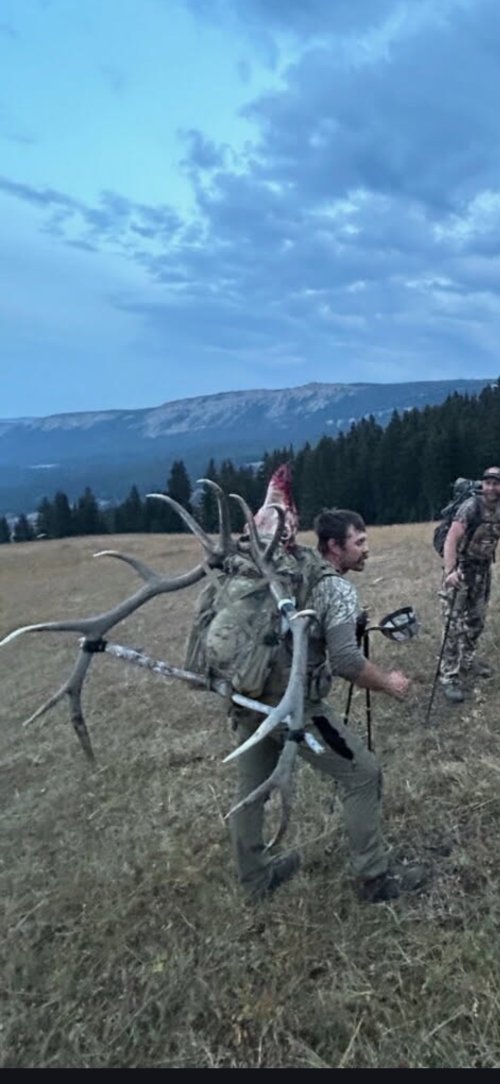
Last edited:

Lmartin5
Well-known member
- Joined
- Dec 23, 2025
- Messages
- 625
This is work right here...congratulations!

Pintail2008
New member
- Joined
- Feb 18, 2026
- Messages
- 11
Beauty!Here's the deal. Since the "Let's see them" pronghorn thread is one of the most viewed on this site, and most viewed by lurkers, I am thinking we should do the same with elk and show how many elk guys on this site take.
This thread will be a "sticky thread" and be at the top of the Elk Forum, from here on out. It doesn't matter when you shot it, how you shot it, or if you were just the person helping, this is the thread to post elk pictures. No need to post a long story, just a pic and a few notes about the hunt.
Be as specific or vague as you want, as far as location.
Here goes.
2005 - Missouri River Breaks rifle tag. My son's first elk. Most fun I ever had on an elk hunt. We were joined by my brother, Logdawg.
View attachment 32075
Thanks for doing this. I hope this thread becomes as popular as the pronghorn thread. I know you guys have shot a lot of elk, so post 'em up right here, even if they have previsouly been posted on another thread.

MS 9x56
Well-known member
- Joined
- Mar 9, 2022
- Messages
- 439
Please congratulate the young man for me. Bringing home the groceries already.My son's first elk. Two weeks before he turned 12. 17 yards with a crossbow

AI has made it to Hunttalk, and it doesn’t know the difference between a pronghorn and an elkAuthor: Colton Timmons (PHA Co-founder)
Check this story out and come book a hunt through us!
https://www.premierhuntingadventures.com
SPOT & STALK PRONGHORN: EARNING IT ON THE OPEN PLAINS
Spot-and-stalk antelope hunting on the open plains is a unique challenge. The grass is grazed down by cattle, and cactus seems to find you no matter how careful you are. There is little to no cover, and every movement matters.
I have hunted pronghorn with a rifle most of my life and have taken several solid plains bucks. In recent years, however, I have shifted toward bowhunting—chasing everything from javelina in western Arizona to Rocky Mountain elk in high alpine basins, and even black bears in thick chokecherry patches.
Part of the ongoing pursuit of hunting is challenging yourself and discovering what success truly means to you. There are countless ways to hunt the same animal, and I decided I wanted to take a pronghorn buck with a bow—spot and stalk—on an over-the-counter hunt in eastern Colorado on private land my family has hunted for two generations.
After a summer of building arrows, paper tuning, and practicing realistic shot scenarios, I felt prepared to face the challenge. When opening day arrived, I was on bucks at first light, watching them push does at full speed across open, rolling hills.
BUILT FOR THE PLAINS
The American pronghorn is a survivor of the Pleistocene Epoch—a time when North America held far more, and far faster, predators than it does today. Animals like the American cheetah helped shape what the pronghorn has become.
Today, pronghorn can reach speeds of 55–60 mph and sustain 30–40 mph for miles. On top of that, they possess roughly 320-degree vision and can detect movement from several miles away.
In real terms, this makes getting within 100 yards of a mature buck one of the most challenging spot-and-stalk hunts in North America.
GRINDING IT OUT
After three days of nonstop stalks on multiple bucks, I found myself repeatedly busted—often by does that seemed to pick me apart from impossible distances. More than once, I lay face down in the dirt, trying not to breathe too heavily, hoping the buck I had seen minutes earlier was still within range.
By Sunday, I told myself I needed a reset. But like any hunter knows, that feeling doesn’t last long.
I woke up and went anyway.
Driving my old 4Runner down a washed-out dirt road, country music playing low, I shut it off and pulled up near an old oil derrick. I stepped out, grabbed my bow, and ranged my target at 55 yards.
I drew, settled, and released—missed.
No excuses. Just a miss.
I reset, drew again, and this time center-punched the target.
At that moment, I knew I was ready.
THE OPPORTUNITY
Back in the truck, I rolled slowly down another familiar road where I had been seeing bucks. Then it happened.
A lone buck.
He had been running with a group of does all week, and I hadn’t been able to get within 400 yards of them. But now he was bedded alone between two rolling hills, completely exposed.
The only advantage I had was a small creek bottom with a few scattered trees that could get me within roughly 200 yards.
I grabbed my umbrella decoy—something I hadn’t yet made work—and slipped on moccasins.
From there, it was slow, deliberate movement.
Toe to heel.
Step by step.
Constant wind checks.
No wasted motion.
CLOSING THE DISTANCE
At the final tree, there was no more cover.
I knew he was bedded somewhere below me, and from here it would take a crawl.
I set down my bino harness, slipped my rangefinder into my pocket, and removed my quiver—holding two arrows in hand.
Heart pounding. Heat rising.
I opened the umbrella decoy and began moving forward slowly, scanning every ridge line for movement.
Then I saw him.
Exactly where I had left him.
He looked directly at me.
Perfect.
I set the decoy down gently and slid back, legs out in front, bow in hand.
Minutes passed like hours.
At 90 yards, he began working toward me, trying to get downwind. He moved broadside, then stopped, then angled in again.
Each time I felt exposed, I adjusted slightly, staying hidden behind the decoy.
Finally, he closed to range.
My rangefinder struggled through the grass and gave me 66 yards.
I dialed for 70.
I drew.
He turned, then paused.
I took a breath and released.
THE MOMENT
He spun and ran.
I assumed I had missed.
Then, as he crested back toward where he had bedded, he slowed… wobbled… and went down.
Relief hit first.
Then emotion.
This plains monarch—earned the hard way—was finally mine.
WHAT MAKES A HUNT SUCCESSFUL
In that moment, my thoughts weren’t about inches of horn.
They were about, the land, the animal, my family, and the effort it took to get there.
A successful hunt is subjective.
For me, it comes down to the preparation and effort put in long before the moment arrives. Success is giving yourself a real opportunity—whether that ends in harvest or simply in growth.
The animal lives every day in the elements, constantly fighting to survive. To honor that, we should challenge ourselves in the same way.
Because in the end, success isn’t guaranteed.
But the pursuit always is.View attachment 405568


Rugged_Yogi
New member
- Joined
- Apr 10, 2026
- Messages
- 3
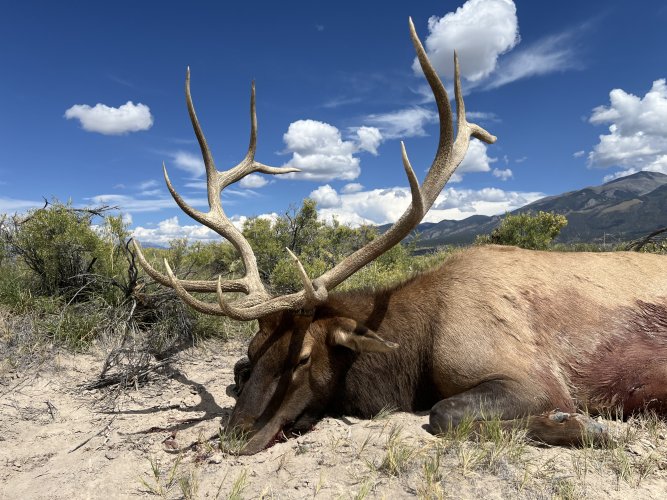
332” bull I shot in CO in 2024
Gnomepunter
Member
- Joined
- May 27, 2025
- Messages
- 39
Yall making me jealous lol

Little Big Man MT Chris
Well-known member
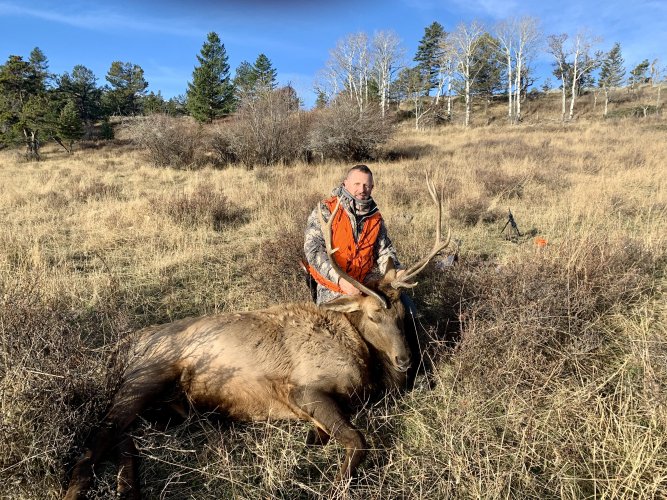
2025 MT BULL , 1st Rocky to go with my 4 Roosevelt’s, definitely a special moment for me to have harvested both Elk Species
BootsontheGround18
New member
- Joined
- May 8, 2026
- Messages
- 13
2025 CO archery bull.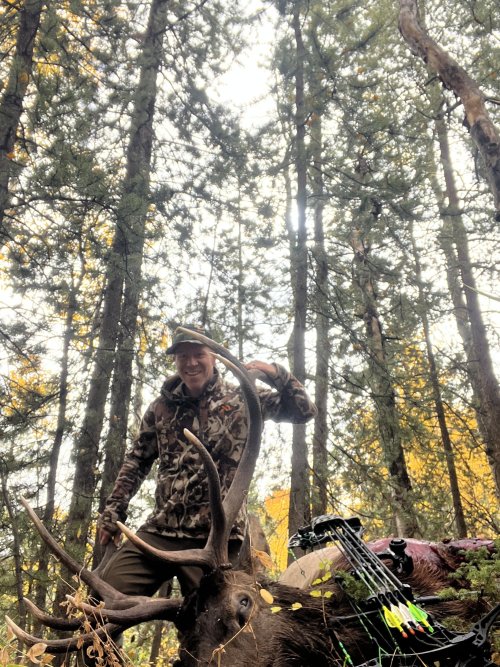

Guy
Well-known member
- Joined
- Dec 5, 2018
- Messages
- 506
Never drew the tag to hunt "branch antler" bulls near my home in Washington, but I could sure find them.  Regards, Guy
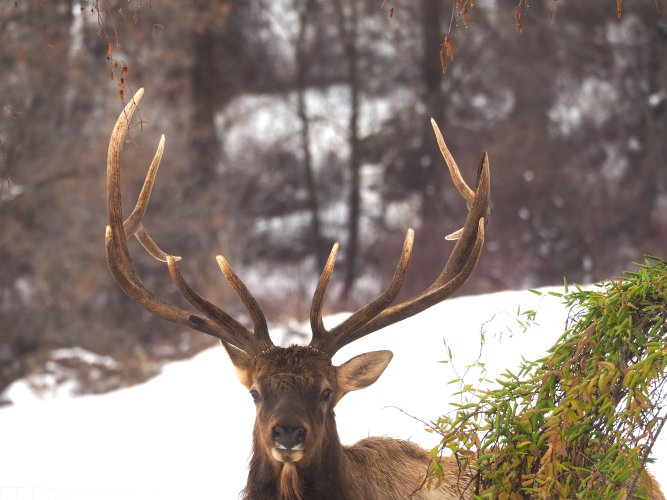
Regards, Guy
Bigbuck454
Member
- Joined
- Jul 7, 2022
- Messages
- 16
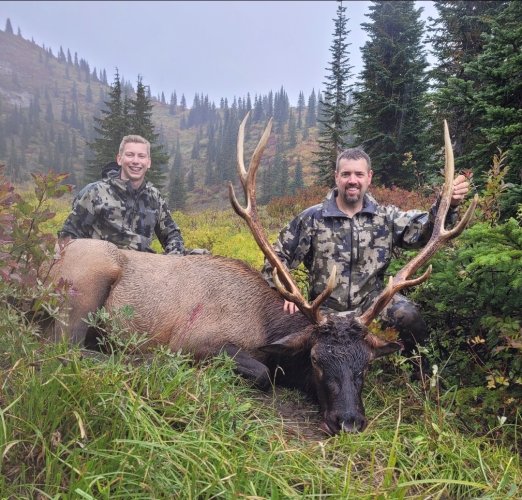
cool!Due to the graciousness of a certain landowner my son was able to take an extremely good bull in Montana this year. I cannot thank people like him enough. Me and my boy will remember and cherish this hunt and time together forever!View attachment 395885View attachment 395886

pointingdogsrule
Well-known member
An I the first for 2026 fall?
Wyoming crossbow.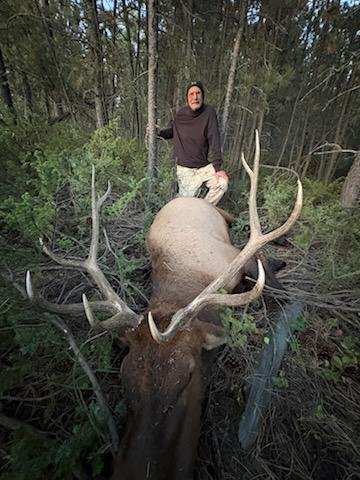
Wyoming crossbow.

jbseamus83
Well-known member
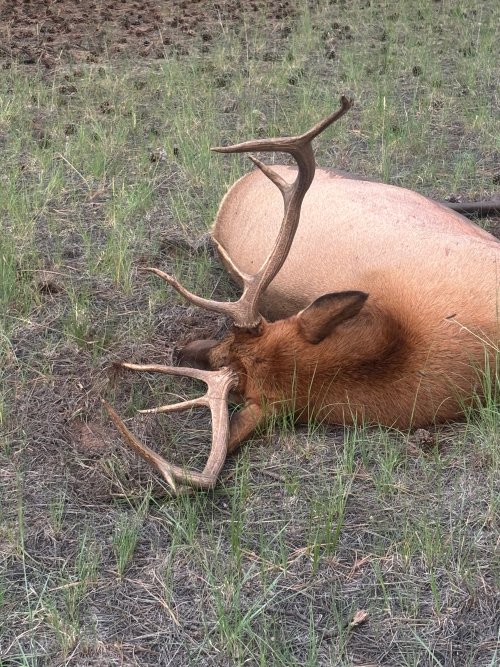
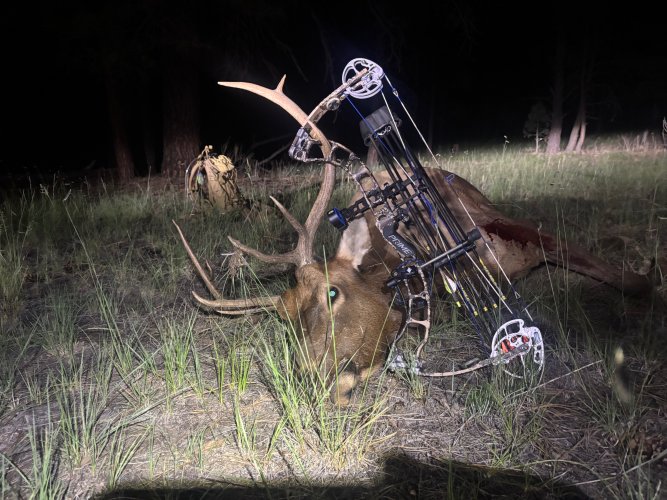

Salmonchaser
Well-known member
- Joined
- Nov 12, 2019
- Messages
- 3,245
We are off and running. Well done boys.

jpc01101
Well-known member
- Joined
- Jan 14, 2021
- Messages
- 1,088
Way to go guys! Excited for this thread to get moving!

Hammsolo
Well-known member
- Joined
- May 16, 2020
- Messages
- 2,978
Headed scouting today!