Wildfire management LTTE

Homeowners that did fuel reduction work on their properties, saved their homes. Those that didn't, lost them. The forest service had plans to do fuel reduction treatments adjacent to the WUI, but litigation stopped that work from taking place. I saw this fire take off from across the valley in real time. The only managing you could do was prior to ignition by reducing the fuel load, that was substantial.
That's always been the case, but you can't force a private landowner to do fuel reduction work.
 
So you are saying fuel reduction works when properly implemented. We are in agreement here.
I'd always been appreciative that in my neck of the woods NGO's haven't been road blocks to forest treatment projects. That appears to have changed
 
So do nothing is what you are advocating for?
Don't break your leg jumping to imaginary conclusions.

To recap, since you're having trouble following along.

1. You can't compel private landowners to mitigate fire risk, that is unless you want to trash private property rights.
2. Even if mitigation steps have been taken, they may, or may not work under extreme conditions for all kinds of reasons. As an example: I don't give a shit how much defensible space you have if a landowner chooses to have cedar shakes on their roof, or stack their firewood under their deck. I don't know how much fire you've fought in your life, but I did it from 1987-1994 and its not uncommon for fires to spot 1/4 plus miles ahead of the fire front. If one of those embers lands on a cedar shake roof...your house is burnt toast.
3. Since you can't compel your neighbors to mitigate fire risk, your property could be at risk because of what they don't do.
4. Fire behavior has become more and more extreme over time...more red flag days, stronger winds, extreme drought...making previous mitigation efforts all but worthless.

Deny it all you want, but I'm not in denial, seeing it first hand. Fire seasons are longer and longer, more intense, fire doing things that we haven't seen in the past. Way more construction in WUI, often with piss poor zoning and layout. Too many things to list them all.

Clear enough?
 
Insurance companies don't have to insure properties in the wui that won't and don't do proper fuel reduction treatments, as well as homes with cedar shingles, ect.

If your neighbor doesn't want to do fuel reduction work, have conversation with them. If that fails, treat your own property between them and your home to even higher level.

Support the forest service when they propose proper fuel reduction treatments in your local area. Call out the serial litigants for their obstructionist behavior. Don't use climate change as an excuse to do nothing, like Buzz is suggesting here.

Clear enough?
 
Insurance companies don't have to insure properties in the wui that won't and don't do proper fuel reduction treatments, as well as homes with cedar shingles, ect.

If your neighbor doesn't want to do fuel reduction work, have conversation with them. If that fails, treat your own property between them and your home to even higher level.

Support the forest service when they propose proper fuel reduction treatments in your local area. Call out the serial litigants for their obstructionist behavior. Don't use climate change as an excuse to do nothing, like Buzz is suggesting here.

Clear enough?
Good advice. But how 'bout keeping your misinterpretations of others' posts to your narrowly focused self.
 
Insurance companies don't have to insure properties in the wui that won't and don't do proper fuel reduction treatments, as well as homes with cedar shingles, ect.

If your neighbor doesn't want to do fuel reduction work, have conversation with them. If that fails, treat your own property between them and your home to even higher level.
While I agree with the premise, it is a bit of a fantasy. Insurance companies are reviewing their books all the time and dropping coverage of homes in high-risk areas, fuel reduction or not. Problem is that you can't expect an insurance company to hire dozens of adjusters to assess this risk for which they can never recoup the cost without increasing premiums. I assume most insurance companies are simply looking at satellite photos and determining the yes/no on the property. Also, insurance companies are run by states, so there is a political element, and not R/D. If people who have their coverage dropped or costs increased make enough noise, the insurance company has to either lose money or leave the state, which is happening.

Also, "Have a conversation with them..."? You can't be serious. The reason people live these areas is because they don't like neighbors.
 
Insurance companies don't have to insure properties in the wui that won't and don't do proper fuel reduction treatments, as well as homes with cedar shingles, ect.

If your neighbor doesn't want to do fuel reduction work, have conversation with them. If that fails, treat your own property between them and your home to even higher level.

Support the forest service when they propose proper fuel reduction treatments in your local area. Call out the serial litigants for their obstructionist behavior. Don't use climate change as an excuse to do nothing, like Buzz is suggesting here.

Clear enough?
Here's the problem you forget about the "serial litigators"...often times it's the local people in the area that you're trying to protect with fuel reductions that are pissing and moaning about what the FS is proposing. They don't like changes to "their forest" that's in their back yards. They don't like burning in the fall and spring because little johnnie and jane have asthma.

I'm not using climate change as a reason to not do anything, only that even IF, and that's a big IF you had your way, things are not normal right now with how fire behaves. It's not normal to have entire subdivisions burn down in November in Colorado, yet that happened. It's not normal to have fire seasons stretch for 12 months a year, that happens. It's not normal that we had huge mountain pine beetle outbreaks in much of the interior west that combined perfectly with a recession, that happened. It's not normal to have FS staffing at the lowest levels in the past 50 years, yet its reality. It's not normal to have FS budgets cut to complete shit, yet thats happening.

You want to pretend that pruning a couple trees and having a prescribed fire here and there will solve the complexities of the WUI...that's fantasyland and total nonsense.

I've been at this way too long, you can't BS me.
 
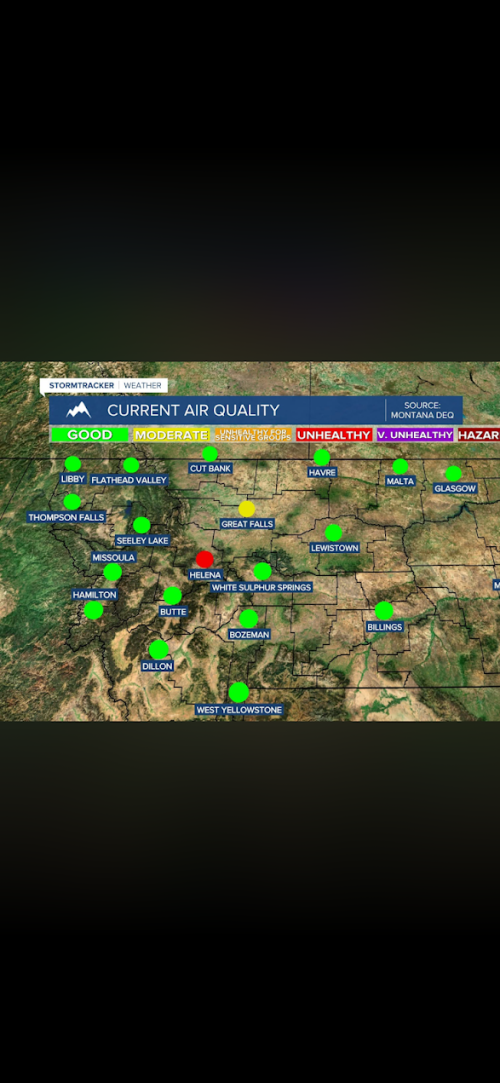
Just something that made me think of the complexity of mitigation and this thread. In the northern Boulder Mountains yesterday were a couple broadcast burns totalling about 500 acres to reduce potential fire intensity in the WUI. There's a small and tenuous window of time in the west where you can light a fire for RX purposes and actually have it burn and perform the job, but not have it burn out of control, and I don't envy the responsibility of making that decision.

The smoke blew south and filled our valley as well as Helena's. Yesterday evening I heard multiple people at a kids football game bitch about the smoke, say things like “this was poorly planned”. Last night the smoke that filled our valley from 10 miles north was called in as a wildfire by someone in our district dialing 911.

These burns were advertised in multiple places.


1789649973333.png

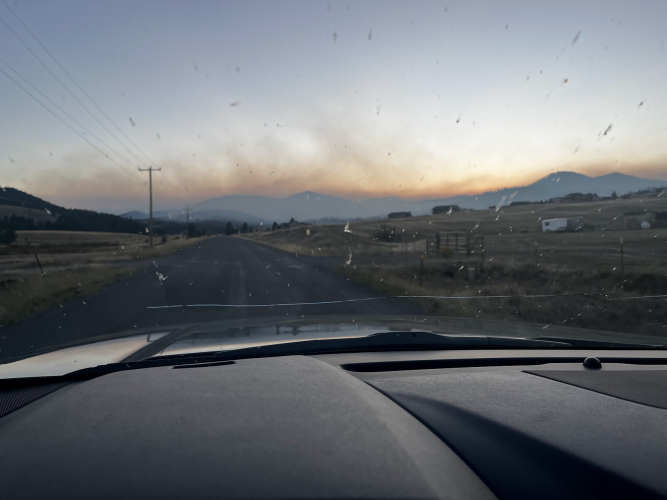
Driving home last night as the smoke rolled in (yeah I need to wash my windshield)

1789650006211.png

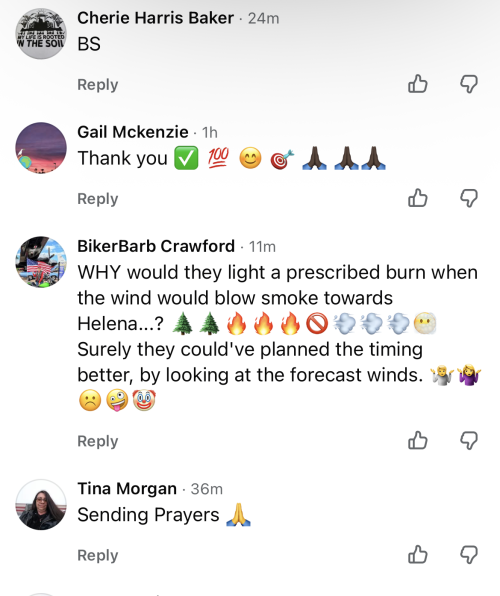
Seeing a fair bit of comments like this this morning on the social medias.

1789650199950.png


A great podcast I listened to years ago was Hal Herring's podcast with Stephen Pyne. It's philosophical and interesting and beautiful, but one of the pragmatic takeaways I heard was fire is unavoidable and folks will need to learn to live with it to some degree. None of that means we shouldn't try different avenues to alleviate its effects on the landscape and people, but there's a cousin of "damned if you do" somewhere out there when it comes to landscape managers' attempts to curtail the bad thing from happening.

 
Just something that made me think of the complexity of mitigation and this thread. In the northern Boulder Mountains yesterday were a couple broadcast burns totalling about 500 acres to reduce potential fire intensity in the WUI. There's a small and tenuous window of time in the west where you can light a fire for RX purposes and actually have it burn and perform the job, but not have it burn out of control, and I don't envy the responsibility of making that decision.

The smoke blew south and filled our valley as well as Helena's. Yesterday evening I heard multiple people at a kids football game bitch about the smoke, say things like “this was poorly planned”. Last night the smoke that filled our valley from 10 miles north was called in as a wildfire by someone in our district dialing 911.

These burns were advertised in multiple places.


View attachment 417272

Driving home last night as the smoke rolled in (yeah I need to wash my windshield)

View attachment 417273

Seeing a fair bit of comments like this this morning on the social medias.

View attachment 417275


A great podcast I listened to years ago was Hal Herring's podcast with Stephen Pyne. It's philosophical and interesting and beautiful, but one of the pragmatic takeaways I heard was fire is unavoidable and folks will need to learn to live with it to some degree. None of that means we shouldn't try different avenues to alleviate its effects on the landscape and people, but there's a cousin of "damned if you do" somewhere out there when it comes to landscape managers' attempts to curtail the bad thing from happening.

I saw the control burn you mention here on yesterdays evening news. Forest Service is being proactive in the Helena area.

Helena smoke tied to Grizzly Gulch burn southwest of city | Fires | montanarightnow.com https://share.google/5VSqRg2kSbBJlXtRt
 

Latest posts

Forum statistics

Threads
120,003
Messages
2,246,616
Members
39,077
Latest member
Johnjason
Back
Top