



Irrelevant
Well-known member
I agree with the majority of your comments.I’d say that chart is an N-of-1. Folks above have mentioned that we used to do a lot more fuels reduction by way of merchantable timber and that’s part of it, but that 40 year span of suppression also built a hell of a lot of fuel up on the landscape and became unsustainable. I don’t think the increases in acres-burned over the last 30 years are chiefly driven by a different management perspective on wildfire.
I believe we are better at firefighting now than ever before and we are catching fires much earlier than ever before with better technology than ever before all while spending more money than ever before.
If I were king for a day and solely with reducing the amount of smoke folks experience in the summer in mind, we would log a heck of a lot more. Litigants would have no options. We would engage in more prescribed burning, which really only touches very small acreages compared to what’s out there, has a ridiculously small window of efficacy seasonally, and I would remove the liability concerns associated with that activity.We would engage in far more fuels reduction efforts, which make no money whatsoever and quite the opposite. All of those efforts would have to be repeated at particular intervals. Fuels reduction isn’t something you do and walk away from- it’s a literal maintenance schedule. We would be far more aggressive in our stage restrictions - limiting the ability of the public to have campfires and such - and we would put a lot more heads on pikes. We would heavily restrict where people could build structures because those areas get a disproportionate focus to other areas that might produce more smoke. We would probably also restrict access to the woods far more aggressively when it’s dry out.
Pros and cons. None of it particularly feasible. And I suspect we’d still have big damn fires. Here in the Pyrocene.
It's hard for me to reconcile a mere 40 years of suppression, and the amount of fuels created during that time, as being some overwhelming factor in our current situation when the fire intervals for much of the western forests range from 5-100 years, especially if you've ever had analyzed naturally occuring data and taken a statistic course. However, if it's true. If we just need to make up for the fuels that weren't burned, over that period, then by god, we shouldn't anything to worry about here in the very near future. There's not a patch that hasn't burned in the last 30.
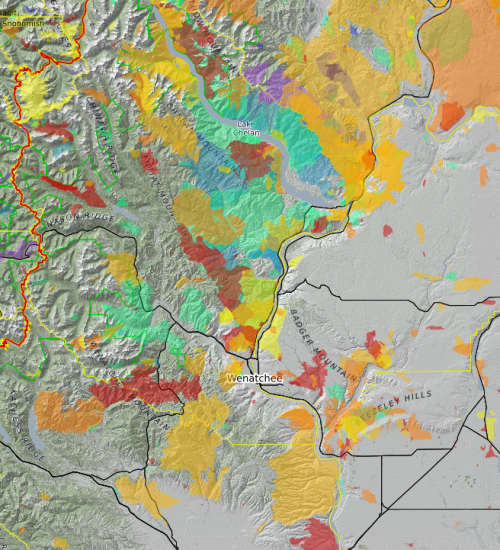
The little giant fire, which drove the aqi up to 180 yesterday, has burned over 100k acres of forest that burned in the last 40 years (give or take, I was pretty rough in my mapping).
I get that depending on where you live, it's easier to believe that it's the lack of fire that's causing the "un-fightable" nature of our fires.
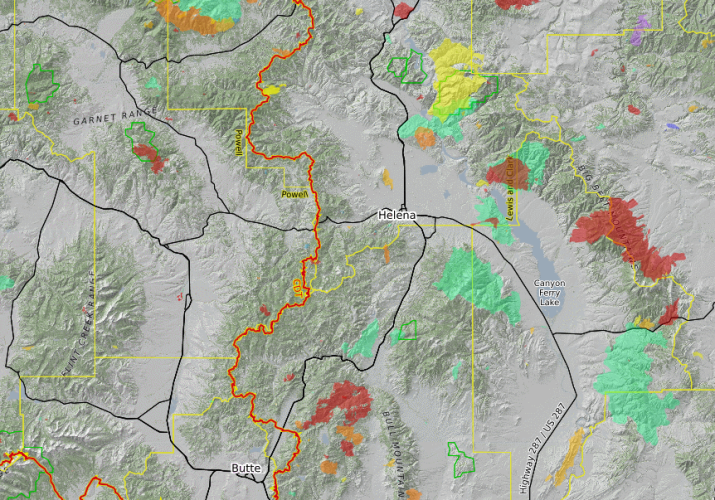
In the last 120 years, large swaths of MT haven't seen the flame.
But it's a lot harder for me to reconcile. There are fires, on top of fires, on top of fires.