I know I'm stepping into a punch with this one - I'm okay with that.
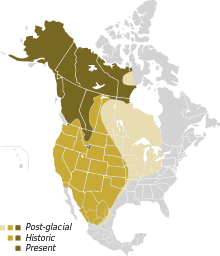
I still believe that a co-mingling population of grizzlies should extend from the GYE to Glacier NP before delisting happens. The population doesn't have the genetic diversity that it should have to be entirely off of the ESL. I look at a species like the wolf as a great example of what should be required before we are allowed to hunt them - widespread distribution as well as connectivity among island populations. We are very close with the grizzly, but aren't quite there yet. Once they establish a real population in the Crazies and Little Belts I don't see any reason why they shouldn't come off of the ESL.
Please don't confuse this as someone who wants them protected forever. I believe we need to hunt grizzlies to reduce their presence on the landscape in many areas. I just don't think we've prioritized the habitat expansion required to have genetically diverse populations, which has led to a large percentage of grizzlies living in a very small part of their natural range. We've moved away from habitat expansion in favor of protectionism for existing populations. It's a sad reality that I think many on both sides hope to continue (the anti-gun folks want to keep distribution low to keep them on the ESL, while the hunting crowd wants their range small to protect the ungulates). I hope we can expand their habitat, protect the existing population, and manage them appropriately.
I really believe that this is going to be an even bloodier fight than delisting wolves was. I hope more than anything that our rights as hunters aren't eroded because of this issue, but unfortunately I see this as a future campaign for anti-hunters. Many people anthropomorphize the grizzly and will portray hunters as blood-crazed trophy hunters over this, while most people just want a safer, well-managed population. It's going to cause a divide that has been closing since the delisting of the wolves. Prepare to see the "farm to table" hunters turning again away from hunting over this.
I get the points you are making, but that is not what was provided as the criteria for delisting. The issue of connectivity has been tried by the litigators and refuted by the best bear scientists on the planet. There is nothing in the Gbear ESA listing language that requires Gbears to occupy the Big Belts, Little Belts, Crazies, or any place outside the Primary Conservation Area (PCA) for that matter, to allow for delisting. I get that some, including you, feel that requirement should be added now as an additional requirement for delisting, though the science upon which this listing/delisting states such is not necessary for a secure population in the GYE.
I disagree with your comments about habitat. If you read the Conservation Strategy (CS), you will see huge habitat restrictions that have been implemented for Gbears in the GYE. Every part of the PCA is divided into habitat areas and all are monitored and managed for Gbears, expanding the core Gbear habitats since the bears were listed. For anyone to say that habitat has not been managed, changed in allowed use, and therefore expanded for Gbears, is a false statement. The CS and supporting documents have extensive detail as to these habitat adjustments, all of which required serious changes in human activities allowed in those areas, over the last 25 years. Most of SW MT, NW WY, and Eastern ID have had huge changes to habitats in terms of allowed human activity, all for the benefit of increaed core habitat areas for Gbears. One can look at those areas in the PCA and examine the allowed uses today and management strategies for Gbears, as compared to 30 years ago,and it shows a huge increase in core Gbear habitat over that time.
I would suggest folks read the Conservation Strategy for the Greater Yellowstone DPS (distinct population segment). The CS give history and background of how we got here, how the five DPS were arrived at, etc. It also goes into great detail as to the safety nets that are in place. Based on comments I read, it seems a very small portion of hunters, or people in general, have read the CS. That document is based on 40 years of science and research by the most informed bear biologists we have. If you talk to anyone of them, they state the science shows the population is fully recovered and far past the point of delisting.
If people want to change the targets/goals/criteria for delisting, then that is a different discussion. Right now, those wanting to change the criteria don't want to admit the want to move the markers, rather they litigate to get science laymen, judges with degrees not anywhere related to the animal sciences, to make decisions that effectively change the criteria.
I've been involved in the Gbear CS since 1998. It is very frustrating to see the BS on this decision. We wonder why the ESA is under attack. This is the exact reason. No matter how many times the USFWS biologists satisfy even the most remote concerns of the long-term viability of the GYE DPS, the courts decide otherwise.
Count me in as one who is now advocating some serious changes to the ESA, EAJA, and associated Federal Law that makes this kind of litigation outcome possible. Last I checked, we had the ESA to move species off the list and to state management. If folks want a Federal model of wildlife management, as do many of the litigators and their supporters, then come forward with a discussion as to why we should change our current state based model and let's have that discussion.
I appreciate your points and bringing them forward. I hope this thread can be helpful to let more people understand how much work, compromise, and science has went into Gbear expansion over the last forty years. We have come a long ways. The bears are recovered. A lot of people in the core Gbear areas have made huge adjustments to their activities to accommodate Gbears. These kind of decisions are a kick in the crotch to those who have worked hard and changed their lives to meet the criteria that allows for a robust and viable Gbear population.