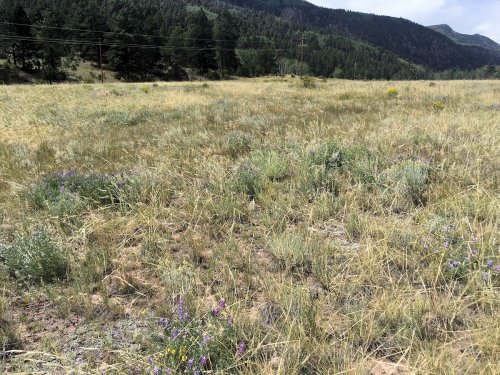
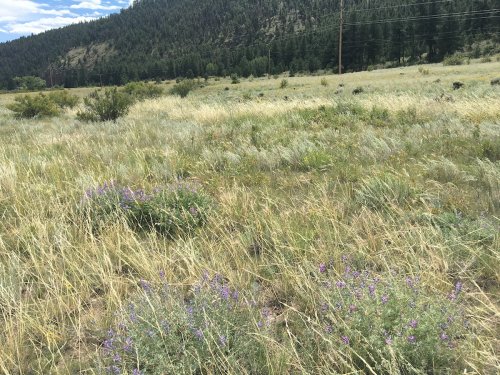
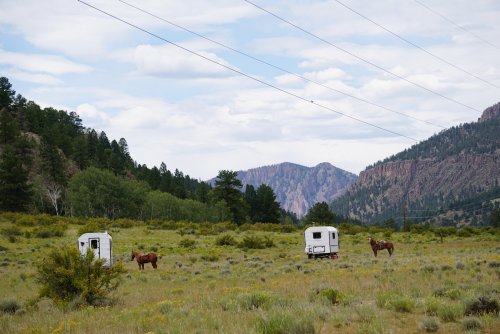
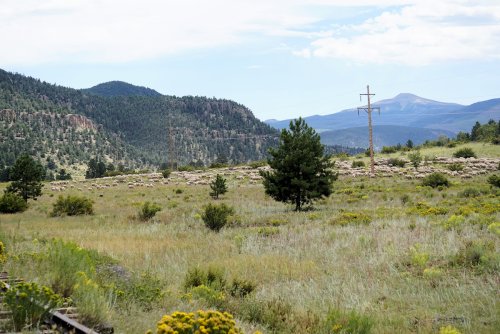
Is grazing allowed on SWAs? That would be news to me.
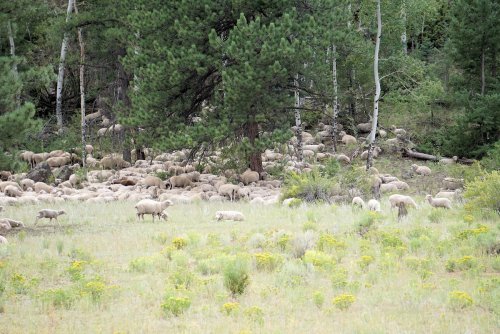
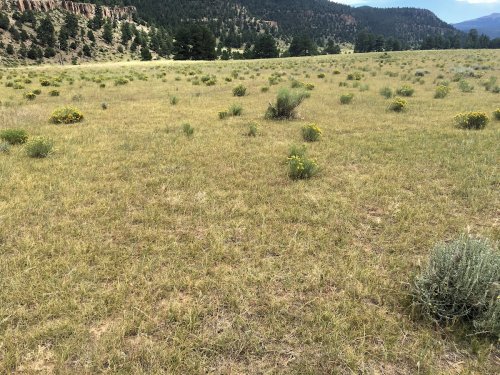
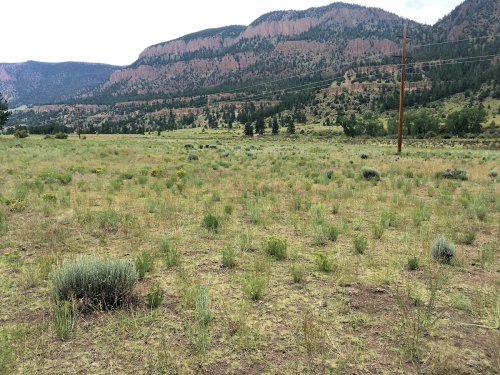
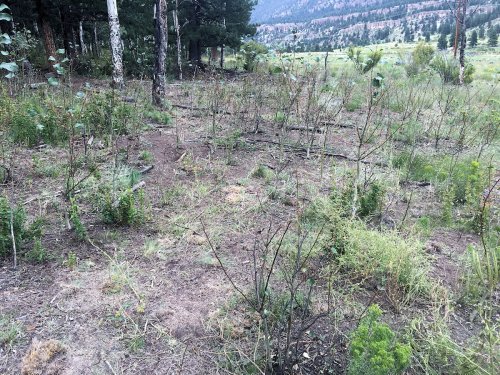
Domestic sheep grazing on this SWA was initiated in 2016 by the USFS as part of an alternative allotment for a producer that was being moved from high elevation allotments due to the risk to bighorn sheep. The new allotment consists of 7 disjunct pastures that the permittee trails between for 2.5 months. A bighorn sheep risk assessment completed by the USFS in 2017 found that the new allotment is "high risk" for bighorn sheep contacting the allotment. The risk assessment determined a "contact rate" of
0.98/year. For comparison, anything over
0.08/year is considered high risk. The CPW comment letter for the analysis states:
The development of the Wishbone Allotment has been collaborative and will help create effective separation between domestic and bighorn sheep, while continuing to provide public land grazing opportunity for local livestock producers. Local CPW District Wildlife Managers (DWMs) and Terrestrial Biologists have worked with Divide District Staff to develop portions of the proposed action, including using the Coller State Wildlife Area (SWA) for domestic sheep grazing to help create effective separation.
At the end of the grazing season in 2017, at least 54 dead or stray domestic sheep were found scattered throughout the area over the course of 35 days following trailing off of the domestic sheep for the year (see attached below).
This summer, the USFS completed a Supplemental Information Report for this decision, which incorporated bighorn sheep GPS collar data collected by CPW. The new risk analysis found a contact rate of
1.26/year, or 27% higher than the original analysis. Inexplicably, in both the 2017 and 2019 analyses, the USFS failed to include all bighorn sheep herds within 35 km of the allotment in the risk assessment, as the risk model requires. They excluded two neighboring herds totaling 765 bighorns, both of which have been shown through telemetry to be connected to the herd nearest the allotment. Since contact rate is additive, including all neighboring herds as required would substantially increase the predicted contact rate, which is already 15.75x higher than the "high risk" threshold.
Additionally, in July of this year, two bighorns were observed on one of the allotment pastures about a week prior to when domestics were going to be turned out on the pasture. The USFS decided to have the permittee skip that pasture in the rotation for 2019. Luckily the permittee had started his grazing rotation late this year, or the domestics would have been on that pasture at the time of the bighorn sighting.
The USFS is
currently being sued by WildEarth Guardians and Western Watersheds.