Growth of horns by mature male pronghorns (Antilocapra americana) in Montana ceased during August when the stratum germinativum became inactive under mature sheaths. During October after the rut, growth of new horns resumed under the old horns and the stratum germinativum proliferated soft, hairy integument. Annular swellings of this integument at the tops of the bony cores produced hard-keratin tips, which aided in loosening old sheaths which were cast in November. The stratum corneum of the new horn formed a tissue layer that permitted abscission to occur.
Histologically, horn formation resembled that of skin. New horns consisted of bony cores approximately 134mm long covered by gray hairy skin and topped by cones of hard horn 20-25mm long. During December, rapid differential growth from the thickened integument at the tops of the cores extruded curved horn tips, and frontal prongs began forming approximately 50mm above horn bases. By February, prongs and hooks were nearly developed.
From March through July, hard keratin formed around the cores while skin around the bases of the cores thickened and extruded horny material distally, lengthening the horns.
O'Gara, B. W, and G. Matson. 1975. Growth and casting of horns by pronghorns and exfoliation of horns by bovids. J. Mamm., 56:829-846.





 )! Here is a map that shows percentage of normal precipitation received the last 90 days. I hope the pronghorn horns are growing like the grass.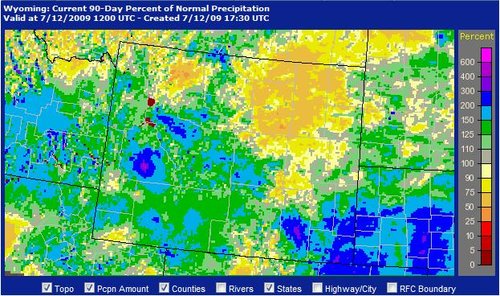


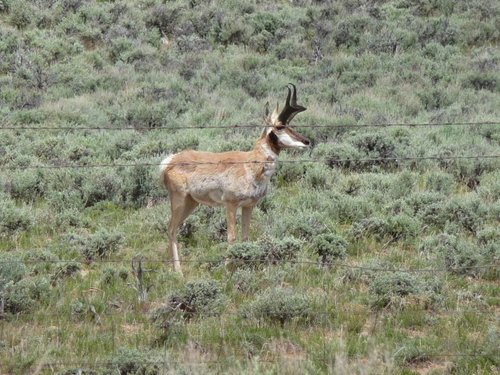
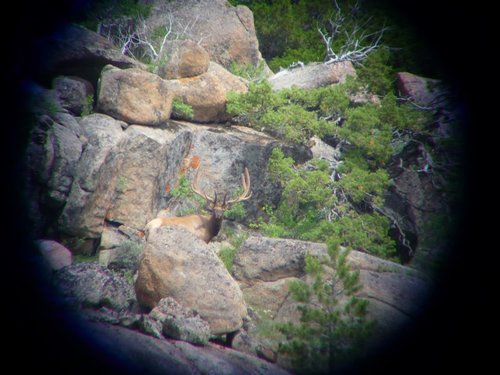
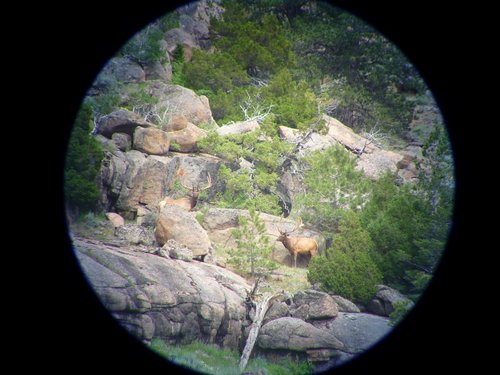
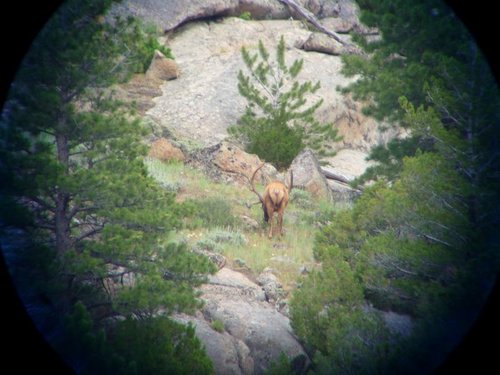
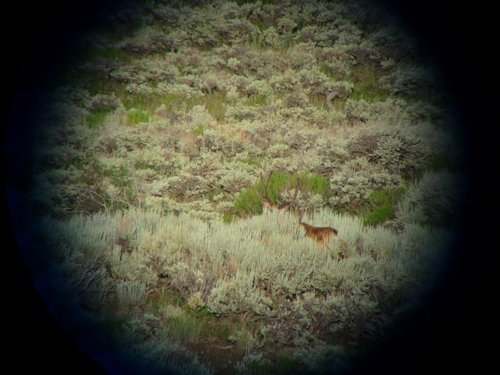
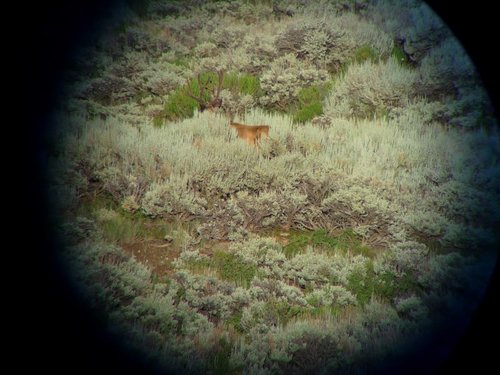

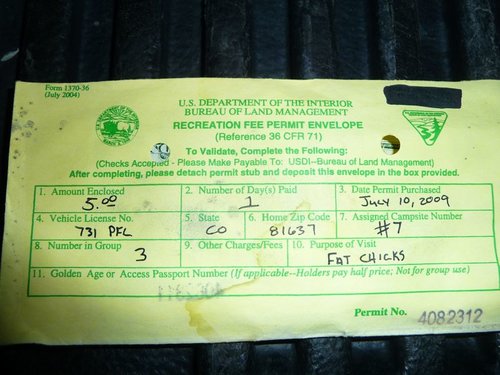


 ...go ahead. That cheesehead told me first, so he should have known anyway.