



Ranchers Shouldering the Waste of Mining and Coal Bed Methane?

Big Fin

Administrator
Staff member
Joined
Dec 27, 2000
Messages
17,373
Location
Bozeman, MT
I think there is a Hunt Talker who is living this problem in his everyday life of trying to make a living on the land.
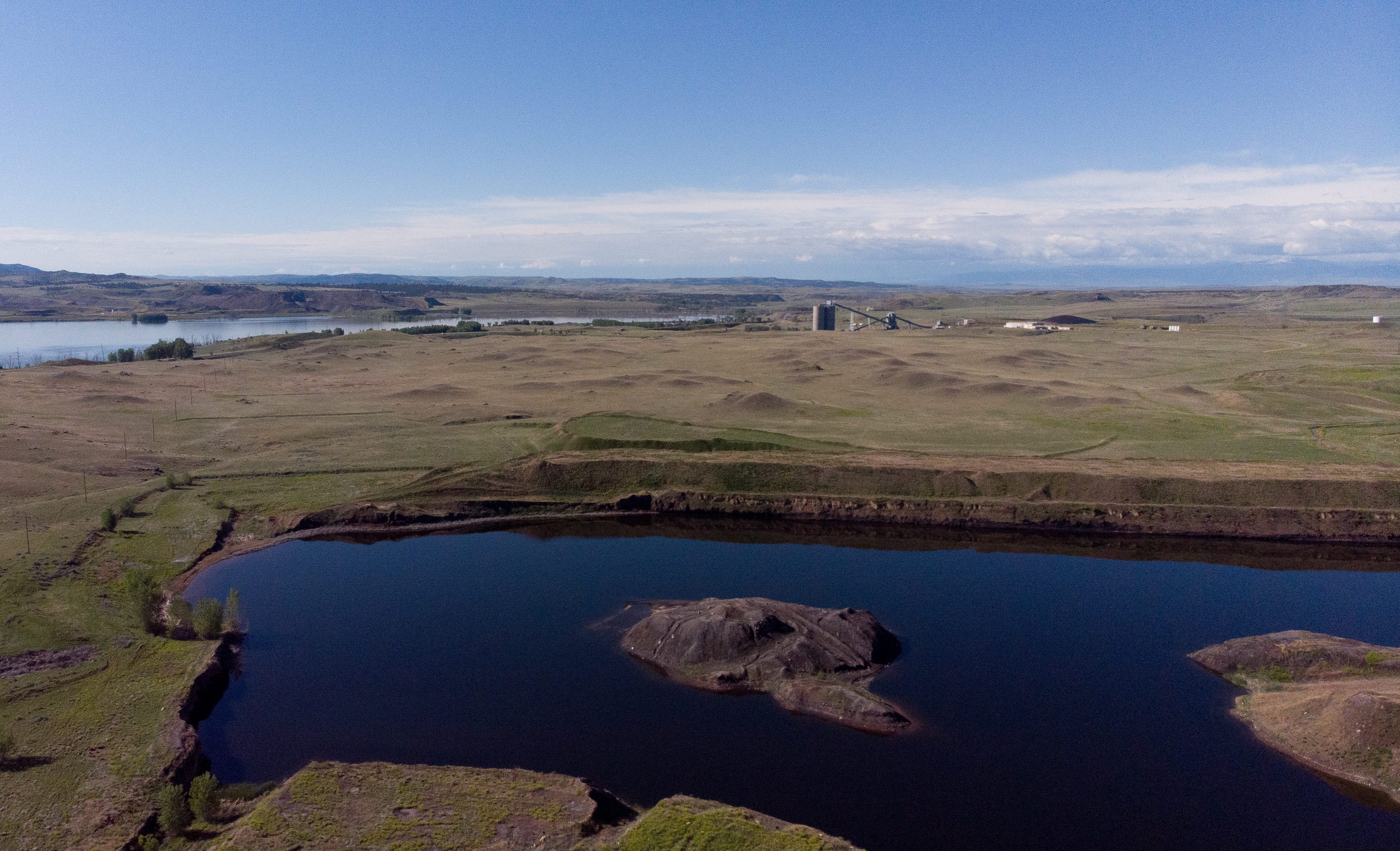

Bad deal for the ranchers and farmers whose water quality has been damaged. I am sure they would like to say, "Told you so." as many of them voiced these concerns in the 1970s-1990s when these permits were issued.

As the one farmer says, it is almost as if eastern Montana is "expendable." History says he's correct, which is BS. Yet, when you have a small handful of ranchers and farmers bearing the brunt of huge industry activity, the consolidation of political power towards the "economic progress" surely makes his statement valid.

And yet this morning, we read that the BLM is going to reduce reclamation/cleanup bonding of oil and gas wells by 95%, as if in these times of inflation the cost of remediation has somehow went down 95%. And with that, another local, likely a rancher or farmer or a small community water supply, will see water quality issues arise a generation from now and nobody will be there to help them, further solidifying the idea that these local producers are "expendable."

Pisses me off. We know this shit is happening. We know there are consequences for our insatiable energy demands. Yet, we refuse to pay the true costs. Instead, by lowering standards, reducing bonding, reducing royalty rates, we just hand the problem off to the younger generations. I guess that should come as no surprise from a country that refuses to tax its citizens commensurate with the government services those citizens demand, and just borrows more money to burden future generations.
 
I can't speak to your particular issues but there are lots of open surface coal mines in my neck of the woods in southern IN & IL. When they get done mining, they clean things up very well, replant habitat, create beautiful lakes, etc. and have created some of the finest fishing, hunting and recreation lands our areas have to offer.

Hope they get your western problems under control.
 
I can't speak to your particular issues but there are lots of open surface coal mines in my neck of the woods in southern IN & IL. When they get done mining, they clean things up very well, replant habitat, create beautiful lakes, etc. and have created some of the finest fishing, hunting and recreation lands our areas have to offer.

Hope they get your western problems under control.
Same that I experienced here. For the majority. Been a part of a few of them. Obviously not the case further to the west.
 
Same that I experienced here. For the majority. Been a part of a few of them. Obviously not the case further to the west.
The population density is higher the further east one travels. With that comes more people impacted, which results in more political opposition. Thus the reason these rural communities and ranchers and farmers feel expendable when the same activities in the east do not bring that same result, or at least to a lesser extent.

The same industry could do the same quality reclamation out west, but very often they do not. There are some coal mines out west that have done remarkable remediation.

Unfortunately, the cold bed methane industry has ignored and neglected its responsibilities, and the rural communities of the west are so dependent upon energy that there is less opposition and mostly just the hope that Uncle Sam will show up with his checkbook to solve the problem.

The west, and much of rural America, has been the resource and energy colony for urban/suburban America. It's been that way for centuries. The disparity in reclamation, bonding, and social responsibility between industries operating near population centers compared to those same industries operating near rural settings, reflects this colonial/empire dynamic.

Urban/suburban America wants cheap energy, cheap food, and other cheap resources, and the providers of such are expected to suck it up and deal with it. An example of NIMBY-ism on a grand national scale. Data centers are the 2026 version of this.

There is no free lunch. I’d rather all of us pay those costs economists talk about rather than dump them on future generations or unfairly burden those people today who don’t have the political allies needed to have a strong voice.
 
Couple of, what I believe to be pertinent, points to add. Most of this is in regard to surface coal mining but I believe is mostly applicable to O&G. When operating on Fed land, a reclamation bond held by the BLM is required as well as a separate reclamation bond that is held by the state. For us the BLM bond is typically very low and is based off production while the state bond is very high. Much higher than what it actually costs to reclaim the land. The difference in the size of two bonds is largely in what they each cover. The BLM bond is simply to hold the right to mine and not necessarily based on any actual disturbance. The state bond is based on actual disturbance. The state bond is based on third party costs of reclamation and those costs are produced by the state. They are updated every year based on cost increases/decreases due to inflation. The BLM bond is a set value based on how many tons were produced in the year prior and is a set value based on those tons. Since the state is the entity that ensures the Federal regulations along with state regulations are being followed it makes sense that the state bond would be much higher. The reasoning behind not requiring both bonds to be the same is the argument that this would result in being double bonded. Should the BLM bonds be higher? Very reasonable argument that they should be, based on past performance. What I can say with 100% certainty, is the state bond is very over-valued in every case I have seen first-hand. Including the one mentioned in the article. It's been a couple of years, but I believe their state bond is far in excess of $100M.

I am also very surprised that if the mine had an unauthorized water discharge off the mine permit area, as mentioned in the article, that MT did nothing about it. In WY no water is allowed to be discharged off the permit boundary without first being tested and determined it will meet approved state levels. No exceptions! Therefore we have dozens of overly built retention ponds scattered throughout the mine to hold excess water should we need them. There are times we do but mostly they sit empty. Powder River country is a different climate but I know they have similar requirements. If an unauthorized discharge happened and the state did nothing about it, the state needs to be held to task for that and then ultimately the mine needs to mitigate the problem and pay for recovery. That's how it works south of MT. Trust me, I know. The article mentions that excess water from the mine could go to the neighboring mine that is still operating for dust suppression. Once again this would need to be sorted out through the state permit as it currently would not allow for excess water to go anywhere other than its original home. Wherever a raindrop was going to end up prior to disturbance, needs to end up in the same spot during and after disturbance once it has met applicable quality guidelines.

Also sounds like the state of MT needs to re-address their water quality standards. Whether the salt and mercury issues are coming from mining, CBM, farming and ranching, whatever it is, it needs to be addressed and stopped. Given my dealing with Wy DEQ and MT DEQ, I am surprised that MT would be more hands off than WY.

I would also encourage the folks in MT to look to the AML funds the state receives from the coal mining that takes place in the state. Those funds can be used to help mitigate some of the issues from the legacy CBM wells. It's been used for far less appropriate uses in other places.
 
Same that I experienced here. For the majority. Been a part of a few of them. Obviously not the case further to the west.
Reclamation standards, requireements and bonding are very different in western states vs. midwest. Even though both are governed ultimatly by OSMRE, the main standard is different. Midwest is largely based on a reclamation standard of AOC (Approximate Original Contour) Meaning the final grounds must look pretty damn close to what it looked like before in both elevation and slope. Western US is mostly PMT (post mined topography). In the west they are not as concerned with the ground looking the same but rather where the water ends up. Given how tight water rights in the west are, the state wants to make sure a raindrop post mining would end up in the same drainage as it would have prior to mining. This is not as large an issue in the midwest. This is one reason why many midwest coal mines are able to leave many pits open after mining to serve as a lake. This is not ever allowed in western surface coal.

Climate is also a big driving factor in the quality of final reclaim. Much easier to get trees to grow in Kentucky than it is to get grass and shrubs to grow in SW Wyoming. This added difficulty is address in our state bond. The timeline to get final bond release from the state is a minimum of 10 years demonstrated grass and shrub density. Midwest, plant trees and watch them grow and your kind of done.
 
I think there is a Hunt Talker who is living this problem in his everyday life of trying to make a living on the land.


Bad deal for the ranchers and farmers whose water quality has been damaged. I am sure they would like to say, "Told you so." as many of them voiced these concerns in the 1970s-1990s when these permits were issued.

As the one farmer says, it is almost as if eastern Montana is "expendable." History says he's correct, which is BS. Yet, when you have a small handful of ranchers and farmers bearing the brunt of huge industry activity, the consolidation of political power towards the "economic progress" surely makes his statement valid.

And yet this morning, we read that the BLM is going to reduce reclamation/cleanup bonding of oil and gas wells by 95%, as if in these times of inflation the cost of remediation has somehow went down 95%. And with that, another local, likely a rancher or farmer or a small community water supply, will see water quality issues arise a generation from now and nobody will be there to help them, further solidifying the idea that these local producers are "expendable."

Pisses me off. We know this shit is happening. We know there are consequences for our insatiable energy demands. Yet, we refuse to pay the true costs. Instead, by lowering standards, reducing bonding, reducing royalty rates, we just hand the problem off to the younger generations. I guess that should come as no surprise from a country that refuses to tax its citizens commensurate with the government services those citizens demand, and just borrows more money to burden future generations.
Thanks for posting, I will read the article when I have time. Looking at the picture, though. Dam that old rancher looks grumpy.;)
 
Won’t get better by lowering bonding costs from $500k to $25k. Everyone should stock up on clean water.


Latest posts

Forum statistics

Threads
119,399
Messages
2,225,838
Members
38,897
Latest member
california_elk_hunter
Back
Top