


Navigation
Install the app
How to install the app on iOS
Follow along with the video below to see how to install our site as a web app on your home screen.
Note: This feature may not be available in some browsers.
More options

You are using an out of date browser. It may not display this or other websites correctly.
You should upgrade or use an alternative browser.
You should upgrade or use an alternative browser.
Anybody Buying Yet? Where’s the Bottom?
- Thread starter NEWHunter
- Start date


jryoung
Well-known member
This is the worst hire of a fed chairman since the last hire. Will Warsh get a "too late" nickname too, or does he get a new one?

This is the worst hire of a fed chairman since the last hire. Will Warsh get a "too late" nickname too, or does he get a new one?
Wishy-Washy Warsh
Wannabe Warsh
Whiney Warsh
does Kalshi have any predictions?
jryoung
Well-known member
Waiting to cut Warsh
Washout Warsh
Washed up Warsh
Washout Warsh
Washed up Warsh


Jack Ryan
Well-known member
Buying right now.
SPCX
QQQ
VOO
SPHQ
SPMO
PSI
SPCX
QQQ
VOO
SPHQ
SPMO
PSI

Big Sky Guy
Well-known member
- Joined
- Dec 10, 2018
- Messages
- 1,188
Trump saying buy WQTM without saying buy WQTM?
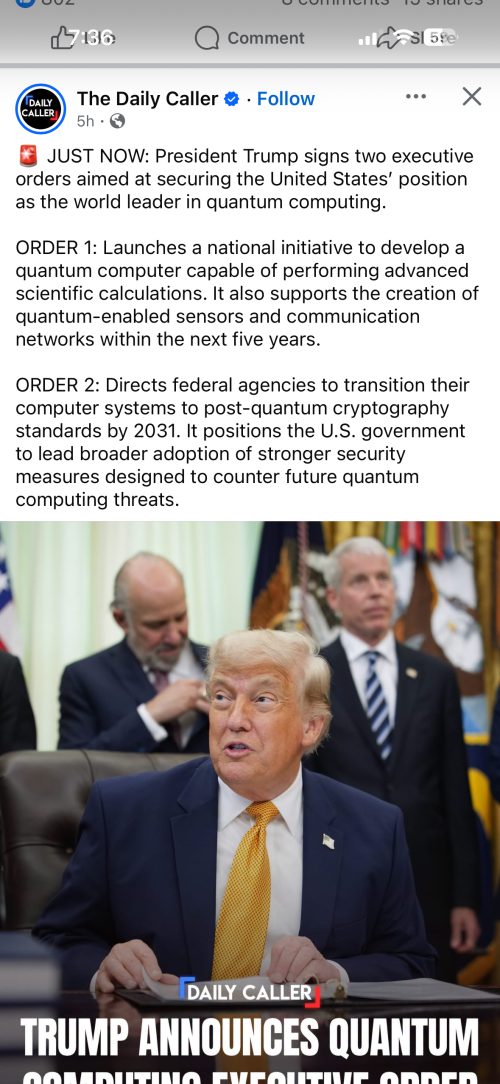
I wouldn't mind a few more days like today! A nice sale on everything would be great.Lookin red today, ALL red!


Wes Mantooth
Well-known member
I am just pissed I didn't act on the GLP-1 options with Eli, Novo, etc. a few years ago.
Jack Ryan
Well-known member
Sold out a pile of PSI and bought it back a dollar cheaper today.

Foxtrot1
Well-known member
Anyone looking at Kratos Defense?


Jack Ryan
Well-known member
PSI up about 6% today.
Bonasababy
Well-known member
- Joined
- May 16, 2024
- Messages
- 2,077
How does the SECs plan to end the requirement for quarterly reporting strike folks?
Advocates for personal investors are alarmed. Their claims of it being easier to hide trouble ring true to me, as does their claims that the wealthy have resources to keep aware of issues that the average investor doesnt.
The libertarian Cato Institute has said that Trump and his SEC appointed leaders rationale for the change doesnt hold water.
Advocates for personal investors are alarmed. Their claims of it being easier to hide trouble ring true to me, as does their claims that the wealthy have resources to keep aware of issues that the average investor doesnt.
The libertarian Cato Institute has said that Trump and his SEC appointed leaders rationale for the change doesnt hold water.

BigHornRam
Well-known member
I would be more concerned about the impact on the stock market if the communist successfully implement a wealth tax.How does the SECs plan to end the requirement for quarterly reporting strike folks?
Advocates for personal investors are alarmed. Their claims of it being easier to hide trouble ring true to me, as does their claims that the wealthy have resources to keep aware of issues that the average investor doesnt.
The libertarian Cato Institute has said that Trump and his SEC appointed leaders rationale for the change doesnt hold water.
jryoung
Well-known member
How does the SECs plan to end the requirement for quarterly reporting strike folks?
Advocates for personal investors are alarmed. Their claims of it being easier to hide trouble ring true to me, as does their claims that the wealthy have resources to keep aware of issues that the average investor doesnt.
The libertarian Cato Institute has said that Trump and his SEC appointed leaders rationale for the change doesnt hold water.
Having been responsible for SEC reporting as a consultant and auditor at PWC, and in charge of domestic reporting and compliance for a publically traded company I certainly have some concerns. Quarterly reporting though always had a heavy lean towards guidance (which drives stock prices). On the audit side most of the work on a monthly and quarterly basis was still with the focus towards year end, but we still had to pause once the books were closed and get the filings ready. I could see where that would be beneficial to allow the teams to continue to focus on the books instead of pausing to work on reporting. I would imagine most companies will still have quarterly metrics, KPIs etc. etc.
The voluntary notion of the reporting frequency is interesting, I'm curious to see which companies and industries prefer to mainain the current quarterly requirement and those that opt out.
I'm anxious to see how analysts adjust. They still need industry data to be able to report, how to they maintain trust and accuracy?
Time to have some beers with my accounting and analyst friends to see what their thoughts are.
Last edited:
SAJ-99
Well-known member
It would be interesting to see what they say. I tilt toward it being part of the Accountant Full Employment rules.Having been responsible for SEC reporting as a consultant and auditor at PWC, and in charge of domestic reporting and compliance for a publically traded company I certainly have some concerns. Quarterly reporting though always had a heavy lean towards guidance (which drives stock prices). On the audit side most of the work on a monthly and quarterly basis was still with the focus towards year end, but we still had to pause once the books were closed and get the filings ready. I could see where that would be beneficial to allow the teams to continue to focus on the books instead of pausing to work on reporting. I would imagine most companies will still have quarterly metrics, KPIs etc. etc.
The voluntary notion of the reporting frequency is interesting, I'm curious to see which companies and industries prefer to mainain the current quarterly requirement and those that opt out.
I'm anxious to see how analysts adjust. They still need industry data to be able to report, how to they maintain trust and accuracy?
Time to have some beers with my accounting and analyst friends to see what their thoughts are.
A couple of things to mull over. Guidance is not a requirement. Many companies have gone away from giving it, but the rest of the them still have people working on some stupid financial model to provide a number that CEO doesn't like and he just makes up a number instead. But I digress. (sorry, flashback on that one...).
The talk of less frequent reporting has been bounced around for a long time. Sometimes the argument was "less work for people and cheaper", which no one really bought. I don't think it applies here much either. With today's technology, it should be pretty easy for a greenhorn accountant with minimal training to throw out a 10Q on the SEC website. There is also no law requiring a quarterly conference call, so they can stop doing them.
I mostly just roll my eyes at this. Like I said, it has come up over the last 25 yrs. In the past, the main argument has been investors should be focused on the long term, so quarterly earnings are unnecessary and lead to stock price volatility. The argument is you can reduce the share price volatility if you take away what causes it. What this argument ceases to understand is that the market NEEDS volatility. Every buyer needs a seller. It is as much an input as it is a measurable result. If you take away earnings reports, investors/traders will focus on something else to determine if they should buy or sell. Warsh is going to learn the same thing with Fed communication and interest rate volatility. Add to that, the current environment requires CEO's to be sales people - sell the narrative. Can't do that without a qtly call.How does the SECs plan to end the requirement for quarterly reporting strike folks?
Advocates for personal investors are alarmed. Their claims of it being easier to hide trouble ring true to me, as does their claims that the wealthy have resources to keep aware of issues that the average investor doesnt.
The libertarian Cato Institute has said that Trump and his SEC appointed leaders rationale for the change doesnt hold water.
There has always been a political tilt to the arguments. Rep want to help companies reduce cost, Dems argue that investors need more information. I don't think most investors have ever cracked a 10Q and most advisors haven't either. Both groups trade on inside information so they don't care much about investors or transparency.

Nameless Range
Well-known member
Every morning I read Tyler Cowen's blog, Marginal Revolution. I am not a libertarian, but I do value the philosophy as an anchor to tether one's belief's to - with varying lengths of rope.
Anyway, the other day he shared this post. I don't mean to be political, as corruption knows no partisan boundaries, but it's tough not the feel like we live in an age of massive political and market corruption, and any market-related EO Trump concocts (or signs for someone else) is likely a furtherance of the current moral decline of our government.
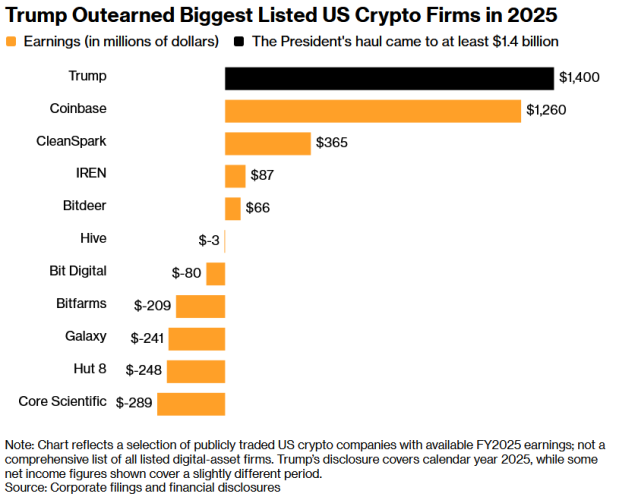
Anyway, the other day he shared this post. I don't mean to be political, as corruption knows no partisan boundaries, but it's tough not the feel like we live in an age of massive political and market corruption, and any market-related EO Trump concocts (or signs for someone else) is likely a furtherance of the current moral decline of our government.
Similar threads
- Replies
- 19
- Views
- 918


- Replies
- 48
- Views
- 4K


- Replies
- 28
- Views
- 2K

- Replies
- 41
- Views
- 8K