Correct Gerald. In reflection, probably shouldn't give a shit. At the time, it irritated me. mtmuleyAm I correct in understanding that your negative experience is connected to seeking hunting access on one of their properties and they did not allow access to that particular property at that time?



Navigation
Install the app
How to install the app on iOS
Follow along with the video below to see how to install our site as a web app on your home screen.
Note: This feature may not be available in some browsers.
More options

You are using an out of date browser. It may not display this or other websites correctly.
You should upgrade or use an alternative browser.
You should upgrade or use an alternative browser.
American prairie. What's the issue?
- Thread starter hossblur
- Start date
Buzz, I've never hunted AP and do not plan to. Lots of country out there. mtmuleyBe sure to report back when you find your evidence of 900 bison over grazing 600,000 acres of tall grass prairie to the detriment of the Missouri Breaks elk herds the next time you're hunting for free on AP property.
BuzzH
Well-known member
Good, then you can stop complaining about them.Buzz, I've never hunted AP and do not plan to. Lots of country out there. mtmuley
I'm planning on hunting plenty more on their awesome properties.
Not complaining really. If I have deeper questions you will get a pm. Like with the sheep stuff. Have a good Sunday. mtmuleyGood, then you can stop complaining about them.

Gerald Martin
Well-known member
- Joined
- Jul 3, 2009
- Messages
- 9,713
Correct Gerald. In reflection, probably shouldn't give a shit. At the time, it irritated me. mtmuley
I get it that it could be irritating to have a special permit and be denied access to a desired property. What I don’t understand is how that a private landowner’s reason for allowing or denying access is an issue? I see tons of private property where the owners allow some folks and not others, at some time and not at another time. Access to private property is always at the discretion of the landowner.
One very important thing I did not realize about AP until Randy did that podcast with one of their representatives is that AP still allows public access across their private property to access adjacent public land even if they aren’t giving permission or only limited permission to hunt their deeded land on that specific property. That’s huge.
BuzzH
Well-known member
Why my family and I are financial donors to AP. Very few landowners offer that kind of access.One very important thing I did not realize about AP until Randy did that podcast with one of their representatives is that AP still allows public access across their private property to access adjacent public land even if they aren’t giving permission or only limited permission to hunt their deeded land on that specific property. That’s huge.
Good stuff. Thanks. mtmuleyI get it that it could be irritating to have a special permit and be denied access to a desired property. What I don’t understand is how that a private landowner’s reason for allowing or denying access is an issue? I see tons of private property where the owners allow some folks and not others, at some time and not at another time. Access to private property is always at the discretion of the landowner.
One very important thing I did not realize about AP until Randy did that podcast with one of their representatives is that AP still allows public access across their private property to access adjacent public land even if they aren’t giving permission or only limited permission to hunt their deeded land on that specific property. That’s huge.
Nunjagottam
Well-known member
- Joined
- Dec 27, 2025
- Messages
- 98
The unchallenged consensus regarding range land in MT, is that cattle ranching saved the frontier from undergrazing. Cattle were sent by the Creator to fulfill the destiny of the uninhabited west. Cattle and the men who run them are God's chosen model of stuardship. All other creatures are vermin, dissent is heresy.

Irrelevant
Well-known member
Stayed in the AP cabin at the confluence with the Judith a few years back while deer hunting the area. I can't believe when I read they had a griz roll through there recently. Just never a landscape that my feeble brain could see a silver-tipped bruin inhabiting, even if I've read about plenty of historical accounts.
OlWhitcombPlace
Active member
- Joined
- Oct 3, 2022
- Messages
- 14
I have lead much of the research work for Smithsonian on the AP landscape since 2018. If someone wants to put questions together, I'll answer them. -andy
SAJ-99
Well-known member
Thanks for posting. Organizing is not the strength of HT or the internet in general, but I came up with few. If there are written studies you can point us there too. Some of us love this stuff.I have lead much of the research work for Smithsonian on the AP landscape since 2018. If someone wants to put questions together, I'll answer them. -andy
What is your biggest challenge on the landscape?
What have been the biggest positive surprises?
Any wolves discover the place yet? Grizzly bears?
What would you want the average citizen (mostly hunters here on HT) to know about the landscape that they might be surprised by?

Gulf of America
Well-known member
Stayed in the AP cabin at the confluence with the Judith a few years back while deer hunting the area. I can't believe when I read they had a griz roll through there recently. Just never a landscape that my feeble brain could see a silver-tipped bruin inhabiting, even if I've read about plenty of historical accounts.
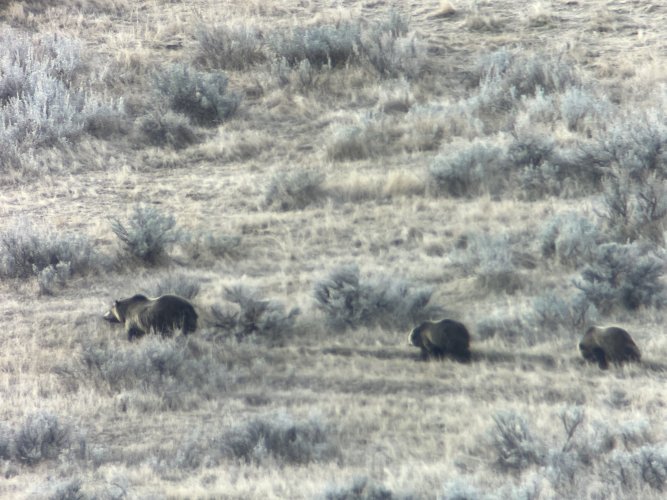
This was across the creek on the west end of that same property in fall 2024. Definitely not just a wandering boar out there.
corndog1
Well-known member
Why do cattle ranchers need additional land for their cattle herd?Why does APR need additional land for their bison herd? mtmuley

Schaaf
Well-known member
Helped pack a 12 year old bull off AP land a few weeks ago for a bright eyed 14 year old.
Good neighbors in my opinion and I look forward to this being retracted in the courts in the coming weeks.
Good neighbors in my opinion and I look forward to this being retracted in the courts in the coming weeks.
marshman
Well-known member
I hunted APR property near Malta fall of 2022. The land was in great condition, I saw lot's of game (including Buffalo), and the people managing the property were awesome to deal with.
As a public land hunter what more could a guy ask for?
As a public land hunter what more could a guy ask for?
OlWhitcombPlace
Active member
- Joined
- Oct 3, 2022
- Messages
- 14
What is your biggest challenge on the landscape?Thanks for posting. Organizing is not the strength of HT or the internet in general, but I came up with few. If there are written studies you can point us there too. Some of us love this stuff.
What is your biggest challenge on the landscape?
What have been the biggest positive surprises?
Any wolves discover the place yet? Grizzly bears?
What would you want the average citizen (mostly hunters here on HT) to know about the landscape that they might be surprised by?
2-fold I guess; 1) It's really difficult to answer the questions many folks are interested in (e.g. what would a large bison herd with tons of space mean for a Great Plains grassland ecosystem?) because politics and logistics make it impossible to test. 2) It's really difficult to undertake big collaborative research/conservation projects because everyone is terrified to be seen working together with "the other side". Many conservation groups won't publicly work with anyone who is seen to be working with AP...etc. This is actually improving quickly but has been a longstanding issue.
What have been the biggest positive surprises?
The things preventing biodiversity and economic productivity from co-existing are not intractable, they're mainly driven by social/political inertia and fear of change, which are things we can all change and improve over time, many producers already are.
Any wolves discover the place yet? Grizzly bears?
There are absolutely Grizzly Bears regularly spending time in the Judith Landing area/western edge of the monument, probably denning. Also in the Bear's Paw Mts and at least occasionally in the N. Moccasins. Lots of rumors about animals in the CMR but I've not seen anything conclusive. As for wolves, transient young animals only as far as I know. Usually in winter and usually end up dead pretty quick.
What would you want the average citizen (mostly hunters here on HT) to know about the landscape that they might be surprised by?
The grassland ecosystem in that area is a crowned jewel globally. There are simply not many big tracts of mostly untilled temperate grassland left on earth. Comparable to Mongolian/Kazakh steppes. This area should be viewed with the reverence we have for the Bob Marshall/Glacier region, or the Everglades, or the Amazon. At the same time, this system has been altered so much and so fast since western expansion, we really need to try to remember what this landscape supported in terms of wildlife before 1800. We're not going back there, but as conservationists, we can certainly push to maximize the biodiversity of that landscape within the economic constraints of the ranching industry. Finally -- for the beef eaters. Choosing what sort of beef you eat is the difference between supporting a business that is stewarding a healthy and unique ecosystem while making a good living, and one that is responsible for some of the most ecologically destructive actions of any industry on earth. Get to know your rancher, choose wisely.
Thank you. mtmuleyWhat is your biggest challenge on the landscape?
2-fold I guess; 1) It's really difficult to answer the questions many folks are interested in (e.g. what would a large bison herd with tons of space mean for a Great Plains grassland ecosystem?) because politics and logistics make it impossible to test. 2) It's really difficult to undertake big collaborative research/conservation projects because everyone is terrified to be seen working together with "the other side". Many conservation groups won't publicly work with anyone who is seen to be working with AP...etc. This is actually improving quickly but has been a longstanding issue.
What have been the biggest positive surprises?
The things preventing biodiversity and economic productivity from co-existing are not intractable, they're mainly driven by social/political inertia and fear of change, which are things we can all change and improve over time, many producers already are.
Any wolves discover the place yet? Grizzly bears?
There are absolutely Grizzly Bears regularly spending time in the Judith Landing area/western edge of the monument, probably denning. Also in the Bear's Paw Mts and at least occasionally in the N. Moccasins. Lots of rumors about animals in the CMR but I've not seen anything conclusive. As for wolves, transient young animals only as far as I know. Usually in winter and usually end up dead pretty quick.
What would you want the average citizen (mostly hunters here on HT) to know about the landscape that they might be surprised by?
The grassland ecosystem in that area is a crowned jewel globally. There are simply not many big tracts of mostly untilled temperate grassland left on earth. Comparable to Mongolian/Kazakh steppes. This area should be viewed with the reverence we have for the Bob Marshall/Glacier region, or the Everglades, or the Amazon. At the same time, this system has been altered so much and so fast since western expansion, we really need to try to remember what this landscape supported in terms of wildlife before 1800. We're not going back there, but as conservationists, we can certainly push to maximize the biodiversity of that landscape within the economic constraints of the ranching industry. Finally -- for the beef eaters. Choosing what sort of beef you eat is the difference between supporting a business that is stewarding a healthy and unique ecosystem while making a good living, and one that is responsible for some of the most ecologically destructive actions of any industry on earth. Get to know your rancher, choose wisely.
OlWhitcombPlace
Active member
- Joined
- Oct 3, 2022
- Messages
- 14
One more thing people should know -- Bison aren't magic. They're different from cows in some important ways, they aren't nearly as tied to water as cattle and they have a stronger preference for grass. Together these things mean they have much less of a negative impact on wet areas (important for deer, sage grouse...etc) than cattle tend to. *BUT* those differences can only really show up when they have a lot of space and are stocked at a reasonable density. If you put a bunch of Bison in a tiny pasture, or let them get way overstocked (we've seen this occasionally in Yellowstone), they can certainly have the same negative impacts on ecosystem health that cows do. To get the benefits you have to a) let Bison be Bison and b) manage their density with predators, hunters, or capture/transfer. On the other side of this coin, cows don't have to be a major biodiversity negative. You can build out watering structures away from streams and rivers to prevent damage, and even combine that with virtual fencing around sensitive areas. Cows don't poison prairie-dogs on their own, or go over-the-top with predator killing. Done right, a ranching operation in the Northern Great Plains can be a massive positive for grassland conservation.What is your biggest challenge on the landscape?
2-fold I guess; 1) It's really difficult to answer the questions many folks are interested in (e.g. what would a large bison herd with tons of space mean for a Great Plains grassland ecosystem?) because politics and logistics make it impossible to test. 2) It's really difficult to undertake big collaborative research/conservation projects because everyone is terrified to be seen working together with "the other side". Many conservation groups won't publicly work with anyone who is seen to be working with AP...etc. This is actually improving quickly but has been a longstanding issue.
What have been the biggest positive surprises?
The things preventing biodiversity and economic productivity from co-existing are not intractable, they're mainly driven by social/political inertia and fear of change, which are things we can all change and improve over time, many producers already are.
Any wolves discover the place yet? Grizzly bears?
There are absolutely Grizzly Bears regularly spending time in the Judith Landing area/western edge of the monument, probably denning. Also in the Bear's Paw Mts and at least occasionally in the N. Moccasins. Lots of rumors about animals in the CMR but I've not seen anything conclusive. As for wolves, transient young animals only as far as I know. Usually in winter and usually end up dead pretty quick.
What would you want the average citizen (mostly hunters here on HT) to know about the landscape that they might be surprised by?
The grassland ecosystem in that area is a crowned jewel globally. There are simply not many big tracts of mostly untilled temperate grassland left on earth. Comparable to Mongolian/Kazakh steppes. This area should be viewed with the reverence we have for the Bob Marshall/Glacier region, or the Everglades, or the Amazon. At the same time, this system has been altered so much and so fast since western expansion, we really need to try to remember what this landscape supported in terms of wildlife before 1800. We're not going back there, but as conservationists, we can certainly push to maximize the biodiversity of that landscape within the economic constraints of the ranching industry. Finally -- for the beef eaters. Choosing what sort of beef you eat is the difference between supporting a business that is stewarding a healthy and unique ecosystem while making a good living, and one that is responsible for some of the most ecologically destructive actions of any industry on earth. Get to know your rancher, choose wisely.
This is the kind of firsthand info I have wanted to hear. mtmuleyOne more thing people should know -- Bison aren't magic. They're different from cows in some important ways, they aren't nearly as tied to water as cattle and they have a stronger preference for grass. Together these things mean they have much less of a negative impact on wet areas (important for deer, sage grouse...etc) than cattle tend to. *BUT* those differences can only really show up when they have a lot of space and are stocked at a reasonable density. If you put a bunch of Bison in a tiny pasture, or let them get way overstocked (we've seen this occasionally in Yellowstone), they can certainly have the same negative impacts on ecosystem health that cows do. To get the benefits you have to a) let Bison be Bison and b) manage their density with predators, hunters, or capture/transfer. On the other side of this coin, cows don't have to be a major biodiversity negative. You can build out watering structures away from streams and rivers to prevent damage, and even combine that with virtual fencing around sensitive areas. Cows don't poison prairie-dogs on their own, or go over-the-top with predator killing. Done right, a ranching operation in the Northern Great Plains can be a massive positive for grassland conservation.

Straight Arrow
Well-known member
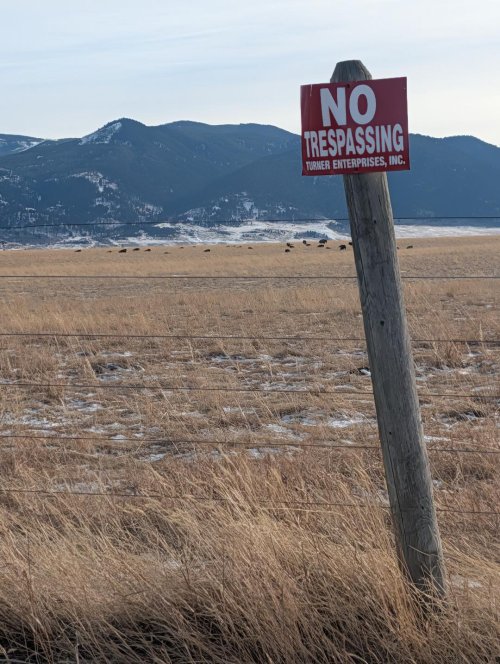
As long as bison have ample space and good grass, a good six round wire wildlife friendly fence has proven to work well.
Similar threads

- Replies
- 12
- Views
- 4K