Reading//listening/watching the current struggle for equality unfold I am struck by the similarities between our current conversations and those that occurred during the civil rights movement of the 60-70s.
Obviously I wasn't even born, my mom was just a kid.
In ~1963 the BBC did a bunch of profiles of American families in a series called "Inside America", one of the families was my moms. My grandfather was a Presbyterian minister and my grand mother was a professor of anthropology in Little Rock, AR, the episode gave a snap shot into their lives.
In this clip from the episode my grand father, at the head of the table, is discussing civil rights protesting/activities with other local ministers.
Essentially he says he feels that if he got actively involved he would lose members of his congregation and therefore wouldn't be able to have as great an ability to effect change.
He questioned how fast we (1960 America should move).
I imagine, that
@Big Fin, the meateater crew, as well as other members of our hunting community have faced similar dilemmas. Do I step up, if I say something will I lose followers/fans/etc, is it better to just try and do an episode with a black person on my show or something like that, what is my roll/responsibility. How do I balance doing the right thing with the backlash.
In 1965, after this episode aired, DCVL, SCLC, and SNCC marched from Selma to Montgomery. The first march on March 7th, aka Bloody Sunday was met egregious acts of violence by police.
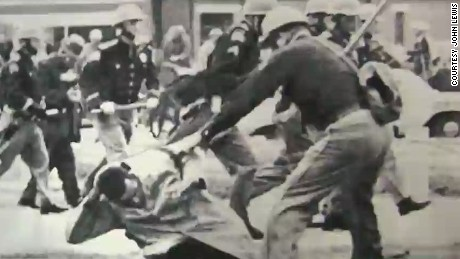
Galvanized by the police brutality, my grandfather along with clergy and activist rushed across the county to join Dr. King and the other protesters. There was a second march on March 9th, that my grandfather participated in. That evening James Reeb a minister from Boston who had come to join march was murdered by white supremacists.
I talked to my grandfather about this protest, and he said he was scared shit-less.
My grandfather had been a very conservative christian growing up. He enlisted in the Navy in WWII and was on a "missile boat" essentially the small littoral craft that raked the beach at close range right before an amphibious assault. He was at pretty much all of the big landings including Okinawa.
When he entered the Navy he was so straight laced he didn't get off the boat during liberty in Hawaii, preferring to stay on the boat and read the bible. The war greatly influence his perspective, he came home went to seminary, and became (for the time) a very liberal minister in the south (with regard to race and biblical interpretation literal versus metaphoric interpretation of some of the scriptures).
After he went to Selma, he started actively preaching about civil rights and playing a more active roll in the movement.
He lost congregation members, though not as many as he thought he would. In many ways his example made members of his church feel empowered to have discussions and express their views.
He never regretted his decision.
---------------------------------------
Despite being an active participant in the movement, and fighting for civil rights, (and having a wife that worked full time) he totally was a product of his era and had all kinds of biases with regard to race/gender.
---------------------------------------
Ruminating on this I wonder if I personally should be doing something more.





www.psychologytoday.com
 www.forbes.com


 )
)