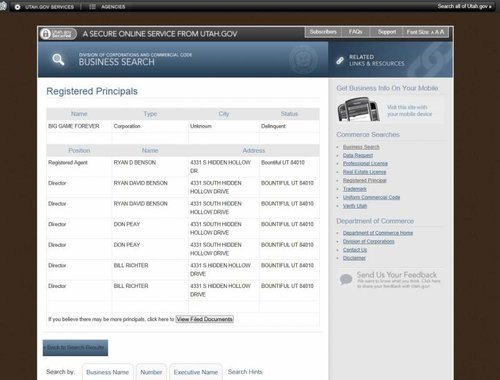
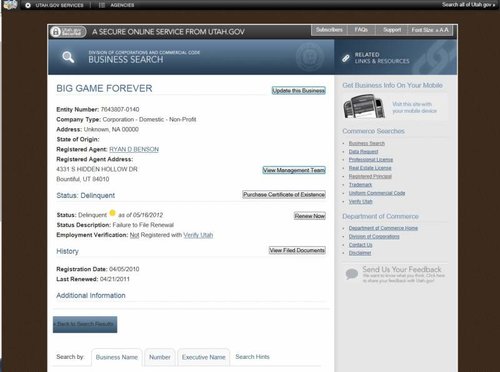
I didn't realize that everyone was only concerned with convention permits??

Maybe the Director hears what he wants to hear. I read those releases to understand that RMEF was concerned about a few things.
1. Transparency and accountability of non-profit groups receiving benefit via public assets, auction or raffle tags.
2. Non-profit groups becoming financially dependent upon public assets, such as auction and raffle tags.
3. Proliferation of auction and raffle tags in places they currently exist and establishment of such programs where they currently do not exist.
I am still at a loss as to why the Director felt inclined to respond to this release to start with. And, why he felt he had to run his letter by the SFW crowd so they could feel "blessed" (SFW's terminology) to read it.
The principles above still stand, regardless of what the Director thinks.
Another thing that is hard to measure, but is an unfavorable by-product of increased popularity of the auction system, is the damage it does to the NA Model tenet of democratic allocation of wildlife opportunity.
No one can deny that when these programs grow as they have in some states, there becomes a feeling of unfairness among the rank and file hunters, as they donate their time to conservation, but lacking the funds to play the auction game, they have to stand on the sidelines and watch as the same small group of well-healed hunters and their outfitters buy their way to the front of the line. Year after year, this same small group of auction buyers go hunt the best the west has to offer, while the volunteers who put time and energy into the conservation projects, the fund raisers, the politics, have to wait ten years, twenty years, a lifetime to draw the same tag.
Though some may have done so, I suspect a small percentage of the auction tag buyers have been a committee volunteer, probably few have spent much time on habitat projects, most are probably too busy to attend a legislative or wildlife hearing. Yet, the hunter who has done all of those things, gets nothing for it, other than satisfaction. Is that hunter's time, labor, and activism not as valuable as the money some of pay for auction tags?
That is the sticky point of expanding auction tag numbers that the Director, and a few of the tag selling groups, completely miss. Is it OK to increase those auction tags to the point where hardly anyone can objectively say we are in compliance with the NA Model of fair allocation of our hunting opportunity?
Amazing how some states and some groups can complete their conservation work without the need for stacks and stacks of auction tags. Amazing how some groups have no problem providing complete accountability for their use of publicly-derived funds.
Personally, I have a problem with lots of auction tags, whether there is transparency, or not. Fewer is better. And yes, I can easily make a case for a few auction tags of each species in each state. Maybe I am just old school. Maybe I am too hung up on the principles that brought about this conservation recovery we enjoy today.
Not everyone, whose time and commitment has done a ton of benefit for hunting and conservation, is financially as blessed as some of us who are able to hunt anywhere and everywhere. Yet, that person might have done more for our cause; for the future or youth hunters; or to change a political tide against us, than a check coming from those of us fortunate enough to have resources to write it.
All the money in the west is not going to improve public land hunting if we continue toward a point where the conservation volunteer and the hunter-activist feel like some piece of cold left-overs from the King's dinner. Hopefully we never arrive at a destination where the volunteers and activists feel that way.






 . Remember only you can help save the earth by preserving sound healthy habitat that will help maintain grass hopper genitic diversity and ultimatly save the planet. Donate now. And I'll even be transparent with my funds if it will make you want to give me more pie.