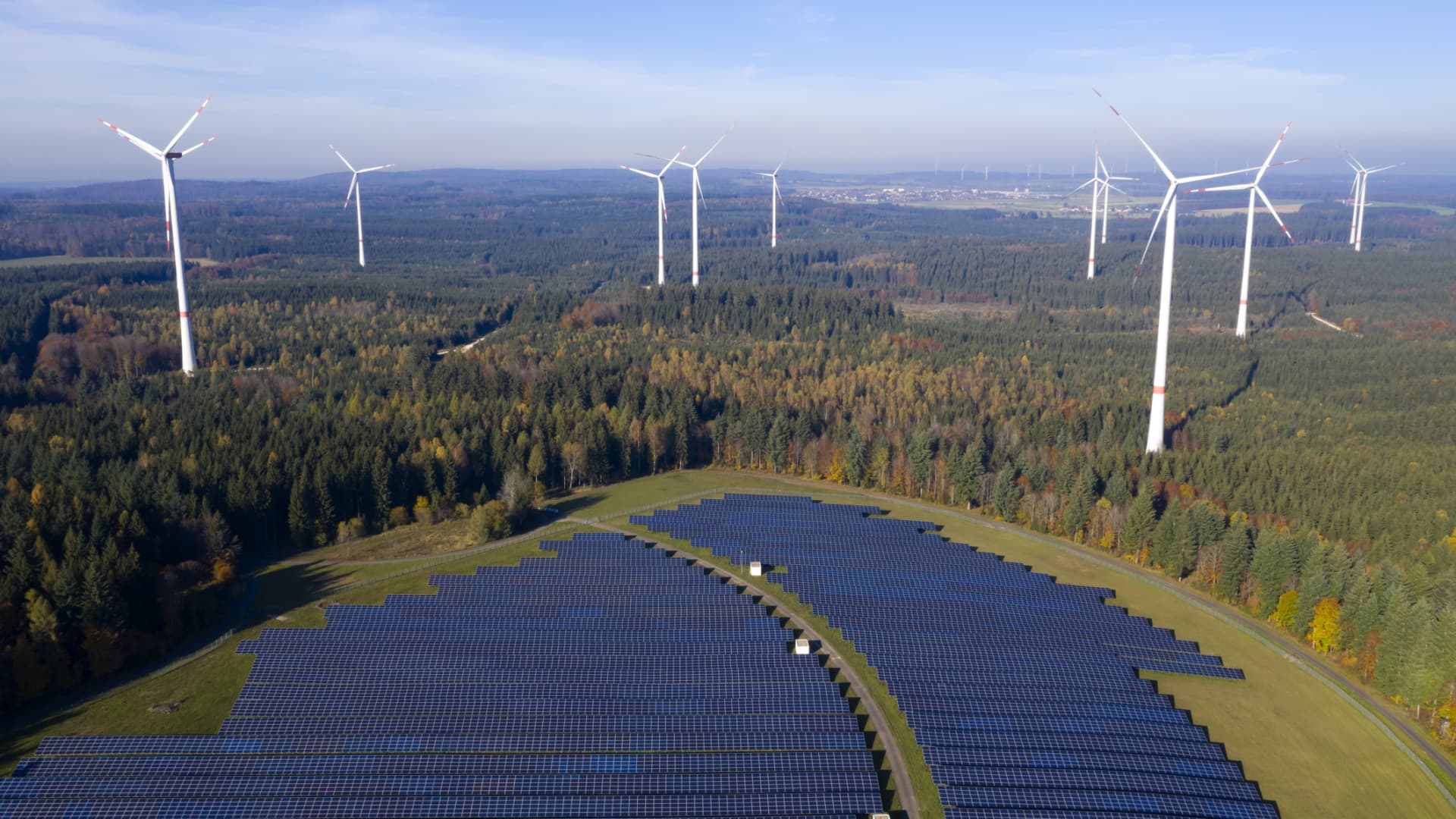
One of the general rules of the electrical grid is the order of priorities - reliability, cost, efficiency. If you start screwing with the order, things get squirrely really fast.
I agree wholeheartedly that it would be nice to have solar in place where development has already occurred but there are a lot of challenges that haven't yet been overcome with doing so. I don't think most folks understand how the grid works. It basically needs to generate what the demanded load is or you get blackouts. Existing distribution (not transmission) networks were not designed to have a bunch of additional uncontrolled solar generators backfeeding the grid. I know this became a real problem for the grid in some places like hawaii. Utility scale solar projects need to be compliant with stringent physical and digital security requirements of NERC. I'm not sure how that works when the entirety of your generation is easily accessed in thousands of little spots.
It's a hell of a lot more economical to set and wire up a million panels in one spot in an open area all going to one substation than to have hundreds or thousands of little installments, each with their own grid interface. I can't fathom how that it would even work without completely redoing how our grid operates.
I have been working in utility scale renewables since 2010.
@Wind Gypsy is spot on here - electricity is generated somewhere on the grid the instant you use it. The amount of storage we have on the grid is currently vanishingly small, and while a bit more is probably a good idea, it's nowhere near feasible to provide substantial backup. Both from an economic perspective - and a technical perspective, it's a huge amount of batteries. Secondly any of these small electrical generators will discover - they serve at the "pleasure of the King," they'll either take the deal the grid offers, or they won't run. Residential solar generators are generally installed on the basis of "net metering" where you run the meter backwards and forward depending on which way the electricity is going - but this is fundamentally predicated on the idea that the grid is a free service/storage system for you. Eventually as the number of residential installs increased the grid operators, who have to pay to maintain the grid, have decided they weren't going to do that anymore - and they changed the deal. This happens to everyone, even GW generators, and that means energy costs more.
$.24 v $.54
But it's more complicated than that as it's tiered. The calculator that my install company ran for me was a pay off of my out of pocket in roughly 12 months or so. In a typical month it will knock between $250-300 off my electric bill utilizing ~810kwh of capacity (27kwh x 30 days).
This has classically been a fundamental problem of "advances in energy" - they only really pencil out as economical when the price of energy is absurdly high. California provides a good example of screwing with the power supply priorities, once you start saying we're prioritizing efficiency (or low carbon, or magic pixie fairy dust) the cost goes up, and push on it enough and the reliability suffers. Rolling blackouts in California are common, not because of renewables per-se, but by prioritizing renewables to the level that it makes it uneconomical to run other power generation, and making permitting for new transmission lines impossible to get - means you're going to have reliability problems. They try lots of "economic incentives" to solve the problem, and while they help, they artificially distort the actual market, which causes long term problems. A good example is the "Energiewende" where Germany decided they were going to go really green, and then energy got way more expensive, and while they installed a ton of wind/solar, because they made it uneconomic to run clean things (like nukes) they ended up with higher carbon emissions because they ended up needing to run some really awful coal plants to balance the whole thing.
Buzz word for the day. "Mineral security"
With demand only set to increase, there will be a number of hurdles to overcome.

www.cnbc.com
You will absolutely hear more about this - it's only spooling up now but it's going to get nasty. Historically, wars get fought over energy and vital materials, it's only a matter of time. Right now, we're just propping up warlord dictators and child slaves, it's not pretty - but it'll get worse.