

Frank Church Wilderness to allow chain saws......

once you start it's hard to put the motor back in the bottle.
Exactly. If the trails haven't been cleared for 10 years, I am probably more open to chainsaws to do it. But it will still have to be cleared every year and that should revert back to manual saws. All this requires money and there isn't any of that, except for the ballroom. So it will be the outfitters that do it and they had a part in letting it get to this condition. (I have been on an outfitted wilderness hunt and the outfitter had to clear those trails every year with a cross cut, and they did.)

To the point of the article in the OP, Idaho outfitters have long wanted to use chain saws in the wilderness. Now they get to. My view is be careful what you wish for. Next up will be an automated walkway.
 
In 1960 full time FS employees numbered around 13,000, from what I could find. Then in 1964 Congress enacts the Wilderness Act. A reasonable person would assume this would require an increase in FS headcount given that maintenance within Wilderness areas would require more people to accomplish the same work. Appears now the FS headcount is around 30,000. All while FS total land acreage has remained relatively stable. Once again from what I could find. I would assume at least some of the 17,000 person increase would be folks to handle maintenance. Wondering if anyone with better knowledge knows where the headcount increases have been allocated.
 
Exactly. If the trails haven't been cleared for 10 years, I am probably more open to chainsaws to do it. But it will still have to be cleared every year and that should revert back to manual saws. All this requires money and there isn't any of that, except for the ballroom. So it will be the outfitters that do it and they had a part in letting it get to this condition. (I have been on an outfitted wilderness hunt and the outfitter had to clear those trails every year with a cross cut, and they did.)

To the point of the article in the OP, Idaho outfitters have long wanted to use chain saws in the wilderness. Now they get to. My view is be careful what you wish for. Next up will be an automated walkway.

There will always be those who seek to push the boundaries of what is acceptable and prudent. That's entirely why I'm grateful guys like Buzz are around to remind us what happens when accommodation turns into entitlement.

There should always be strong resistance to allowing motors in wilderness. If it's an emergency, prove it.
 
I would also add both land management agencies have added a lot of positions above the field level. My experience with these GS 13 and above positions is they enjoy the $$$ but push the responsibility back down to field level employees. I haven't seen a lot of productive value from most of them.
 
If the budgets had not been slashed for my entire 39 year career, and we hadn't been asked to do more with less the whole time, I would be more sympathetic to your point of view.

But, as you so clearly pointed out, there's been a lack of budget and associated crews to deal with maintenance for decades. Now, because the final wheel fell off the bus, we get to change the rules to accommodate congress's lack of giving a shit about the FS budget and management of our/MY public lands.

Tough, start appropriating a budget, start hiring, and start taking care of public lands without taking a giant dump on the Wilderness Act.
Correct, this is the camel's nose under the tent to erode the wilderness act's non-mechanized rule. Staffing and budget cuts pave the way.
 
All 17,000? Assume fire crews also have maintenance responsibilities at times or are Fire personnel always working on fires?
Alot of fire staff is seasonal or career seasonal. I saw a lot of PT done, lawn mowing and Pulaski sharpening.

I have no idea what the permanent staff is supposed to do on a day to day basis outside of fire season. What I've observed is alot of walking around with a coffee cup in hand. Depending on the office they try to get out and prescribe burn as much as they can. Years like this that's not a lot because of the hot, dry, windy conditions.
 
I don't think there is an emergency in our wilderness. The emergency is the policy and the people outside the wilderness eroding the intent of keeping our last few wild places wild.
 
Here in Southern Oregon, we have a wilderness area called the Kalimopsis Wilderness. The entire wilderness area burned in, I think, 2003 and since it is near the coast it gets lots of rain which makes the brush grows back real fast. Which, along with falling snags, makes trail maintenance a real nightmare. There was never a real high volume of hikers anyway, so the forest Service just gave up on the idea of maintaining the trails. A group of hikers got tired of bitching about the crappy overgrown trails and decided to do something about it. They formed a non-profit to raise money to clear the trails. They put together a crew each year and all the logistics are handled by the non-profit. All the forest service has to do is decide which trails they want maintained each year and make sure all the rules and regulations are adhered to. I don't know how sustainable this system is, but it has been going strong for better than 15 years now.
While I applaud the effort, the principle of this is for the Fed to abdicate responsibility for aspects of government this administration wants to end. Budgets reflect not only financial oscillations, they display values and are political tools to promote those values. The clear intent here is to devalue public lands to the extent that they aren't worth keeping, GOP policy for 20 years before it's latest iteration in Project 2025, which surreptitiously replaced previous statements of GOP national policy platforms. Those went away because they were much too honest in communicating the motives of the Party, in this case to eliminate federal public lands.
 
So it will be the outfitters that do it and they had a part in letting it get to this condition. (I have been on an outfitted wilderness hunt and the outfitter had to clear those trails every year with a cross cut, and they did.)
How much does a license to operate in a Wilderness area cost an outfitter? Maybe if they can show they have cleared X amount of trail this year the fee can be waived? Cleared trails affects them more than it does most other people, they should have more skin in the game than most people.
 
How much does a license to operate in a Wilderness area cost an outfitter? Maybe if they can show they have cleared X amount of trail this year the fee can be waived? Cleared trails affects them more than it does most other people, they should have more skin in the game than most people.

That's the cost of doing business. Waving a fee for maintaining access to their operation is absurd. They do clear a lot of trails. Some of the best maintained trails are unofficial and we're built by the outfitter to specifically benefit them, not the general public.
 
All 17,000? Assume fire crews also have maintenance responsibilities at times or are Fire personnel always working on fires?
Ask anyone in fire if its a seasonal job due to climate change these days. Fires in November and December on the front range in CO for instance aren't the uncommon event they used to be.

Also, with all their spare time, there are fuel reduction projects in the urban/wildland interface that are done by fire crews. Of course training is non-stop as well with high turn over. Writing prescriptions and trying to do prescribed burning.

I have no idea how many FS fire fighters there were in 1964, but today its 11,000+ so there's a bulk of your 17,000. Even at those numbers it's not close to what is needed and those numbers also do not include militia.
 
Last edited:
I'm assuming by hand tools you mean non-motorized stuff. But is this accurate, where all the trails in FC built and maintained prior to 1980 without the use of a chainsaw? FC became Wilderness in 1980.
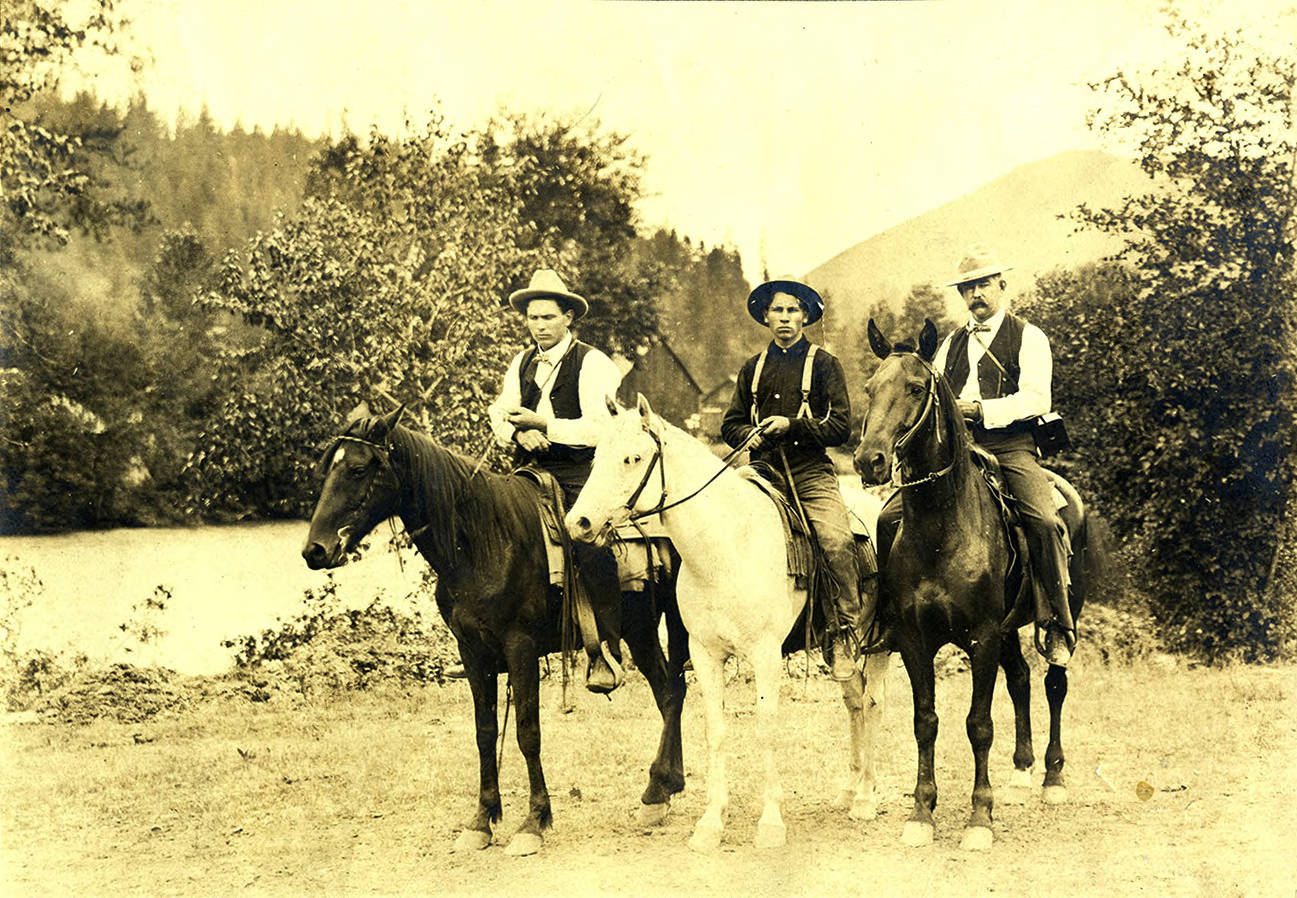
The Three-Blaze into Chamberlain basin was paid for by miners, prospectors, and businessmen in the 1890s and early 1900s. It describes that the trail "was located on open ridges for easier travel as the open ridges are not subject to blowdown timber..."https://objects.lib.uidaho.edu/taylorarchive/b08-PayetteNationalForestLiterature49.pdf
That certainly implies blowdown has always existed and always sucked. Also, we should bill the outfitters for [some of] the maintenance since they financially benefit from it.
We just got done talking about fiscal responsibility with the Forest service. Would it be better to pay some college kid $14/hour to clear 1/2 mile a day with cross cut saws or a 1/2 mile an hour with chainsaws?
But if we only think about "fiscal responsibility", then let's do away with wilderness and log and mine the piss out of it. As we continue to grow in population, and the number of people who want to experience public lands increases as a proportion of that growing population, we need to plan ways to keep our impact in check. Not having 1,000's a miles of cleared and maintained dirt paved highways might be one of the ways we limit our recreational impact on wildlife.
Clear it once with chain saws and then have enough crews to keep up with it by hand from here on out.
Every single trail was already cleared at least once, probably many MANY times over its lifespan. It's only in the defund and decry era that we think we now need chainsaws because we're too fiscally incompetent or too soft.

I've met plenty of trailcrew mule teams clearing trail with crosscuts. They're badassadry is enviable and damn near intimidating.
 
How much does a license to operate in a Wilderness area cost an outfitter? Maybe if they can show they have cleared X amount of trail this year the fee can be waived? Cleared trails affects them more than it does most other people, they should have more skin in the game than most people.
Not sure the cost. I think they get a special use permit for a certain number of months. Your idea could work fine but I would bet the cost isn't much. The problem is that in the case I am familiar with they don't have exclusive use. Open those trails too much and it's only a matter of time before someone sets up camp in your prime hunting spot to get "closer".
 
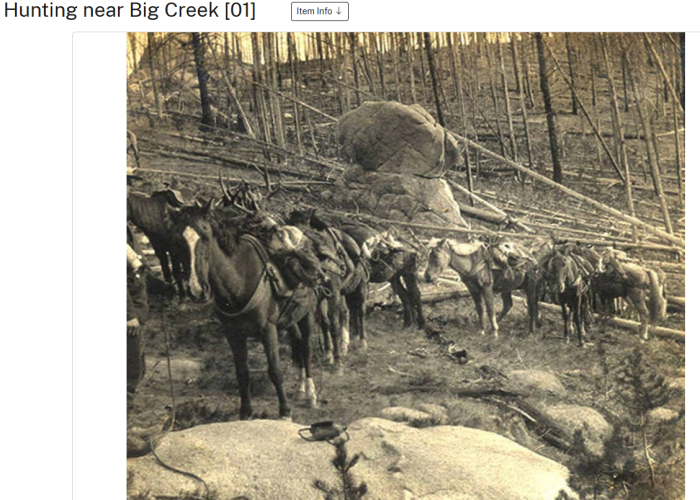
Also, check this out. 500+ images of the location and the era of original trailbuilding exploration.
And damn if they didn't have fires and blowdown in 1903 too!
1778774487586.png
 
All 17,000? Assume fire crews also have maintenance responsibilities at times or are Fire personnel always working on fires?
Also, don't think that time stood still after 1964.

There were many Acts of congress passed after 1964, back when people seemed to actually give a shit about the environment. However, those Acts required action, by law, to meet the goals.

A few that require some additional staff for the various agencies:

ESA 1973.

RPA 1974 (the group I work with is mandated under this one).

Wild and Scenic Rivers Act 1968.

NFMA 1976.

MUSYA just prior to the Wilderness Act in 1960.

Just to name a few off the top of my head. Been a minute since I took Resource Policy.
 
Also, check this out. 500+ images of the location and the era of original trailbuilding exploration.
And damn if they didn't have fires and blowdown in 1903 too!
View attachment 408303

Of course they did, they also walked 5 miles to school up hill both ways.

Seriously though 100 years of fire suppression changed the forest.
 
Also, don't think that time stood still after 1964.

There were many Acts of congress passed after 1964, back when people seemed to actually give a shit about the environment. However, those Acts required action, by law, to meet the goals.

A few that require some additional staff for the various agencies:

ESA 1973.

RPA 1974 (the group I work with is mandated under this one).

Wild and Scenic Rivers Act 1968.

NFMA 1976.

MUSYA just prior to the Wilderness Act in 1960.

Just to name a few off the top of my head. Been a minute since I took Resource Policy.
Never did but the smartass remark is really helpful.

Detail about staff added to cover the Wilderness Act along with the other Acts you list is what I was hoping someone had access to. Stuff like that could be really helpful for people understand where the increases are used and needed. It's just too easy to say, "we need more money and people." I could easily look at the data and come to the conclusion that the FS has more than doubled in size since the Wilderness Act was enacted so there should be more than enough people to run those crosscuts, perform those ESA reviews, comply with NEPA, etc. Or I could determine that all 17,000 are fighting fires. Or I could conclude they are all administrative folks that drink a lot of coffee. I suspect the answer lies somewhere in the middle, would be great to know for sure.
 
Back
Top