Forest Service Reorg - Progress or Politics

You probably shouldn't try thinking, there absolutely is equivalent private sector work in every FS position.

You say you want equal rules, but you would be the first to cry and whine if that were to ever happen...and that's a fact.
FS is just one set of federal workers.

Since there aren't equal rules, we'll never know.
 
I don't think there is usually equivalent work in the private sector.

However, I don't personally care if they are paid less or more. I'm ok with whatever the market will bear. I do think there should be the same employment rules as the private sector. I don't think that's the case now.

I'm sure it's an outlier, but the top TVA employee recently resigned after a limit was placed on the maximum pay. He wasn't the only one, but what sense does it make for many employees of the federal government to make more than the President?

The Forest Service isn't the TVA. FS pay has long been capped at a much lower rate, I believe $228,000 for 2026.


Should anyone make more than the President?
 
Having enjoyed a long career working in the military (4 yrs active Army, 25 yrs+ Army National Guard), a decade as state employee, thirty years plus in private sector (mostly construction industry), and closely with federal contracts and federal employees ... I can tell you that the strong American work ethic prevails. However, with every human endeavor there are mostly those who are givers (productive workers) and sadly also takers (self-centered slackers). That is a common thread throughout the private sector and at every level of government. At the state and federal level unfortunately those perceived with the criticism and negativity expressed by Jimh406 and others are often hampered and restrained in certain respects by laws, regulations, and policies which are often much more stringent and restrictive than those for the private sector. It's called red tape and results in hampered productivity and higher costs.

For those who are the armchair critics of governmental employees ... you only have yourselves to blame as you voted in and support the red tape.
 
Having enjoyed a long career working in the military (4 yrs active Army, 25 yrs+ Army National Guard), a decade as state employee, thirty years plus in private sector (mostly construction industry), and closely with federal contracts and federal employees ... I can tell you that the strong American work ethic prevails. However, with every human endeavor there are mostly those who are givers (productive workers) and sadly also takers (self-centered slackers). That is a common thread throughout the private sector and at every level of government. At the state and federal level unfortunately those perceived with the criticism and negativity expressed by Jimh406 and others are often hampered and restrained in certain respects by laws, regulations, and policies which are often much more stringent and restrictive than those for the private sector. It's called red tape and results in hampered productivity and higher costs.

For those who are the armchair critics of governmental employees ... you only have yourselves to blame as you voted in and support the red tape.
I would also argue that not all the red tap, laws, and regulations the agencies are required to adhere to are always a bad thing.

For instance, a private timber company doesn't have to adhere much to any "red tape" to liquidate their timber resources. They can take that timber as cheaply and efficiently as they can by building roads, not having to worry about wildlife considerations, etc. etc. Its 100% a maximize profit and screw the rest attitude.

In response to that largely unfettered timber liquidation by private industry, I'm glad that the same thing doesn't happen on Federal land and that we have different mandates (often called red tape, laws, regulations). I like that Federal timber lands are managed in different ways than private and that they have to follow other regulations and consider more than a balance sheet.
 
In response to that largely unfettered timber liquidation by private industry, I'm glad that the same thing doesn't happen on Federal land and that we have different mandates (often called red tape, laws, regulations).

As well as public comment. Not much of a comment period before they turn a piece of north idaho or coast range oregon private land into a moonscape.
 
I'm sure it's an outlier, but the top TVA employee recently resigned after a limit was placed on the maximum pay. He wasn't the only one, but what sense does it make for many employees of the federal government to make more than the President?
Yes, this is a ridiculously skewed outlier. I’m continually baffled that people seem to think regular federal employees are making huge salaries.

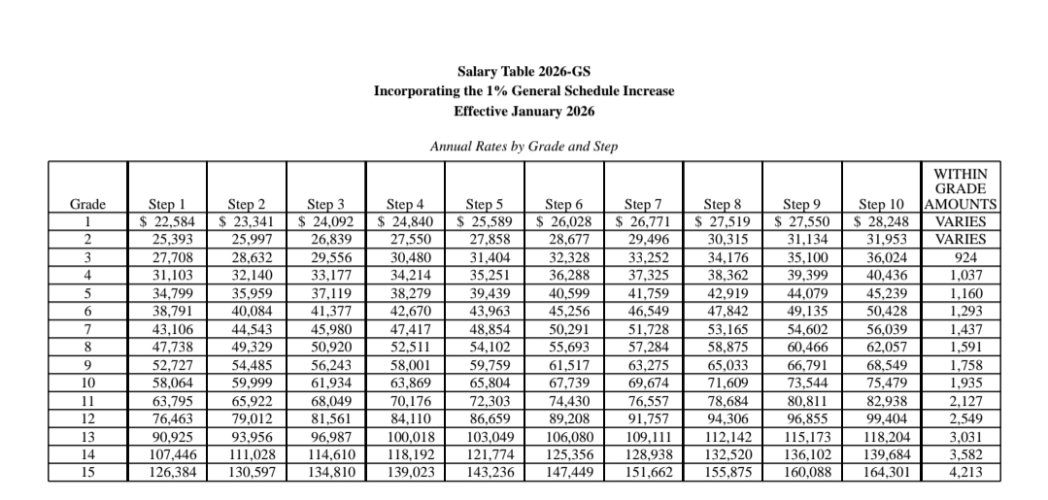
President- $400K/yr
Cabinet officials (political appointees)- tops about $253K/yr
Senior Executive (“career” pay scale)- tops out around $209k-$228k/yr
General Schedule (and other similar schedules like Wage Grade, LE, etc) generally maxes out at GS-15, $183K/yr.

The vast, vast majority of people in the federal agency workforce are pay scale employees (GS or similar). Very few of those are GS-15. Most are somewhere in the GS 7-12 levels at land management agencies I’ve worked for. These are your boots-on-the-ground wildlife biologists, hydrologists, engineers, natural resource managers, etc. I imagine Forest Service is similar.

TVA is Excepted Service I believe, so is FDIC and a couple of others. They are not capped, but they are also not rank and file federal employees. They are typically appointed and do not get hired through competitive application to their position. They get paid “market rate”. Less than 10% of the workforce falls into that model, and it’s mostly attorneys, financial and banking jobs, things like that.
 
Yes, this is a ridiculously skewed outlier. I’m continually baffled that people seem to think regular federal employees are making huge salaries.

President- $400K/yr
Cabinet officials (political appointees)- tops about $253K/yr
Senior Executive (“career” pay scale)- tops out around $209k-$228k/yr
General Schedule (and other similar schedules like Wage Grade, LE, etc) generally maxes out at GS-15, $183K/yr.

The vast, vast majority of people in the federal agency workforce are pay scale employees (GS or similar). Very few of those are GS-15. Most are somewhere in the GS 7-12 levels at land management agencies I’ve worked for. These are your boots-on-the-ground wildlife biologists, hydrologists, engineers, natural resource managers, etc. I imagine Forest Service is similar.

TVA is Excepted Service I believe, so is FDIC and a couple of others. They are not capped, but they are also not rank and file federal employees. They are typically appointed and do not get hired through competitive application to their position. They get paid “market rate”. Less than 10% of the workforce falls into that model, and it’s mostly attorneys, financial and banking jobs, things like that.

And until recently most entry level positions were starting at GS5 or 6.

Seasonal techs are still hired as 4s. That's $15/ hr for a job that requires a bachelor's degree.

Screenshot_20260503_110016_Chrome.jpg
 
When we see these efforts focus on land management agencies under the marketing banner of "fiscal responsibility" anyone who studies the US Government budget/tax policy/fiscal policy/subsidies, can't take these arguments seriously.

I can't take it seriously. Especially when the folks claiming such "fiscal discipline" passed a tax bill last year, the Big Beautiful Bill, that costs $500 Billion per year and rearranges the winners (wealthiest) and losers (working folks) in a degree that I've never seen in my 35 years of reading tax law.

For those who want to see how much money we leave on the table by giving preferential treatment to the very wealthy, you should subscribe to the Bipartisan Policy Center or the Tax Policy Center. You'd quickly learn that the political machines have specialized in putting enough blood in the water to keep the serfs fighting among themselves, while the big money laughs all the way to the bank.

Yeah, we see the claims that somehow these cuts to land agencies is going to help with the US Budget situation. My decision to run Unleaded or Premium in my snowblower has a larger percentage impact on my budget than these land agency cuts have as a percentage of the Federal budget.

You wanna make a difference, here are some starting places:

- Stop letting Wall Street treat their business income as capital gain, also called "Carried Interest." Over a Billion dollars of tax per year. A tidy $1B per year that is saved by a small handful of very wealthy people, while the rest of the serfs get to pay ordinary income tax rates on their wages, along with SS & Medicare tax.

- Start forcing hard rock mining companies to pay the same 8% royalty that coal pays, rather than a 0% royalty. Another quick $1-1.5 Billion per year could be found here.

- Stop letting oil & gas companies deduct depletion in excess of cost basis. Stop allowing accelerated deduction of intangible drilling cost. Stop allowing tax CREDITS for carbon sequestration. Stop allowing foreign royalties to be treated as foreign taxes allowed for credits. Those are around $5B per year.

- Stop letting buyers of professional sports teams amortize most of their purchase price over 15 years, even though the asset is growing in value, not decreasing. Tax theory applied to businesses is that you get to amortize/depreciate your asset purchases in a manner that reflect their loss in value over time. Example - Computer depreciated over 3 years, trucks and equipment over 5 years. A half billion a year among the 30-32 NFL, NHL, NBA, and MLB team owners.

- Stop letting private companies use the Industrial Revenue Bond (IRB) loophole for private companies to issues tax-exempt/preferred bonds the interest on which is wholly or partially tax-exempt. This is a favorite stunt for Professional Sports teams who bribe metro areas into giving them tax breaks under a threat to leave if not provided. That IRB rule costs the US Treasury $2B per year.

I could go on and on. You get the point. The complaints about overpaid USFS workers is a shiny object that the lobbyists and the twin grifters known as the RNC and DNC hope we focus on. It seems to be an effective strategy in distracting the electorate, so I don't expect the Beltway folks to change, so long as the serfs take the bait.

If you let a committee of CPAs attack the US budget, we'd be balanced and even paying down our debt within a month. There would be some pissed off lobbyists and sniveling industries, but solving our budget/deficit problems is not that hard in terms of math; just really hard when elected officials are beholden to the big money folks who funded their elections.

Focusing on land management agencies and their budgets, under a paradigm of subsidizing/giving away the resources on those lands, is like telling the old boy catfishing on the banks of the Mississippi that we will solve the water pollution issues if he stops pissing on the river bank.

 
And yet, we've got $2Billion (and counting) to pay companies to abandon alternative energy projects that would add to energy supply and lower total costs, especially with the rapid growth in data centers. Yet, we're gonna flex our "fiscally responsible" muscles by cutting the USFS trail crews that are critical for local tourism or save money by getting rid of USFS research centers that help lead a lot of our science in foresty, fire management, and drought impacts.

And the mouthpiece at Department of Interior, Secretary Burgrum, wants to lecture those of us in the conservation space as not being "financially literate." He's overseen the largest public land resource giveaway since the Homestead Act and the Railroad Grants. Yet, we're the ones lacking "financial literacy."

If it wasn't so laughably ridiculous, it would be funny. Fuggin' idgits.
 
Back
Top