


Navigation
Install the app
How to install the app on iOS
Follow along with the video below to see how to install our site as a web app on your home screen.
Note: This feature may not be available in some browsers.
More options

You are using an out of date browser. It may not display this or other websites correctly.
You should upgrade or use an alternative browser.
You should upgrade or use an alternative browser.
Cumulative burden of taxes
- Thread starter Bullshot
- Start date
I hear ya. One thing I don’t understand is the usage of “appraised” as opposed to “assessed”. I understand that the appraisal ultimately determines the assessment but the way it’s worded is just odd to me. As a TX transplant i scratch my head here often. But it sure beats at a minimum 40 other states. Maybe 45. Hey, at least we’re not laundering money for foreign terror states and using illogical virtue signaling as an excuse.What makes me shed more dandruff is the property tax system in TX. We can never own our home free and clear and they tax us on their perceived value that goes up each year - we bought the house at XX dollars and pay taxes on the increased value each year without it generating any income - but the "Gov" is working on it....
Here’s my conundrum via anecdote.
I walk into a bodega in NY to buy a sandwich one evening. Some inebriated fellow asks why I was there instead of a place like dunkin. I try to dodge the interaction as best I could, but to summarize…. Dude goes on a rant about big biz vs little biz (he hates “corporations”) and tries to justify his thoughts. Fair enough, but……
My retirement is tied into this 401k thingy….. and as I far as I know, it can’t be a vehicle to invest into mom & pop biz. I am the shareholder. I’m not saying it’s righteous or not, I’m saying I’m playing a game I’m not in control of. Unless I don’t play the game, which means no dental, no deodorant. (Reminds me I gotta schedule a cleaning). I think Howard Hughes said something to the effect of “I am merely a private citizen, you are the lawmaker.”
I walk into a bodega in NY to buy a sandwich one evening. Some inebriated fellow asks why I was there instead of a place like dunkin. I try to dodge the interaction as best I could, but to summarize…. Dude goes on a rant about big biz vs little biz (he hates “corporations”) and tries to justify his thoughts. Fair enough, but……
My retirement is tied into this 401k thingy….. and as I far as I know, it can’t be a vehicle to invest into mom & pop biz. I am the shareholder. I’m not saying it’s righteous or not, I’m saying I’m playing a game I’m not in control of. Unless I don’t play the game, which means no dental, no deodorant. (Reminds me I gotta schedule a cleaning). I think Howard Hughes said something to the effect of “I am merely a private citizen, you are the lawmaker.”
So you’re suggesting a Flat tax in which my employer is also my accountant?I have proposed that employees just get paid after tax. The person who now thinks he gets paid $100,000 but only takes home $80k just gets paid $80k and doesn’t have to do taxes. The company pays all that out and the employee doesn’t have to worry about April 15. Of course some people think that is a horrible idea because they want people to think they are getting screwed. Seems to be working.

noharleyyet
Well-known member
SAJ-99
Well-known member
Not sure how you came up with that. No, not a flat tax. It would need to remain graduated. Your employer knows how much you earned and can tax you the appropriate amount as your income increases through the year. The whole "guess what your deductions and withholdings should be" causes most of the angst at tax time. Yes, there are some holes and it would also be easier if we get rid of a bunch of deductions which cause the ultimate tax to differ. I kind of thought the goal was to simplify the tax code then realized it was mostly about people fighting to tax the other but not themselves.So you’re suggesting a Flat tax in which my employer is also my accountant?
Spending at federal level is out of control and far exceeds inflation. Both parties to blame. Many state are out of control as well and have huge unfunded liabilities.
Just think if the government didn’t take 50% of what you earned. How much better would our living standard be in they “only” took 25%? That’s a lot of extra money in the pocket.
Politicians only look at one side of the equation. We need more money! We need to raise the minimum wage! Etc
Just think if the government didn’t take 50% of what you earned. How much better would our living standard be in they “only” took 25%? That’s a lot of extra money in the pocket.
Politicians only look at one side of the equation. We need more money! We need to raise the minimum wage! Etc

Forkyfinder
Well-known member
- Joined
- Dec 13, 2023
- Messages
- 6,291
Are you referring to comments like "it would be a move in the right direction" when you say that?I kind of thought the goal was to simplify the tax code then realized it was mostly about people fighting to tax the other but not themselves.
Quadruple corporate taxes - that seems like a potentially bad idea, but for the sake of argument - you realize thats not even enough to make the US break even?
I thought the goal of the thread was about the cumalative tax burden. My point has been that even with the heavy burden we are still coming up well short of what we "need" to break even and that we have more of a spending problem than a revenue problem.But tt certainly would move in the right direction.
SAJ-99
Well-known member
Not sure I understand the ? I'm open to a lot of ideas if they lead to a better fiscal situation for us all. Even if that means higher taxes for me (don't tell my wife I said that).Are you referring to comments like "it would be a move in the right direction" when you say that?
Who is we? The individual or the collective we/government? Collectively we have a revenue problem. If you want start listing out spending cuts we can discuss and debate those. DOGE, in all its glory and incompetence did a good job of proving where the problem is. Part of that discussion on your cuts will be about the beneficiaries and how they might view those "spending cuts".I thought the goal of the thread was about the cumalative tax burden. My point has been that even with the heavy burden we are still coming up well short of what we "need" to break even and that we have more of a spending problem than a revenue problem.
In my mind DOGE only needed to do one thing: prove that many of us were right that our tax dollars truly being wasted on things that don't benefit the world let alone the American citizen.
It did that in spades.
Was it a huge percentage of the overall spending? No. Does it make it clear to me that the government doesn't deserve another single percent of my money until they can pass an audit and tell us where our money is being spent, open and honestly? Yes. Do I assume they are better at hiding the fraud/waste that makes a bigger impact on the spending? Also yes.
Every time I drive out of TN into a state that has state income taxes and yet worse roads, more tolled roads, crumbling infrastructure, etc. I can't help but wonder what on earth is happening with all that tax money.
It did that in spades.
Was it a huge percentage of the overall spending? No. Does it make it clear to me that the government doesn't deserve another single percent of my money until they can pass an audit and tell us where our money is being spent, open and honestly? Yes. Do I assume they are better at hiding the fraud/waste that makes a bigger impact on the spending? Also yes.
Every time I drive out of TN into a state that has state income taxes and yet worse roads, more tolled roads, crumbling infrastructure, etc. I can't help but wonder what on earth is happening with all that tax money.
If you want to simplify the tax code, then a flat tax that is consumptive based is likely the best approach. Eliminate income taxes and its various cousins. The current US economy if almost 70% personal consumption based. If you include USG consumption this value rises to between 78% and 85% (USG fraction is consumption and investment). Why not make USG revenue generation reflective of the economy itself?Not sure how you came up with that. No, not a flat tax. It would need to remain graduated. Your employer knows how much you earned and can tax you the appropriate amount as your income increases through the year. The whole "guess what your deductions and withholdings should be" causes most of the angst at tax time. Yes, there are some holes and it would also be easier if we get rid of a bunch of deductions which cause the ultimate tax to differ. I kind of thought the goal was to simplify the tax code then realized it was mostly about people fighting to tax the other but not themselves.
Pros:
- Eliminates politicians ability to reward their friends and punish their enemies through tax give-aways, targeted deductions, etc.; removes one of the levers for big money to buy the candidate of their choice.
- Eliminates the vast bulk of the IRS - taxes are collected at first point of sale as they are already. IRS becomes an auditing function only. No need for the individual to file any tax forms. This is done by retailers.
- It a general sense, it is an elective tax - the more you consume, the more you pay and vice-versa. Exempt foodstuffs from the tax. But everyone pays the same "rate" under one set of rules.
- Prevents the "evil rich" from avoiding taxes since they pay on the consumption side and not the income/wealth generation side. No ability to exploit income tax loopholes.
Cons:
- Everyone pays the same rate (but not the same amount) which will not fly with progressives/liberals that have grown up with the mantra that those with the broadest shoulders should carry the largest burden.
- Requires the States to re-jigger their respective tax policies since many are tied to US Federal tax code which will be very disruptive.
- State-level politics will lose the same perks that national politics enjoys, the ability to reward/punish those that do or do not align to their political ambitions.
Reality:
- It will never happen. Politicians on both sides of the spectrum won't willingly give up power. Hard to see the US voter having the will (and intelligence) to force the issue.
SAJ-99
Well-known member
I appreciate your use of AI. To simplify the AI response, much of which is just political talking points, the math doesn't math. You can't tax the poor because they don't have any money. I'm not sure anyone can agree on a definition of "fair". The reality section is generally on point.If you want to simplify the tax code, then a flat tax that is consumptive based is likely the best approach. Eliminate income taxes and its various cousins. The current US economy if almost 70% personal consumption based. If you include USG consumption this value rises to between 78% and 85% (USG fraction is consumption and investment). Why not make USG revenue generation reflective of the economy itself?
Pros:
- Eliminates politicians ability to reward their friends and punish their enemies through tax give-aways, targeted deductions, etc.; removes one of the levers for big money to buy the candidate of their choice.
- Eliminates the vast bulk of the IRS - taxes are collected at first point of sale as they are already. IRS becomes an auditing function only. No need for the individual to file any tax forms. This is done by retailers.
- It a general sense, it is an elective tax - the more you consume, the more you pay and vice-versa. Exempt foodstuffs from the tax. But everyone pays the same "rate" under one set of rules.
- Prevents the "evil rich" from avoiding taxes since they pay on the consumption side and not the income/wealth generation side. No ability to exploit income tax loopholes.
Cons:
- Everyone pays the same rate (but not the same amount) which will not fly with progressives/liberals that have grown up with the mantra that those with the broadest shoulders should carry the largest burden.
- Requires the States to re-jigger their respective tax policies since many are tied to US Federal tax code which will be very disruptive.
- State-level politics will lose the same perks that national politics enjoys, the ability to reward/punish those that do or do not align to their political ambitions.
Reality:
- It will never happen. Politicians on both sides of the spectrum won't willingly give up power. Hard to see the US voter having the will (and intelligence) to force the issue.
Sorry, no AI used. Strike one. And tax policy is all political. Even the definition of "fair" relative to taxes is political. Strike two.I appreciate your use of AI. To simplify the AI response, much of which is just political talking points, the math doesn't math. You can't tax the poor because they don't have any money. I'm not sure anyone can agree on a definition of "fair". The reality section is generally on point.
"Poor ... don't have any money." is hyperbole, at least in the US. It is also addressable although it is highly unlikely it will ever be 100% solved. History has shown that regardless of what political/economic model you want to throw out as an example. There are poor under capitalism, there are poor under socialism, there are poor under communism. Can we raise overall standard of living? Certainly. The "poor" in the US are far "richer" than the poor in many countries. Is that due to a US capitalistic model? Probably. Can it be better? Most likely, yes. But a nanny state mentality isn't going to achieve that. The US has been tilting more and more toward that model since FDR while the "war on poverty" started in 1964 with LBJ. Hard to convince anyone that war has been won. To be fair, poverty rates decreased from roughly 19% in 1964 to just under 12% by the mid-70's (some data shows it has bounced between 12 and 15% from 1970 through the present) but that number hasn't really changed since the early 70's despite welfare spending increasing by 10-fold (on a per person basis) over the same period. Perhaps we need a welfare model that moves people from financial dependence to financial independence rather than just making their lives more comfortable. But that is not the subject of this thread.
All that said, the question was how to simplify the tax code. You didn't address that in your response. I offered one possible approach; but certainly not the only approach. Strike three.

npaden
Well-known member
It's somewhat humorous to see a 4 page thread arguing about cumulative burden of taxes which really tells you how complicated the tax structure is that we can argue about it for 4 pages.
You can just about spin it anyway you want to support what you think is right. Consumptive, net worth based, etc. Like most things the true answer is somewhere in the middle, but the middle just doesn't have a very loud voice right now.
Only way I can think to get out of the mess we are in right now is to have a middle party but that has failed time and again. The middle is just not passionate like the left and the right are.
You can just about spin it anyway you want to support what you think is right. Consumptive, net worth based, etc. Like most things the true answer is somewhere in the middle, but the middle just doesn't have a very loud voice right now.
Only way I can think to get out of the mess we are in right now is to have a middle party but that has failed time and again. The middle is just not passionate like the left and the right are.
You forgot “Vat tax”Fun buzzwords for today…..
“Consumption tax”
“Flat tax”
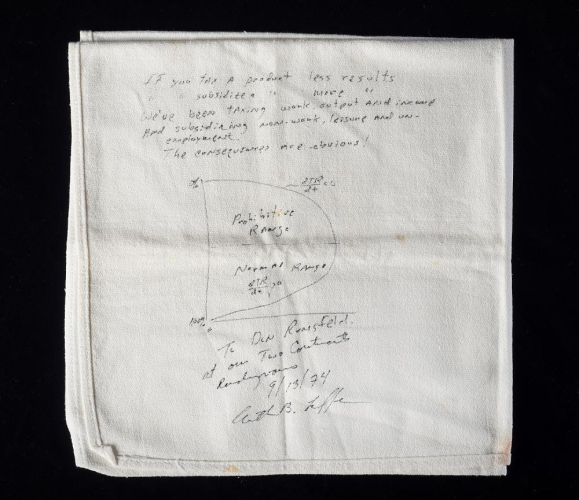
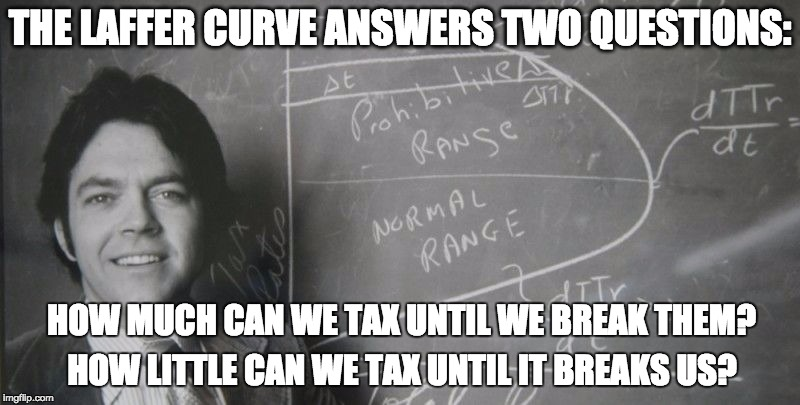
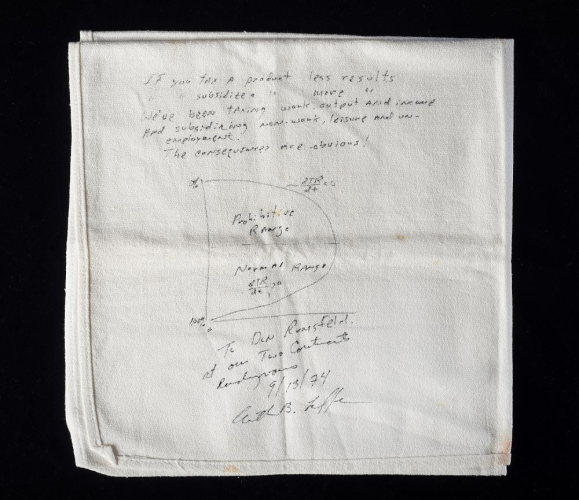
“Laffer Curve”

Hem
Well-known member
Right^Only thing I remember about breaking bad was when they talked about needing a criminal attorney. A actual criminal that’s how I feel about the person that does my taxes I want one that’s borderline criminal
Somehow my CPA fee equals my refund every friggin year.

SAJ-99
Well-known member
Well, very AI-like. I can see some things I agree with and other things that literally make no sense. I have a lot of ideas that are not political, ie. distribute the pain. Let's reset, without the childish "strikes". What is your goal from tax policy? That has to be the first question answered. Everyone jumps to spending but can't really suggest where to cut. No one ever addresses an estimate of what the revenue should be. Maybe a Balanced budget amendment? LOL.Sorry, no AI used. Strike one. And tax policy is all political. Even the definition of "fair" relative to taxes is political. Strike two.
"Poor ... don't have any money." is hyperbole, at least in the US. It is also addressable although it is highly unlikely it will ever be 100% solved. History has shown that regardless of what political/economic model you want to throw out as an example. There are poor under capitalism, there are poor under socialism, there are poor under communism. Can we raise overall standard of living? Certainly. The "poor" in the US are far "richer" than the poor in many countries. Is that due to a US capitalistic model? Probably. Can it be better? Most likely, yes. But a nanny state mentality isn't going to achieve that. The US has been tilting more and more toward that model since FDR while the "war on poverty" started in 1964 with LBJ. Hard to convince anyone that war has been won. To be fair, poverty rates decreased from roughly 19% in 1964 to just under 12% by the mid-70's (some data shows it has bounced between 12 and 15% from 1970 through the present) but that number hasn't really changed since the early 70's despite welfare spending increasing by 10-fold (on a per person basis) over the same period. Perhaps we need a welfare model that moves people from financial dependence to financial independence rather than just making their lives more comfortable. But that is not the subject of this thread.
All that said, the question was how to simplify the tax code. You didn't address that in your response. I offered one possible approach; but certainly not the only approach. Strike three.
The questions WASN'T how to simplify the tax code. I just made a comment that simpler is better for most people. An employer turns in data on earnings and taxes paid to the IRS and then the system says you have to justify why the number is right or wrong, high or low. Seems like simplifying would make it easier for a lot of people.

LopeHunter
Well-known member
Daycare might erase much of the second wage earner but taxes will never on its own.We had the conversation when kids started if it penciled out to keep my wife working for this reason. Decided since she has a career that would be hard for her to go back to and not a job to ride it out. Crazy between taxes and daycare you can be financially ahead by not working
Buddy of mine had his wife stay at home with first kid then the second kid arrived before spouse returned to work. Okay, once the second kid hits school age will go back to work. Buddy drops and flops at family 4th of July gathering by tipping forward out of the lawn chair.
Alas, spouse had not worked for seven years and the tech industry changes a lot in the time. She found herself trying to find a job, dealing with grief and investigating childcare options. She could have coasted on their wealth a few years but then skills are more stale as job hunt then relaunch career.
If she had taken 6 months off from work as each infant arrived then as my buddy dies she would need to deal with grief as childcare and job would be in place.
One good life insurance policy is probably the easiest answer for that kind of scenario. I carry enough so that during the years my kids are minors my wife can pay off all of our debt, the kid's college, and multiple years of my current salary before having to worry about money. I think when my kids were very little I carried at least enough to get her totally out of debt with a couple years of my salary on top. That policy cost me like $400/year and worth every penny for the peace of mind.Daycare might erase much of the second wage earner but taxes will never on its own.
Buddy of mine had his wife stay at home with first kid then the second kid arrived before spouse returned to work. Okay, once the second kid hits school age will go back to work. Buddy drops and flops at family 4th of July gathering by tipping forward out of the lawn chair.
Alas, spouse had not worked for seven years and the tech industry changes a lot in the time. She found herself trying to find a job, dealing with grief and investigating childcare options. She could have coasted on their wealth a few years but then skills are more stale as job hunt then relaunch career.
If she had taken 6 months off from work as each infant arrived then as my buddy dies she would need to deal with grief as childcare and job would be in place.

cgasner1
Well-known member
- Joined
- Apr 24, 2016
- Messages
- 5,878
That’s a horrible situation and such is life all our are viables are so different. We decided keeping the career was best long term. If that was to happen to me she would be fine with my line of work my insurance has me worth more dead than alive.Daycare might erase much of the second wage earner but taxes will never on its own.
Buddy of mine had his wife stay at home with first kid then the second kid arrived before spouse returned to work. Okay, once the second kid hits school age will go back to work. Buddy drops and flops at family 4th of July gathering by tipping forward out of the lawn chair.
Alas, spouse had not worked for seven years and the tech industry changes a lot in the time. She found herself trying to find a job, dealing with grief and investigating childcare options. She could have coasted on their wealth a few years but then skills are more stale as job hunt then relaunch career.
If she had taken 6 months off from work as each infant arrived then as my buddy dies she would need to deal with grief as childcare and job would be in place.
Similar threads


- Replies
- 58
- Views
- 3K