EDITORIAL: Ballot-box biology will backfire on Colorado
- The Gazette editorial board
- Feb 26, 2024
Critics denounced Colorado’s 2020 ballot proposal to release wolves in the wilds as “ballot box biology.” It was more than a catchy phrase; it underscored the folly of expecting voters to weigh in on the science of wildlife.
Proposition 114 barely passed statewide that year. But it won the overwhelming support of Front Range voters, who only have seen wolves on Animal Planet. And few of them ever had to make ends meet as financially strapped ranchers whose livestock would become wolves’ prey.
A big selling point pitched to Colorado’s urban and suburban voters at the time was that reintroducing wolves would restore balance to the state’s ecosystem. Animal and plant life would flourish — the food chain would be nudged back into synch — the way it supposedly was when wolves are said to have abounded here.
Voting “yes” was like hitting a reset button, right?
If only.
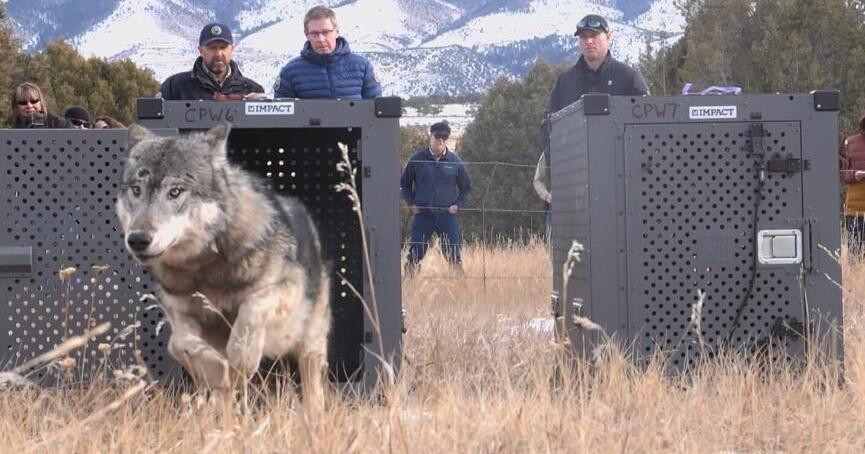
To say the least, an ecosystem is a lot more complicated, as Coloradans now will discover following the first release of wolves last December. An enlightening news report in The Gazette recently made that clear. It turns out Exhibit A for wolf reintroduction doesn’t quite hold up.
The Gazette reported that research at Colorado State University is challenging a popular narrative that wolf reintroduction in Wyoming’s Yellowstone National Park in the 1990s restored habitat that had degraded after wolves were removed from the park a century ago.
The research, drawing from a 20-year study, concluded that the development of a stable grassland ecosystem in recent decades — after generations of overgrazing by elk in the absence of wolves — was not due to the return of the wolves after all.
“I think we showed pretty conclusively that for the riparian areas of the small stream network of the (Yellowstone) northern range … very little has changed since wolves were reintroduced,” Emeritus Prof. N. Thompson Hobbs told The Gazette. He added, “…we can't really know the extent to which the decline in elk populations was due to wolves or to other carnivores. We do absolutely know this — that during the 10 years after wolves were reintroduced, so from about 1995 to 2005, wolves had very little to do with it.” As for the needed decline in the elk herd, Hobbs attributed much of it to hunting following shifts in policy by wildlife managers.
In fact, seasoned wildlife managers in Colorado contend hunting is one of the most effective tools for managing overgrazing by elk or other species.
“Colorado has wisely managed their elk herd magnificently through the use of the North American model of big game management, which is much more highly regulated than packs of wolves wandering willy-nilly all over the state,” said former Colorado Wildlife Commissioner Rick Enstrom.
Hobbs warned against drawing sweeping conclusions from his findings — and we won’t. The takeaway for policymakers isn’t that the research disproves the value of wolves in restoring habitat but rather that such issues are so complex they should be left to the experts.
The Colorado Parks and Wildlife Commission consists of key stakeholders who have tracked wildlife- and land-management issues much of their lives. And they preside over a staff of highly trained wildlife biologists and other technical experts whose entire careers are spent on such issues. If there is a case to be made for introducing a species, they are the ones to vet it — not voters.
Prop. 114 usurped and undermined that role, turning a complex consideration into feel-good politics with potentially disastrous results.
Without a doubt, ballot box biology will cost the state’s cattle and sheep ranchers. They put dinner on the table for city slickers — who thank them by sending in the wolves.
Critics denounced Colorado’s 2020 ballot proposal to release wolves in the wilds as “ballot box biology.” It was more than a catchy phrase; it underscored the folly of expecting voters

gazette.com






 savethehuntcolorado.com