


WILD BISON ON THE MONTANA PRAIRIE? MAYBE. BUT WHAT IS WILD? by Ron Moody

Kat,

"Climate Change" I was referring to was the man caused variety......but I think you knew that. Natural climate change is indeed real. Where I live was under 100+ feet of water 10,000 years ago. Is climate change good or bad? Depends on your perspective I guess.

You ought to take a few forestry classes or attend a few forestry conferences with Prof. Peter Kolb, MSU extension forestry. Smart guy. Interesting prospective on climate change and its effects on forestry. You probably could even keep him on his toes. ;)
 
This ties in with the bison issue here in Montana and this thread so I am posting this here, rather than a new thread. These are some of the quotes that I made during the public comment time at the Lewistown bison meeting.

Since I follow the brucellosis issue to protect our elk from being thrown under the bus, as has been done with the bison and keep up with DoL and APHIS on these matters, I saw that Dr. Marty Zaluski was going to Texas on Sept. 10th to present on brucellosis in Montana, specifically in our DSA region, to advocate on behalf of the Montana cattle industry. Texas Animal Health Commission was proposing a rule change on cattle imports from the GYA states of Montana, Idaho and Idaho. This is actually part of a bigger picture involving APHIS and their goal of eradication of all brucellosis in the United States, including all wildlife reservoirs - elk and bison test and slaughter. I wont get into that bigger picture documentation right now, but I knew Texas was going to pass this regardless of the fact they have their own brucellosis issues and whatever science Zaluski would be presenting. Other states are lining up to do the same - it is a strongarm tactic to force these states to capitulate to test and slaughter of our wildlife (this can include deer and moose as well, but they are not the preferred host for Brucella abortus).

Anyway, I saw that the TAHC had audio of all their commission meetings, which saved me calling down there and asking a friend to go tape it. I listened to all the audio files involved, transcribed Zaluskis presentation and requested the public comments submitted which I received in pdf. These public comments also included letters from Montana Stockgrowers Association, Montana Cattlemens Association and some private Montana ranchers, all stating this was a small issue and was manageable, no threat to Texas or any other state. These are not normal statements that we hear the DoL and these organizations state here in Montana, yet should. The full documents and audio files are available.

http://www.emwh.org/issues/brucellosis/livestock%20tahc.htm

DoL, "Montana's DSA includes 282 operations with 73,200 cattle and domestic bison. This fiscal year, 42,025 of the 73,200 animals have been tested to achieve a 99% confidence that the disease (if it exists) is present at a rate of less that 0.008%. The chance that any one Montana animal is brucellosis positive is 0.00024%." "In comparison, the state of Montana has an annual infection rate of 0.007% with five affected herds over six years since 2007." "There is no documented case of bulls spreading brucellosis." "So what happens is you have cattle properties that are typically on the flats, the river bottoms and the prairies, and then you have the elk ground that is alot of time in the forest. So its not like those elk are on private property typically, and in fact often times those elk are on BLM or Forest Service land," "So there are practices, its not like they come down on the flats, then spread out five fetuses and they take off."
Heres a really good one - no mention of bison, "So really the DSA in the state of Montana is in southwest Montana. And it is designed to identify the cattle at risk from brucellosis positive elk. So we know that brucellosis positive elk are in southwest Montana, they can potentially expose cattle and so the key to identifying the cattle at risk is to identify where the brucellosis positive elk are."

MSA, "There is an extremely low risk of brucellosis transfer posed by cattle coming out of Montana. While a small area of Montana in the Greater Yellowstone Area (GYA) is affected by rare transfers of brucellosis from wildlife, the state of Montana has proven highly effective in its efforts to mitigate the spread of brucellosis."
Mr. Palmers testimony (audio file 10) on behalf of the Matador Cattle Company (Koch Industries), the owner of the Beaverhead Ranch in southwestern Montana, discussing how little of an issue this is, "the majority of those times those elk are not calving in the same location as the cows."
Darrel Stevenson, Stevenson Angus Ranch, "As you can see the rate of incidence is extraordinarily low and our policing system has proven to manage with superb efficiency....Why isnt the science trusted? As reviewed in the attached, incident rate in Montana is low and imported cattle to Texas become even lower with a pre-shipment test? With no documented case of bulls spreading Brucellosis, why are they bundled into the concern?"

I would like to ask this same question of the DoL who shot the lone bull bison on the Dome Mountain WMA after hazing it off the Dome Mountain Ranch (private property rights ignored) and shooting the 2 bull bison on the west side. DoL knows that bulls dont spread brucellosis, nor the bison to cattle, which is why Zaluski only addresses elk in his presentation. And based on the science and stats presented by Zaluski, as well as the statements from the associations and ranchers, brucellosis from elk is extremely low, extraordinarily low and easily manageable. So why in Montana do they inflame the dialogue on this issue and we dont hear this kind of testimony and science here?

I think it is time that we put wildlife management back into the hands of the FWP as far as bison are concerned and keep it there as far as the elk are concerned. Remove "eradication/elimination of brucellosis from wildlife reservoirs" from our Fish, Wildlife and Parks documents/statements, such as that which FWP is signed onto in the IBMP; support natural regulation of these wildlife in the Gallatin National Forest and the Yellowstone National Park, as it should be (their signatures should not be on the IBMP eradication/elimination of brucellosis either). Brucellosis is a minimal disease threat to the cattle industry (more cattle are killed by weather or vehicular accidents each year than years of extremely low brucellosis transmission from elk), which can be managed through the DoL herd plans that Zaluski describes, as well as efforts from FWP in minimizing possible transmission of brucellosis through approved Elk Working Group measures such as encouraging security and forage on public lands and hazing from private.
 
It's the current "average ag background" perspective that seems to have lost the basic love for Montana which had originally made farmers and ranchers the popular and most admired citizens, primarily due to their heretofore, perhaps now extinct, attitudes regarding wildlife, conservation, and love of the Montana landscape.

It was NOT the likes of Toby Bridges, Senator Brenden, UPOM, MOGA and such that "brought back from the brink" the many species of birds and wildlife in Montana a hundred years ago.

As a lifelong Montanan and grandson of maternal and paternal grandparents who homesteaded the "Big Flat" in Blaine County, I view the ag industry from a historical and proud perspective.
I wish more ag producers would see Montana with a broader more futuristic perspective and realize the fragility of the "Last Best Place" that they seem willing to change to be just like any other place ... as long as they can make whatever money they think they need ... but is as temporary and fleeting as each of our times trodding the landscape of Montana.

I don't understand what people want, Kat wants ag producers to adapt and you want them to live as if it is still 1955. It appears to me that many landowners didn't value wild life much until they realized that they could make money by allowing access to their lands. That is called adapting to keep the place profitable.

To claim now that you get to decide who "loves Montana" and who doesn't is just one more flame thrower adding fuel to the fire.

Farmers and ranchers are in business, whether or not is gets subsidized is beside the point, that land has to pay for itself one what or another. When hunters started putting more value on access and trophy quality, farmers and ranchers adapted.

We don't live in Mayberry any more and I know plenty of farmers and ranchers who love the land just as much as any hunter and often times more.

Nemont
 
No, I don't want them to live like it's1955 ... but just because they got to see the wild Breaks and special places of Montana in 1955, I don't want them deprive their progeny of the same experiences in 2055.
 
Kat,

You ought to take a few forestry classes or attend a few forestry conferences with Prof. Peter Kolb, MSU extension forestry. Smart guy. Interesting prospective on climate change and its effects on forestry. You probably could even keep him on his toes. ;)

BigHorn Ram, Cant sleep so I turned the computer back on, read through a 4 part powerpoint presentation, his testimony on the bark beetles, an interview about forest health and fire (glad he wasnt afraid of the benefits of fire in land ecology), and some climate change and forestry papers. His bounty paper was a good idea - innovative. Thanks for the reference. I enjoyed it.
 
No, I don't want them to live like it's1955 ... but just because they got to see the wild Breaks and special places of Montana in 1955, I don't want them deprive their progeny of the same experiences in 2055.
Can you explain how the Breaks was more wild in 1955 vs today? Why do only you get to decide who loves Montana and who doesn't? There are more protected areas in Montana today then was then there ever was in 1955.

I think you rhetoric proves you are just a flame thrower with little interest in solving any problems or dealing with the world as it is not as you wish they were.

Nemont
 
Can you explain how the Breaks was more wild in 1955 vs today?
NO, I didn't even express that.

There are more protected areas in Montana today then was then there ever was in 1955.
The difference is you seem to imply that is a bad thing, while I think it is a good thing ... for wildlife, for hunting, and for Montana's economy.

I do agree there are many ag producers who love Montana and are excellent stewards of their land. However, the more vocal ones who express paranoia, fear mongering, and "private property rights" which don't really exist are the ones of focus in this issue.

Kat is spot-on in advocating for fact finding and collaboration from all stakeholders in this issue.
Unfortunately, many of those who purport to represent the ag industry are unwilling.
 
I'm personally not interested in hunting bison. It is like shooting someone's cow. Buffalo are dumb. They just look at you like a stupid cow. The only way I might be interested in shooting a stupid buffalo would be to use my great uncle's buffalo gun....or perhaps just use his old gun on a steer. The way I figure, native americans hunted buffalo because they are easy to hunt and produce a lot to eat...has to do with the stupid part again. I also don't by the buffalo grazing is better BS or the rancher and farmer don't care about the land or animals BS.
Buffalo/beef both are easy to hunt, both can cross breed, and both get through fences.
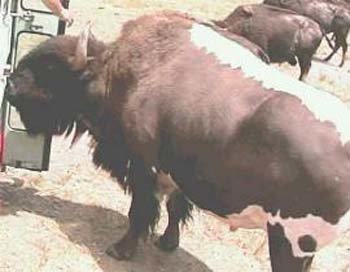
beefalo2.jpg
 
NO, I didn't even express that.


The difference is you seem to imply that is a bad thing, while I think it is a good thing ... for wildlife, for hunting, and for Montana's economy.

I do agree there are many ag producers who love Montana and are excellent stewards of their land. However, the more vocal ones who express paranoia, fear mongering, and "private property rights" which don't really exist are the ones of focus in this issue.

Kat is spot-on in advocating for fact finding and collaboration from all stakeholders in this issue.
Unfortunately, many of those who purport to represent the ag industry are unwilling.

I love the protected areas and enjoy recreating on or near them every year. You don't see me demanding the sale of public lands or believing grazed down acres are a good thing. Please find a post on any of the sites I frequent that didn't support protecting wild places. .

It's the current "average ag background" perspective that seems to have lost the basic love for Montana which had originally made farmers and ranchers the popular and most admired citizens, primarily due to their heretofore, perhaps now extinct, attitudes regarding wildlife, conservation, and love of the Montana landscape.

It was NOT the likes of Toby Bridges, Senator Brenden, UPOM, MOGA and such that "brought back from the brink" the many species of birds and wildlife in Montana a hundred years ago.

As a lifelong Montanan and grandson of maternal and paternal grandparents who homesteaded the "Big Flat" in Blaine County, I view the ag industry from a historical and proud perspective.
I wish more ag producers would see Montana with a broader more futuristic perspective and realize the fragility of the "Last Best Place" that they seem willing to change to be just like any other place ... as long as they can make whatever money they think they need ... but is as temporary and fleeting as each of our times trodding the landscape of Montana.

You lump everyone into the same group in the above post and only you get to decide who loves Montana.

You can't have it both ways you can't lump every ag producer together without expecting your opposition to lump every hunter together. In Montana do road hunters driving around looking to shoot something near the road out number the guys who strap their camp on their back and hike 10 miles up the mountains to hunt? Which group of hunters loves Montana and wants to keep places wild? In the Breaks what I witness is the hunters have as big of an impact as the cattle industry and judging by the number of 4 wheeler trails, lots of hunters don't love the Breaks as much as the ranchers do.

Nemont
 
I'm personally not interested in hunting bison. It is like shooting someone's cow. Buffalo are dumb. They just look at you like a stupid cow. The only way I might be interested in shooting a stupid buffalo would be to use my great uncle's buffalo gun....or perhaps just use his old gun on a steer. The way I figure, native americans hunted buffalo because they are easy to hunt and produce a lot to eat...has to do with the stupid part again. I also don't by the buffalo grazing is better BS or the rancher and farmer don't care about the land or animals BS.
Buffalo/beef both are easy to hunt, both can cross breed, and both get through fences.
View attachment 37467

Nowhere near as much fun as finishing off a couple dozen wounded/maimed antelope huh?

I really have no idea how the divide between ranchers and outdoorsmen is going to get spanned, it's just so obvious how fundamentally different the two sides see things.
 
I'm personally not interested in hunting bison. It is like shooting someone's cow. Buffalo are dumb. They just look at you like a stupid cow. The only way I might be interested in shooting a stupid buffalo would be to use my great uncle's buffalo gun....or perhaps just use his old gun on a steer. The way I figure, native americans hunted buffalo because they are easy to hunt and produce a lot to eat...has to do with the stupid part again.
View attachment 37467

If you read the journals of Lewis and Clark I think you'll find that most of the animals up in your part of the World showed the same ''Dumb'' behavior . Start hunting them and see how dumb they are in a Generation or two.
 
I really have no idea how the divide between ranchers and outdoorsmen is going to get spanned, it's just so obvious how fundamentally different the two sides see things.

I think part of the divide is the broad brush painting of groups as all one perspective or another - like hunter versus rancher. I know ranchers that are ethical hunters and love the wilderness. I know farmers that are ethical hunters and supportive of the wild and wildlife conservation. I also know ethical hunters that are conservationsists that are not part of any hunting groups and have no representation, no voice and people who identify themselves as conservationists who hunt. Likewise land owners that are pro wildlife.

The polarization of groups is coming about when you have an industry association like the Montana Stockgrowers Association who states in legislative hearings and such that they represent the ranchers and consistently votes against public lands, public hunter access and wildlife issues in Montana and is very vocal. Yet I know livestock owners who have stated that the Montana Stockgrowers Association doesnt represent them. You can talk to alot of people in the organic industry and they will state that they have to fight the livestock industry tooth and nail. UPOM is another example, all about private property rights and there at the legislative hearings and bison meetings - very vocal, but they dont represent all landowners, especially those that are pro wildlife. Some of these groups outright lie, misrepresent, inflame situations and use fearmongering and those that are better connected and better funded, just do it a hell of a lot more efficiently than others.

No different than some of the specialized wildlife advocate groups that use the same tactics to push their agendas or the wildlife groups that hate hunters and use the actions of the minority, those that many of you would not call hunters but poachers, as the poster child for all hunters, saying hunting is barbaric, outdated and should be stopped, that it is cruel and not necessary, just a bunch of killers. I hear it all the time from some conservation and wildlife advocates, while we are having great conservation conversations and love to shake their world view up by telling them that I am a hunter and hunting advocate.

Like Ben mentioned before, you have two extremes with 90% in the middle, though I would say there are not two factions but more like 4-6, depending on your lumping parameters. :) And in my opinion, the way we can help to mitigate these problems is by stop giving the f*cking mic and seat at the negotiation table to the extremist groups with the one sided agendas and start listening to and including the greater number of marginalized Montanan's that are parts of many perspectives. These are the people that could make some real headway into these polarized issues. People like predator friendly sheep rancher Becky Weed. Or hunter, wildlife conservationist, organic farmer Bill O'Connell. Or hunter, wildlife conservationist advocate Matt Skoglund. Or private property owner, hunter, predator friendly, wildlife conservationist Bonnie Lynn.

Of course this is just one of my many opinions. ;)
 
"Or hunter, wildlife conservationist, organic farmer Bill O'Connell."

Better add former buffalo skinner. And maybe another venture or two!
At least my official policy is that I stick to non-controversial things like buffalo.

The Bison Citizen Working Group came up with consensus recommendations that addressed basically all concerns. Plus we stressed that perhaps the best place to start, is north and west of Yellowstone. Basically next to no conflict, big game winter range, overwhelmingly public lands...

Anybody here used to hunt elk in the Gardiner Basin, or say, the Taylor Fork...?

Except, I know, the next thing they'll be goring schoolchildren in Ennis! Except private landowners can lead and limit, and in spite of what some think, buffalo are smarter than that.
 
"Or hunter, wildlife conservationist, organic farmer Bill O'Connell."

Better add former buffalo skinner. And maybe another venture or two!
At least my official policy is that I stick to non-controversial things like buffalo.

The Bison Citizen Working Group came up with consensus recommendations that addressed basically all concerns. Plus we stressed that perhaps the best place to start, is north and west of Yellowstone. Basically next to no conflict, big game winter range, overwhelmingly public lands...

Anybody here used to hunt elk in the Gardiner Basin, or say, the Taylor Fork...?

Except, I know, the next thing they'll be goring schoolchildren in Ennis! Except private landowners can lead and limit, and in spite of what some think, buffalo are smarter than that.

What you didnt buy those hides you have? I'm impressed. I will keep your extended resume in mind when I plug you as an example of a multi-interest Montanan.
 
I'm personally not interested in hunting bison. It is like shooting someone's cow. Buffalo are dumb. They just look at you like a stupid cow. The only way I might be interested in shooting a stupid buffalo would be to use my great uncle's buffalo gun....or perhaps just use his old gun on a steer. The way I figure, native americans hunted buffalo because they are easy to hunt and produce a lot to eat...has to do with the stupid part again. I also don't by the buffalo grazing is better BS or the rancher and farmer don't care about the land or animals BS.
Buffalo/beef both are easy to hunt, both can cross breed, and both get through fences.
View attachment 37467

Thats great for you, but there's plenty of us that do want to take a Bison. Your not anymore important than the rest.

If you don't want to take part in a Bison hunt don't apply.

If you force animals to un naturally graze a piece of land to long it will have negative effects. Doesn't matter what animal.

So how do you feel about game farms?

Hunting Moose?

Hunting Muskox?

Maybe your expertise of hunting is for just the more elusive of the creatures on this planet, and that's all we need to have free roaming.

I do know this, you can leave Bison by themselves all winter, and they survive, Beef not so much. Why is that? Maybe Bison are smarter than Beef.;)

Kind of all over the place but this bias towards Bison makes me ill.
 
I do know this, you can leave Bison by themselves all winter, and they survive, Beef not so much. Why is that? Maybe Bison are smarter than Beef.;)

Shoots-straight, it is going to be interesting as it gets hotter as well. Because not only can bison tolerate colder temps that the weaker domestic cattle, but they can also tolerate hotter temps. I was just reading a paper, within the lasdt 2 months, on domestic cattle stress levels in hotter temps, especially those raised in northern climes, versus the temp range of wild bison. The cattle breeds that can handle the heat better are not necessarily suitable for our drastic cold. That temp stress weakens the cattles immune system.
 
Funny thing about bison and wolves...somebody always knows what is "best" for those of us who have lived here for 5-6 generations....apparently we are expendables.
There is unfortunately no room for "free-range bison". This is simply a fact...not that with the right amount of $$ enough of us can't be bought out and this pipe dream realized....but guess what, those of you who are GULLIBLE enough to believe that you will be "hunting wild bison" better think again... at first there will be limited entry permits, but after a few short years the grizzly bears and wolves will be doing the hunting. There will be no hunting on the APR within the next few years...sure right now they allow some hunting, but not for much longer. The former head of APF/APR said as much(might be why he quit them).

Bison are not suited for a severe N.E. Mt winter either, this is why they migrated south. Certainly the bison is more hearty than domestic cattle are, but God did not equip them w/ snowshovels. He equiped them w/ GPS and they went south for the winter...just like the Native American's did...even they were smart enough not to winter in this foresaken Klondike s.o.b. that we call home.
 

Latest posts

Forum statistics

Threads
117,861
Messages
2,171,925
Members
38,371
Latest member
debrafite116
Back
Top