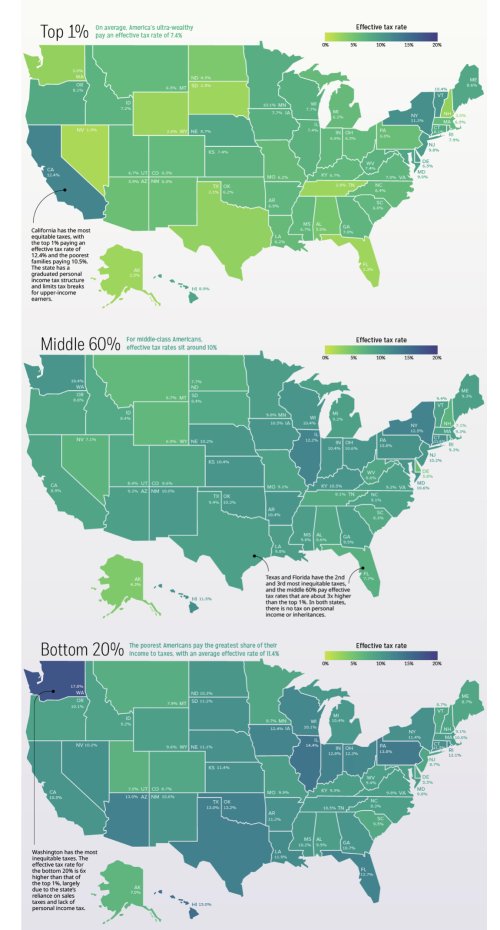
Here's an example of sales tax vs a progressive income tax.
Case 1: 5% sales tax:
Suppose you spend $10,000/year on essential taxable items, (or worse, $30,000 on a car). $500 is a really big deal to someone living paycheck to paycheck. They are going to have to give up food, or something essential. On the other hand, it won't affect a high-income person's situation as they have excess money beyond that needed for essentials. In fact, they have enough money to avoid the tax altogether by investing or spending it elsewhere. This is why Gianforte pushed for a sales tax until Montanans pushed back.
Case 2: A progressive income tax.
The person that is living paycheck to paycheck is in a low or 0% tax bracket and would pay little or nothing, so it wouldn't affect their ability to buy essentials. While the high-income person pays more, it isn't enough to prevent them from buying essentials. It is also harder for them to avoid the tax by investing
The same arguments apply to a flat tax vs progressive tax. Property tax is somewhat flat and also passed onto renters. By the way, the MT session before last flattened the MT income tax, raising the rate on low income earners and lowering it on high income earners.






 Higher cost of rebuilding maybe? Higher chance of extreme weather events?