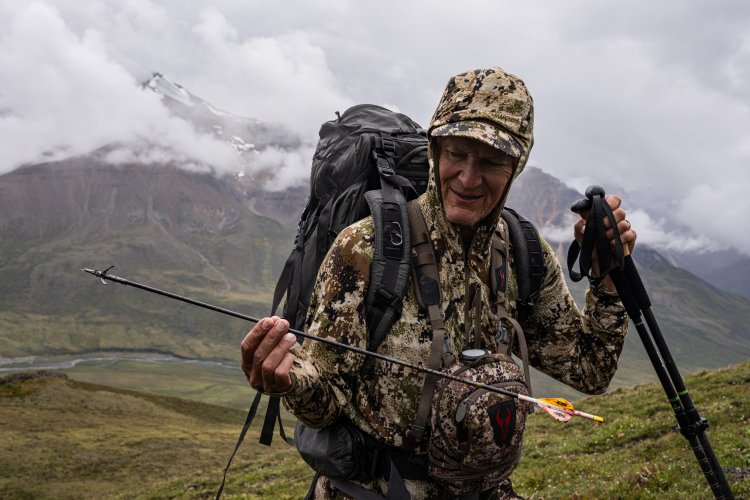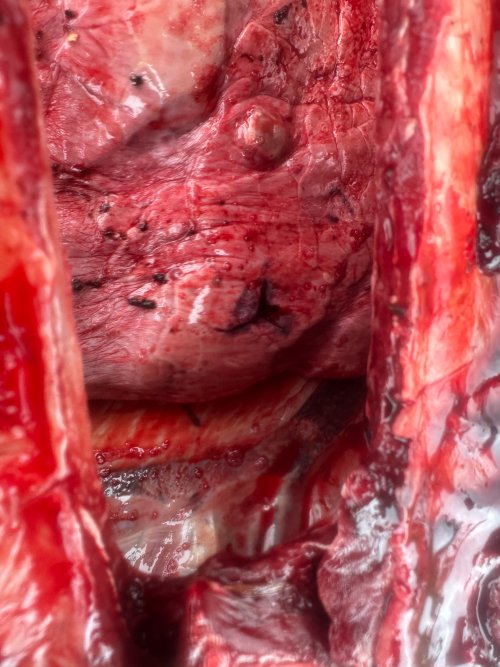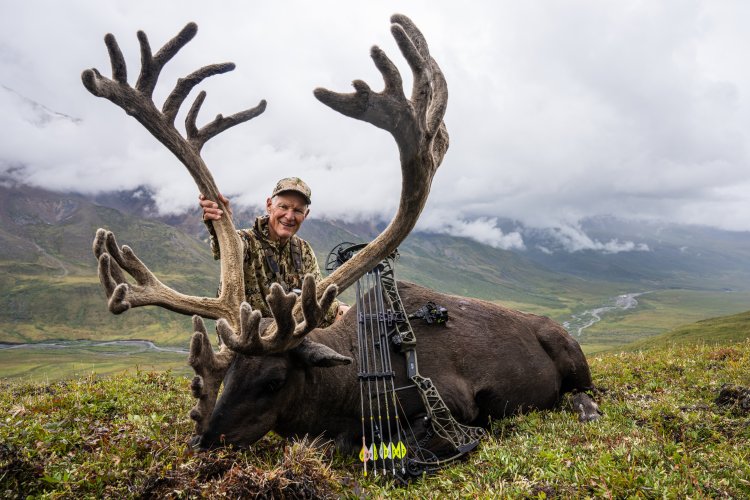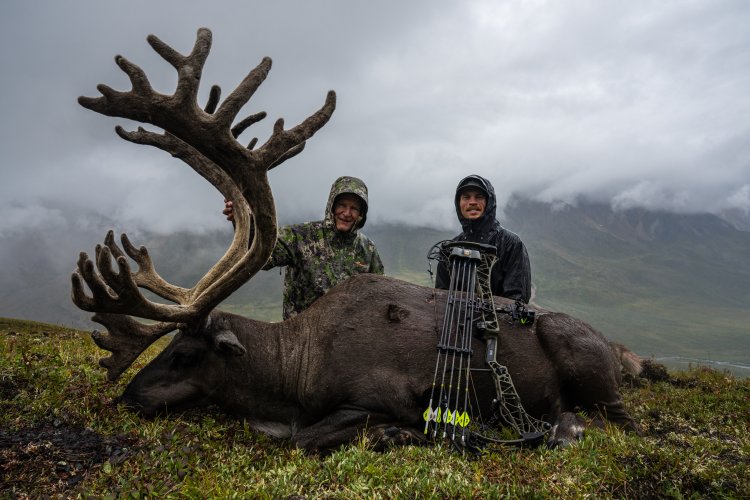

The MacKenzies - The Land that Time Forgot

Big Fin

Administrator
Staff member
Joined
Dec 27, 2000
Messages
17,391
Location
Bozeman, MT
A part of me thinks I should just post photos of this adventure and spare the writing. Yet, the other part of me is trying to find words that articulate how it is that some of us connect to certain places in a way that is hard to explain to others. I suspect we all have our own place of refuge from the demands and expectations of the real world. For me, it seems the MacKenzies are that place, though my place of refuge wasn't always a place so isolated, lonely, and remote.

As I think about the regenerating value of lonely places, my mind goes back to Pine Island State Forest as the location where I found a lot of comfort at a difficult time in my life. My parents went through a messy divorce when I was ten. Being the oldest of three kids, I was probably caught in the middle of it more than my younger siblings, and that seems to be why I sought places that made sense.

The perfect "nuclear family" notion seemed to be my future. Yet, when my Dad decided that drinking was more important that running his businesses, that notion came unraveled in the course of about three years. Standing on our steps, watching his logging equipment, his trucks, and his land get sold at a bank auction was a stark reality of how rapidly one's world could come unwound.

When my Dad moved a few hours away to find work in the iron mines, I was pretty much on my own as far as outdoors. Thankfully, with a quick half-mile walk down the hill from our trailer house, across Larry and Patsy Cook's place, onto Albin's land, I could climb up into the trolley car that took me across the Big Fork River to Pine Island State Forest. In doing so, all the stresses of life were left behind. Nobody knew where I was. And nobody else invested the effort to trolley across the river and disturb my three-thousand acre pieces of unexplored wilderness.

It was this place where I found some sanity in during a very turbulent time. I didn't understand why I was so attracted to that place. Not sure I can explain it well, even today, fifty years later. Yet, in this small place, a place that seemed like the most remote corner of the planet to my ten year old mind, it was very comforting.

Things made sense. The false premises of human society were absent. No egos, no charades, no human drama, no stigma for having divorced parents, none of the fake expectations humans created. Nope, just some Ruffed Grouse I hoped to find, a lot of Snowshoe Hares, Evening Grosbeaks by the hoards eating on wild rose berries, and the hum of human activity drowned out by the gurgle of the river. The simplicity and honestly to my young mind was very comforting.

Since that time, it seems I've continued to seek places of refuge from humanity. Maybe it is my coping mechanism. Maybe it's just the human need to be undistracted, focused, and calm. We attach many terms trying to explain such; "recharge our batteries," or "soothe the soul," and many others. Whatever term we use, it works for me. And as I left northern Minnesota, the places that provided that feeling for me got bigger, wilder, and more remote. As I got older and my budget allowed, the places I sought were even further from the modern world.

When I went to college in Nevada, there were lots of vast lonely mountains and basins. When I moved to Montana, the presence of grizzly bears kept most people out of my newly discovered favorite spots. With family in Alaska, I had shortcuts to adventures and lonely places that made my Montana sanctuaries seem semi-tame in comparison. And then I discovered northern Canada, specifically the MacKenzie Mountains.

All of those special places along my journey, from Pine Island State Forest, to Nevada, to Montana, to Alaska, have done some great things for me. They've provided some great adventures and some quiet times to sort out my thoughts and re-prioritize my life. Yet, for reasons only explainable to those who have been there and find the same comforts in loneliness and human insignificance, the MacKenzies are a different level.

My first trip to the Mackenzies had me looking for what was there - Dall's sheep, Mountain Caribou, grizzlies, and a landscape seemingly just unpackaged for human view the day before I arrived. This trip, I would be coming back for that "isn't there." What "isn't there" is human complexity, noise, internet, cell service and it's continual pinging, expectation of immediate response, masses of people, drama, politics, and a much longer list of conditions absent from the MacKenzies.

Flying out on the final day of my last trip was a contradiction of feelings - still in awe and wondering how such a dream became reality, offset by the realization I'd likely never be able to return. When I got home, a lot of thoughts focused on returning to the MacKenzies, the most significant being the cost to do so. Being a tightwad CPA can result in some screwed up priorities, most often leaning towards financial security. Two weeks in the remote expanse of northern Canada helps align those priorities.

Unburdened with the normal American obligations of mortgage, retirement savings, college costs, and other adult-duties, reprioritizing got a lot easier when I really thought about it. It took two years and a cancellation opening to get back to the MacKenzies, but with Mrs. Fin's complete support, a lot of my "saved this for a rainy day cushion" is going to be pissed away while my health allows.

Those who feel the slow erosion of Father Time probably relate to this "later-in-life" reprioritization. I know I would not have related to it in my thirties or forties and my effort to maintain a pace on the Great American Treadmill. Add in a liver condition that at last report was showing incremental decline, and I am the classic poster child for the slogan, "Beware of an old man in a hurry." I'm in a hurry alright; a hurry to immerse in places that slow down the craziness of our modern lives and allow me to throw away the last four pages of my five-page "to do list."

I have spent a lifetime searching for my "MacKenzie Mountains." The MacKenzies are a place on a map, a place that time has yet to disturb, yet I'm starting to realize that we all have our "MacKenzie Mountains," sometimes not too far from home, maybe not as vast, and maybe not as quiet, yet they are "that place" that does something for us that we know is good for the mind, the body, and the spirit. I feel blessed when I get to be physically present in the MacKenzies, yet some times "My MacKenzies" are in a remote bay on Fort Peck, alone on the vast Montana prairies, in a lonely sage basin of Nevada, or listening to the click of llama hooves trailing behind me in western Wyoming. For the times I can't be in northwest Canada, I cherish those special places and the refuge they offer.

With that background, I'll try to do justice to a place, an adventure, and a hunt that is hard to explain with words. Physically being there is the only way I know to fully appreciate it. I hope everyone has their "MacKenzies" and they spend as much time there as possible.
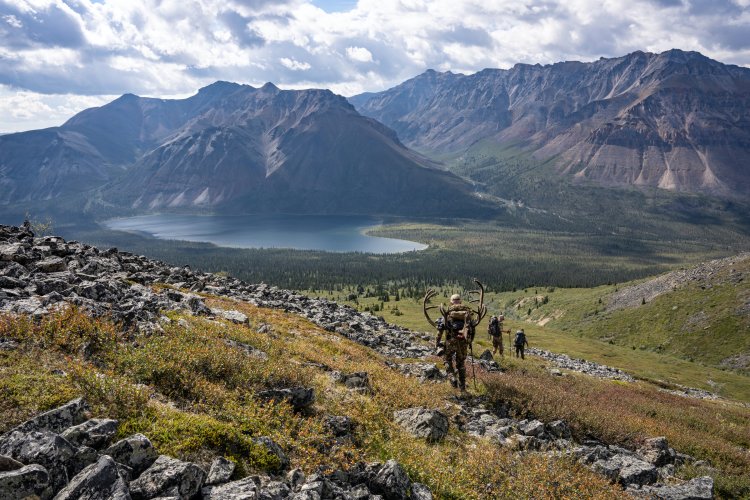
Marcus Hockett - 2026 - NWT-216.jpg
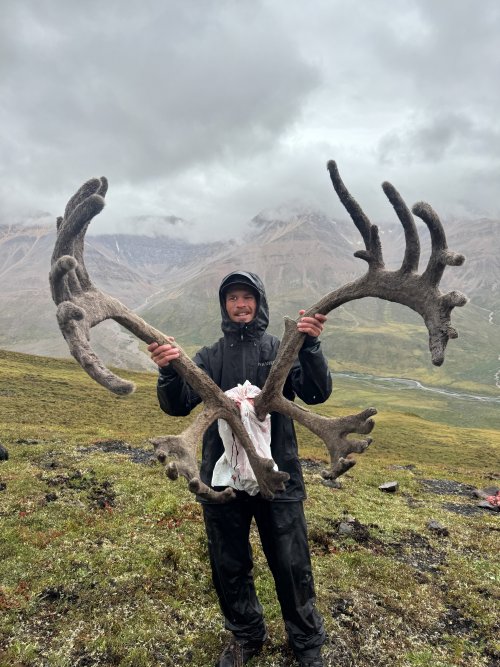
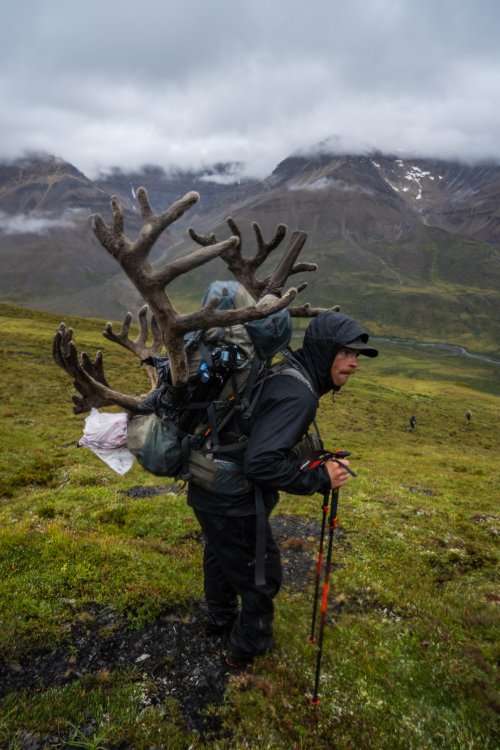
As always, amazing photos are credit to Marcus Hockett.
 
The logistics of venturing to remote places is always well above the norm, with some sort of inverse relationship between the complexity of getting there and the value derived from being there once the logistics are behind you. For this trip, it went like this:

Day 1 - Up early. Pick up Mike, hunting partner on this trip and friend of 30 year, at 6:00am. Grab Marcus and his mountain of camera gear on the way out of town. To the border crossing at Sweetgrass before noon, with firearm paperwork paid for and the truck bound for Edmonton. Overnight in Edmonton and do a last re-sort of what I need and what I can do without.

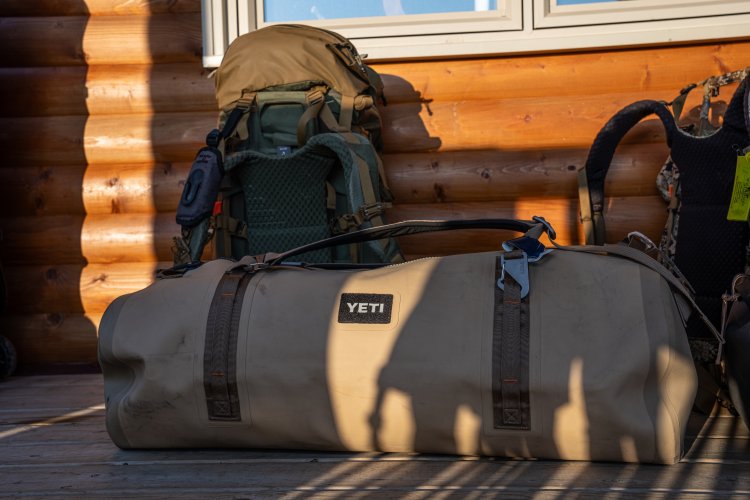
Day 2 - 5am to the Park2Go and shuttle to the airport. As always the Canadian version of TSA has an unexpected wrinkle. The firearm passes through with ease. Mike's bow adds no additional complication. Then they weigh our carryon bags. The lady must have woke up too early to get her daily coffee, as she is adamant that we cannot exceed 22 pounds per person. Marcus's cameras, lenses, batteries, and charging banks have him at 47#. Mike and I have our optics in our bags, putting us close to the 22# limit. I reluctantly pull the spotter and binos from my pack. I ask the lady to let me grab my checked bags where I burry those items. Marcus hands me our new $5K camera on its maiden trip, which I wrap in my clothes and bury deep inside a checked bag. Marcus reallocates batteries and charging banks between me and Mike. Somehow we get close to the 22# limit and the lady relents.
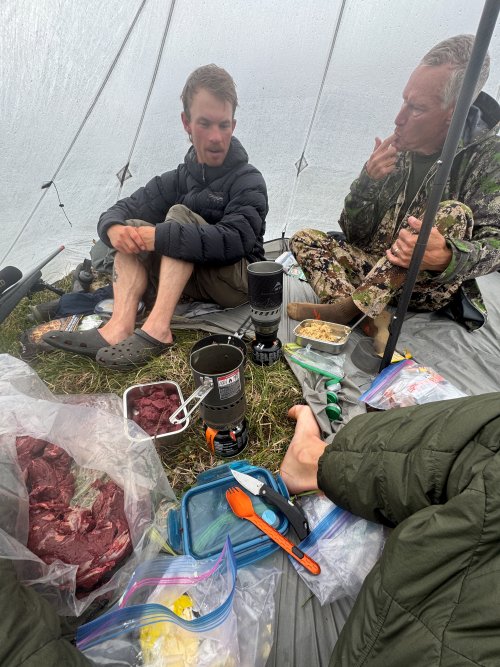
We get to Yellowknife around 10am. Rain pelts us as we whistle down taxis to take us and our gear to the North Wright Cargo terminal where we will take a twin turbo to Norman Wells later in the day. The depot is stacked with hunters returning and hunters going out. All twelve passengers are going to Gana River Outfitters with us (seven of us), or with Arctic Red just to the north of the Gana concession (five other hunters).

Touch down in Yellowknife around 5:45. Sense of relief when all firearms, bows, and cameras arrived without incident. Get shuttled to Canoe North, where we will get dinner, spend the night, and fly out of their seaplane base in the morning. Time to sort gear even more. Weight and space are even more challenging.
Marcus Hockett - 2026 - NWT-3.jpg

Hard cases for bows and firearms are stowed away, along with anything that might be a duplicate among the three of us. Al and Lin are great hosts. Lots of fun talk among the hunters, all of us having big expectations, possibly bordering on unrealistic expectations.

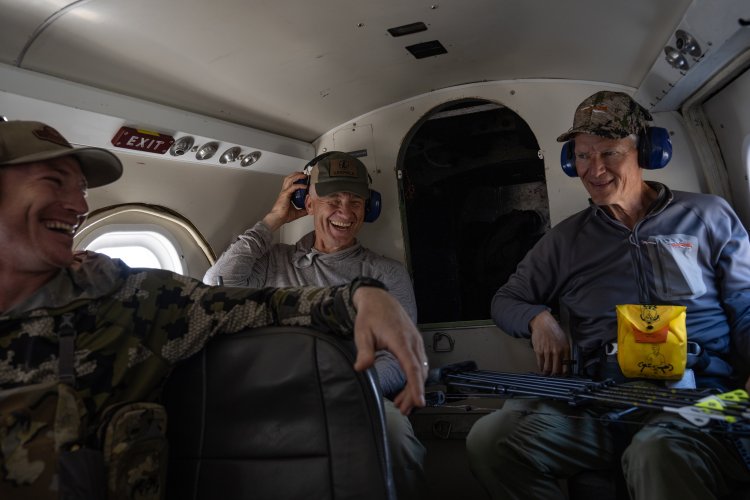
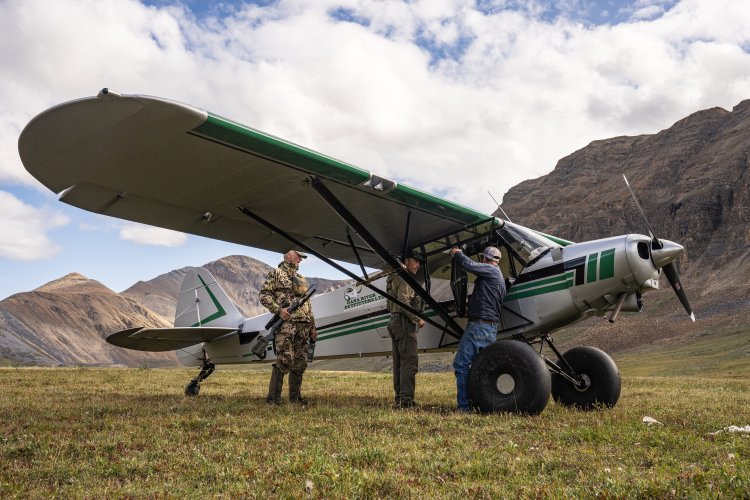
Day 3 - The Twin Otter is afloat and ready to go. We stow our gear amongst the drums of aviation fuel loaded for the use in the two Super Cubs Gana River has. Of the seven hunters, three are hunting sheep, me and Mike are hunting caribou, Sarah is the wife of one of the sheep hunters, and Marcus is the camera guy.

Our first trip is turned back due to bad weather. According to my onX, we are about 15 miles from base camp when the clouds are just too much. I feel the plane bank as we climb. We are obviously turning back.

Marcus Hockett - 2026 - NWT-6.jpg

While waiting for the pilot to get the plane ready for round two, a group of hunters fresh out of camp is brought to Canoe North. One of them looks very familiar. @psinclair steps off the bus, smiles at me and waves as he grabs his gear and his sheep horns. Mike, a former baseball teammate of Pat leans to me and whispers, "If I didn't know better, I'd think that is Pat Sinclair." I laugh, as Pat had mentioned he had an epic trip planned for this year. Luckily, his extraction date lines up with our insertion date. We catch up with each other for about twenty minutes before Pat and his crew are shuttled off to the Game & Fish office for registration permits.

It's worth reading the epic adventure of @psinclair at this thread - https://www.hunttalk.com/threads/mackenzie-mountains-in-july.333880/

Shortly after that group heads to the G&F office, the pilot lets us know there is an opening and if we hustle, we might make it. We land on Palmer Lake, the base camp of Gana River Outfitters, around 2pm. We are met by the welcoming party that is the entire Gana River crew, from the owners down to the guides, cooks, and wranglers. Waiting there with his caribou wrapped and packaged for cargo is @MTGomer. A buddy of Mike's also happens to be there. What are the odds of being this far from the real world and everywhere we go there is someone we know?

As we deplane, the Otter is loaded with more gear and people for the return flight to Norman Wells. Harold, the outfiitter and managing partner of Gana River shows us our cabin for storing our gear. He tells us that supper is ready and if all goes well, we might fly out to our hunting area yet tonight. That would be great, as we wouldn't lose one day due to the 12-hour flight rule of NWT. It also would force me to get my act together and repack all of my ten day's worth of food and belongings in my pack and meet the weight limit for the Super Cub.

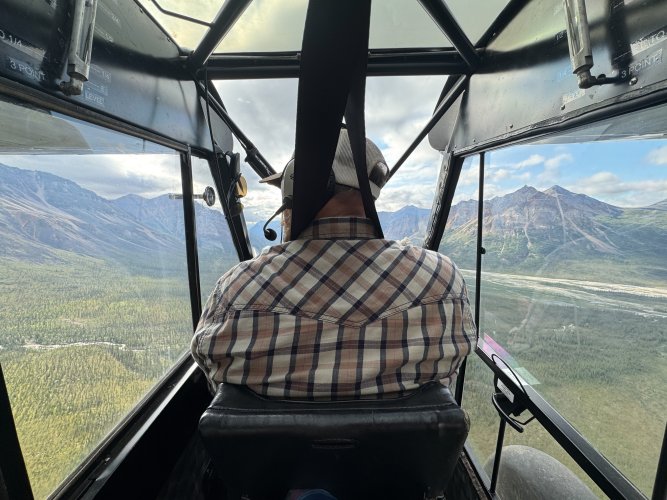
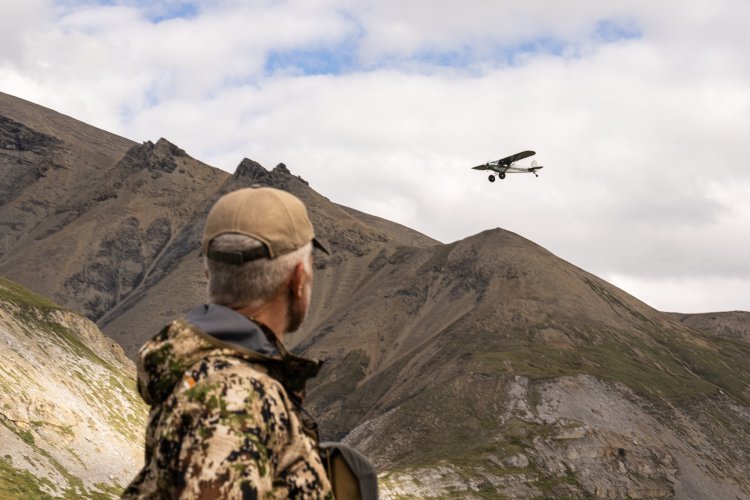
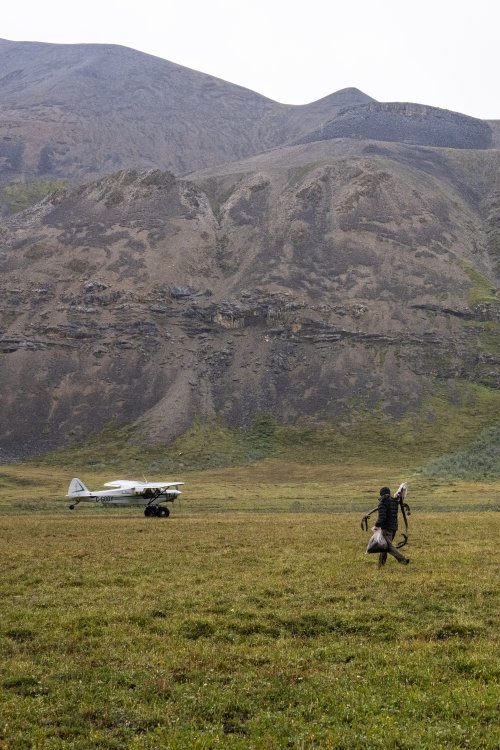
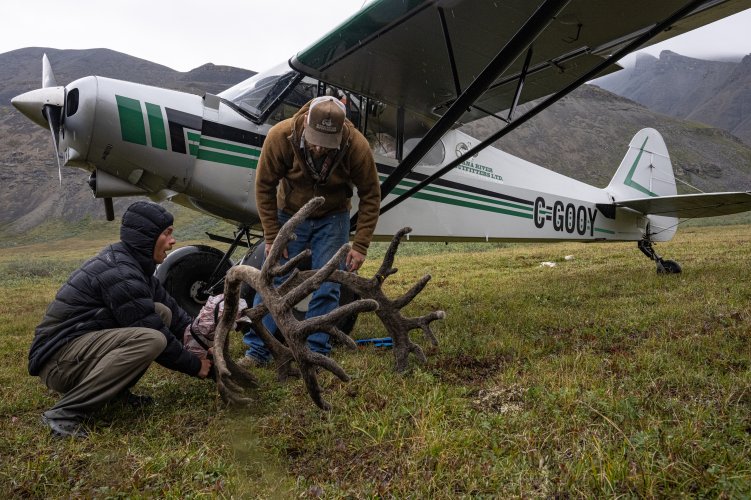
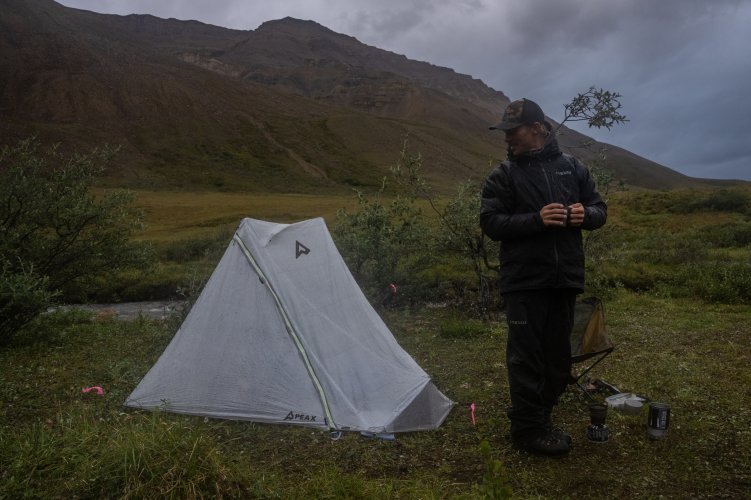
And that is what we did. By 10pm the two Super Cubs had shuttled me, Mike, Marcus, and our guide, Riley, to a short piece of tundra standing high enough to not be washed away by the braids of river that sandwich both sides of this soft patch.

MH Phone - 2026 - NWT-2.jpg

Something cool about watching your last connection to technology and humanity fly off over the ridge lines. A sense of relief, freedom, and calm suddenly take over. This is what you came for. Be present. Enjoy it. Forget life's burdens. The next ten days are what dreams are made of. Be grateful that your life events have led you to this point, on this day, in a remote valley that seems impossibly beautiful.

Marcus Hockett - 2026 - NWT-139.jpg

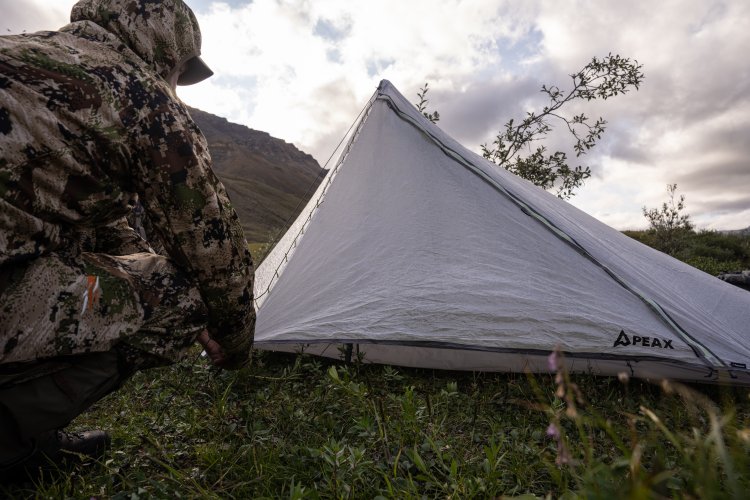
Camp is set.
Marcus Hockett - 2026 - NWT-27.jpg

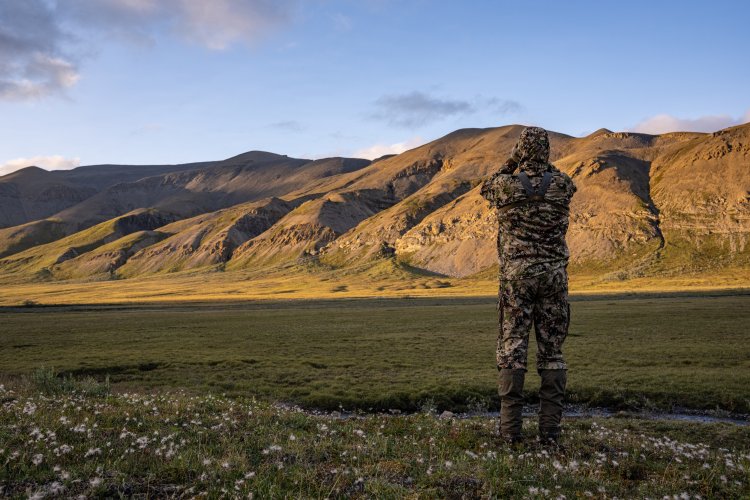
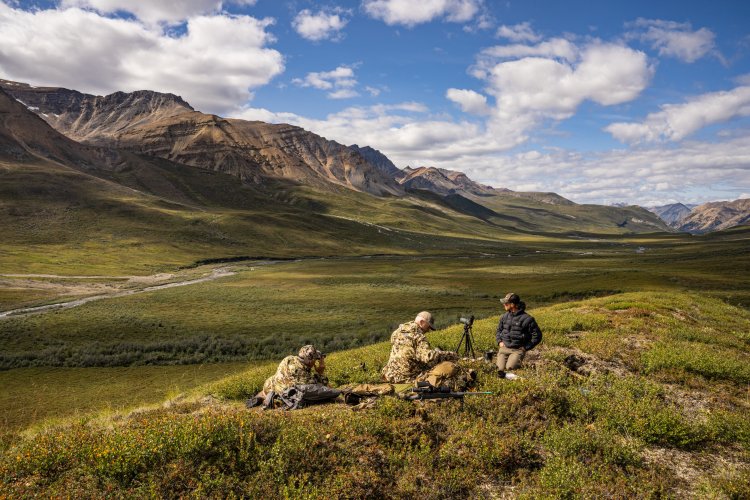
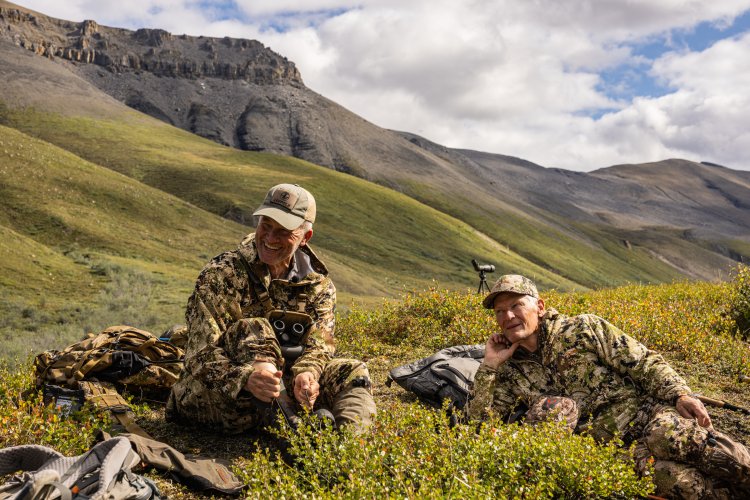
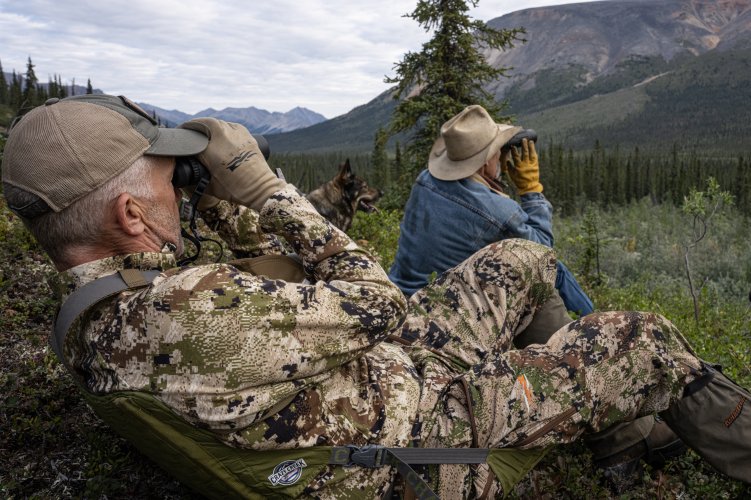
A grizzly strolls across the opposite side of the valley, as if to tell us who owns the joint. He's completely unaware, or maybe unconcerned about the intruders trespassing on his turf. Maybe it's just one of the many reminders I will have as to how insignificant I am in the bigger picture. No matter the bear, we start glassing for caribou in between our comments of awe as to how beautiful this valley, one valley among dozens nearby, is to the human eye.
Marcus Hockett - 2026 - NWT-35.jpg
 
August 6 - Hunting Day 1

I needed some sleep. The anxiety of logistics, gear, final details before leaving town, always wear on me. The guys were up around 6:00am sharing coffee and excitedly chattering about what might be on these ridges. I stayed in the tent until around 7:45 am. My liver wasn’t feeling very good and rest, even an extra hour, seems to be the best medicine.

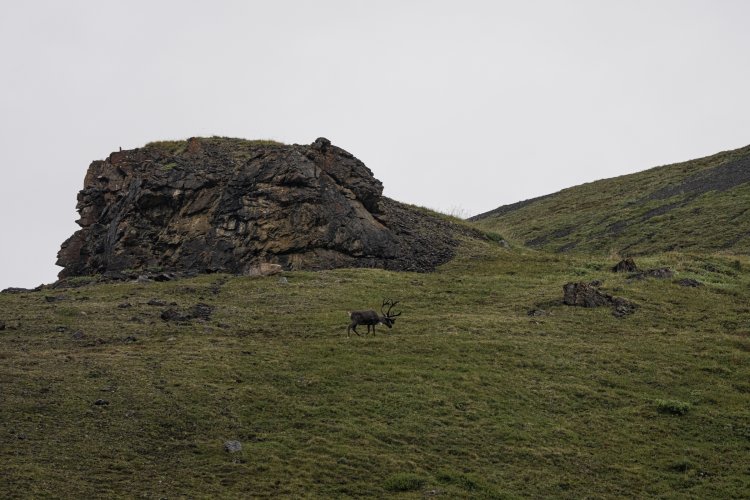
While eating breakfast on a small tuft of tundra, Riley spotted two caribou bulls on one of the "lower" green hills. One very good bull and a slightly smaller bull. They are feeding just above a grizzly bear. Riley has hunted this valley a few times, some for sheep and some for caribou. With the hot temps, he predicts the caribou will go high to escape the Warble flies, mosquitoes, and cool down.

The bulls grazed out of view by 9:15am. Mike and I commented how deceiving the distances were. We had guessed the bull to be about a mile and a half away. Nope. I could get a 2,500 yard reading on a rock that was maybe half way there. Dang, this is gonna be a hike.

Riley had us loaded and laid out his plan for the day that would hopefully get us close enough for a better view. With the next two days forecast to be unusually warm, Riley wanted to use those days to locate as many caribou as possible. His theory is that cooler weather, even rain, is "caribou killing" weather. To have multiple groups located for the weather change headed our way on Day 3 would be beneficial.

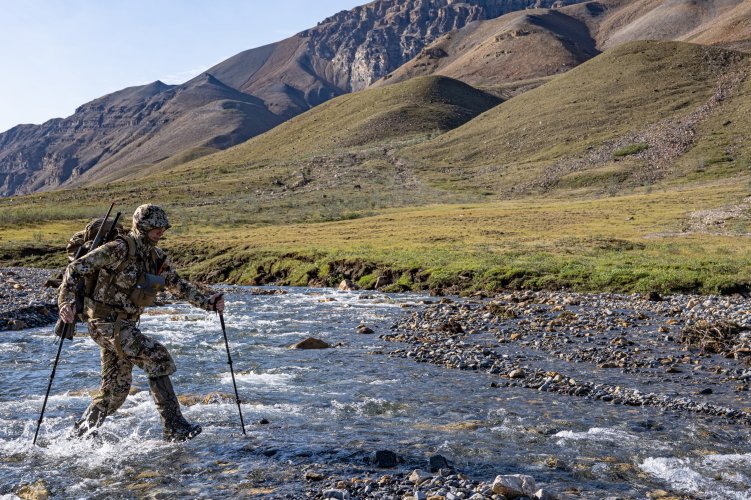
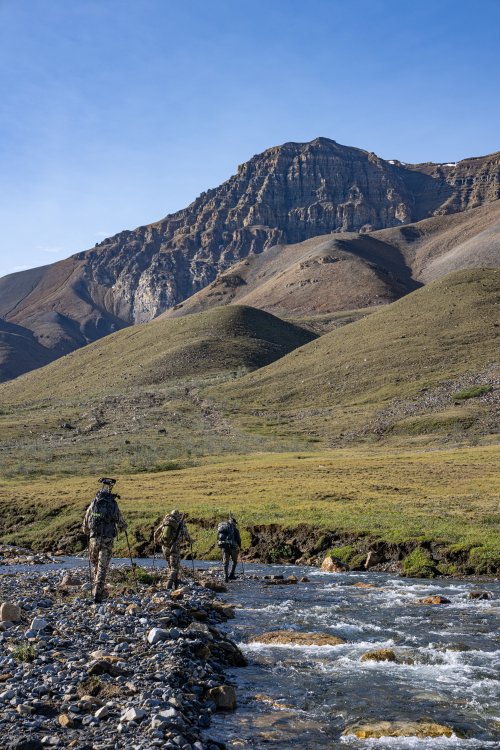
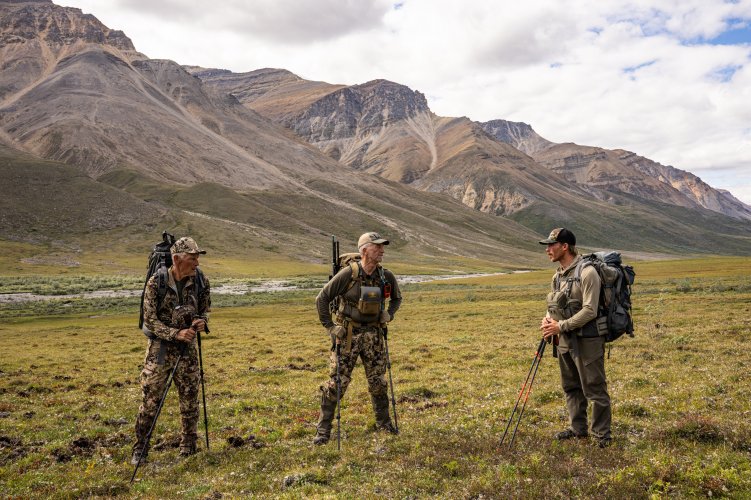
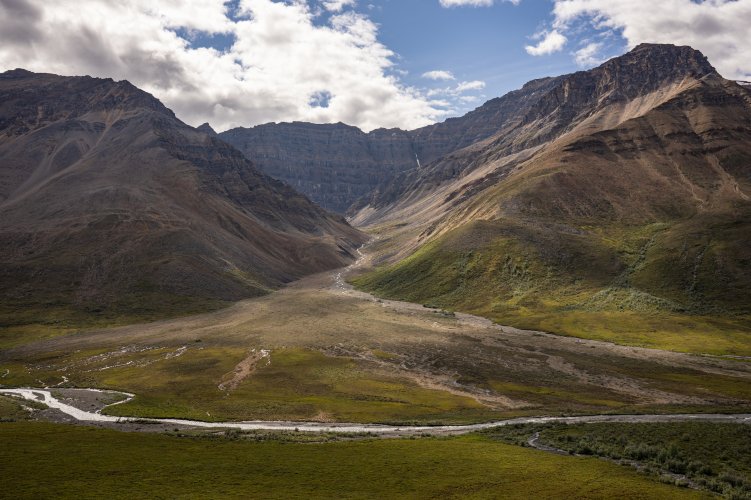
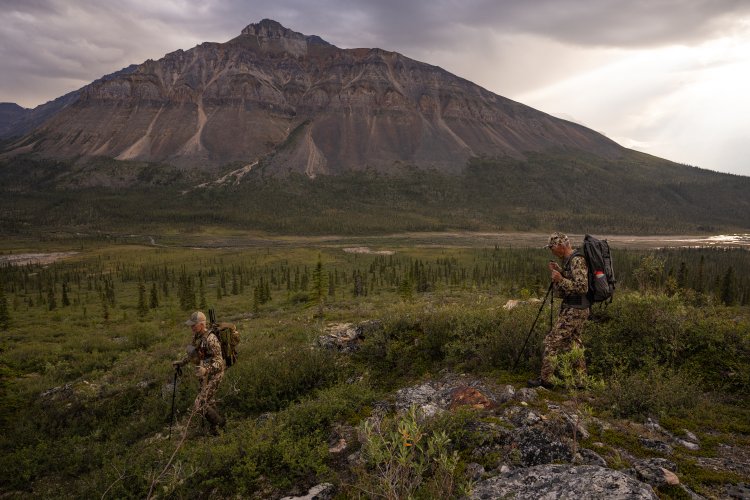
We hiked down valley a couple miles, crossing and recrossing the river braids, pausing to examine grizzly, wolf, and some caribou tracks littering the few sand bars.
Marcus Hockett - 2026 - NWT-45.jpg

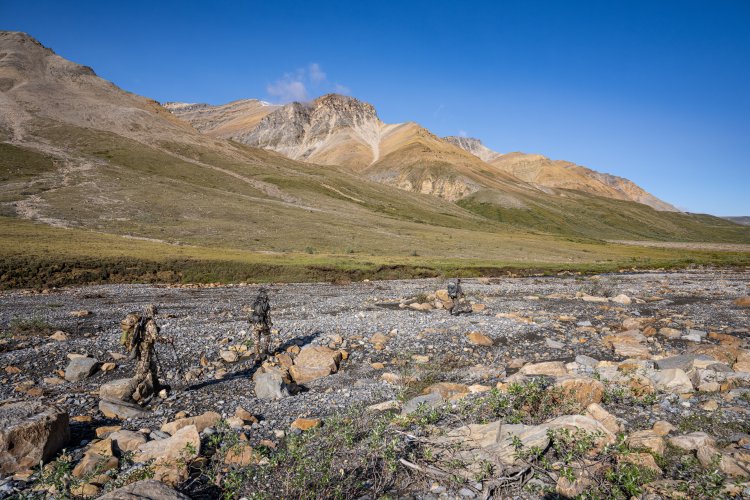
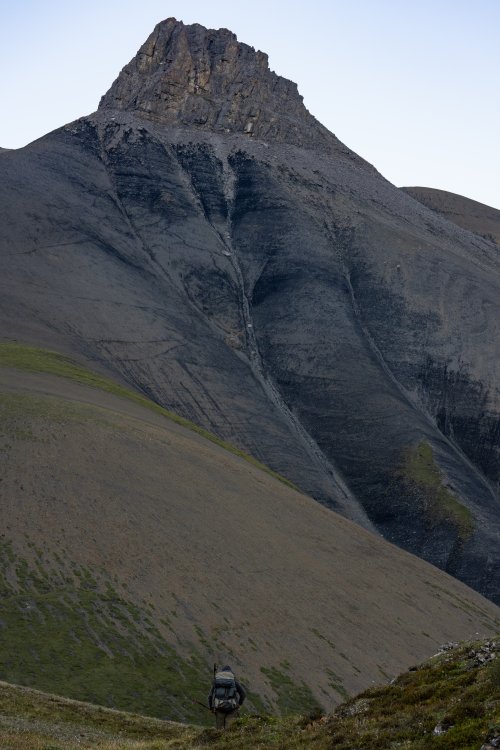
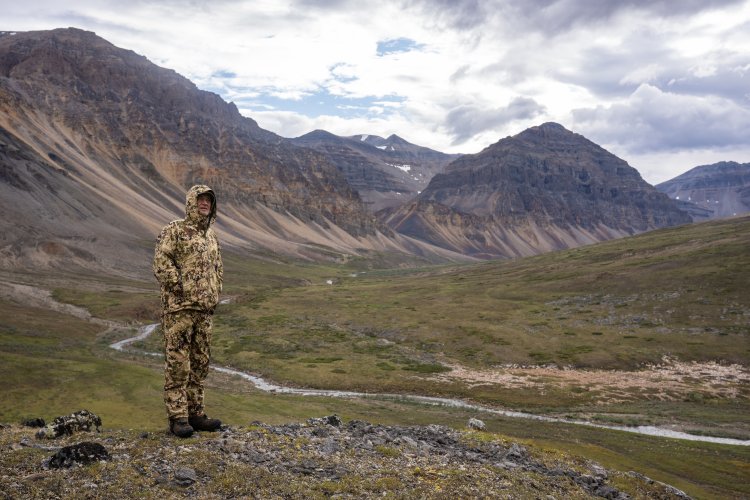
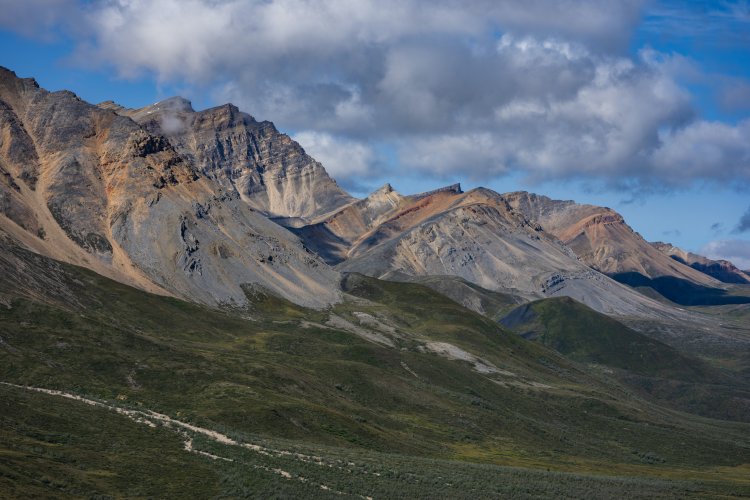
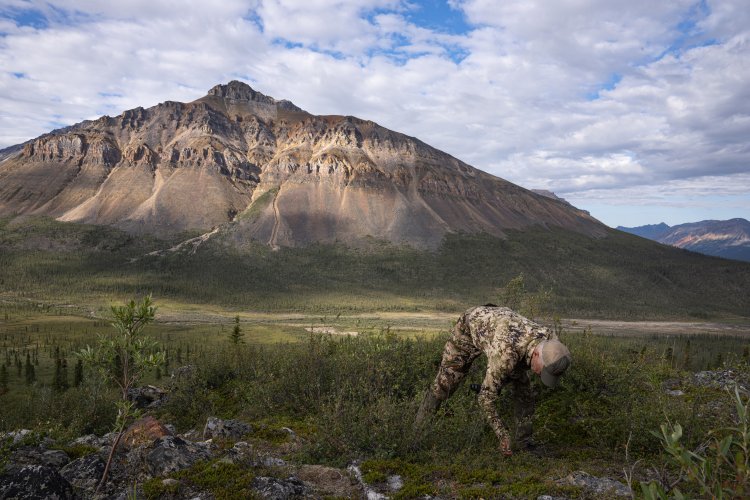
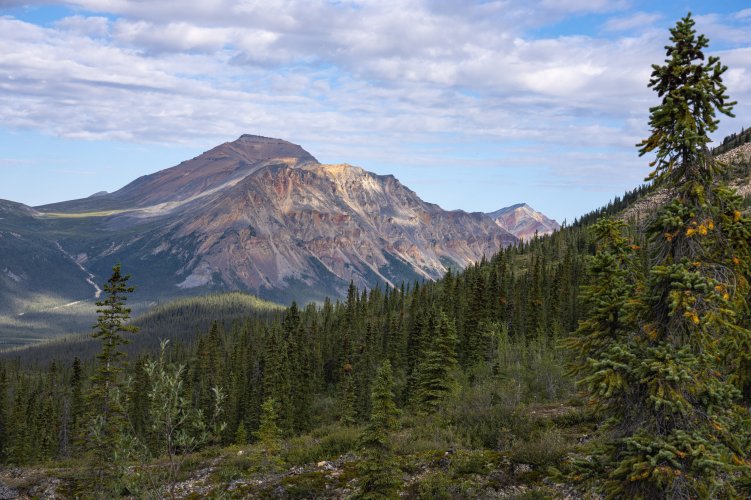
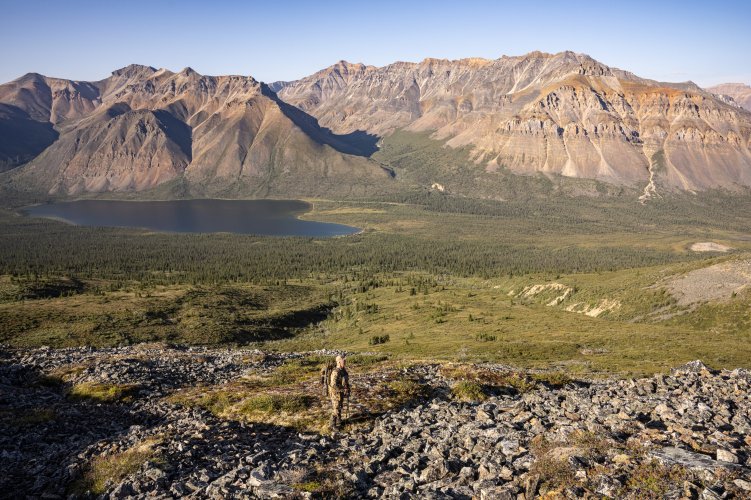
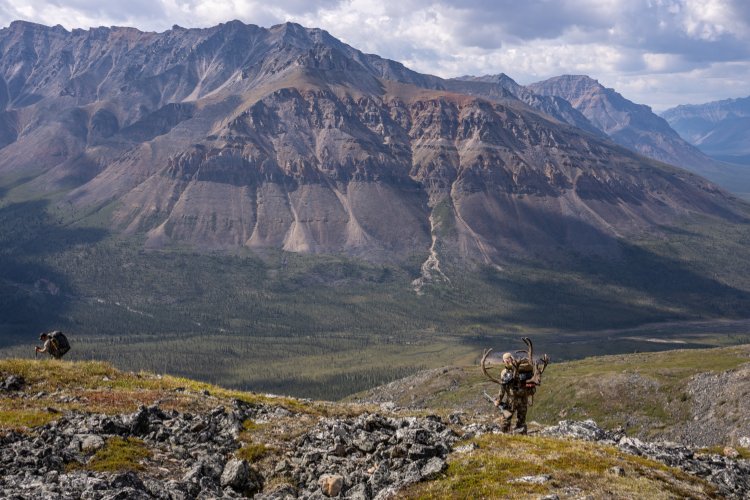
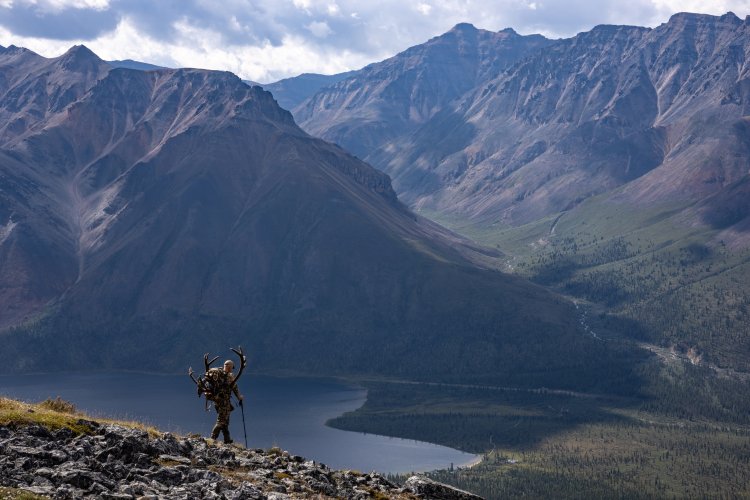
I think all of us were so distracted by the scenery that we could have easily missed some caribou along the way. These mountains look like the youngest mountains on the planet. I'm no geologist, but the rugged, unpolished edges, lacking much evidence of erosion, make it seem that a rapid tectonic convergence happened just a few years ago leaving the MacKenzies as witness to the geologic powers that form our landscapes.
Marcus Hockett - 2026 - NWT-42.jpg


Eventually Riley led us to a wide alluvial fan. We dropped packs and set up spotters. I dug out some bug dope and deployed my head net. These temps were perfect for mosquito revelry. With all pleasures must come a few inconveniences, and the bugs here on warm days are surely that. Yet, a minor distraction to the aesthetics.

We relocated the two bulls. They were in a great location - just whether or not they’d stay there with these hot temps. If the wind could keep the bugs away, they might stay put. If not, they would likely climb into the far reaches of rock, snow, and shadows for relief from sun and skeeter.


We crossed the river as we headed east. A foraging grizzly was an obstacle we had to navigate. Riley decided it was best to gain elevation above the creek and see if the bear would stay below us. It worked perfectly as the grizzly fed out into the broad valley allowing us to continue our trek.

We stopped on the first big bench trying to nudge its way into this long north-south valley. It gave a good view of the bulls above and a quick chance to glance down the valley for more caribou. No other bulls were found, but the view was worth the stop. The bulls above were still bedded, just barely visible from this bench that got us closer, yet at a steeper angle below them.
Marcus Hockett - 2026 - NWT-126.jpg

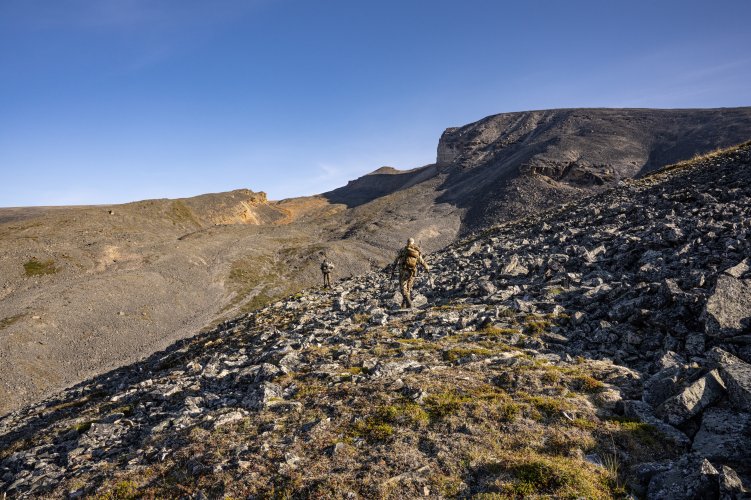
Riley decided that with the change in winds, mostly thermals now pushing upslope, we had to get above them. How to scale the 1,600’ of vertical to get above them without being spotted or winded. We got there. It took a lot of time, but within three hours we were in position for Mike to stalk. Hopefully the bulls were still there.
Marcus Hockett - 2026 - NWT-47.jpg

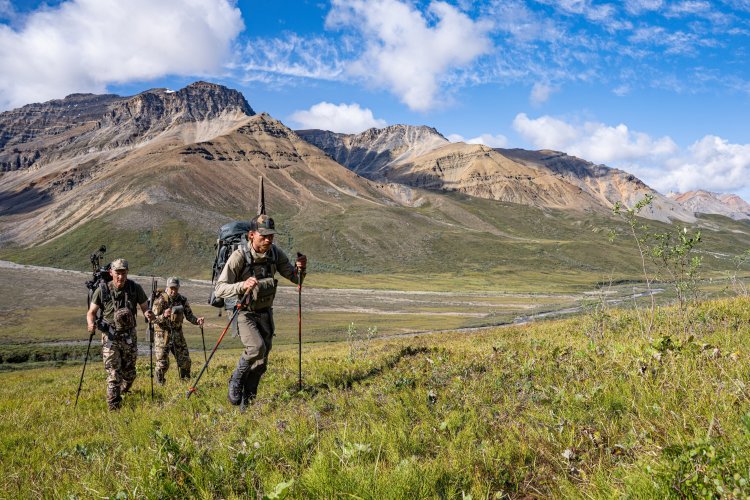
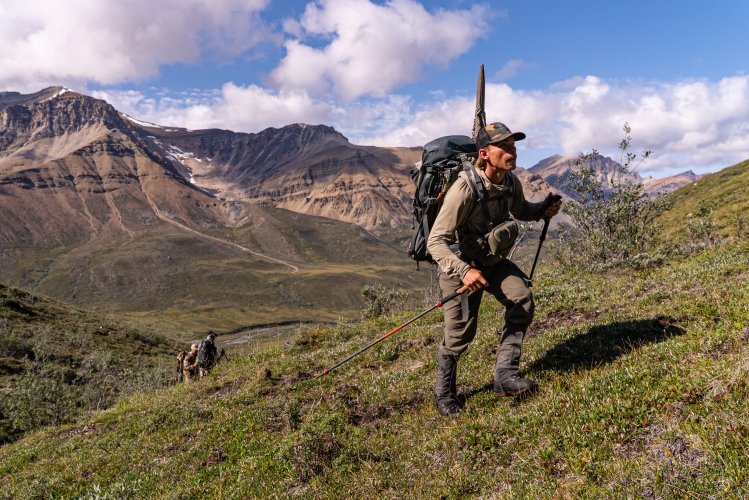
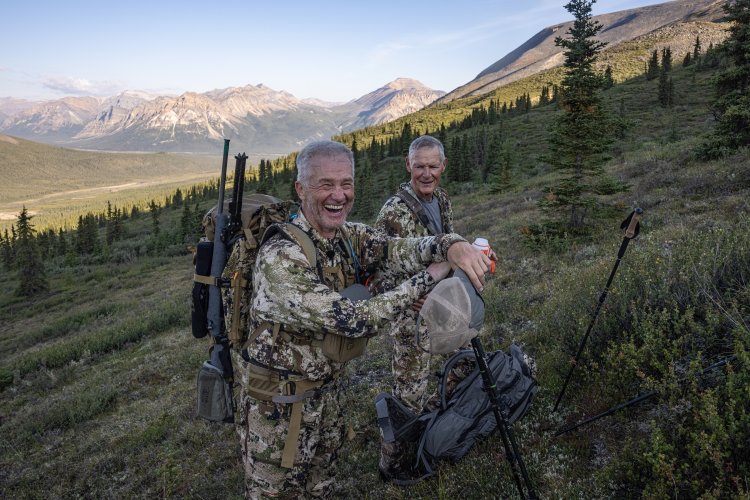
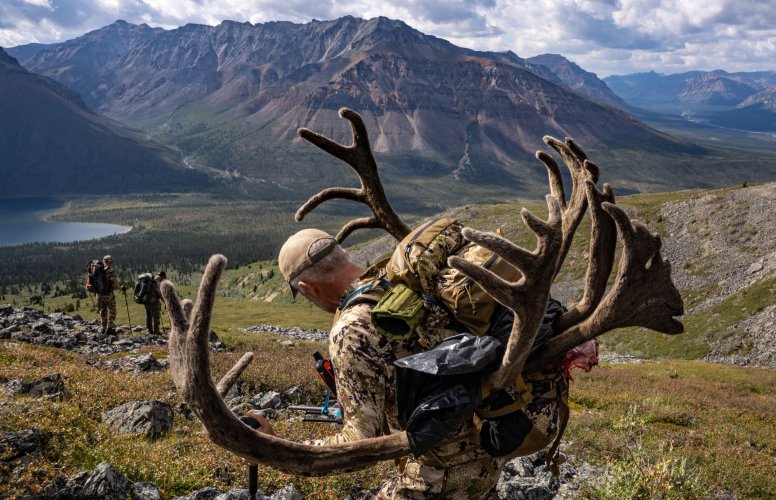
Hiking and trying to keep up with a 29 year-old mountain guide is a function of pace. Riley's pace is far beyond what Mike and I had in mind. I suspect Riley tired of waiting for us. As we'd get back within ear shot, he ask, "All good?" When we responded affirmatively, he'd turn upslope and chew up more elevation like a sixth-grader on a Snickers bar. Marcus probably had to be strategic when trying to get hiking images with Mike and I anywhere near Riley.
Marcus Hockett - 2026 - NWT-234.jpg

As we neared the summit, I stayed back 100 yards, filming from afar. The slow pace indicated Riley was confident the bulls were just over the lip. They weren’t. Bummer. All this work, this time, and no bulls to be found. Such is the randomness of caribou behavior. Unknown to us, when we climbed up the creek bottom, the bulls moved off, surely in search of more comfortable surroundings.

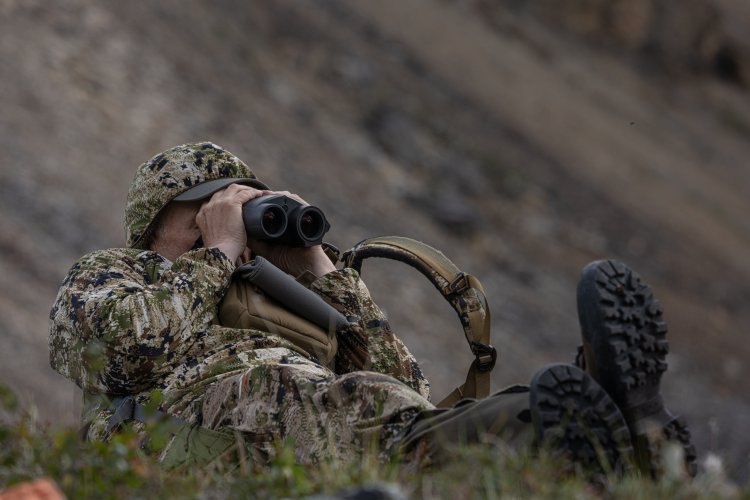
We glassed until our eyes were tired. The bulls were nowhere to be seen. It was now 5pm, yet the daylight intensity made it seem like 1pm. After some napping, Marcus located the bulls. They’d crossed behind us and were now tucked into the cliffs to our south. Not stalkable. Hard to believe these were caribou in this spot, not goats or sheep.

Since things are about to get exciting, I'll start another post, as I'm reaching the limit on words.
 
August 6 - Hunting Day 1 (continued)

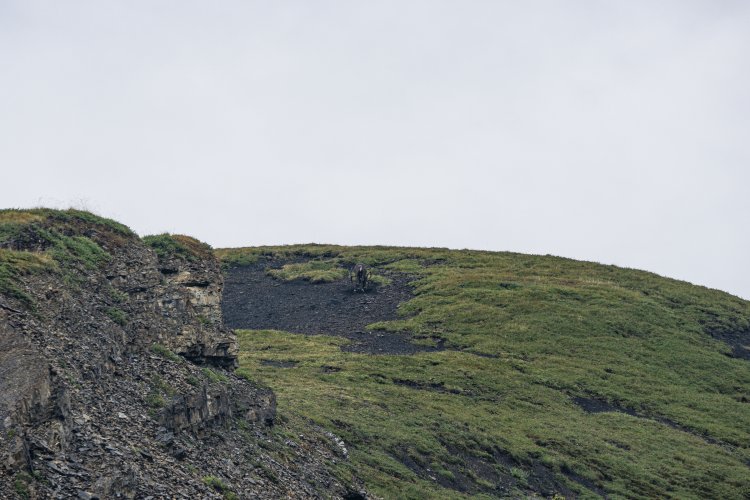
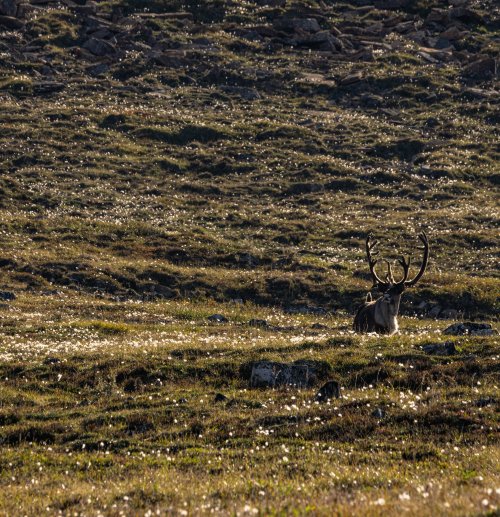
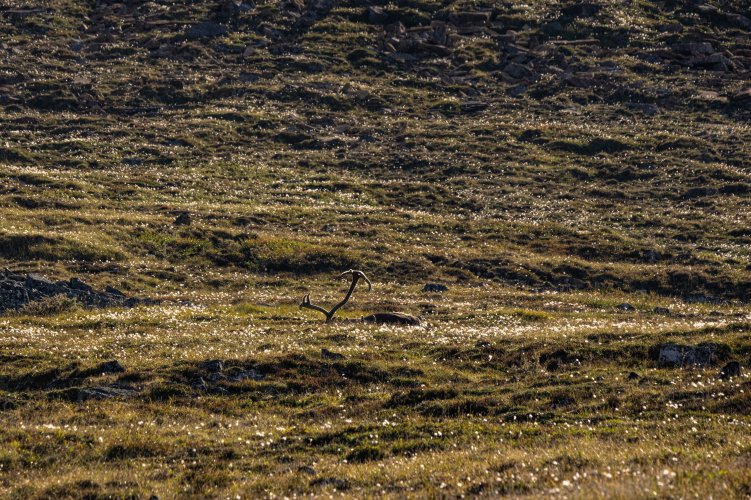
I'm trying to find some images of where these bulls headed to. All I can find is this one from later in the day, when shadows filled the valley. They were now on their feet, but not very visible in this image. They are in the gray band of shale, tucked right against the brown cliffs above them. In this 9pm image Riley is trying to figure out how we would make a stalk. He concluded it would be impossible with a bow. We all concurred with his assessment.
Marcus Hockett - 2026 - NWT-57.jpg

The only option was to wait them out. Hopefully with the cooling temps and their stomachs empty from being in the rocks for the last eight hours they'd be tempted to come down and feed. At least that was Riley's best guess. A plan was built around that notion. it gave me time to inspect the biggest bull.

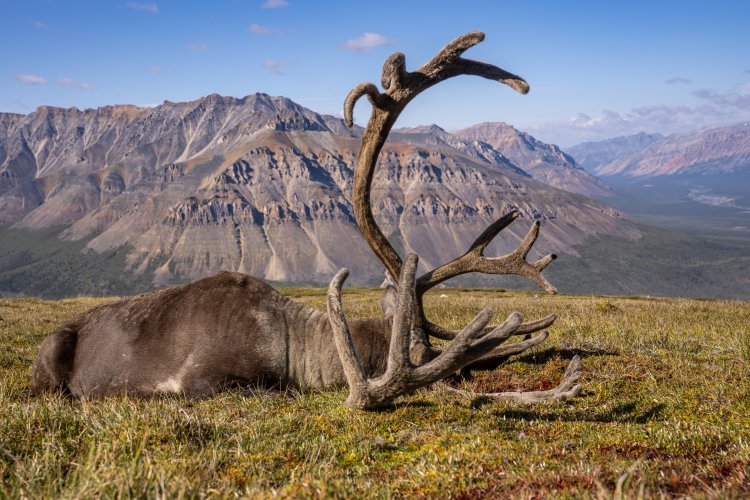
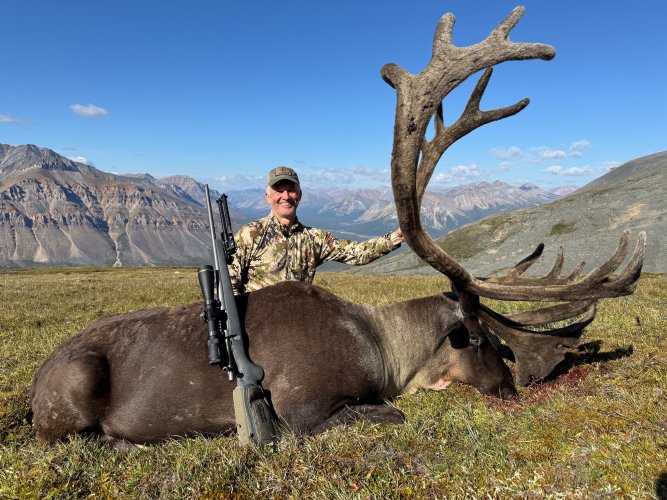
This was a very good bull. My estimate:
Beam length - 45”
Width - 40”
Total points - 32
Longest in top - 20”
2nd longest top - 15”
Top mass - 8” + 8”
Bottom mass - 10” + 9”
Bez - 20”
Shovel - 16” + 12”

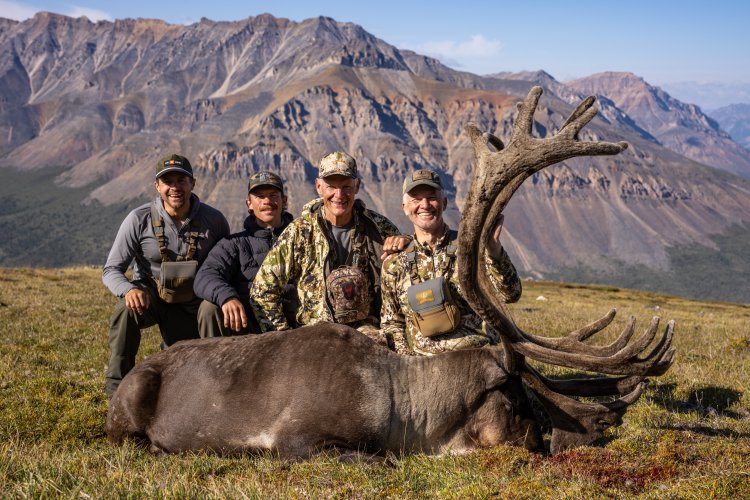
Conservatively, I'm coming up with 380". Probably bigger. That's a great bull.

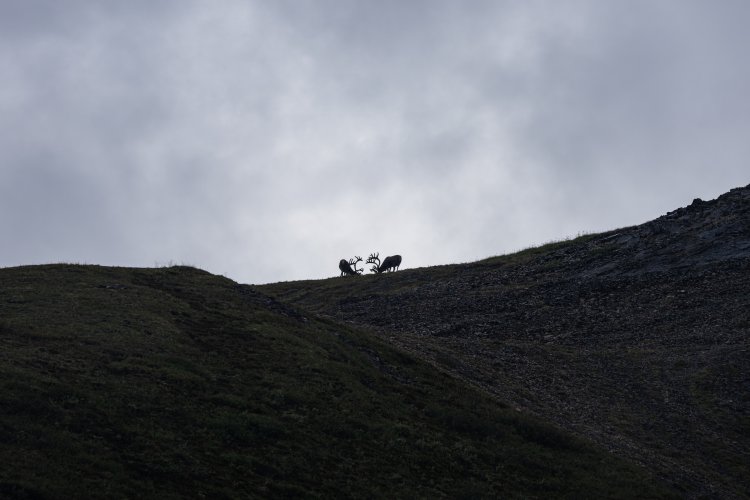
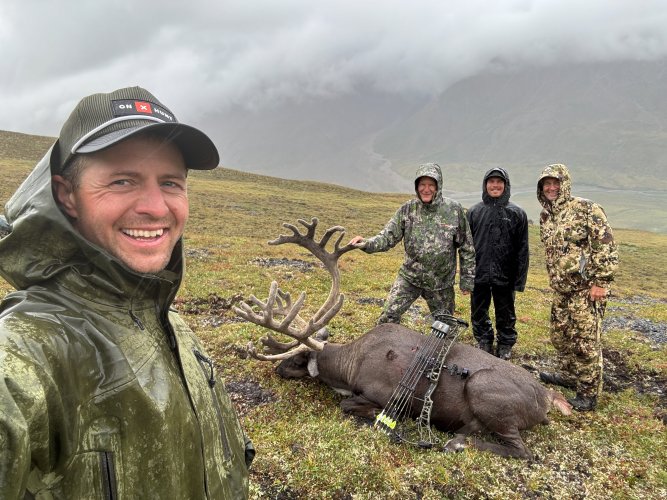
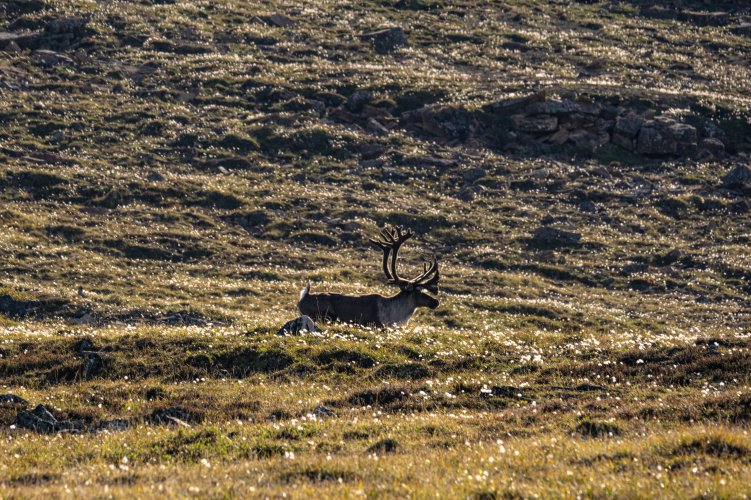
Around 10pm, the bulls started moving. First, rapidly crossing the shale to the first bit of green forage. They started feeding hard. As they skylined, it became obvious that this biggest bull was a first day bull. Riley doesn't get too excited, but he made it clear that he wanted one of us to shoot this bull on the right. The bull on the left is no slouch, but he's clearly not the boss.

Marcus Hockett - 2026 - NWT-79.jpg


As if the bulls concurred with Riley's plan, once they got their bellies stocked with some greens, they started moving downhill. Their current trajectory would take them to the creek bottom we'd traversed on our trek up here. They were joined by four cows and two calves who fed further back and without a demonstrated hunger that these bulls exemplified.

Now, it was a waiting game. Would they come lower into the creek bottom and use the tight corridor where Mike would have a shot? Or, would they cross and come back up here where we had seen them feeding earlier?

It was now 11pm. Riley suggested we hedge our bet. We'd use a small rock wall to drop some elevation, brining us closer while staying hidden, and giving us the option of dropping quickly to the pinch point in the creek bottom if the bulls took that route.

Off we went. We were in position. Now, it was a waiting game. The bulls' path would dictate our next move.

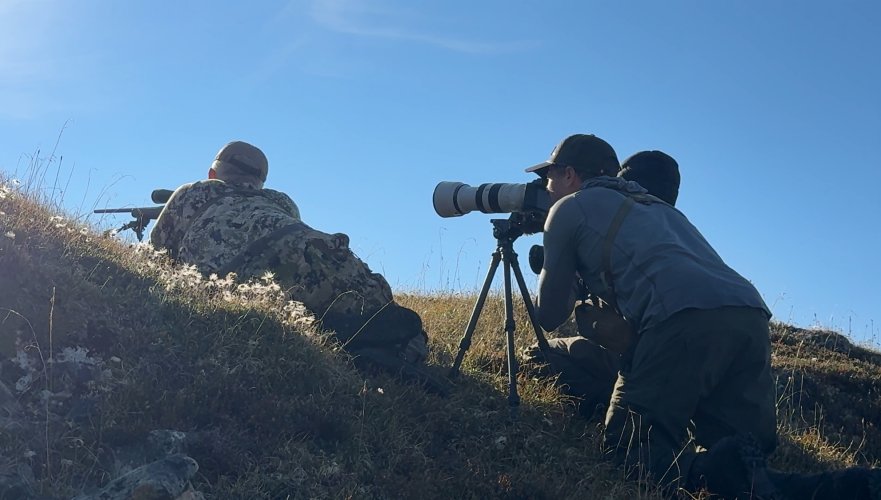
Lucky for us, the bulls started moving down the creek. Riley and Mike moved down to the pinch point. Marcus was just behind them with two cameras in hand. I stayed slightly upslope, laying on my back in hopes I wouldn't mess up this stalk.

Every few minutes I'd rise my head to keep tabs on what was unfolding. I saw Riley sneaking up to me, using the small rock ledge to stay obscured. He told me the cows were moving up above us and he wanted to bump them down to Mike. If the bulls followed the cows, they'd be out of Mike's range. In my mind I was thinking, "What are the odds that one person can wrangle eight caribou to a specified location with hundreds of square miles for them to escape?"

Well, I've learned to not underestimate Riley. His ability to scramble up these ridges at such a rapid pace is impressive. I'm now watching Mike and Marcus below me and Riley playing "goalie" above me as he tries to bump the cows and calves in play. I see Mike rise and take a range. Marcus brings the big lens to play. This could happened.

I see Mike drop back down. I look up to Riley and he's now on the skyline of this ridge. He's obviously making himself visible to the caribou. I can only guess what is going on, as I'm staying tucked down and out of view.

The rock ridge is about thirty yards to my east, running uphill. As I look up to see where Riley is at, I see velvet antlers outlined by the dimming skies. It is the smaller of the two bulls. He's about forty yards away. Riley is skiing the rock and scree towards me. Obviously he is trying to push the bigger bull further down to Mike's position.

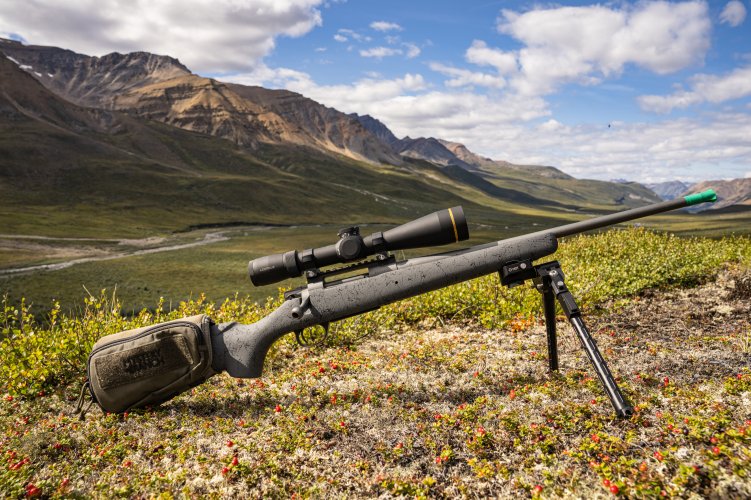
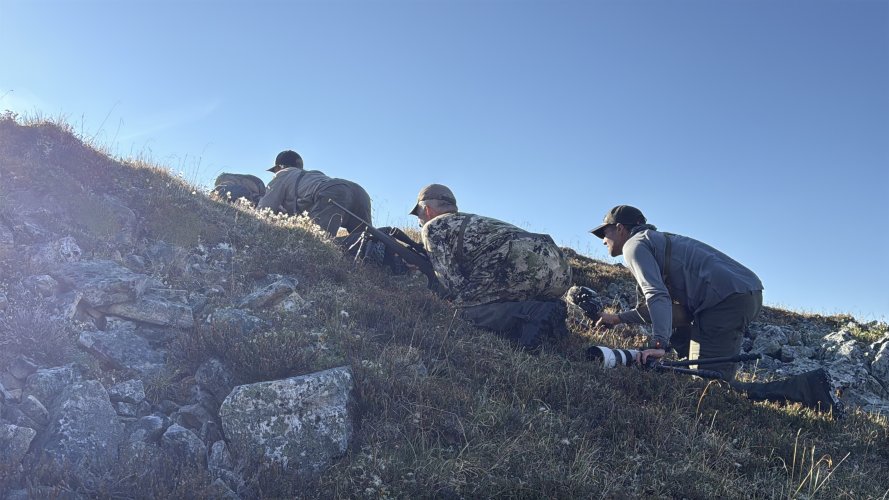
As the younger bull is inspecting me as an unfamiliar object in the grass, I slowly roll over to my stomach and slide a round into the chamber of my rifle that is propped up by my bipod and pointed uphill. As I look uphill, the bull crosses above me, from right to left. Thinking the bigger bull might follow the smaller guy, I roll over to a small grass clump to my left and extend my bipod. The smaller bull stops to inspect that this foreign body rolling in the grass below him. At 3x, he fills the entire scope.

I see Riley scrambling fast and making himself even more visible. He's dropping my direction in a hurry. I catch antlers to my right, just over the rocks. It's the bigger bull and he's obviously wondering what his buddy is looking at. I slowly lift my rifle to my right. I'm ready.

I see Riley scooting my way. This is not good. If the big bull follows the other bull, he's going to cross in between Riley's location and my shooting lane. And that's exactly what happened. I don't dare place my rifle crosshairs on this bull. I'm loaded and ready, but I cannot take the risk. I look back to see if Marcus is rolling, though he always is. Being prone, I can only see the top of his hat and part a lens.

The bull has had enough. He starts moving left and uphill. Riley is yelling for me to shoot the bull. Marcus and I are moving up and left to navigate some of the small rolls and undulations. The bull is curious what we are doing and as I drop to go prone again the bull stops. As I start to draw down on him, he starts moving straight away, uphill, following the exact path of the younger bull.

I'm now fully prone and following him. I range the small rock pile on the ridgeline above him and to my north - it's 180 yards. He stops. He's fully skylined from my view. Riley, slightly uphill and to my right about 75 yards has a different view. He's wondering why I'm not shooting. Obviously, I can't take this shot. I have no idea where the other bull is located, though he is somewhere over that ridgeline.

Eventually the bull trots off and out of sight. Riley is confused. I explain to him that my first shot option would have put him in danger and my second shot was a skyline option that I couldn't take. If ever I've seen a "You've gotta be kidding me" look, this was it.

I turn to Mike who is now coming up the slope to me, Riley, and Marcus. He explains that when Riley first bumped the caribou, they dropped down towards him. The closest the big one got was 72 yards. Not a shot Mike is going to force.

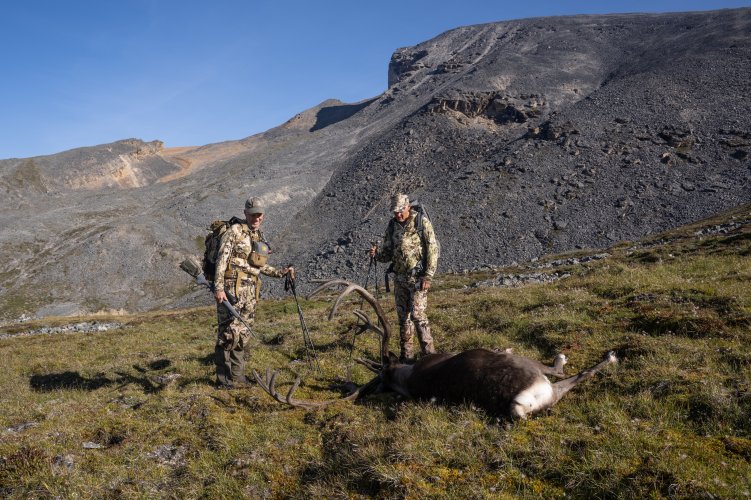
After all of this, no bulls were harmed. A lot of miles covered and elevation gained. When we got back to camp around 2am, Marcus's track said 9.6 miles. It was agreed we'd all sleep in tomorrow.

Animals seen today:
Caribou - 2 bulls, 6 cows calves
Grizzly - 1
Dall’s sheep - 4 rams
 
August 7 - Hunting Day 2

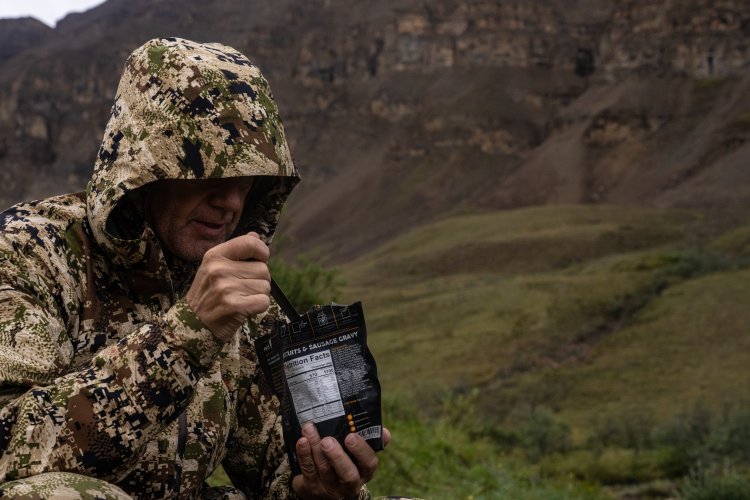
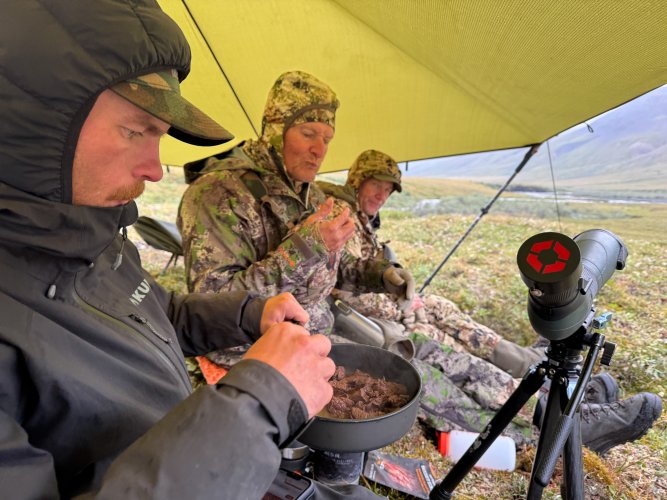
Slept in after a very late night. Up around 10:30 am. Riley served coffee when people work up. Peak Fuel Biscuits & Gravy for breakfast, if a noon meal can properly be called breakfast.

Hung around camp until 2pm. A couple rams were hanging out at the lick across the valley from our camp. Riley says its very reliable place to find sheep, but often it is not attractive to the older rams, 10+ years old, that they target for their hunters.

Riley surmised that our debacle of last night probably pushed those two caribou bulls into the next valley, a full day hike to get to, not counting the day to hike back if we did shoot something. So, it was decided we'd head up the valley to a place known to have caribou stage while on their movements to the eventual rutting grounds they congregate at in early September. Just the hike and the new scenery around every corner was worth the effort to get there.
Marcus Hockett - 2026 - NWT-44.jpg

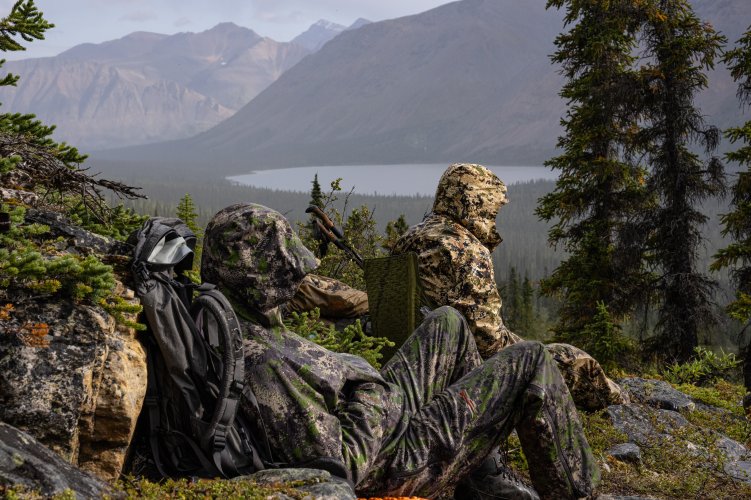
A two-hour hike had us at the glassing spot. Got there around 4pm. This is the top end of the valley, just below the pass that separates this valley and its north direction flow to the Ram River from the big drainage that drains south to the Fritz River. It is as beautiful spot of a spot that I've ever glassed from.
Marcus Hockett - 2026 - NWT-64.jpg

No caribou nearby, just the two bulls from yesterday back on the big grassy mountain. Riley was surprised that they had returned, given how much we'd messed with them. They were over five miles away, yet Riley and Marcus were confident it was the same bull.

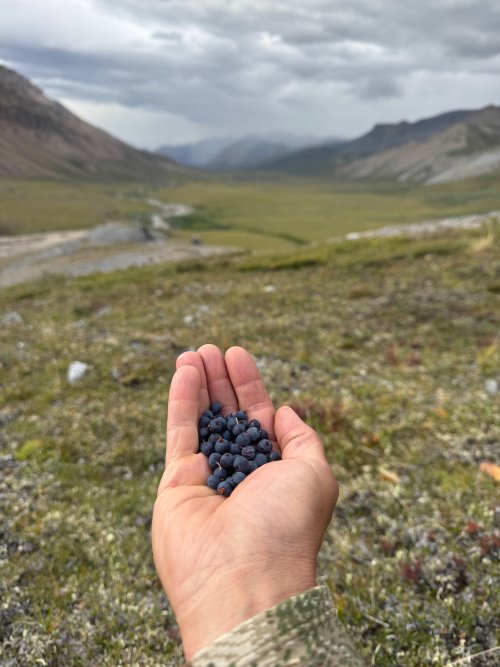
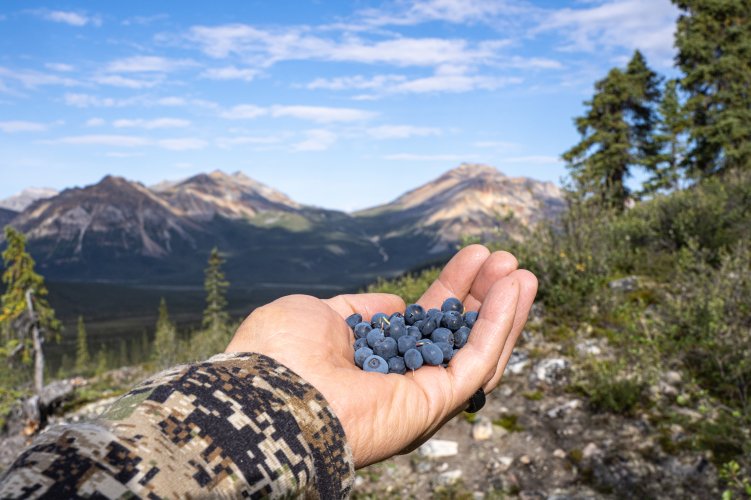
A few more rams showed up at the lick; all young rams. No bears today, just lots of bear scat. And blueberries on top of blueberries. I'm rather content to fill my stomach with blueberries while glassing such amazing country, even if a small afternoon squally tried to slow down my berry grazing.
MH Phone - 2026 - NWT-6.jpg

By this time, my mind is fully checked out. I'd look at my orange inReach. I almost wanted to bury it and any temptation to plug in to the "other world." Yet, I promised Mrs. Fin that every evening she'd get the "All is good here' inReach message. I wrote a lot of notes this day. Just sitting, in the quietness, nothing but the wind rustling my hood, thinking about how much the Lower 48 looked like this before the grinding wheels of "progress" traded its wildness for comfort and convenience. This was the day when my mental pace really started to slow down and absorb all I was seeing, smelling, hearing, and breathing.
Marcus Hockett - 2026 - NWT-70.jpg

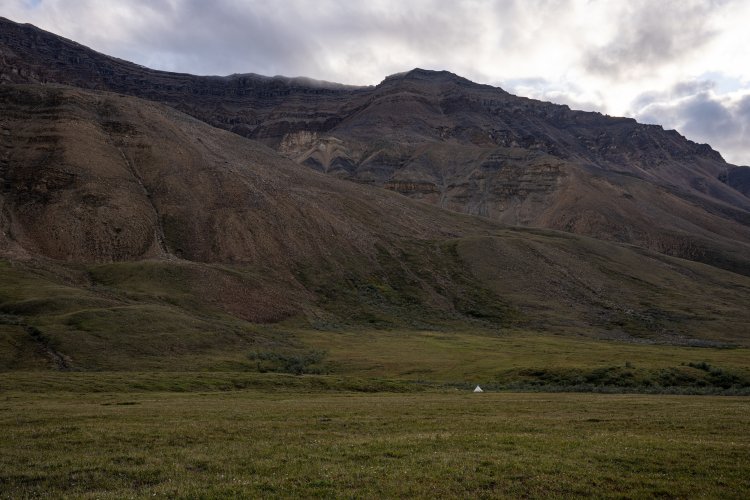
Got back to camp around 11pm. Dinner and sleeping shortly after. Day 3 we planned to head back down the valley and try to find that big bull with his sidekick. As we hiked, I was struck at how small every human item seemed here. Our camp coming into view as clouds built to the northwest seemed out of place. Well, I guess that's because it was out of place when measured against everything else here lacking human contrivance. Yet, it look so insignificant as to not even be a measurable object among all that is here.
Marcus Hockett - 2026 - NWT-33.jpg

Animals spotted this day:
Caribou - 2 bulls and six cows/calves
Sheep - 6 rams
 
I deffinitely found that comfortable feeling in the woods as a kid. I spent my 20s thinking i needed to be hiking in wilderness areas to get that same feeling. Ive now come to realize i can get it in any isolated woods. Learning to not worry about money, or making a bunch of it, limiting my time at work and maximizing my time in the outdoors has brought that feeling back a lot more these days. somewhere around late 20s is started to make the connection between not spending money unessicarily and having more time in the woods while being financially sound. That has brought a lot of comfort to me.
 

Forum statistics

Threads
119,835
Messages
2,240,034
Members
39,020
Latest member
bblair
Back
Top