




mattdeere1
Member
- Joined
- Feb 15, 2020
- Messages
- 15
I thought I’d share a few photos and the story from a Quebec caribou hunt I did back in September 2005 with Safari Nordik. This was well before Quebec eventually closed the migratory caribou sport hunt in 2018.
We had a long travel day from Fresno, California, to Montreal, arriving at the hotel late that night. We met up with the outfitter, got to bed around midnight, and were back up early the next morning for about a two-hour commercial flight from Montreal to Kuujjuaq.
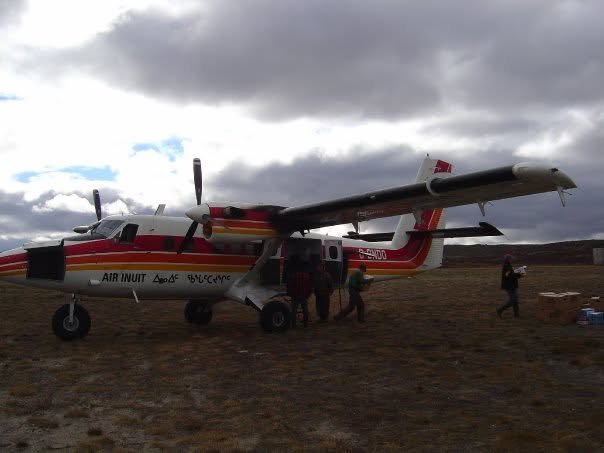
Once we arrived in Kuujjuaq, we transferred our gear onto a twin-engine de Havilland Otter for about a one-hour flight out to Snow Camp. Our pilot was a tiny little gal and a very good pilot. The wind was blowing so hard on our approach that she had the Otter crabbed far enough sideways that I could look out the side of the plane and see the runway. Just before touchdown she straightened it out and made a perfect landing. Perfect meaning we didn't crash and die.
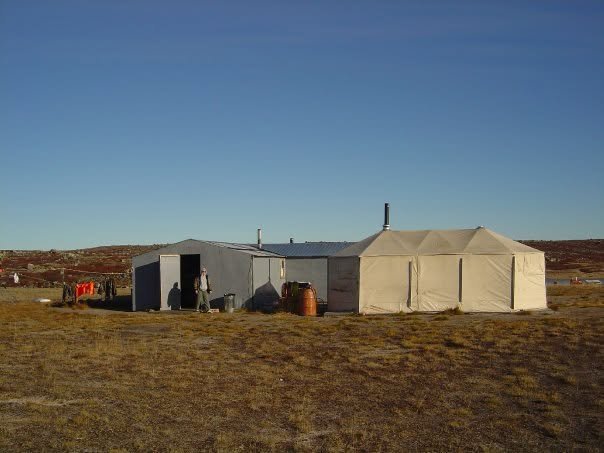
We unloaded our gear, got settled into camp, and prepared to start hunting the next morning.
Most hunters would head out by boat with their guide to areas that had been decided on the night before. That way everyone had a general idea where the other groups were if something went wrong. It was extremely remote country, and you had to be careful. One of the camp rules was no boat travel after dark because it was too easy to hit a rock in the shallow waterways.
On day one, we traveled by boat for probably 30-40 minutes and stopped at an area where we could glass for caribou. After spotting some, we started moving toward an area where we could get into their travel lanes.
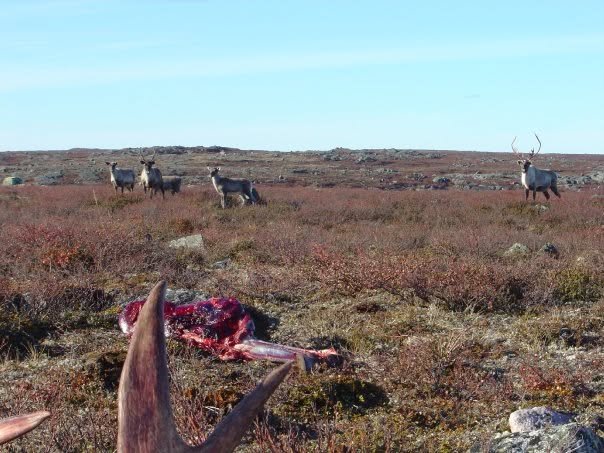
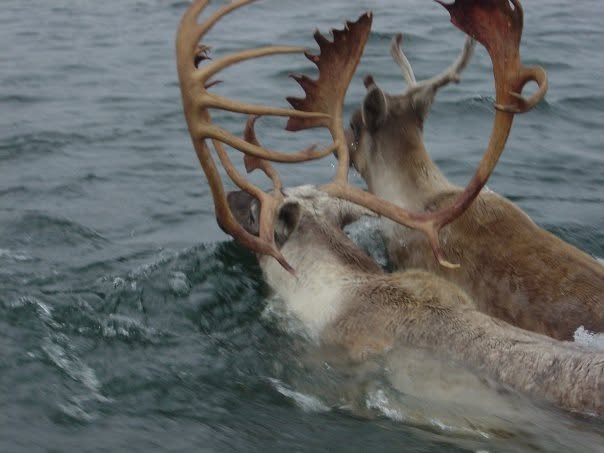
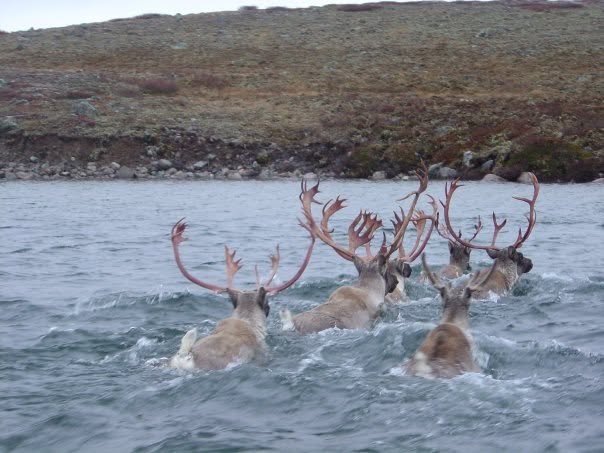
One thing we learned quickly was that if you spotted a bull in the distance, you weren't going to catch up to him. The caribou were migrating and just kept moving. The strategy was to get yourself into a good position and wait for more animals to come through.
We walked about two miles with our packs, seeing caribou along the way. It was a bluebird day and everyone was excited just to be out there experiencing it.
Once we got into position, we could see caribou coming toward us and started looking over bulls. There were caribou everywhere, bull after bull.
My buddy's wife shot first, taking a nice bull that was still mostly in full velvet. After she got her bull, my buddy and I harvested ours. Before long we had five bulls down in about 45 minutes.
Jokingly, our guide said "give me all the bullets" because we had plenty of work ahead of us.
We started breaking down the caribou and really enjoying the harvest. With four of us, we loaded up as much meat and gear as we could carry, knowing we'd have to return the following day for the rest.
By the time we made it back to the boat we were walking in the dark, and we still had the boat ride back to camp. As we got closer, we came across another boat with a couple of guides who had come looking for us. They weren't very happy that we were still out that late, but they were pleased when they heard how successful we'd been.
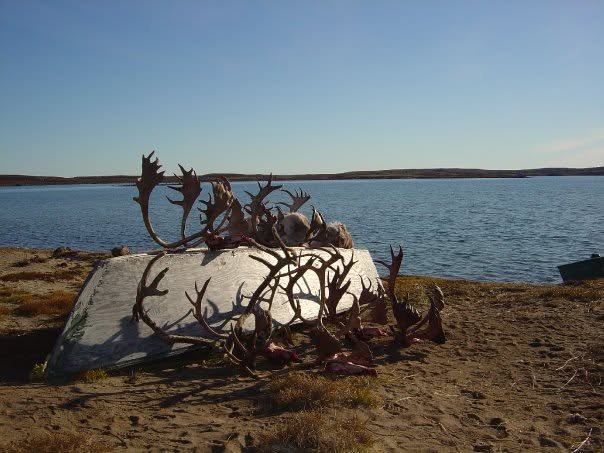
We returned the next day in rain and wind to pack out the rest of the meat and antlers. We also harvested another bull along the way, thankfully this one a lot closer to the boat.
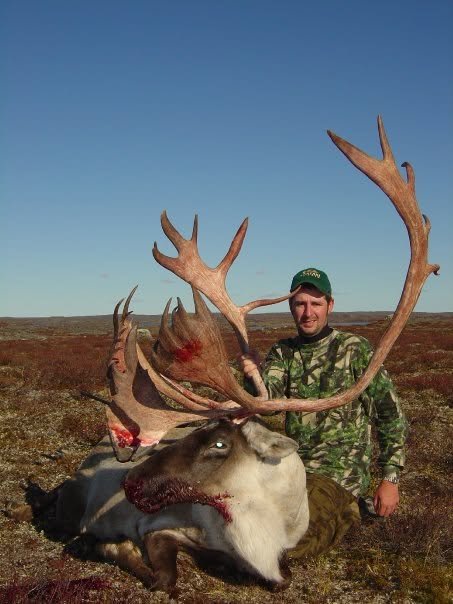
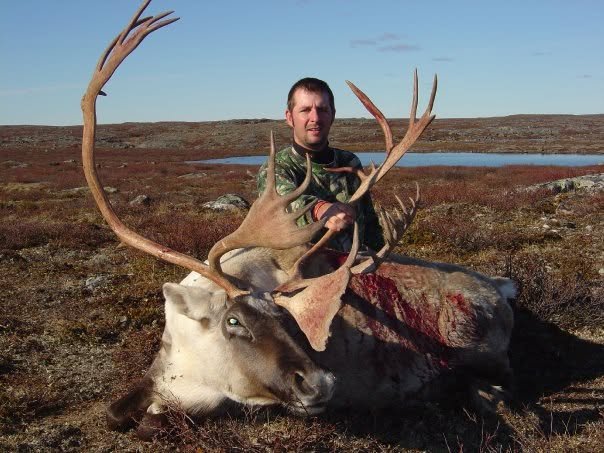
With so many bulls around, we were trying to find animals that had both good bottoms, including double shovels, and good tops. A lot of the bulls seemed to have one or the other.
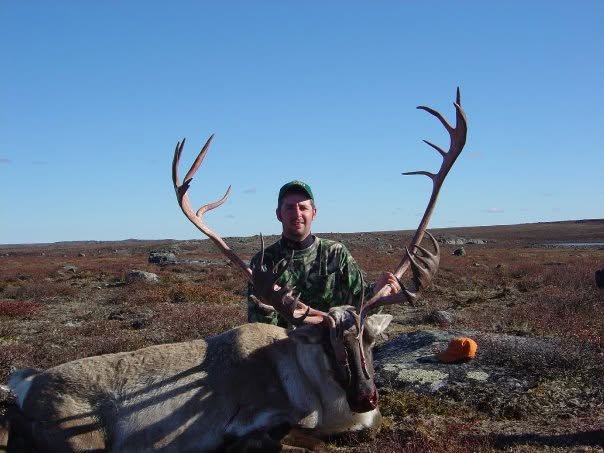
I'm not much of a record-book guy, but my bull ended up scoring a little over 400" SCI. We looked at that bull and others for a while, but he didn't really stick out like a sore thumb. There were just so many good bulls moving through that country.
Caribou meat is also delicious, and we brought back as much as we could.
It was a great hunt and one I'm glad I had the opportunity to experience. Quebec eventually closed the migratory caribou sport hunt in 2018 as the herds declined. Hopefully someday those herds recover to the point where hunters can experience that country and migration again.
We had a long travel day from Fresno, California, to Montreal, arriving at the hotel late that night. We met up with the outfitter, got to bed around midnight, and were back up early the next morning for about a two-hour commercial flight from Montreal to Kuujjuaq.
Once we arrived in Kuujjuaq, we transferred our gear onto a twin-engine de Havilland Otter for about a one-hour flight out to Snow Camp. Our pilot was a tiny little gal and a very good pilot. The wind was blowing so hard on our approach that she had the Otter crabbed far enough sideways that I could look out the side of the plane and see the runway. Just before touchdown she straightened it out and made a perfect landing. Perfect meaning we didn't crash and die.
We unloaded our gear, got settled into camp, and prepared to start hunting the next morning.
Most hunters would head out by boat with their guide to areas that had been decided on the night before. That way everyone had a general idea where the other groups were if something went wrong. It was extremely remote country, and you had to be careful. One of the camp rules was no boat travel after dark because it was too easy to hit a rock in the shallow waterways.
On day one, we traveled by boat for probably 30-40 minutes and stopped at an area where we could glass for caribou. After spotting some, we started moving toward an area where we could get into their travel lanes.
One thing we learned quickly was that if you spotted a bull in the distance, you weren't going to catch up to him. The caribou were migrating and just kept moving. The strategy was to get yourself into a good position and wait for more animals to come through.
We walked about two miles with our packs, seeing caribou along the way. It was a bluebird day and everyone was excited just to be out there experiencing it.
Once we got into position, we could see caribou coming toward us and started looking over bulls. There were caribou everywhere, bull after bull.
My buddy's wife shot first, taking a nice bull that was still mostly in full velvet. After she got her bull, my buddy and I harvested ours. Before long we had five bulls down in about 45 minutes.
Jokingly, our guide said "give me all the bullets" because we had plenty of work ahead of us.
We started breaking down the caribou and really enjoying the harvest. With four of us, we loaded up as much meat and gear as we could carry, knowing we'd have to return the following day for the rest.
By the time we made it back to the boat we were walking in the dark, and we still had the boat ride back to camp. As we got closer, we came across another boat with a couple of guides who had come looking for us. They weren't very happy that we were still out that late, but they were pleased when they heard how successful we'd been.
We returned the next day in rain and wind to pack out the rest of the meat and antlers. We also harvested another bull along the way, thankfully this one a lot closer to the boat.
With so many bulls around, we were trying to find animals that had both good bottoms, including double shovels, and good tops. A lot of the bulls seemed to have one or the other.
I'm not much of a record-book guy, but my bull ended up scoring a little over 400" SCI. We looked at that bull and others for a while, but he didn't really stick out like a sore thumb. There were just so many good bulls moving through that country.
Caribou meat is also delicious, and we brought back as much as we could.
It was a great hunt and one I'm glad I had the opportunity to experience. Quebec eventually closed the migratory caribou sport hunt in 2018 as the herds declined. Hopefully someday those herds recover to the point where hunters can experience that country and migration again.