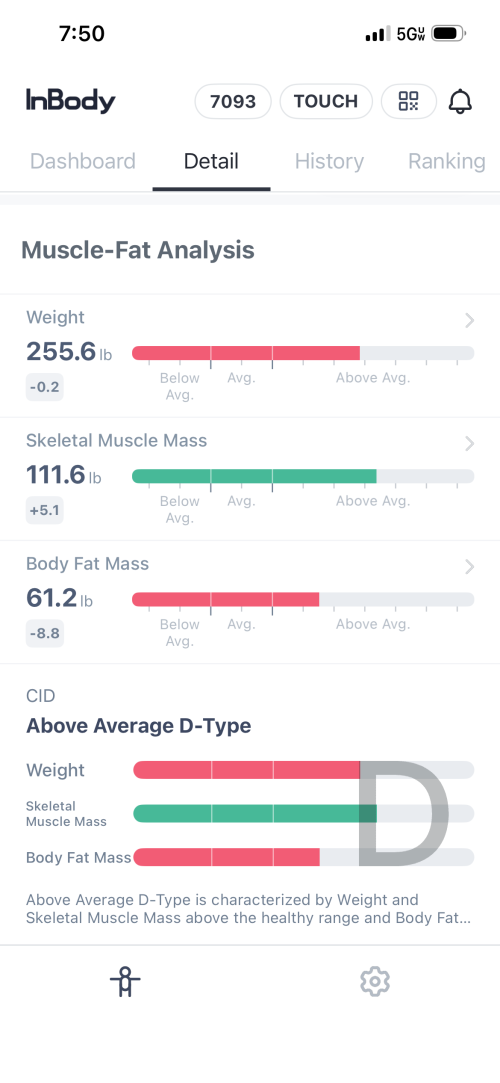



Taking my life back

I think a big part of that is the justification they have to do with insurance.
Maybe insurance. I don’t think T is on any insurance company radar. It’s cheap from a pharmacy. Doctor visits themselves depend on insurance coverage. I’ve never had a doc say don’t see me because insurance won’t cover.

My perspective, until you find a doctor with a different T perspective, they follow the guidelines. Guidelines for men’s T should roughly be 300-850ish level. If you test low but within the guidelines, they tell you you’re fine. Wanting to be closer to 800 than 300 gets no reaction.
 
Just curious if any dealing with sleep apnea have tried the at home sleep apnea tests?
When I saw my Dr. about sleep apnea, he had a monitor that attaches to the pad of your index finger sent to my house. I wore the monitor for two nights, which uploaded data to an app on my phone, and then automatically sent the results directly to him. Super easy and I got to sleep in my own bed.
 
I'm lucky that every Dr I've had has taken the time to get to know me, and cares about me, or at least I feel like they care about me. I've attributed part of that to living in small towns. I do believe that when you have to see your patients at BBall practice or the grocery store, it incentivizes them to care. But as someone above said, the few times I've seen a pay-to-play Dr, they've offered the absolute best care.

To be fair to the Dr's out there, think of what they have to go through, and the type of person that could/would get through that process? They're the type of people who've spent their entire life being the smartest kids in the room. That can be something that's difficult to overcome. THey're also human, so they get jaded by experiences, no different than the rest of us, and if you think about the sheer number of idiots they have to deal with... and the constant risk of malpractice (even when they were right). It's a really shitting job, that's hard to consistently do well. But I'm also jaded, some of my really good friends are doctors.

Alway, glad you're feeling better. Feeling shitty sucks. Glad you found a good doctor.
 
Proactive care is new to medicine (Western only? Idk). Our providers are taught how to fix a problem, like mechanical or psychological, and prevention of these problems is a secondary concern. We ourselves have a hard time objectively reviewing our lifestyles to see what we could change.
I like the offseason fitness related threads here. Giving each other attaboys for walking 10k or losing five pounds, staying in remission, anything really. It’s a great positive feedback loop that amplifies our input to fitness.
 
As far as the sleep apnea stuff. I had no clue I even had it... chalked being tired all the time even though Im in pretty good shape to just being 42 and working a high stress job. My wife suggested I get a sleep study... long story short after getting used to wearing it I could wake up in the morning with 6-8 hours of sleep and feel like a new man. No more brain fog. No more aches and pains for the most part that were really odd and honestly felt like I was rested. I sort of pay for it during hunting season when I am on the mountain now because I feel not rested as much and find myself waking up through the night gasping in my bag.
 
I haven’t made it to it yet but I’m currently on doctor 3 and she is an absolute rock star. She explained to me a pile of other things that can be tied to low testosterone that we don’t wanna deal with as males. Higher testosterone level she says will also help against prostate cancer
Sorry for the length of my response.....

That hasn't been my experience after using testosterone for low T, using CPAP nightly for over 10 years and going through radiation for prostate cancer. Also, if you have sleep apnea you're also at risk for Atrial Fibrillation and increased risk for developing blood clots which can travel to your lungs causing a pulmonary embolism with potential significant complications. (Ask me how I know this!) Testosterone does NOT make this better.

The point of my response to you is to ask you not to rely heavily on your buddy's advice, try not to be overly frustrated by how medical care is provided these days and use your best judgement in seeking treatment.

From AI Google.....

Yes, testosterone significantly affects prostate cancer by fueling its growth, as prostate cancer cells need androgens (like testosterone) to live and multiply, but the relationship is complex, with some studies suggesting low levels might paradoxically link to more advanced disease, while hormone therapy aims to starve the cancer by blocking testosterone, though the cancer can become resistant over time, highlighting the intricate role of testosterone in both the cancer's development and treatment.

How Testosterone Fuels Prostate Cancer:
  • Fuel for Growth: Prostate cancer cells are often "addicted" to testosterone and its derivative, dihydrotestosterone (DHT), using them as fuel for growth and survival.
  • Androgen Deprivation
    :

    Treatments aim to cut off this supply, which slows or stops cancer growth, a concept proven by Nobel Prize winner Charles Huggins

    Complexities & Nuances:
  • Not a Simple Cause: While testosterone is essential, high levels don't necessarily cause cancer, nor does low testosterone always mean low risk, as some studies link very low levels to more advanced cancer.
  • Saturation Model: Prostate growth is sensitive to testosterone at low levels, but once receptors are saturated, more testosterone doesn't proportionally increase growth, say researchers at ScienceDirect.com.
  • Paradoxical Effects: Some research suggests low testosterone might be linked to higher-grade cancer, while very high levels might cause cancer cells to differentiate (mature) and stop growing.
Testosterone Replacement Therapy (TRT):
  • Safety & Risk: For men with clinically low testosterone, TRT to normal levels is generally considered safe and doesn't appear to increase prostate cancer risk, though it carries other potential side effects.
  • Not for Active Cancer: TRT is not recommended for active prostate cancer as it could feed the disease, but it might be used in specific cases with undetectable PSA levels.
In essence, testosterone is crucial for prostate cells, but its relationship with cancer is complex, acting as both a fuel source and a target for therapy, with new research constantly refining our understanding
 

Forum statistics

Threads
118,156
Messages
2,182,466
Members
38,454
Latest member
AJP083
Back
Top