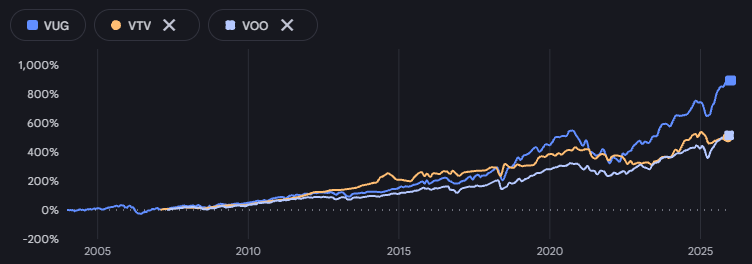
Ran its course, now in the weeds.

When you need the cash and need to sell, the guy who says he will buy them gives you an offer of 50% what the market says it’s worth. Every person who buys a good bar from Costco will soon figure out that Costco doesn’t buy them back.
For the little I have into them might be a day when you trade them for something other than cash. Doubtful and probably laughable i know, but it does cross my mind.
 
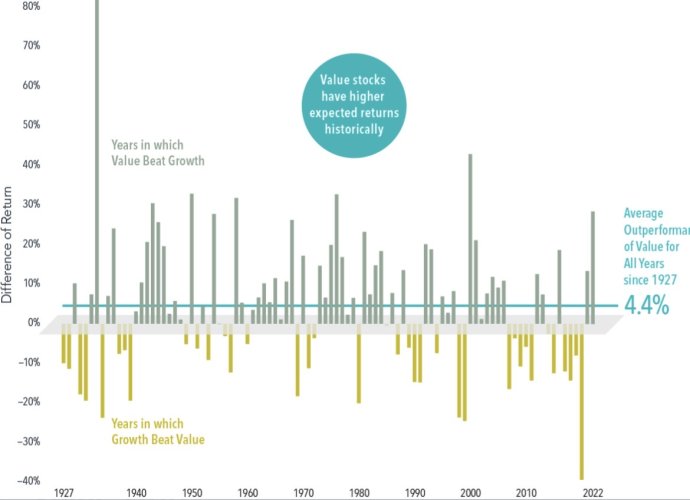
1. I have a hard time believing that we're in the same economic setting as pre-1990, let alone the 1920s-1950s.
2. At what point do you have to evaluate something on the scale over which you are/can be involved? I can't own value for 100 years. I will own growth for 20-40.

Another way to say it. Is 2025-2030 going to be more like 1920-1925 or 2020-2025? I don't want to use irrelevant data to make my decisions.
 
1. I have a hard time believing that we're in the same economic setting as pre-1990, let alone the 1920s-1950s.
2. At what point do you have to evaluate something on the scale over which you are/can be involved? I can't own value for 100 years. I will own growth for 20-40.

Another way to say it. Is 2025-2030 going to be more like 1920-1925 or 2020-2025? I don't want to use irrelevant data to make my decisions.
Great question. Who knows. The post war era was the second Industrial Revolution. So probably not going to get that again. But I hear arguments about AI doing something similar. The question is do you buy the AI infrastructure companies (growth) or do you buy the companies that will benefit from the coming increase in productivity from implementing AI, which are probably value stocks right now?

Ar some point that shift will take place. Change is constant, it just happens slower and runs longer than we anticipate. Mostly just another reason to index and not overthink it.

 
In 2007 you could have posted the same thing on using Value instead of Growth. You are overweighting the most recent history. This is why the SEC makes them put “past performance is not a predictor of future performance” on every marketing doc.
Yup, but Even if you lost the full 31% on 2007-8, you were whole by 2010 and extremely wealthy by 2015. I'm looking at the market since it's inception
 
I’m a medically retired Soldier. You’re welcome for my service and injuries defending your freedom to post ignorant stuff
I’m a medically retired Soldier. You’re welcome for my service and injuries defending your freedom to post ignorant stuff.
There was nothing ignorant about my response. The fact you responded to it the way you did proves you should pay down the house.

There were many thousands us over there, not all required the pity once we got home.
 
1. I have a hard time believing that we're in the same economic setting as pre-1990, let alone the 1920s-1950s.
2. At what point do you have to evaluate something on the scale over which you are/can be involved? I can't own value for 100 years. I will own growth for 20-40.

Another way to say it. Is 2025-2030 going to be more like 1920-1925 or 2020-2025? I don't want to use irrelevant data to make my decisions.
I didn't see the other responses, fair enough. I think the next 3 will be down, but I have for the last 7. If the time horizon is 10+years, I'm still in. If we're trying to flip a few bucks, heck no!

Some really thoughtful responses here.
 
Yup, but Even if you lost the full 31% on 2007-8, you were whole by 2010 and extremely wealthy by 2015. I'm looking at the market since it's inception
not the point.
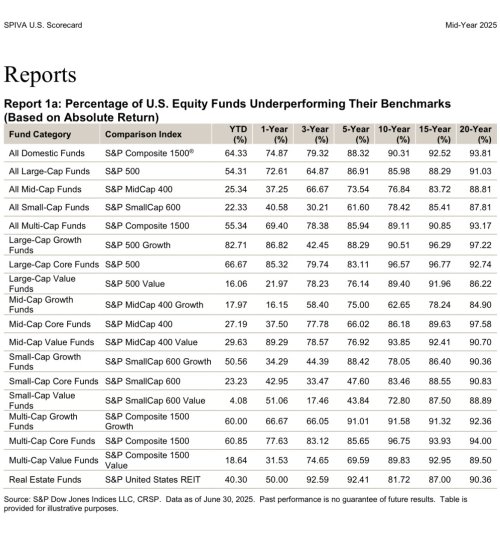
This reports says 90% of LCG funds underperform their pu$$y passive benchmarks over 10yrs. Your advice to a 16yo 10years ago would be hard to justify today. This is why explaining away underperformance is the true art of investing.

IMG_2573.jpeg

 
not the point.
This reports says 90% of LCG funds underperform their pu$$y passive benchmarks over 10yrs. Your advice to a 16yo 10years ago would be hard to justify today. This is why explaining away underperformance is the true art of investing.

View attachment 397549

The advice to a 16 year old is based on a 50 year timeframe, not 10. I'm not familiar with this source so I'll have to take a look at how to find relevant data over a lifetime of investing of Index funds VS. Large Cap growth.

Edit: after brief research you still may be correct
 
I think paying off the mortgage has more to do with life experience than finance. When I was a kid if the small ranch we owned wasn't free and clear, we would literally have been homeless.

Never want my wife to know what that's like.
 
Great question. Who knows. The post war era was the second Industrial Revolution. So probably not going to get that again. But I hear arguments about AI doing something similar. The question is do you buy the AI infrastructure companies (growth) or do you buy the companies that will benefit from the coming increase in productivity from implementing AI, which are probably value stocks right now?

Ar some point that shift will take place. Change is constant, it just happens slower and runs longer than we anticipate. Mostly just another reason to index and not overthink it.

The best similarity to the AI approach is to look at similar to the Internet and dot com era.

You will have your yahoo, Google, and also your pets.com and other trash companies. AI is a software not a magic pill, you still need strong business fundamentals for successful implementation. In healthcare we see great success with billing and insurance returns but the generic “productivity” boost for each employee is a farce at the present.
 
I think paying off the mortgage has more to do with life experience than finance. When I was a kid if the small ranch we owned wasn't free and clear, we would literally have been homeless.

What era was this? Back in the 70s, for example, interest rates were much higher than today- that changed the equation significantly as well.
 
I skipped to the end here, but still thinking of the original question. I recently did the "dumb" thing too and paid off my ~4% mortgage that I had since around 2010. Stress-wise, one of the better things I ever did and it simplifies financial planning elsewhere and provides peace of mind if anything were to ever happen to me or with my job.
 
What era was this? Back in the 70s, for example, interest rates were much higher than today- that changed the equation significantly as well.
60s-70s, but it wouldn't have mattered; our income was so low we couldn't have serviced any debt. Lots of us here grew up poor, and lots of us didn't, but we wound up at the same place anyway and supposedly it builds character. There were times when I felt I could do with a lot less character 🤣.
 

Latest posts

Forum statistics

Threads
117,931
Messages
2,174,253
Members
38,387
Latest member
meatcity
Back
Top