An alternate title for this article could have been, "Hunting still controversial; urban / rural divide persists".
It's very different there. Long ago and far away now, I did a study abroad in college in NZ, and a lot of traveling / backpacking throughout both islands. At one point ended up staying with a farmer who raised elk for the antlers / velvet. Biggest elk you ever saw. I think it was exported to Asia for use it traditional medicines. Venison was for sale in pretty much all the grocery stores.
There is a wildlife sanctuary in Wellington. They built a fence to keep all the nonnative mammals out--down to mice, and then exterminated all the mammals inside that fenced area so that it would be only for native wildlife. The point being, there is such a proliferation of nonnative species that was the kind of drastic action it took to create a few hundred acres of 'clean' space for the native species there.
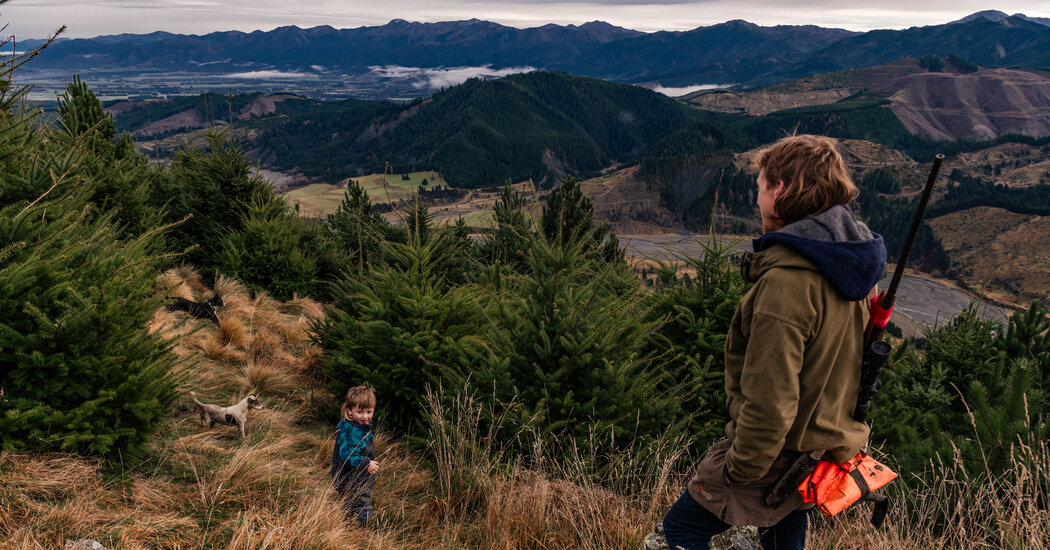
While I was traveling around, someone told me about helicopter trips where people would shoot goats from the air. Asked what they did with the meat and got a blank look. The point, I was told, was not to have goat meat for dinner but to have fewer goats out and about. Thought it all sounded a bit much, to knock over an animal that could be used for food and just leave it lie. Then I went on a multi day kayaking trip in the middle of the North Island and during the trip, heavy rains hit the area and the water came up several feet. There were so many feral goats in the surrounding hills that some got washed into the river and drowned. I wound up sharing the river with all these dead, bobbing goats around me. Would use the paddle to push the bigger ones out of the way. Changed my mind on the heli-hunting of goats after that.
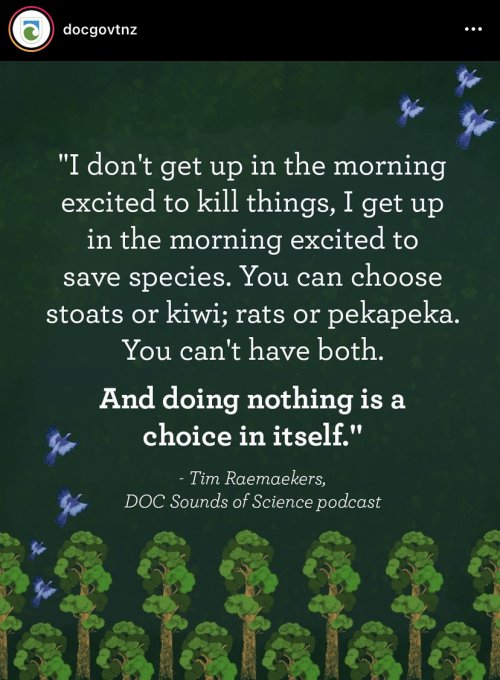
Overall, I had the sense of a country trying to dial back the impacts from all these introduced species, but of being a bit overwhelmed by the scope of it, and willing to try some very different approaches to solving those puzzles.