Actually Bill, it was not an intentional change I assumed you would accept. It was a misread sentence and I acknowledged my mistake, quoting what you actually said. Now, quit being a victim and answer the question.
I’ve been out of pocket for a few hours.
I don’t know any specific locations or game numbers, but I’ve heard Steve Rinella mention that expedition specifically and talk about lower numbers of game in areas than in those same areas today. I’ve also heard guests on that podcast and other that were presented as subject matter experts who would get into shifting baseline theory and the like that would also suggest that there are game animals at lower numbers now than in the past, but also game animals that are at higher numbers. Also it appears that while many animals are at lower populations on a national level, they are at higher populations at many local levels. The two time frames often mentioned are the point of European contact(because we all know the poor starving natives couldn’t kill anything) and the Louis and Clark expedition. If you evidence suggesting those things are incorrect, I’ll certainly accept it. I really should not have cited that supposed situation(whether my understanding is correct or not)as direct evidence of what happens when predator populations aren’t controlled for a few reasons. Game populations at those times really aren’t known, and the factors controlling them go well beyond just predator populations.
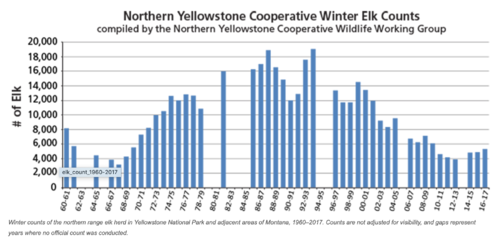
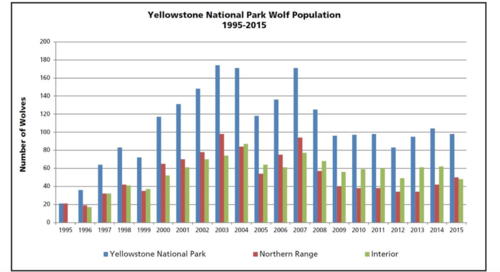
The point I am attempting to make is that adding poorly controlled or uncontrolled predators to a habitat does not increase the number of game animals that exist in that habitat. If you’re aware of a situation in which adding wolves to a habitat directly increased elk/deer numbers, I think everyone here would like to learn about it.
Yes, I prefer to manage game animals for human benefit. I want to eat game meat, which means that I need tags. I also would prefer that other humans have the opportunity go harvest game meat as well, because I’d rather they had the opportunity to experience hunting, and to feed their family wild and free ranging meat instead of eating cage raised chickens who had their heads stuffed in a funnel before their meat was mechanically separated and pressed into chicken nuggets so that the consumer can call me a murderer.
I’m not an expert game manager, but you don’t have to be an expert to know that there is an awful lot of talk in the hunting community about putting more elk in the woods and more sheep on the mountain, and that putting more wolves in the woods does nothing to put more elk in the woods.
If anyone is okay with putting more wolves in the woods at the cost of tags, I would prefer that it was THEIR tag that gets cut, not mine. If someone wants to “share”game with wolves, it should be them who shares, not me. If they want to “share” with wolves, then they should not harvest or eat any game meat this year, and they should not harvest two year’s worth of game meat next year. If predator populations cause a decrease in game populations and hunting opportunity, then it is those hunters who claim to be okay with that outcome that should experience that loss.