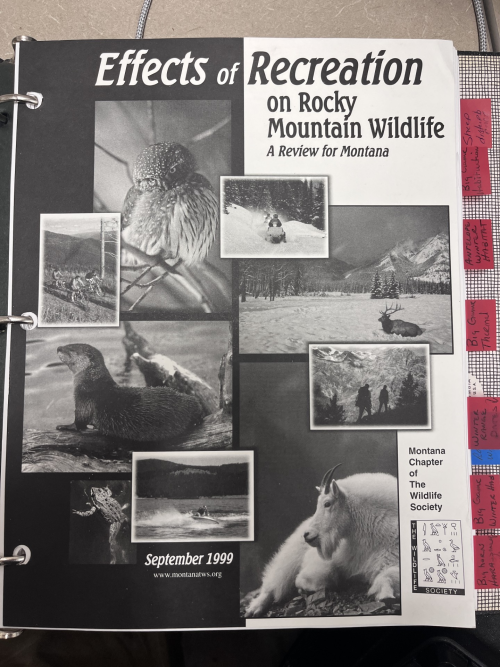
I won't get into a debate over this and sidetrack the OP, but here is an interesting read if you can find it.
View attachment 324733
Not all critters need to run into a lead ball for them to be impacted.
Geospatial analysis shows extent of overlap and highlights opportunities for responsible recreation management.

www.trcp.org
Craig's point is a huge one.
And it's the basis of the proposal: Pressure on wildlife driving changes in location leading to more dramatic steps needed to deal with wildlife concentrations, etc.
The proposal isn't just about mule deer, although mule deer do benefit from it, especially when you look at helping ensure a good age class of bucks exist to help with herd genetics and creating a more robust population through the limiting of doe licenses on public land.
In western MT, mule deer become more vulnerable during migration and that vulnerability peaks during the rut. Rifle hunters will be hitting deer during the migration, which means they will be more available than early season anyways.
But for the changes in muzzleloader, it's really about commission flexibility to set that season where it makes sense, rather than having a hard and fast date that has to be applied, regardless of resource issues. What we've seen in R3 though is that when the FS roads open back up, elk on winter range get hammered, leading to larger than expected take on a vulnerable species. Region 3 is also where approximately 40% of Montana's elk live. Having that kind of vulnerability on bulls in December, post rut, in winter, is going to deplete already low reserves for winter survival, making those animals more likely to succumb to predation than if they went into winter less molested.
For elk, their inclusion is about creating a better experience for elk on public land (and for hunters). Archery may not be a limiting factor in take, but the pressure that comes with archery seasons which have grown in popularity sends elk to private sanctuaries early in September, despite the shoulder seasons starting in August in some areas. The concept that is applied in the proposal comes out more as pulse pressure to help keep animals moving, and never letting them get too comfortable in one spot or another while maintaining the maximum amount of general license opportunity as possible. Montana's success rates on public land are in the lower end of the western states (13% for bulls, a bit above 30% for antlerless iirc). Wyoming, which has a somewhat similar season structure as the proposal, is still an opportunity state, but because they have spread that pressure out and created the pulse as well, sees much higher success rates with around 28-30% for bulls, and over 50% for public land. Furthermore, now that Montana is within the population range, a different approach to antlerless harvest is worth exploring to maintain herds.
From a harvest perspective relative to management of herd size, that kind of approach seems to create a better experience for all involved, 4 legged or 2. it would help achieve management goals in a more efficient manner and I would wager that you'd see more participation in elk hunting because of that.
Currently, Montana's elk herd sits at 142,000 and some change. That's down only about 28,000 from the start of shoulder seasons in 2015. In that time frame, the population has trended up and down, but overall it would not seem that it was having the effect that was hoped for in terms of bringing populations down under temporary seasons. At some point, pressure applied over time will have a negative return on investment. Trying a new approach is a great way to look for better returns. Meanwhile, hunters, outfitters and landowners are seeing the same thing, and coming to the same conclusions relative to animal distribution because of hunting season pressure. One ranch took 130 some elk during shoulder seasons, open to the public. They managed it intensely to ensure harvest was the main goal, rather than recreation but it took at least 2 staff to be on the ground during the entire time to help put hunters in the right spot.
The pressure that elk receive is still pressure that deer receive. The pressure doesn't discriminate between species, so the goal was to maintain long seasons while spreading that pressure out on public land while increasing pressure on private during critical times of the seasons.
In case you missed it, it's pressure.
Pressure pushin' down on me
Pressin' down on you, no man ask for
Under pressure that brings a building down
Splits a family in two, puts people on streets
Mm-ba-ba-beh, mm-ba-ba-beh
Dee-day-da, ee-day-da
That's okay