




The population in NC has been dealing with bears from their inception. They had a poor calf recruitment at first but it has improved as they learned the area and its challenges, adapting to be more sustainable.
This article talks of a temporary better calf recruitment after removing bears from the elk area. (I assume that once the bear population regained the calf recruitment changed)
 www.usgs.gov
This one talks about the elk adapting.
 www.greatsmokies.com
Another article talking about population and mentions bear predation in their early years and that car collisions play a factor too in their death rates.

 smokieslife.org
So it seems like there is just a lot of denial from the wildlife agency and that habitat is a big factor as well. The elk will adapt to this predator however seems like the golden years of a huge elk population could be threatened and just how it goes. Habitat is probably a bigger driver if it doesn't allow the elk to stay safe and thrive.
This article talks of a temporary better calf recruitment after removing bears from the elk area. (I assume that once the bear population regained the calf recruitment changed)
Effects of black bear relocation on elk calf recruitment at Great Smoky Mountains National Park
Previous research from 2001 to 2006 on an experimentally released elk (Cervus elaphus) population at Great Smoky Mountains National Park (GSMNP or Park) indicated that calf recruitment (i.e., calves reaching 1 yr of age per adult female elk) was low (0.306, total SE = 0.090) resulting in low or...
This one talks about the elk adapting.
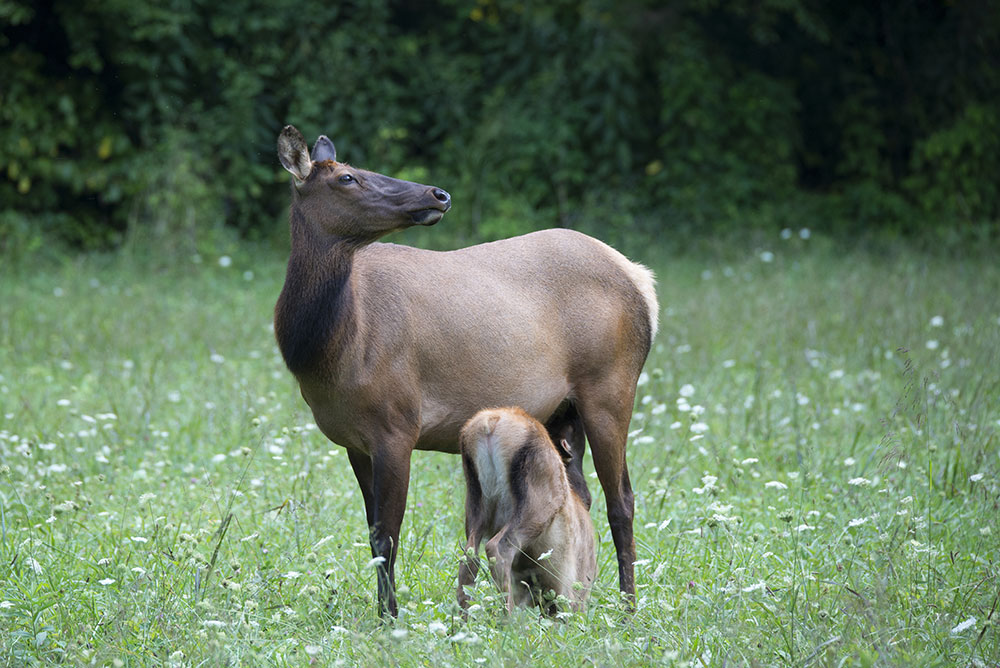
How a Tenacious Elk Cow Helped Assure the Smokies Herd’s Future - Great Smokies
The story of tenacious “cow number 15” and how she learned to protect her calves from predatory black bears in the Smokies.
www.greatsmokies.com
Another article talking about population and mentions bear predation in their early years and that car collisions play a factor too in their death rates.
DNA study yields new estimate of Smoky Mountain elk population
Wildlife biologists utilize radio collars, ear tags, and DNA studies to track and understand the growth of Smokies' elk populations.
smokieslife.org
So it seems like there is just a lot of denial from the wildlife agency and that habitat is a big factor as well. The elk will adapt to this predator however seems like the golden years of a huge elk population could be threatened and just how it goes. Habitat is probably a bigger driver if it doesn't allow the elk to stay safe and thrive.