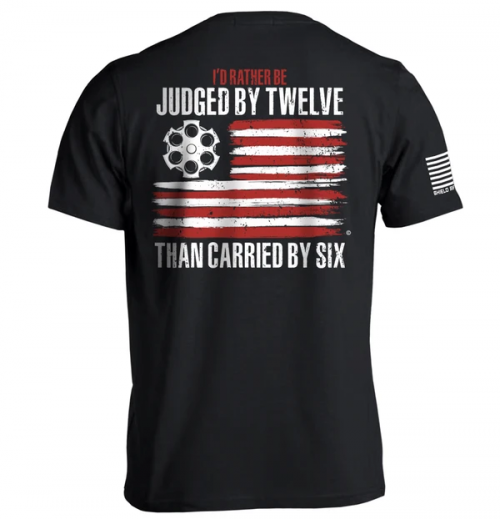
First, do not, as Joe Campbell did, call up your County Attorneys’ office and tell them that your antagonist “is going to wind up in a body bag.” Do not call local law enforcement and tell them that you are going to “put him down.”
Think hard about this. Have you ever said, “Yeah, and I wish that sumbitch would come over here and try some of that monkey business with me”? How about: “Well, if they break in here, they’ll get the full Smith & Wesson treatment”? Ever buy one of those signs, “Trespassers will be shot. Survivors will be prosecuted”? How about: “Nothing in Here is Worth Your Life”?
Now imagine yourself in the courtroom, on trial for a shooting. Do you want to explain why you claimed to your brother-in-law a couple years back that “I’d shoot that sucker soon as look at him,” after you have—justifiably or not—done just that? Do want to explain why you have a sign on your lawn declaring your willingness to shoot somebody? It’s not going to go well for you.
Firearms and self-defense expert and author Massad Ayoob was aware of the Campbell homicide case and the history between Campbell and Newman. “Trash talk, threats, all of that, that is also called Mens Rea, which is Latin for the ‘guilty mind,’” Ayoob told me. “It’s not complicated. What you have done, if something happens, is you’ve established intent.”
Second, if you are involved in a hot dispute over access across private land or anything else, do not do as Tim Newman did, and arm yourself believing that because your opponent is armed, you must be armed, too. You are setting yourself up for a gunfight at best, one that the law will almost certainly determine was avoidable. At worst, you are providing your opponent with exactly what they may be wanting: an excuse to kill you, and take his or her chances in court.