



BrentD
Well-known member
So if I’m going to make one, would it be better to buy a kit or do I make it “freehand”. Is there that big of a difference? Also, What is the difference between a percussion and flintlock rifle.
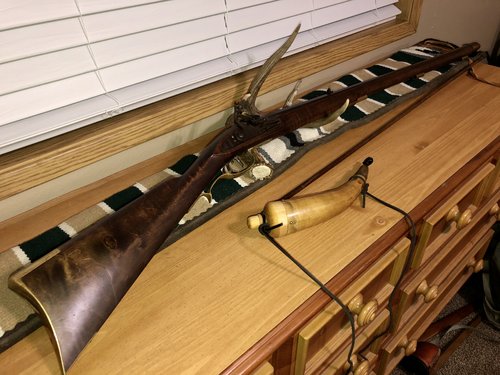
There are all levels of kits and parts. At one end of the spectrum is something like a Lyman Great Plains Rifle kit. Very serviceable rifle, and a very easy kit to assemble. Most of the work is done for you and all the parts are made, of course, to go together. So, that's one way to do it.
In ascending degrees of difficulty, you can select parts from a dealer like Track of the Wolf, Pecatonica River, or Log Cabin Shop. With careful research and some help from the vendors, you can end up with parts that will all work together properly. Things like stock blanks can have a barrel channel and not much else to being mostly preshaped, including a mortise for the lock - and obviously the lock has to fit that mortise (not be too small for instance). Locks, stock and barrels come in different sizes, as well as shapes, so they can help you with that. Which stock you select and how much fitting and positioning has to be done is going to have a lot do with how much difficulty is involved.
As for percussion vs. flint, again, it depends on details. A drum percussion is pretty simple - basically just like a flintlock, in fact, many flints were converted to percussion with a drum. Percussions with a bolster, snail breech plug (think like a Hawken percussion rifle) is a bit trickier, involving a drip guard, but not a big deal.
Half stock rifles are a bit more work because you will need to configure it with a nose piece and an underib with ferrules, but again, not overwhelming.
If you get a stock that has at least a barrel channel and ram rod hole in it, you are pretty good to go. The lock mortise helps also, but if the mortise isn't placed right relative to the barrel channel when you get it and/or get the barrel and breech fitted first, then you won't be able to position the lock correctly, so there are trade offs.
There are some books I could recommend if you are interested, probably many newer ones since I was last looking. Tools are minimal and cheap but a drill press is a great, but not quite essential help. Otherwise, chisels and knives and scrapers and you are good to go.
By luck of being a university rat, I have access to better than average libraries that have really good books on the early colonial and American rifles. Mine is sort of "Carolina" style because I just happened to like that. You can read up on different styles and periods and select parts or kits accordingly.





 . It is not uncommon for the muzzle loaders to have their own muzzle loading range tucked away somewhere also.