He told me yesterday in person that he's not coming back for a while because he doesn't want me to be right about my previous comment. But it is friday and his drinks start pouring around 5 o'clock so we will see.BULLSHIT! You'll be back with spurs on the instant anyone posts an off-topic comment to this thread--the offender doesn't even have to be me!



Navigation
Install the app
How to install the app on iOS
Follow along with the video below to see how to install our site as a web app on your home screen.
Note: This feature may not be available in some browsers.
More options

You are using an out of date browser. It may not display this or other websites correctly.
You should upgrade or use an alternative browser.
You should upgrade or use an alternative browser.
Endangered Grizzly Bear Photo Thread
- Thread starter BigHornRam
- Start date

BigHornRam
Well-known member
New owner of the Dome Mountain Ranch. Hopefully the outfitter they hire can tell what a legal ram looks like.
 www.bozemandailychronicle.com
6,300-acre Paradise Valley ranch sold to Home Depot co-founder's company
A 6,300-acre Paradise Valley property that borders the Dome Mountain Wildlife Management Area has been sold to a company owned by Home Depot’s co-founder.
BigHornRam
Well-known member
Hope you are a patent guy.........I'm not a member of this club but I'm forced to lurk here
Waiting to see a picture of that damn sheep taken from the correct angle

buffybr
Well-known member
I am not defending the Boddington ram. I would not have shot that ram and I have passed on shooting longer Unlimited rams.... why on earth is a 4yr old ram legal?
This is the last Unlimited ram that I shot. The year before I shot him, I passed on shooting him and another ram that looked like his twin, both standing broadside 20 yards from me. I actually picked up a golf ball size rock and threw it underhand and hit one of the rams.
This ram also has the shortest horns of any of my Unlimited unit rams. He is also the oldest. FWP and I both aged him at 9 1/2 years old. A string from the base of the front of his right horn through the back of his eye, just barely touched the tip of his right horn. The same measurement on his left horn makes him legal by 2 1/4".
While I was having him measured at FWD headquarters, another hunter brought in a ram that he had just shot in one of Montana's premier sheep units. That ram was aged at 4 1/2 years old and he green scored over 190 B&C inches.


mevertsen
Well-known member
Amazing how different units produce such drastic differences in health and horn structure.I am not defending the Boddington ram. I would not have shot that ram and I have passed on shooting longer Unlimited rams.
This is the last Unlimited ram that I shot. The year before I shot him, I passed on shooting him and another ram that looked like his twin, both standing broadside 20 yards from me. I actually picked up a golf ball size rock and threw it underhand and hit one of the rams.
This ram also has the shortest horns of any of my Unlimited unit rams. He is also the oldest. FWP and I both aged him at 9 1/2 years old. A string from the base of the front of his right horn through the back of his eye, just barely touched the tip of his right horn. The same measurement on his left horn makes him legal by 2 1/4".
While I was having him measured at FWD headquarters, another hunter brought in a ram that he had just shot in one of Montana's premier sheep units. That ram was aged at 4 1/2 years old and he green scored over 190 B&C inches.
Last edited:

rogerthat
Well-known member
- Joined
- Aug 29, 2015
- Messages
- 3,659
Your dog must have been a badass. My feet hurt just looking at that pictureI am not defending the Boddington ram. I would not have shot that ram and I have passed on shooting longer Unlimited rams.
This is the last Unlimited ram that I shot. The year before I shot him, I passed on shooting him and another ram that looked like his twin, both standing broadside 20 yards from me. I actually picked up a golf ball size rock and threw it underhand and hit one of the rams.
This ram also has the shortest horns of any of my Unlimited unit rams. He is also the oldest. FWP and I both aged him at 9 1/2 years old. A string from the base of the front of his right horn through the back of his eye, just barely touched the tip of his right horn. The same measurement on his left horn makes him legal by 2 1/4".
While I was having him measured at FWD headquarters, another hunter brought in a ram that he had just shot in one of Montana's premier sheep units. That ram was aged at 4 1/2 years old and he green scored over 190 B&C inches.

I'll second that- When I brought my sheep in to the taxidermist, there was a ram from the Breaks nearly half the age of mine, but with nearly 40" of more horn. Something about the Beartooth genetics and scratching out winters at 10000' that keeps 'em a bit smaller, I guess.While I was having him measured at FWD headquarters, another hunter brought in a ram that he had just shot in one of Montana's premier sheep units. That ram was aged at 4 1/2 years old and he green scored over 190 B&C inches.

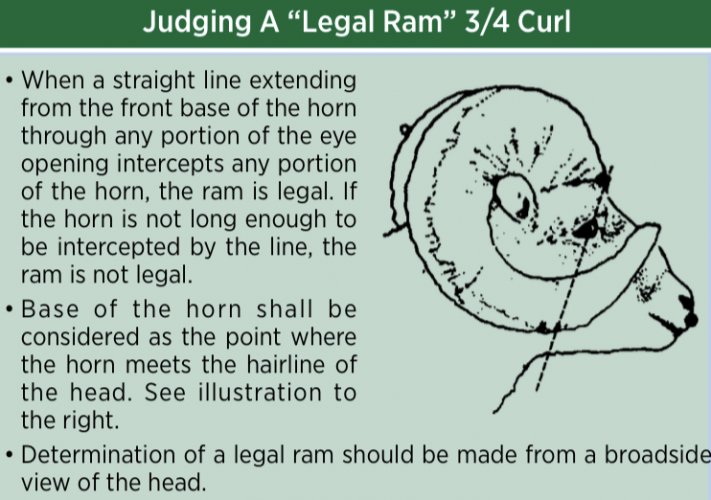
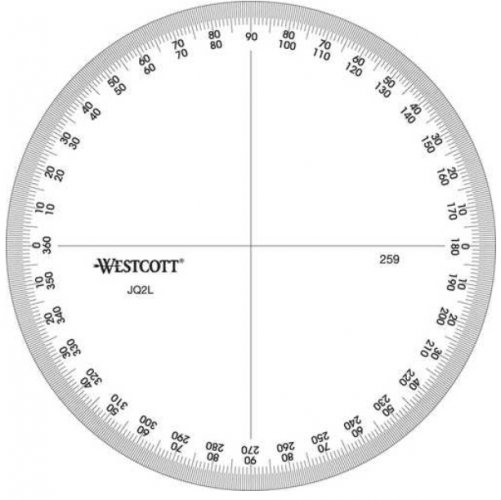
Anyone have an address for the Boddingtons? I want to send them a thoughtful Christmas present that they can use on their future extreme hardcore guided from the truck unlimited bighorn hunts: a 360 degree protractor and a laminated copy of the 3/4 curl requirement page of the sheep regs.
Attachments

rjthehunter
Well-known member
Email Donna and see if she has a PO box you can send a Xmas present to!Anyone have an address for the Boddingtons? I want to send them a thoughtful Christmas present that they can use on their future extreme hardcore guided from the truck unlimited bighorn hunts: a 360 degree protractor and a laminated copy of the 3/4 curl requirement page of the sheep regs.
Then mail a second copy to the outfitter!
Then mail a third copy to the dumb@$$ that plugged it
Attachments

Ooooooooooo now that would be good!Then mail a third copy to the dumb@$$ that plugged it

shines@times
Well-known member
Genetics, nutrition and environmental stress--severe weather across long Winters in the Beartooth country especially--are the contributing and limiting factors.Amazing how different units produce such drastic differences in health and horn structure.
Something else occurs to me, though I do not have enough information to form a hypothesis: Does living at significantly higher elevation than the populations in the breaks of the Missouri River mean that a larger proportion of the nutrition consumed by Beartooth sheep goes to simply fueling their metabolism year-around, regardless weather conditions?
It seems a logical conclusion to me that more nutrition directed to simply maintaining an animal's basic cardio-vascular functioning consequently limits that available to grow horn mass, but I am interested in reading responses from biologists and associates of same who might be following this thread.

BirdManMike
Well-known member
Maybe the Beartooth ewes just prefer metro rams. Natural selection. Not all females want a beefcake, some prefer wisplike.
Interesting thought- But I would say it's possibly more a genetic factor. 302- the Hilgards, mimics some of the Beartooth in many ways, yet is managed differently, and thus, produces more large rams. The 2nd 501 ram this year is a testament that the Beartooths can produce large rams, not on the scale of the Breaks, but still. Perhaps a better comparison yet is many of the record Rams coming from Alberta- I won't say they are enduring a Beartooth Winter in all areas of Alberta, but the Canadian Rockies are no slouch, either. I have no doubt that diet and habitat make a difference. But to what extent, I can't say.Genetics, nutrition and environmental stress--severe weather across long Winters in the Beartooth country especially--are the contributing and limiting factors.
Something else occurs to me, though I do not have enough information to form a hypothesis: Does living at significantly higher elevation than the populations in the breaks of the Missouri River mean that a larger proportion of the nutrition consumed by Beartooth sheep goes to simply fueling their metabolism year-around, regardless weather conditions?
It seems a logical conclusion to me that more nutrition directed to simply maintaining an animal's basic cardio-vascular functioning consequently limits that available to grow horn mass, but I am interested in reading responses from biologists and associates of same who might be following this thread.
I think you would have to abduct and transplant a Beartooth ram into the Breaks and then monitor him for the duration of his life, while simultaneously doing the opposite to a Breaks ram.
longrunner
Member
- Joined
- Mar 2, 2019
- Messages
- 79
In general, plant productivity and nutritional value appears to be inverse to elevation. Alpine meadows are not as productive as bottomlands.
BigHornRam
Well-known member
My understanding is that native herds like the Beartooths, Absarokas, Salmon River, and Selway, in general have slow horn growth. Look at Sun River sheep, same thing. Transplant them to new uninhabited territory like the Breaks and look out, though. Seems like some of transplanted herds horn growth slows down after the herds get to carrying capacity, but who really knows for sure.
BigHornRam
Well-known member
Quality of mothers milk plays a huge roll in how big the ram will get also.
BigHornRam
Well-known member
I remember they transplanted some sheep from the Breaks into the Devils Canyon, Wyoming. More rocks than grass in that country. One young ram from that transplant, grew up to be a real big ram, and was taken by a lucky hunter. Not sure of the age he was taken at, still fairly young if I recall the story right. (Looked it up. Ram was 6.5 when harvested and measured 186"+)Interesting thought- But I would say it's possibly more a genetic factor. 302- the Hilgards, mimics some of the Beartooth in many ways, yet is managed differently, and thus, produces more large rams. The 2nd 501 ram this year is a testament that the Beartooths can produce large rams, not on the scale of the Breaks, but still. Perhaps a better comparison yet is many of the record Rams coming from Alberta- I won't say they are enduring a Beartooth Winter in all areas of Alberta, but the Canadian Rockies are no slouch, either. I have no doubt that diet and habitat make a difference. But to what extent, I can't say.
I think you would have to abduct and transplant a Beartooth ram into the Breaks and then monitor him for the duration of his life, while simultaneously doing the opposite to a Breaks ram.
Last edited:

Carl 9.3x62
Well-known member
I believe Steve Rinellia had some biologist of some sort on a couple weeks ago that said genetics don’t play as big of a factor as we think in antler growth referencing mule deer. It’s more of how healthy the doe was during the pregnancy. I would think it would be similar for rams.
Longtime reader of this thread finally have something to contribute too haha
Longtime reader of this thread finally have something to contribute too haha
rjthehunter
Well-known member
I remember that. Antler growth was determined on the does health and diet during pregnancy. I don't know if being a horned animal makes a difference, but I would certainly think it would apply to all antlered animals.I believe Steve Rinellia had some biologist of some sort on a couple weeks ago that said genetics don’t play as big of a factor as we think in antler growth referencing mule deer. It’s more of how healthy the doe was during the pregnancy. I would think it would be similar for rams.
Longtime reader of this thread finally have something to contribute too haha
Similar threads

- Replies
- 7
- Views
- 615


- Replies
- 35
- Views
- 3K

- Replies
- 6
- Views
- 858