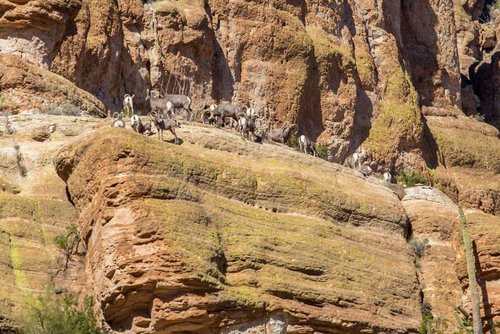
This past Saturday was reserved for 2 Arizona Desert Bighorn Sheep Society (ADBSS) get-togethers --- the annual Sheep Hunter's Clinic in the morning, and the 2013 Ram Recognition Banquet that evening.
A few things I thought I might pass along:
For the Ariz. 2013 sheep hunt application process, there were 13,469 applicants total (including those applying for the 16 Rocky tags). There were approx. 6,000 who just applied for a bonus point this year. Two applicants drew tags with 0/1 bonus points (one 11-year-old girl drew on her first application). Don't give up --- the computer could spit out a really low number for you next year!
Arizona's ongoing drought extends forward (currently at 20 years minimum); 2002 was the driest year in possibly the last 1,500 years. This, naturally, affects all wildlife (and subsequent number of hunting tags available). It's probably not going to get better in the immediate future. All of us who hunt Arizona big game will just have to hang in there.
I know there are those of you who have tagged Dall, Rocky, and/or Stone sheep elsewhere and have a wealth of knowledge of wild sheep in general. Not so much me. I readily admit my "rookie-ness" when it comes to desert sheep and sheep hunting (and I suppose most hunters fall into that same boat). I'm learning more and more as the days go by.
For example, Class IV rams in Arizona (those 9 years old and older) make up only 15% of the total ram population, and only 4% of the total sheep population. Once you find out the sheep population for your hunt unit, you have a better idea of the approx. number of mature rams you might expect to encounter (though nothing replaces actual eyeball confirmation). Makes me really appreciate those "Ol' Boys" all the more! And I didn't know that desert sheep can experience up to 20% dehydration and survive (you can really see a difference in a sheep's appearance following a stop at a water catchment!).
I've learned that rams lay down their growth rings during the rut --- they go off their feed, with resultant compressed horn growth. I knew sheep horns continued to grow throughout a ram's life; now it makes sense why there are growth rings. The most noticeable (counting inward from the end of a ram's horn) is the 3rd-year growth ring; since this is the 1st year a ram is in the rut, it's usually a bit wider in appearance. The rut may extend over 3 months, which is in the hottest part of the year here in Arizona. The 4th-year ring is the first really concise ring; it's not unusual to be notched or broken in some way since it's a weaker spot in a ram's horns.
One bit of advice I'll throw in here. You probably are drawn more to a particular type of horn appearance on a ram. There are 2 sub-species here in Arizona: the blockier Mexicana, and the more-flaring Nelsoni. KNOW WHERE EACH ARE FOUND so you're not disappointed once you do draw a desert sheep tag here in Arizona! Looking back through MANY years of applications, I discovered I had applied a few times in units holding Nelsoni sheep. Not something I would want to look at on my wall for the rest of my life --- I just like the more compact look of the Mexicana rams. 'Nuff said.
As to size of rams taken last year in the general draw, NOT including the 3 special auction/raffle tags (186 4/8 Governor's Ram, 174 1/8 Rocky, 164 Nelsoni Raffle Ram):
180-in plus >>> 3 rams, 175-in plus >>> 3 rams, 170-in plus >>> 4 rams, 165-in plus >>> 17 rams, 160-in plus >>> 17 rams. There was also a first: a Nelsoni ram (130 5/8) taken with a bow in a unit that had never had an archery-taken ram before.
Good to know what you can reasonably expect to see out there when you're scouting, and then actually hunting.

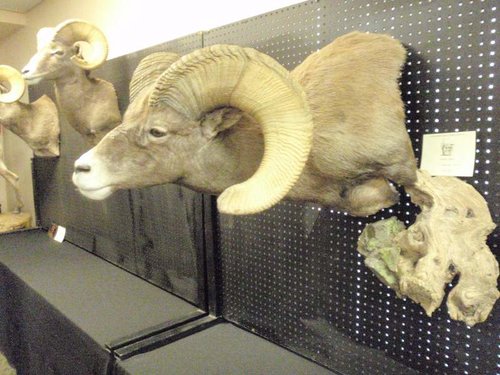
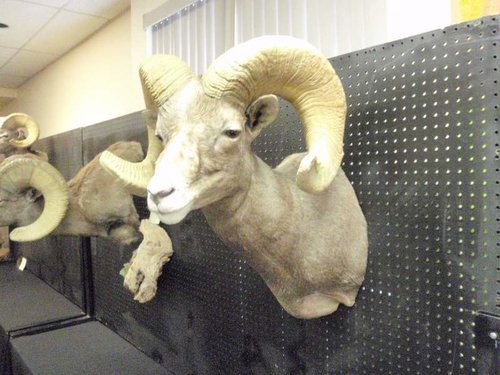
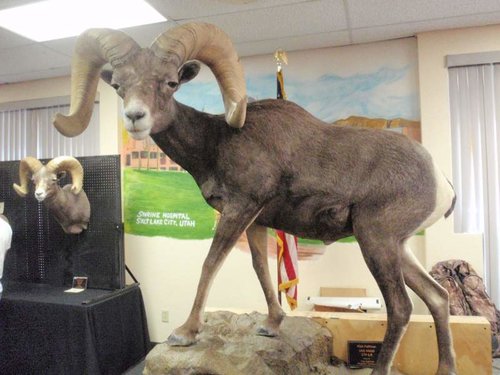
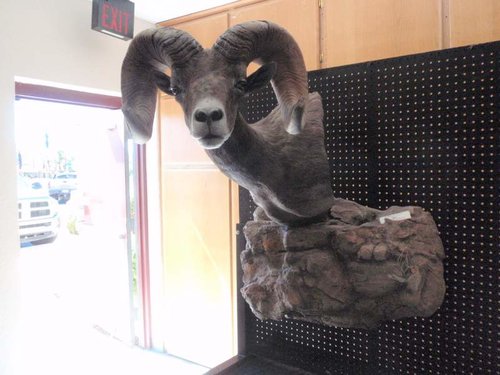
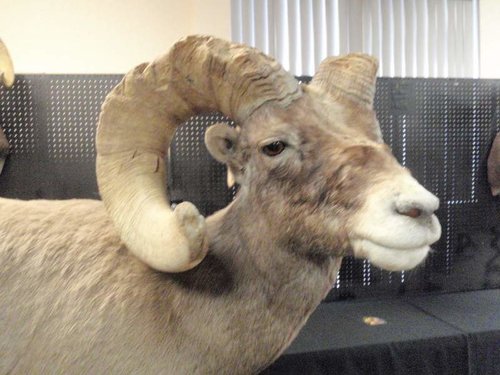
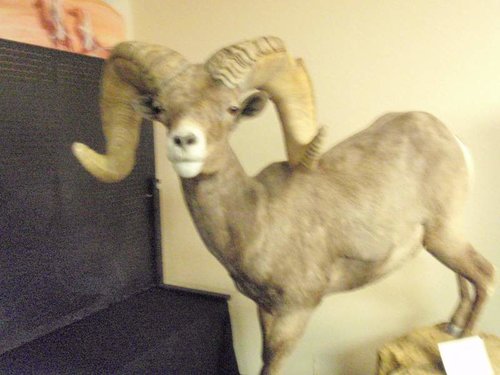
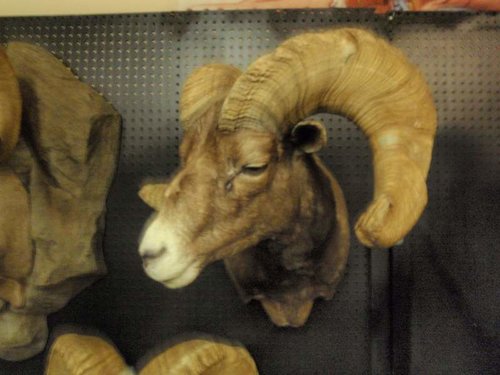
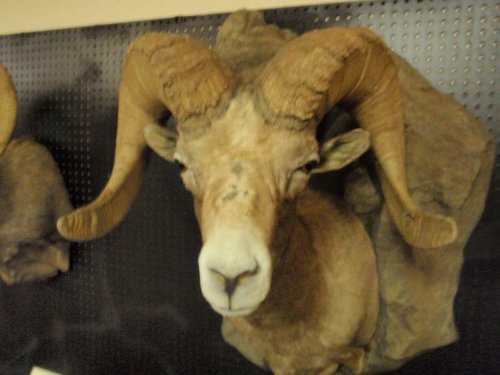
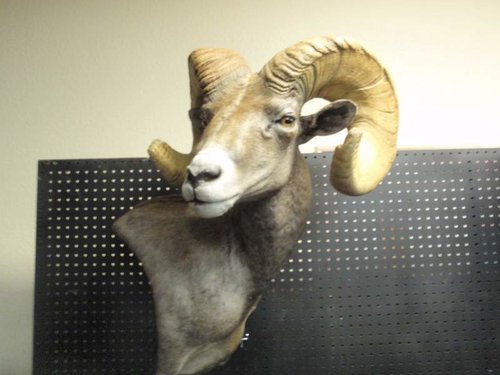
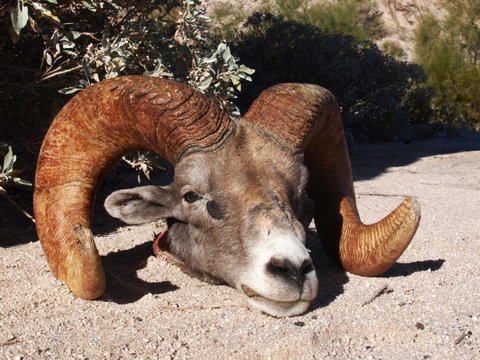
I've included a few pics of sheep mounts from this past year's hunts (I apologize for the inferior quality --- phone battery went to zero and the camera I used was set on wrong setting). These were not the only, nor necessarily the biggest, rams displayed at the banquet ...