SAJ-99
Well-known member
Hawkish on speech. The problem is the same 12 people know that a rate increase doesn’t do squat to the price of oil.


Follow along with the video below to see how to install our site as a web app on your home screen.
Note: This feature may not be available in some browsers.


Didn't hit my limit on the SPCX but I made money both ways on limit trades with BRK and the SPY.I like this move. Shows some conviction. Good to see that BRK is moving upward again after a long period of going nowhere.

Sure, that is legit. But it misses the point. The market looks forward. Q2 earnings were amazing and QQQ is lower.
Below is the chart (credit: Yardeni) that sticks with me. The Blue line (earnings) is with inflation, the Red line is GDP minus inflation. It is pretty odd to see these go in different directions. The economy is 'meh" and the earnings are awesome. Sorry, but I don't think that can keep going. Only way it can is the "benefits" of AI have to start showing up in non-tech earnings.
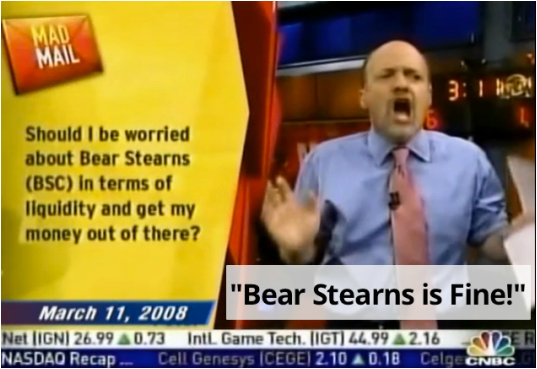
(I hate the word "bubble". If I want to sound like Cramer, there is always a bubble somewhere. I am looking for tomorrow's bubble.)
View attachment 417204
Prime Brokers know the leverage amounts and report it to regulators. They might have issues tracking pledged collateral, but that wasn't your question. Hedge funds blow up, usually for the same reason. LTCM 1997, Amaranth 2006, Sit Aware this year, etc. Don't worry about those guys. They get new jobs doing the same thing somewhere else. I don't think there is much in the way of hidden debt or leverage and the market has handled the last few blow ups pretty well.Do you think we have better analytics now with respect to risks related to hidden debt and or leverage than we had in the past? Or with what happened to Situational Awareness an example of how the market/data can react faster to avert a collapse or not overblow a situation? Was Situational Awareness an outlier?

Sell a put or several for the strike price you are willing to pay today. If you don't get your price, you get a consolation prize. I sold two puts earlier for SPCX at a strike price of $120.00 and $125.00 when it was trading at $132 & 142 respectively. I would have loved to buy the shares at that price, but I still walked away with $800 in premium. Better than a kick in the nutz.Didn't hit my limit on the SPCX but I made money both ways on limit trades with BRK and the SPY.
Thankfully, he's been there, tried that, and failed. Won't stop the midnight rants though. Someone slip a sleeping pill into his late night burger and fries....You're fired!

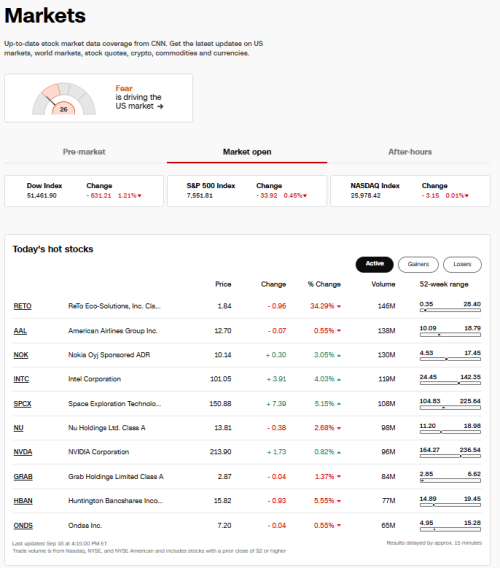
9% overvalued after today.My estimate is that the market is about 8% overvalued.
Yes. Math skills at work!9% overvalued after today.
One arm of Congress? Both? Either way, I’m not sure what that looks like. I doubt we see a big selloff. We live in an economy reliant on the financial system as a driver. Maybe it changes where money gets spent? more to healthcare?I suspect the market soon will start pricing in the Dem takeover, if it hasn't started already.
I didn't say bearish. I said cautious and a negative bias. You've been saying the market is expensive, rich, overvalued, extended, etc for 1,000s of S&P points. You also repeatedly point out all the negative things going on. Sounds cautious to me.You always think I’m bearish for some reason. I’m not sure how to clarify it as I have tried numerous times. My estimate is that the market is about 8% overvalued. The recent choppiness and good earnings has helped bring that in a little. 8% isn’t terrible so I stay with equities at full weight (although I hedge a little around option expirations). And we agree, for most people, they just save and invest and move on.
Maybe I am positive on the market, but not positive on the economy. Data is mixed so a person can paint a positive view ignoring the bad stuff or a negative view ignoring the good stuff. I still think construction is an important driver of general the overall economy. The housing market is a mess so we are just riding on the datacenter wave. That will come to an end at some point, particularly if these companies can’t turn that investment into tangible results. The irony is that if we see the benefits of AI it probably means people lose their jobs, or at least hiring slows. We are already seeing that at the entry level positions. Higher interest rates, higher prices, lower job growth are a bad trifecta. The good news is boomers are spending like they have an expiration date and the government continues to spend like a drunken sailor. Eventually the promises come due.
What sectors do you believe will benefit and lose ground?I suspect the market soon will start pricing in the Dem takeover, if it hasn't started already.
It has been overvalued, and for thousands of points. But no one seems to care, so I don’t, at least not from an allocation point of view.I didn't say bearish. I said cautious and a negative bias. You've been saying the market is expensive, rich, overvalued, extended, etc for 1,000s of S&P points. You also repeatedly point out all the negative things going on. Sounds cautious to me.
I like the market here but am hoping for a pre-midterm slump. I think it would be a great buying opportunity.
Stocks. You’ll wish you bought more at this price in 10 years.The question is if you have new dollars to put to work on Monday do you put it in equities or bonds? The answer is different for everyone.
What would be considered a reasonable exposure percentage?Stocks. You’ll wish you bought more at this price in 10 years.
Sure. We have been condition to do that over the last 40+ years. It has become an even greater selling point for FAs in the last 20, "Just Buy stocks, they almost always go up". Even Buffett says just buy stocks and don't look at your statements. That fine, but these same people will scream "buy the dip!" if it falls 2%. If I'm 100% in stocks, buy it with what?Stocks. You’ll wish you bought more at this price in 10 years.