Anybody Buying Yet? Where’s the Bottom?

I almost pulled the trigger on solar. Made a lot of sense. I’ve checked it out 4-5 times throughout the years. I think a lot of the price gougers went out of business when the tax credit went away and the tariffs went into effect. I think a lot of the low overhead, American sourced companies are eager for buisness. Assuming a 4% annual increase on KW/h I’d have about 22 years of electricity for free assuming the studies showing 30 year life are accurate(which I believe they are). Lots of un-utilized roof square footage out there.
I've came close several times. Just not sure.
 
I've came close several times. Just not sure.
I’m getting my roof done and roofs get beat to hell in Montana so if I was going to do it, now makes the most sense. The only reason I’m not is I could see us moving before it pays itself off. Otherwise I’d probably do it and trade my run around car in for an electric and speed up the return. I’d also do a metal roof if my HOA allowed.
 
I’m getting my roof done and roofs get beat to hell in Montana so if I was going to do it, now makes the most sense. The only reason I’m not is I could see us moving before it pays itself off. Otherwise I’d probably do it and trade my run around car in for an electric and speed up the return. I’d also do a metal roof if my HOA allowed.
I cant stand the sight on the roof. Or the weight or well pretty much any of it. I've got plenty of room on the south side of the property though. Just a complete eye sore and I take a lot of pride in my house.
 
I am not very well-versed on this, and this is a genuine question, but my understanding with solar has been that the generation isn’t necessarily a problem, it’s the upkeep/maintenance and replacement as panels wear out, get dirty, breakdown, etc. I assume that natural gas, nuclear, etc. all have a much higher upfront cost to construct and get running. But how does that compare to the ongoing maintenance cost for solar?
The LCOE is based on lifetime. I’m not sure you can exclude the building cost difference from the equation. Maintenance costs for solar continue to decline but they are generally pretty low at baseline. I’m not sure what they are for coal and nat gas but the 24/7/365 power plant is a myth. Everything has some maintenance and remediation costs. My big question is labor - I’ve seen estimates that are wildly high but I’ve also seen guys working for wind contractors at hotels and there are quite a lot of them. Any estimates will probably vary by source. Total, all-in cost really isn’t a question anymore.

The problem people have with renewables (particularly HT) is usually the footprint and connection cost. It takes more land and that land might be far away from grid. I can agree with all that and would prefer decentralized rooftop solar, but utility scale renewables w/batteries is happening regardless, mostly on private land.
 
The LCOE is based on lifetime. I’m not sure you can exclude the building cost difference from the equation. Maintenance costs for solar continue to decline but they are generally pretty low at baseline. I’m not sure what they are for coal and nat gas but the 24/7/365 power plant is a myth. Everything has some maintenance and remediation costs. My big question is labor - I’ve seen estimates that are wildly high but I’ve also seen guys working for wind contractors at hotels and there are quite a lot of them. Any estimates will probably vary by source. Total, all-in cost really isn’t a question anymore.

The problem people have with renewables (particularly HT) is usually the footprint and connection cost. It takes more land and that land might be far away from grid. I can agree with all that and would prefer decentralized rooftop solar, but utility scale renewables w/batteries is happening regardless, mostly on private land.
My grandparents farm is about 1/4 mile from a substation. The offers they have received to lease it for solar is absolutely mind boggling, I mean insane. However nobody will offer to buy it for solar when asked. I find that telling. Thankfully my grandparents who are getting way up there in age do too.
 
My grandparents farm is about 1/4 mile from a substation. The offers they have received to lease it for solar is absolutely mind boggling, I mean insane. However nobody will offer to buy it for solar when asked. I find that telling. Thankfully my grandparents who are getting way up there in age do too.
Somebody is taking the offer. When you think about it, what’s the difference between farming 500 acres of corn that will be used for Ethanol and 500 acres of solar panels that will generate electricity? Besides the cost of the tractor, combine and trucks, not much.
 
My grandparents farm is about 1/4 mile from a substation. The offers they have received to lease it for solar is absolutely mind boggling, I mean insane. However nobody will offer to buy it for solar when asked. I find that telling. Thankfully my grandparents who are getting way up there in age do too.

Lower up front capital costs and no burden of taxes other than personal property. Margins rule.
 
The vilification of O&G is mostly a narrative created by lobbyists. No politician wants higher fuel prices, but there are certainly differences in the approaches.

The stock market doesn't lie and it disagrees with the "never come close" part. It's just a matter of time. Most of the US economic growth is coming from tech infrastructure, which is power hungry. The only way to add power as fast as you can build datacenters is through solar and wind, which is why they make up 90% of the additions to utility-scale electrical production. There are already some European countries that produce more than half of their electricity from various renewables. California gets an overwhelming majority of its electricity from renewables, and even Texas inches closer to that 50% mark every year. Again, it's just a matter of time.

O&G is certainly not going away anytime soon and will never be 0%, but "all of the above" is the only way to meet future demand. Some countries have figured this out. We continue to make it a d*@%-measuring contest.
“The vilification of O&G is mostly a narrative created by lobbyists.”

That statement is not even remotely accurate if you live in Colorado and watch the statements made by members of the ruling party in the General Assembly. However, their statements and that narrative many times don’t actually match how they vote. Which speaks to your point that most don’t want higher fuel prices.
 
I am not very well-versed on this, and this is a genuine question, but my understanding with solar has been that the generation isn’t necessarily a problem, it’s the upkeep/maintenance and replacement as panels wear out, get dirty, breakdown, etc. I assume that natural gas, nuclear, etc. all have a much higher upfront cost to construct and get running. But how does that compare to the ongoing maintenance cost for solar?
Solar upfront costs are much higher than for a natural gas generation facility. Solar only generates electricity when the sun shines, so you will need natural gas generation for back up, and peak demand support.

Construction Costs for Gas-fired Power Remains Well Below Those for Solar and Wind - IER https://share.google/7EQa3hGDEbnuhZAi8
 
“The vilification of O&G is mostly a narrative created by lobbyists.”

That statement is not even remotely accurate if you live in Colorado and watch the statements made by members of the ruling party in the General Assembly. However, their statements and that narrative many times don’t actually match how they vote. Which speaks to your point that most don’t want higher fuel prices.
So the war on O&G is some people saying a bunch of mean things about them and hurting their feelings before letting them drill? Ok.
 
So the war on O&G is some people saying a bunch of mean things about them and hurting their feelings before letting them drill? Ok.

No, it's quite a bit more than that. There should be a rigorous debate on smart policy and regulations. But my side of the aisle too often goes quite a ways out on the point of diminishing returns.

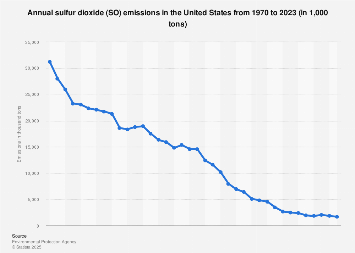
A half a lifetime ago, when I was first employed by big oil, the sulfur content in diesel was capped at 0.50%. Some years later, to reduce SO2 emissions, the limit was lowed to 500ppm. The refinery had to make some investments to make meet this limit. Then a few year before I retired the limit was reduced to 15ppm. The effect of that is that the diesel leaving the refinery is essentially sulfur free. This is since any contamination outside of the refinery can make the diesel outside of the regulation.

To do this, they had to not use the heaviest molecules that had historically become diesel. The way a refinery strips sulfur from a molecule is causing a reaction with hydrogen, that takes the sulfur off the molecule, and creates a H2S molecule. On large molecules, this reaction also often cracks the molecule into two or more smaller molecules, unsuitable for diesel.

Refineries cannot produce as much diesel from a barrel of crude, as before. This is one reason there is the spread between gasoline and diesel.

Switching subjects, but still on the point of diminishing returns. There is an oncoming requirement for new home construction to put in furnaces that are 95% efficient. This requires a more complicated furnace and installation. I recently decided to replace our 20 year old furnace. We went with an 80% efficient furnace. Out of curiosity, I got a bid on the cost of a 95% furnace. It was ~$3k more than the other one. Since our gas bills run around $100/month. During the non heating season, the gas bill is $25 or so.

So the gas to heat our home is ~$75/month for say five months. The 95% efficient furnace would knock about $12/month off the bill. The pay off would be ~50 years.

This is the kind of regulation that pushes many people away from the Democratic party.

 

Latest posts

Forum statistics

Threads
118,965
Messages
2,212,961
Members
38,719
Latest member
ConnerG
Back
Top