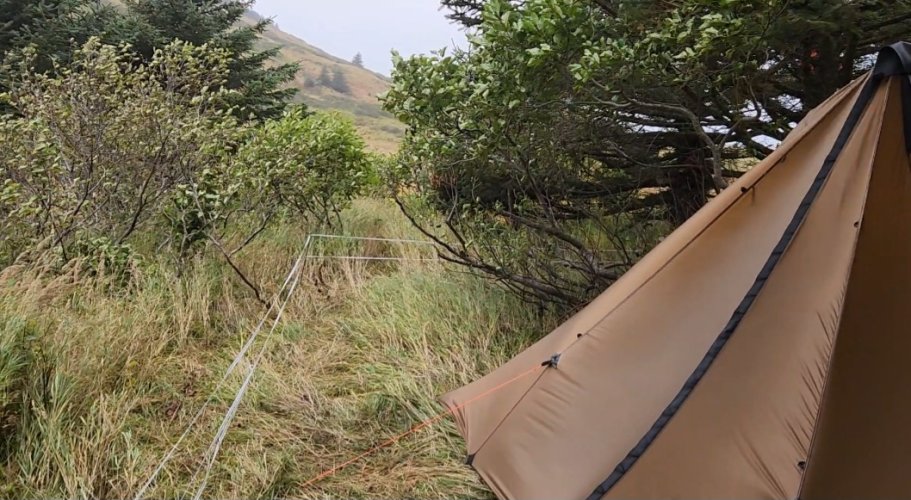
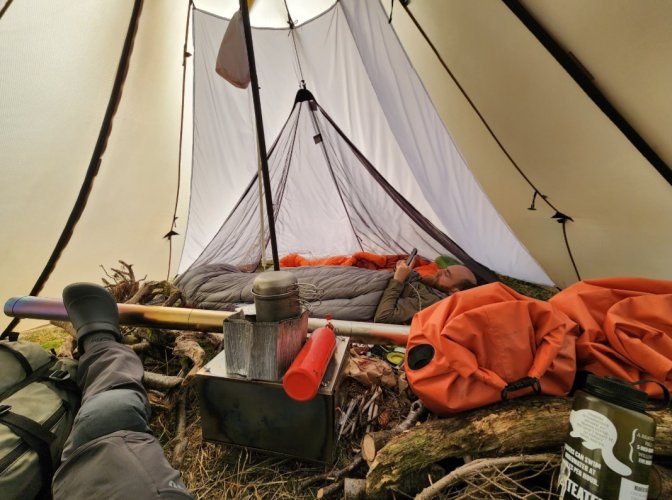
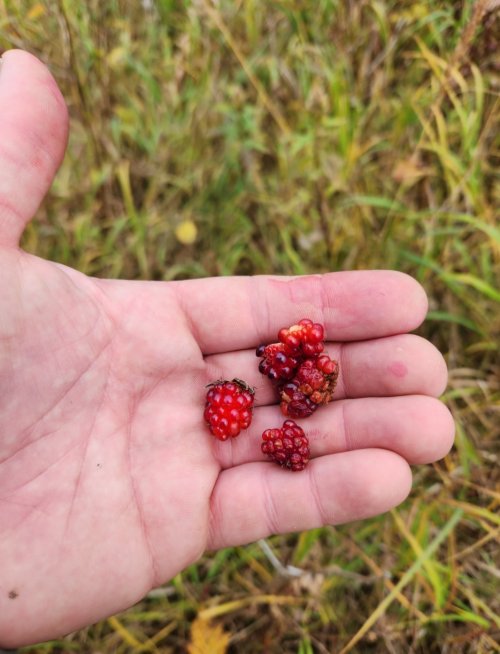
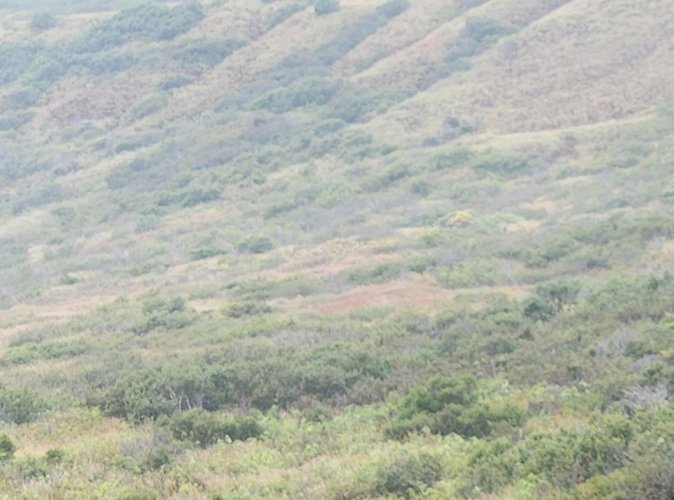
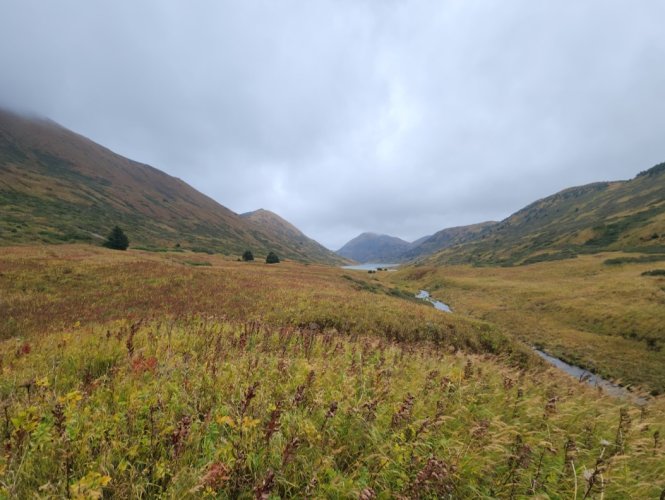
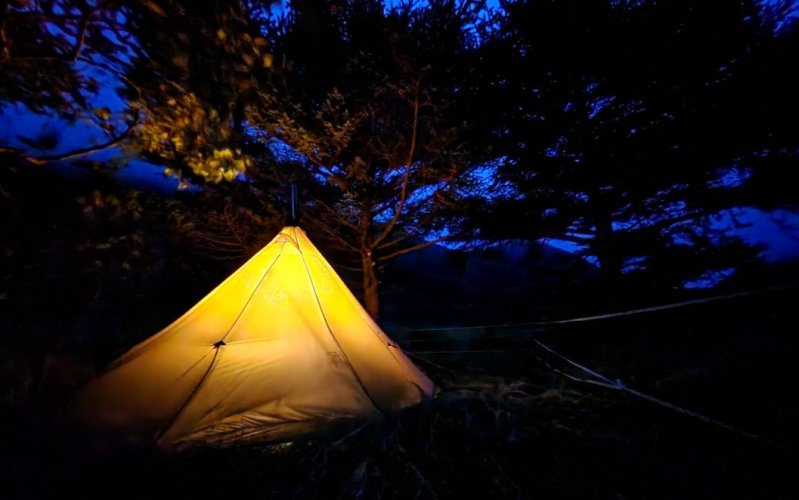
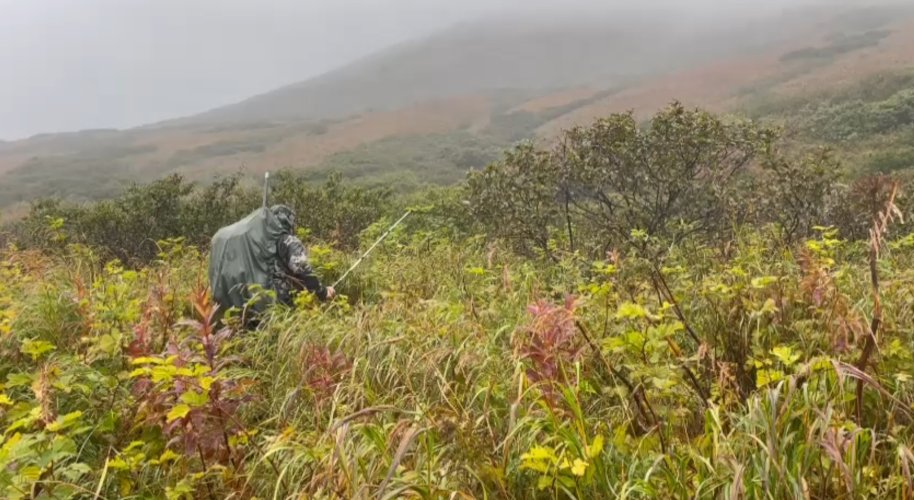
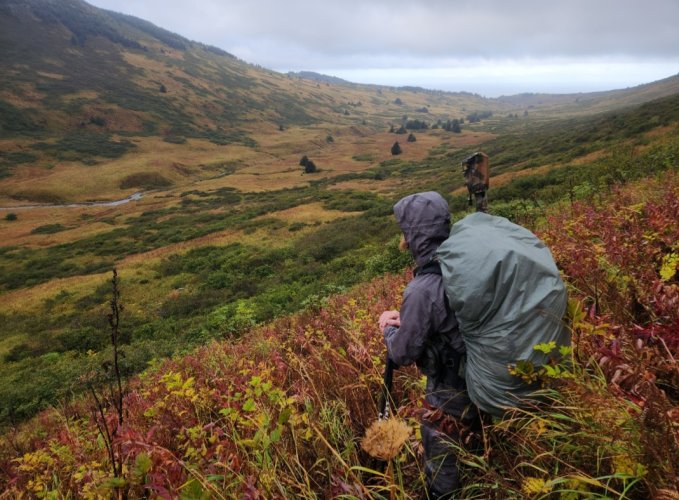
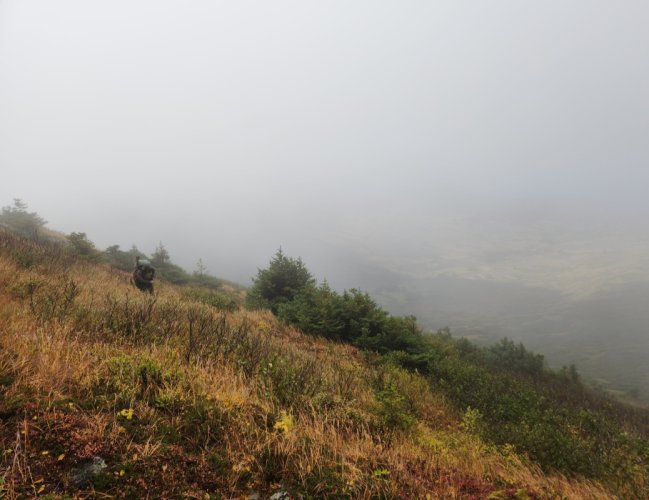
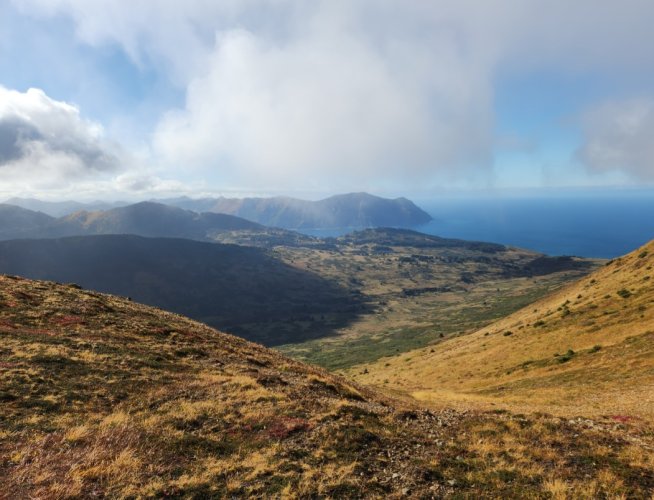
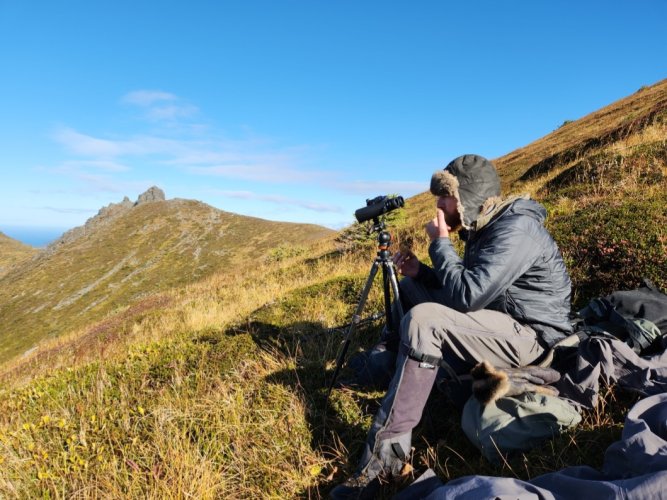
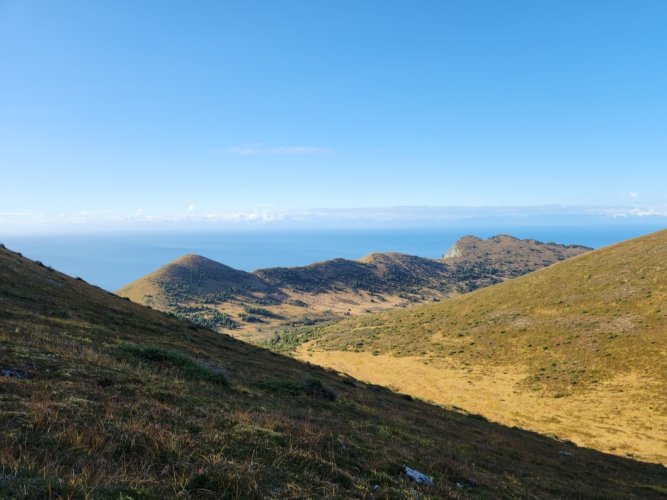
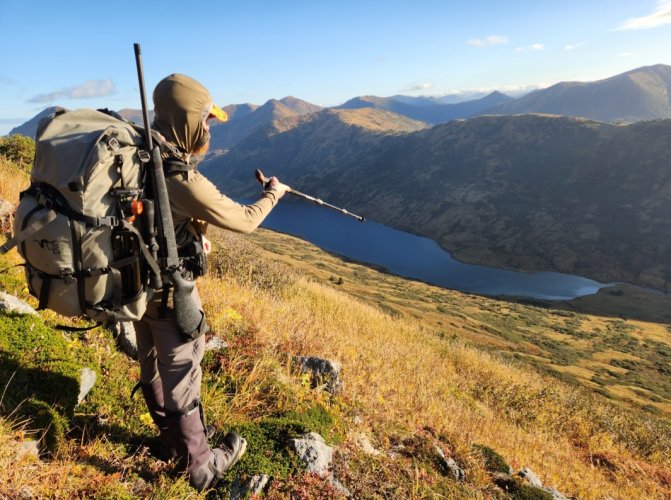
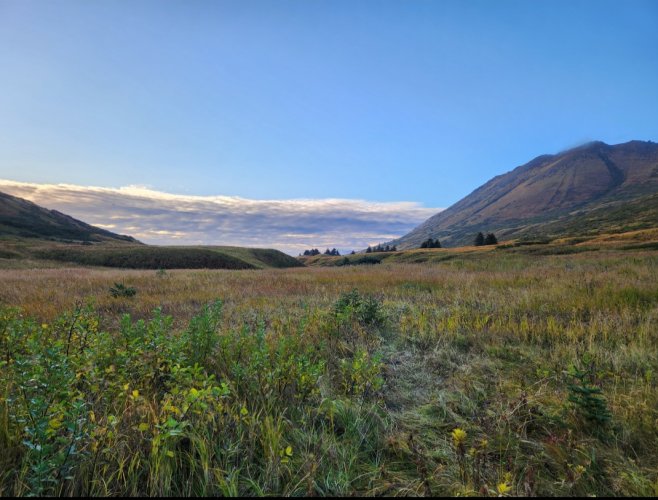
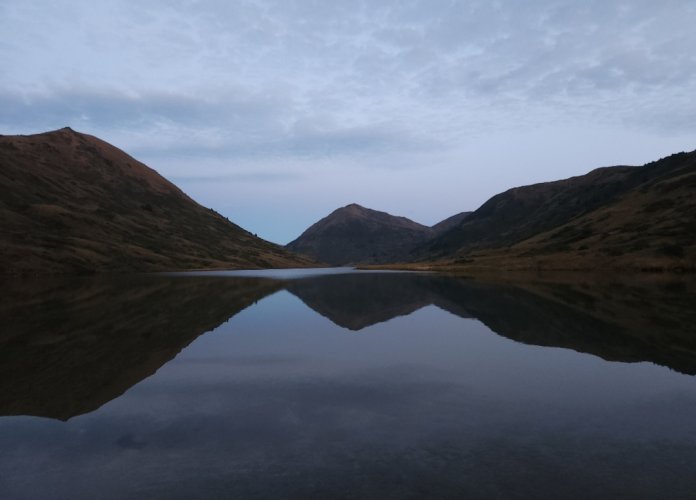
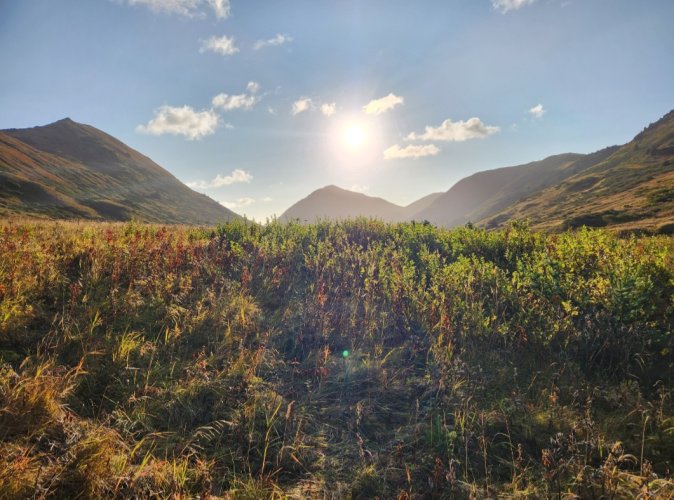
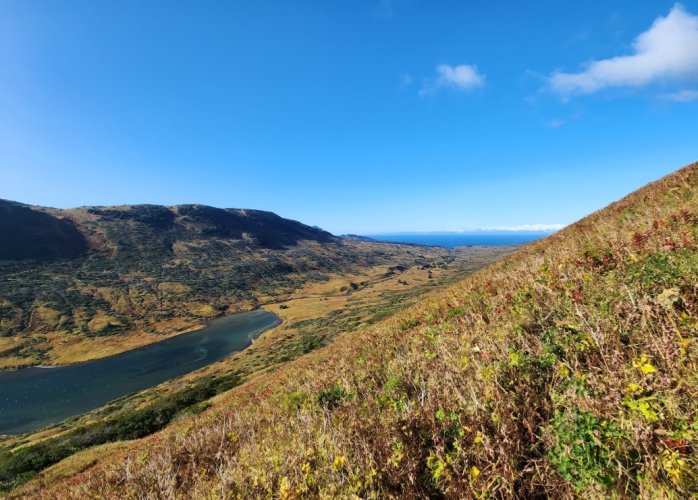
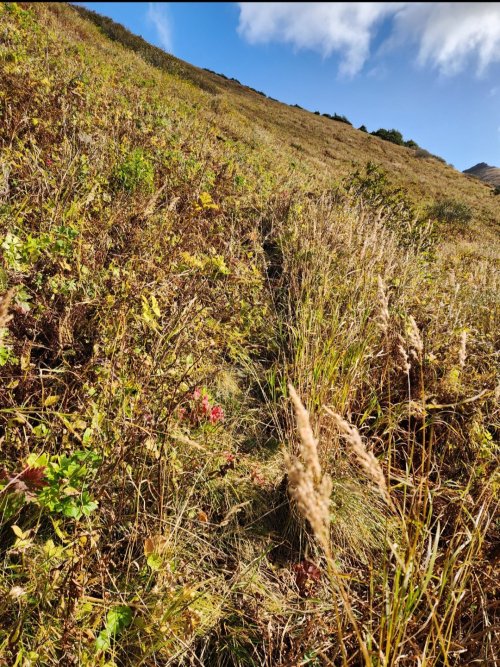
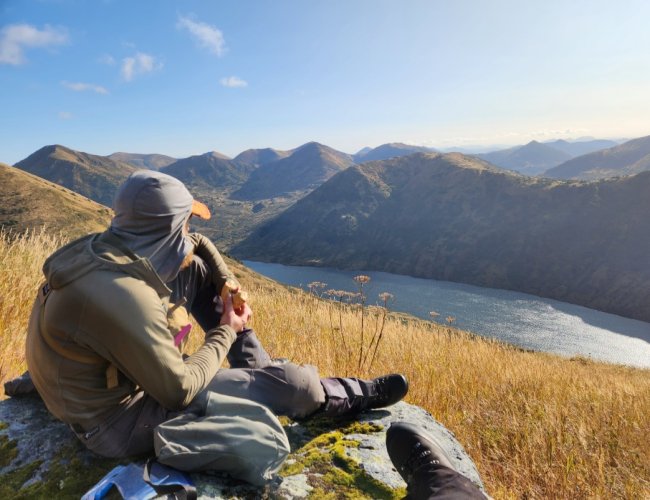
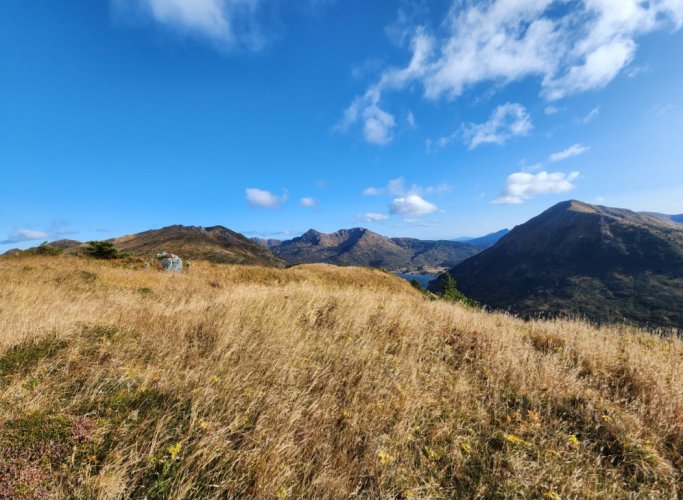
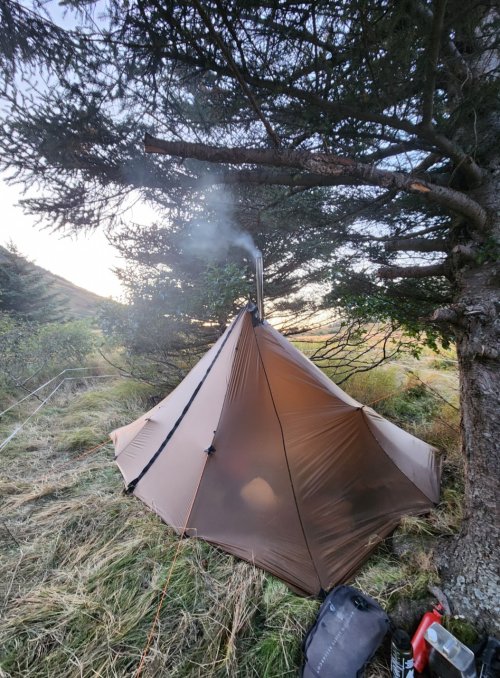
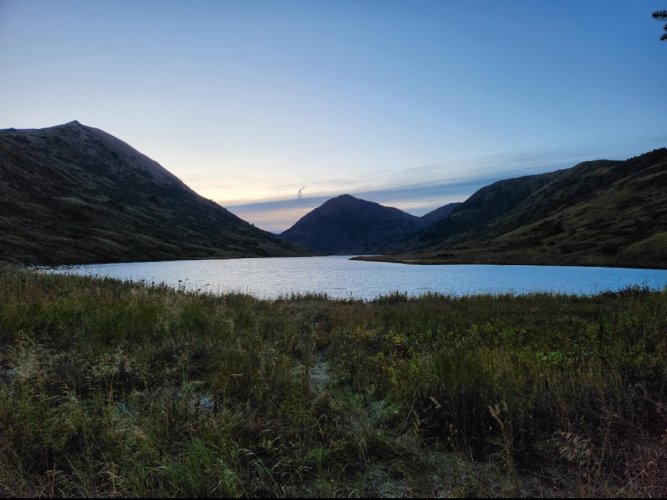
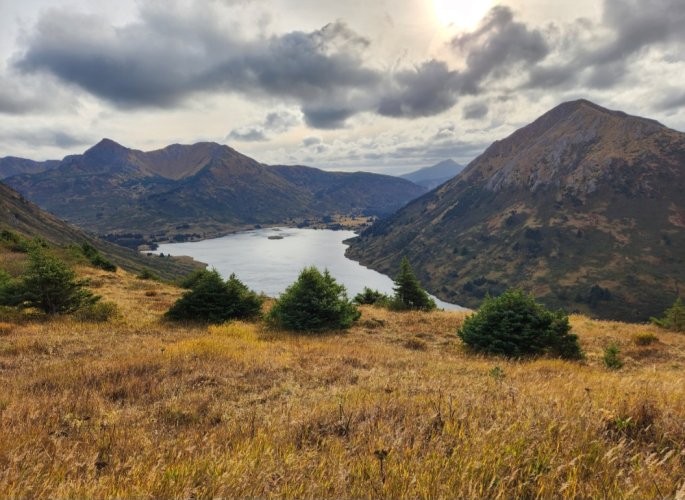
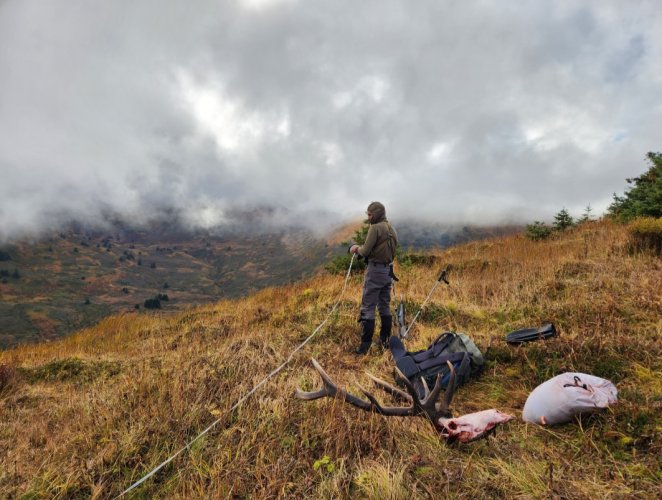
At 6am, my alarm goes off. Snooze. At 610am, it goes off again, and the Kiwi turns on the tent light. I pretend I was already awake, and we scurry through the frozen darkness to the food tree and return to eat breakfast in the cover of the tent and bear fence. Sunrise is after 8am, and around 745am, just as the dawn breaks, we're moving along the lake, turn up through the brush, juke through the salmonberries, then up to our trail and on to the saddle. We pause to inventory the elk. Not nearly as many are visible. We count 4 bulls, none of them the 3 larger ones from yesterday, scattered along the side valley, a spike up high, with a few more closer to the ocean. I give a pep talk to the Kiwi that we might just have to go to those, even though they're 1000 feet lower and another 1-2 miles farther.
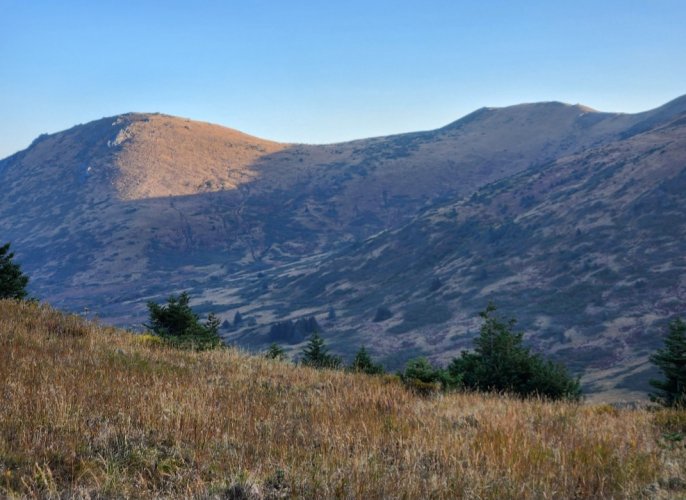
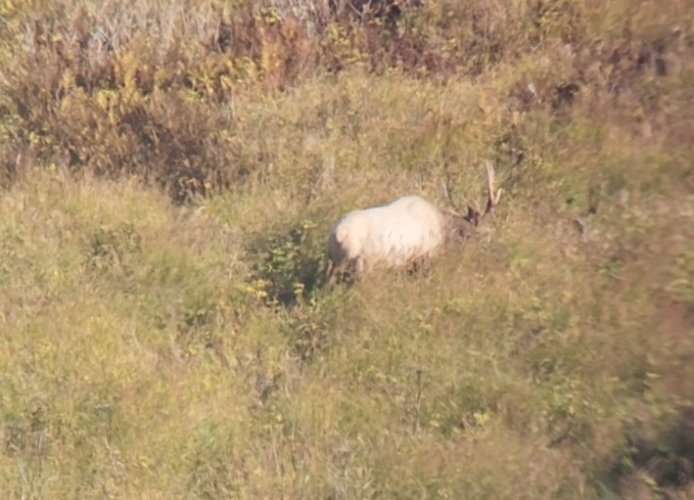
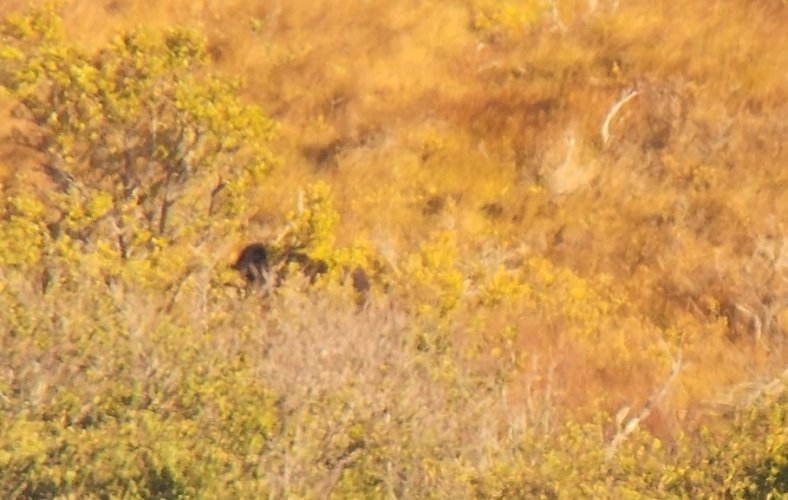
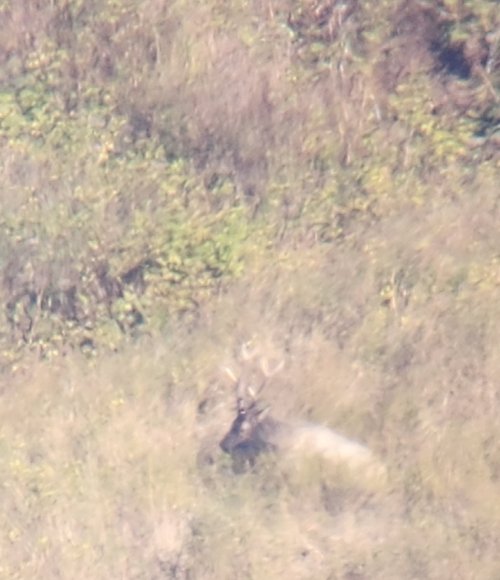
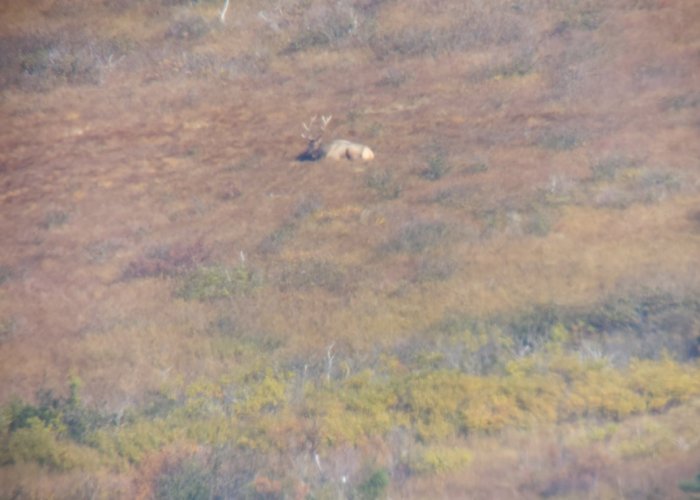
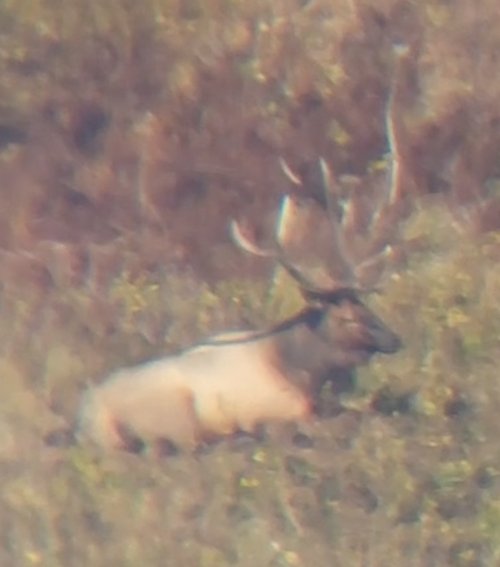
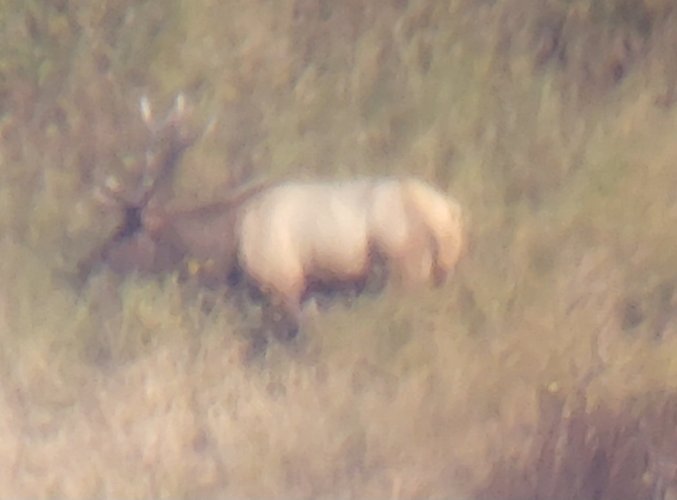
We go up another 300 feet to the ridge crest then down again. Somewhere near the next saddle, a feeding bull becomes obvious near the ridge line in the next valley just east of where the spike had been. I dismiss the bull, thinking it's the spike having moved in the last 30 minutes, but the Kiwi thinks it's a different animal. We have to go that general direction to stalk into the side bowl we believe the broken 5x5 and 6x5 to have traveled overnight, so we keep tabs on him as we move up the ridge then towards the next saddle. Thinking he's an obstacle that may ruin a stalk more than a target, when he comes into view the next time at just under a mile, the Kiwi and I realize he has branched and substantial antlers, definitely not the spike I suspected. Now we're interested. He's by himself and well above the brush, close to the ridgeline, in a great spot to stalk, and where we think will be safer from bears.
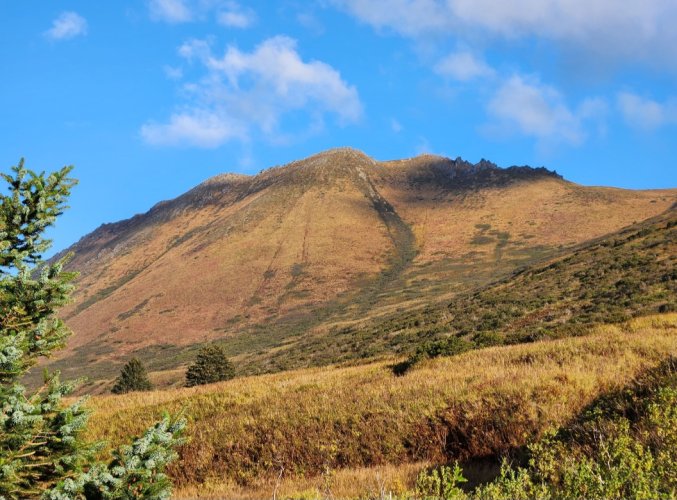
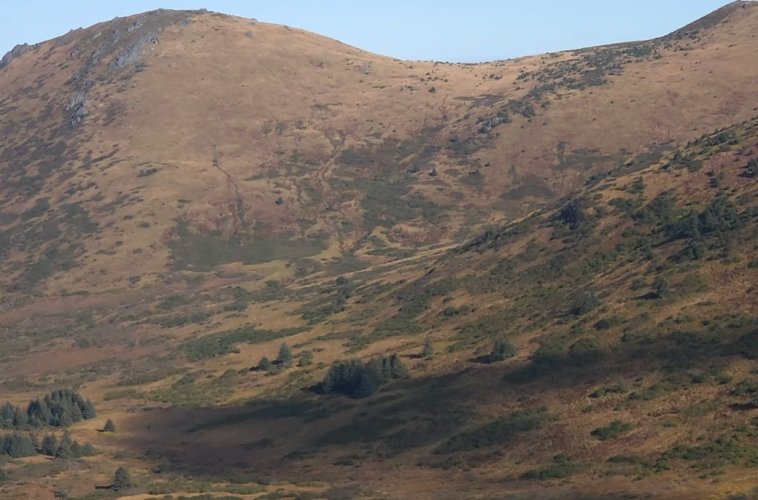
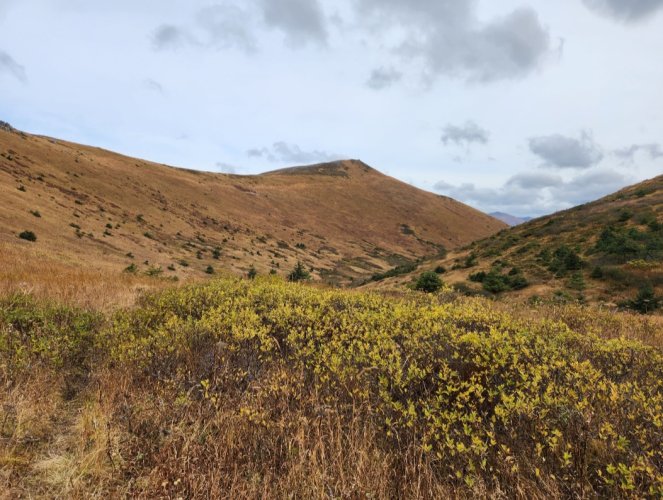
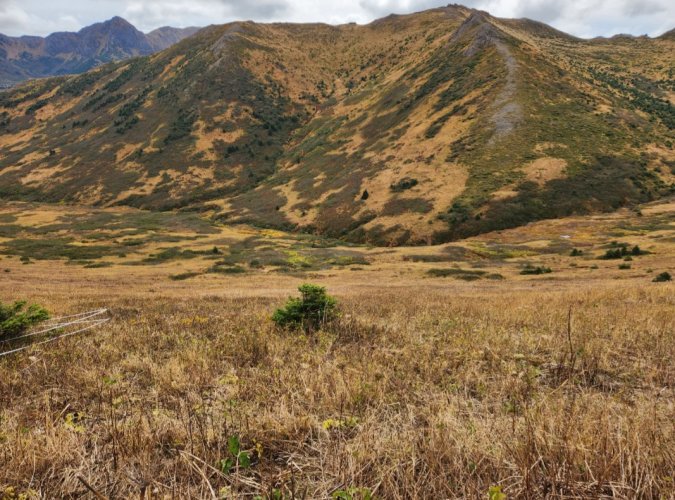
We pass through another saddle and climb the next ridge, staying off the ridgeline. As the ridge circles towards the bull we get to 1100 yards, then 950, then 750, then 550.
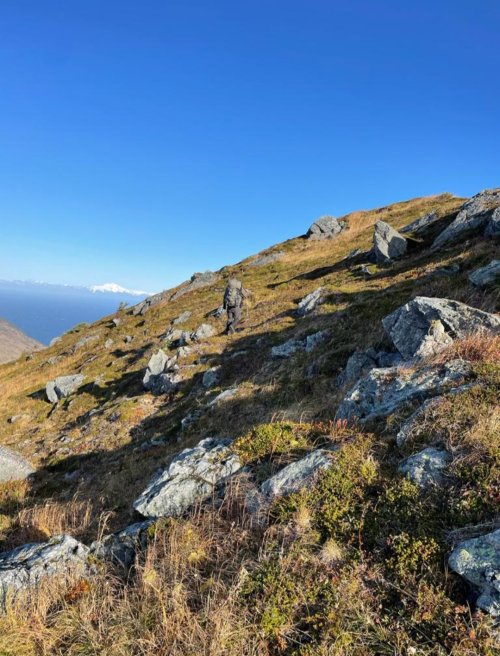
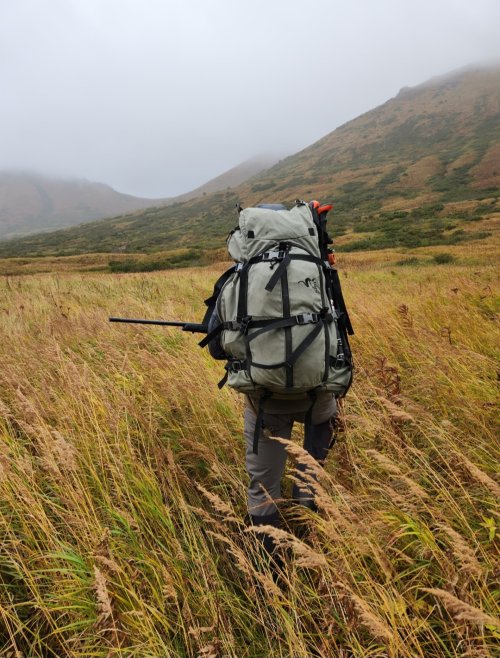
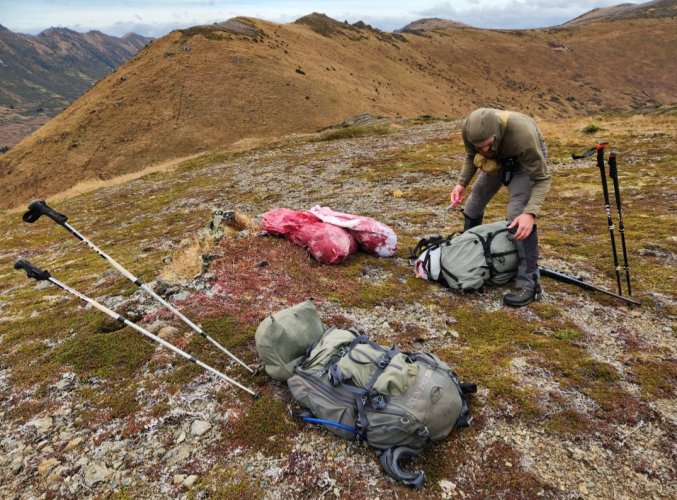
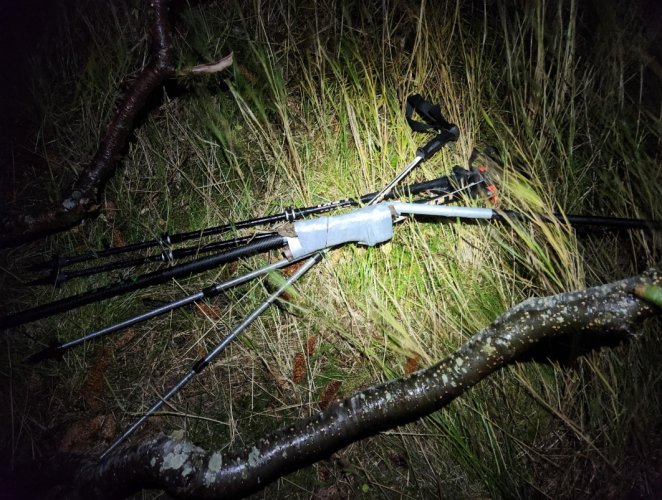
We find a broken piece of elk antler beam, but leave it for the rodents. At 450 yards, hidden, I stab my trekking poles in the ground and get my rifle off my pack. A peek over the ridge confirms this is the 6x5 from the day before. Up until 400 yards, we're completely covered by the ridge, but we make another 50 yards with a scurry over the ridge top towards a krumholtz spruce when the bull turns away to feed. I get myself ready to shoot, 350 yards, quite a bit of wind. Scope dialed, parallax adjusted, and down on the rifle, there's just a little too much grass, so I slop my pack a few yards farther forward and try again. The Kiwi says to hold 8" of wind, and check my level. It feels like I'm well off vertical, but thats what the level is for, as I adjust my body awkwardly at an uphill angle. It finally feels right, and one more reminder to hold the wind.
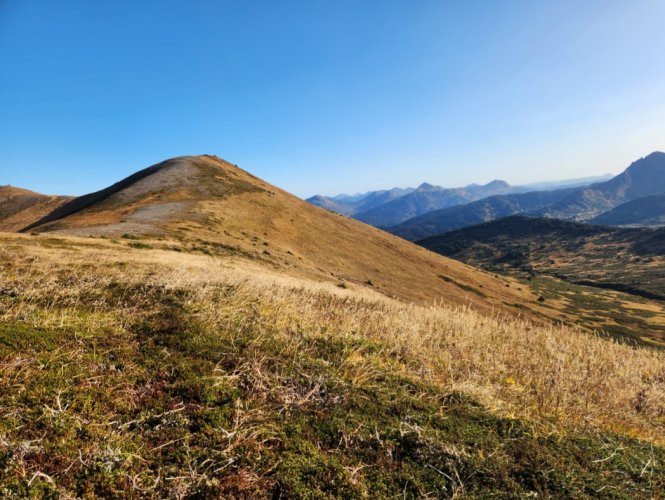
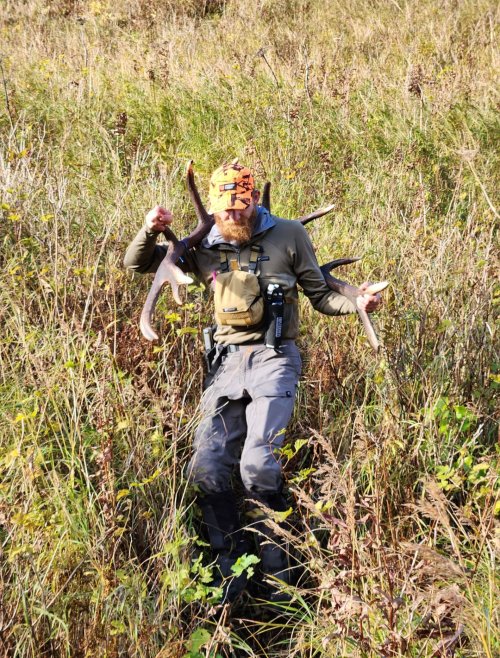
At the shot, the bull drops and starts to slowly roll down hill. He hangs up about 20 yards down, but is still moving his head. I am having flashbacks to my Nevada bull, so I rechamber and cover him. He isn't getting up, but his head continues to thrash. I grab my pack and move to the bull while the Kiwi grabs my trekking poles behind us. When I arrive at the bull, he's still moving, so I put another shot in the back of his neck, just below the skull. It's 1140am. The shot was almost anticlimactic, but here he is, exactly what I wanted in a bull. I tie off his antlers to a tiny, beleaguered blueberry and turn to admire the massive animal. The fur is much lighter in coloration than other elk I've killed. The neck is massive, 41" under the ear, tape pulled tight.
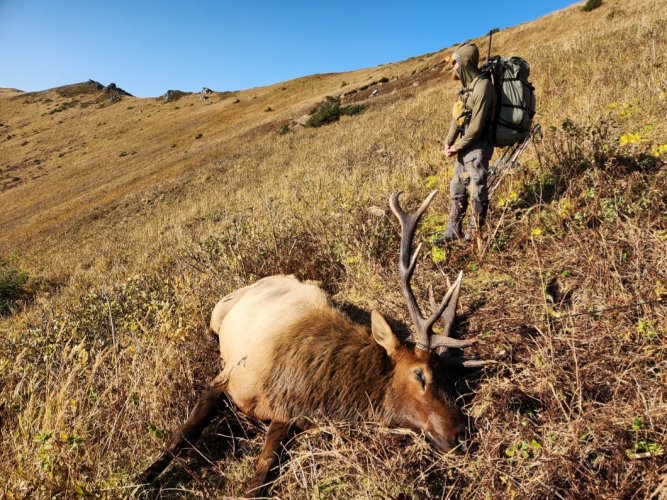
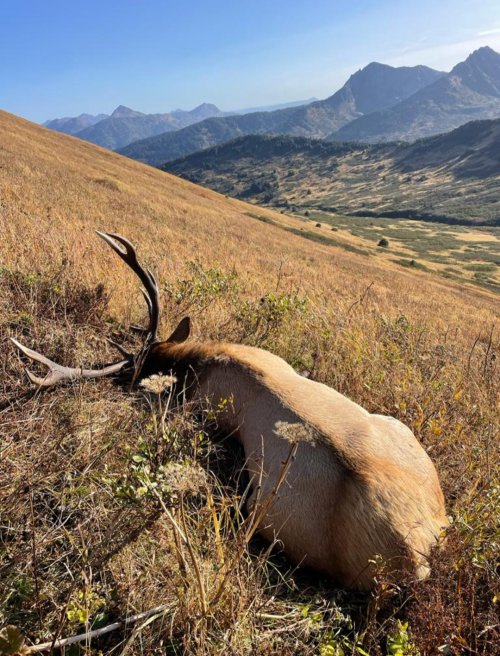
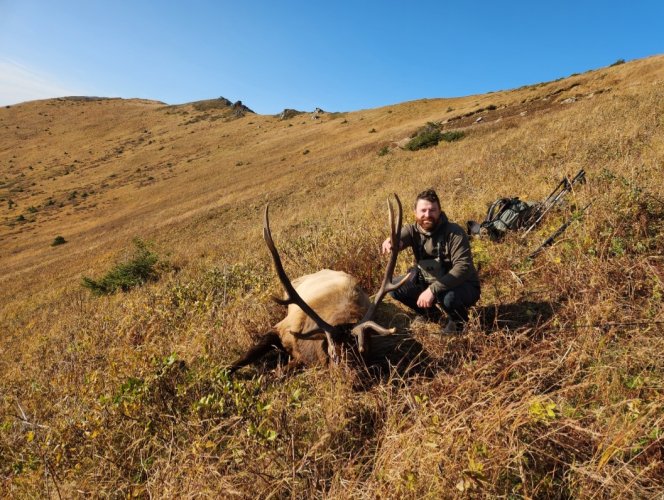
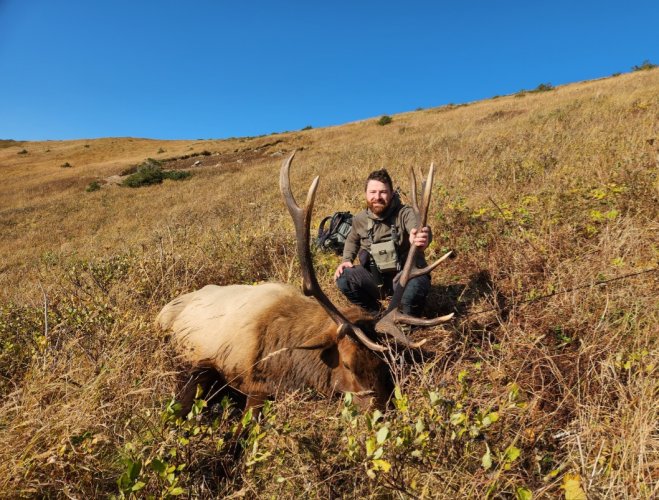
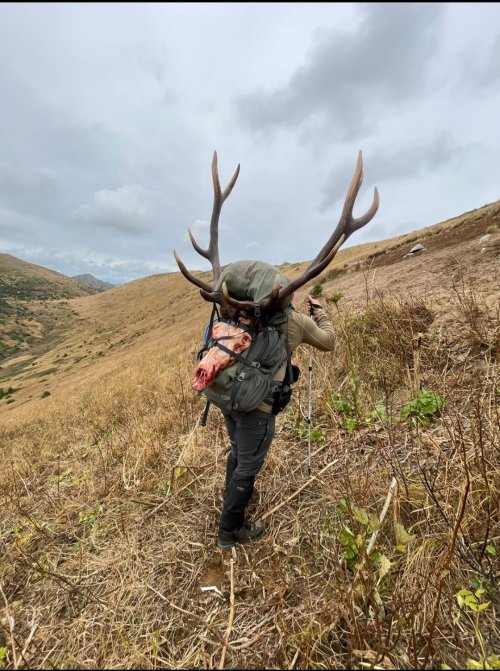
We get a few pictures and through some serious effort, get his legs turned uphill and tied off to the same sad blueberry to attempt a cleaner butchering job. I want the full hide for a king size bed spread. The Kiwi says I can carry it, then.
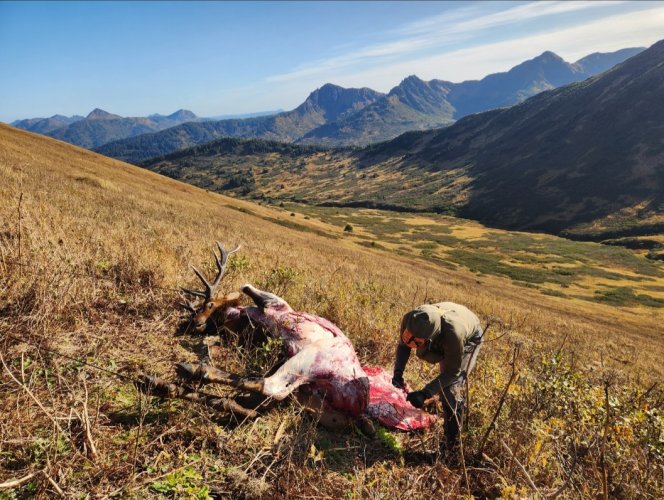
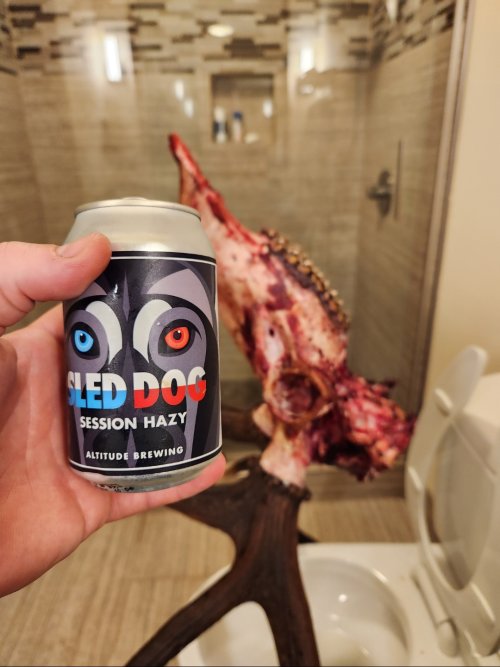
We start skinning, going all the way too the backbone. Carving the hind leg off, it becomes apparent neither of us can cleanly lift it alone on this slope, so we bag it up and double carry to a waiting tarp. It weighs 96lbs with bone. As we get the shoulder, brisket, neck, and rib meat, it's obvious this is much bigger than a rocky bull. We end up with over 380lbs of boned out meat. The hide weighs 67lbs. The head, after skinning, weighs 29lbs. I cut the two lower incisors out for aging later.
During the butchering process, we find the bullet had entered just below the backstrap slightly behind the shoulder, grazed the spine, and got both lungs, coming to rest mid-shoulderblade on the other side. The bullet is missing one petal that careened through the lungs and exited fully through the lower off-side near the elbow.
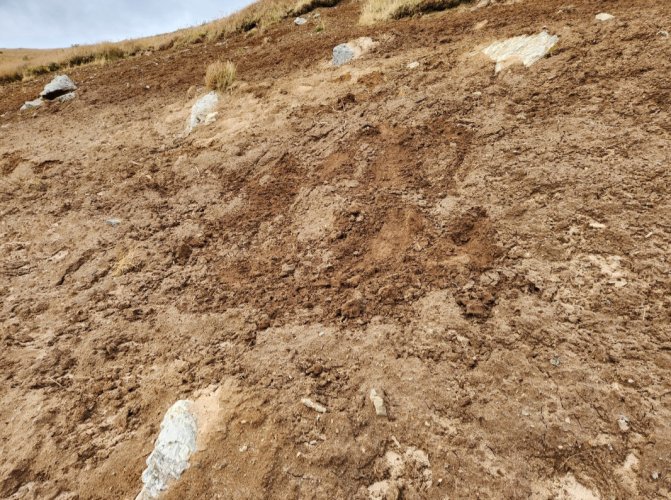
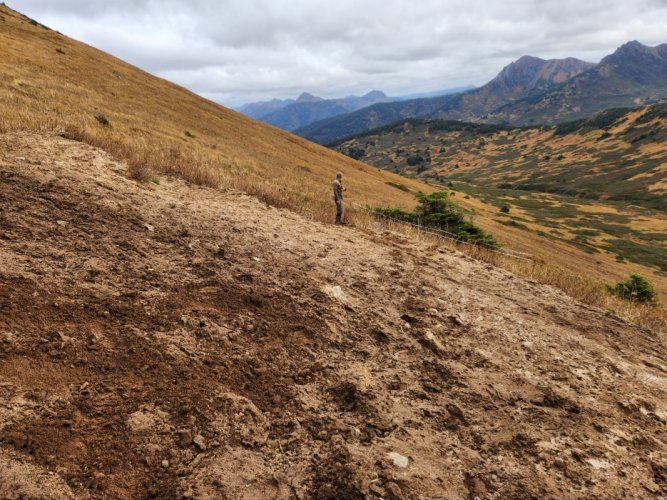
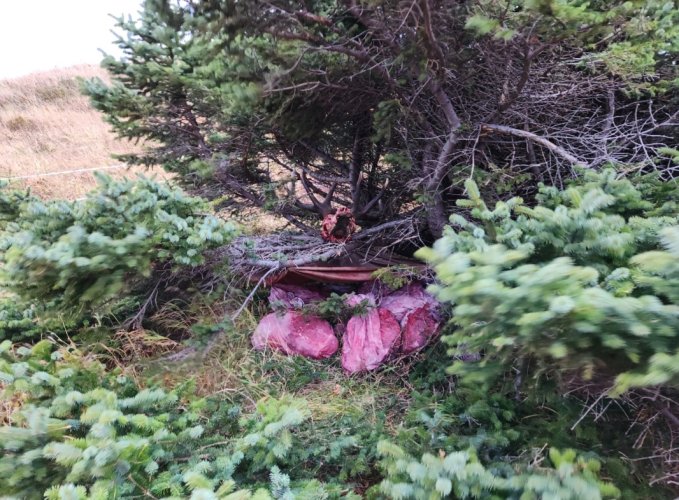
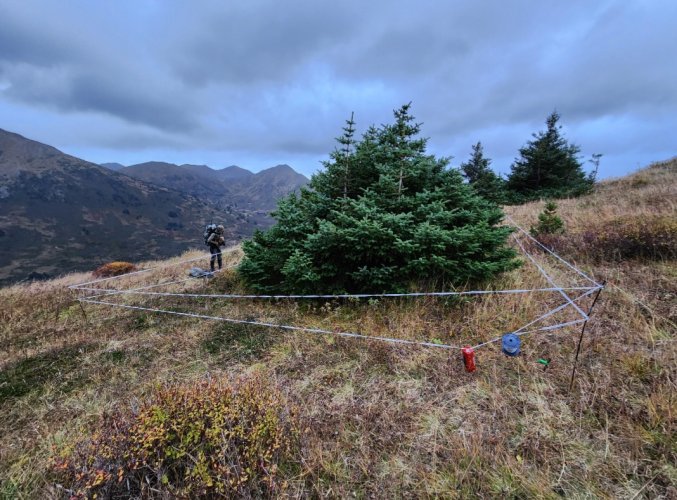
We carry all the bagged meat, hide, and head about 75 yards to a lone spruce. We roll the carcass down towards the creek and the alders, trying to keep the guts away from the meat. We have good visibility here, but expect visitors. Nothing left except a greasy smashed spot in the grass when we're done.
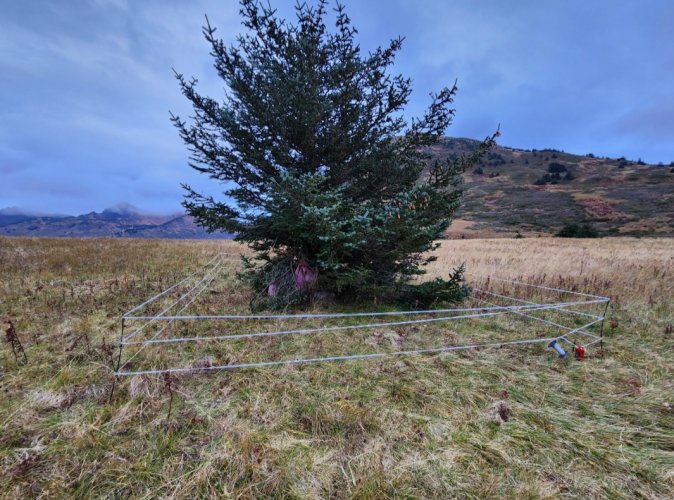
We fence the meat and cover it loosely with a tarp.
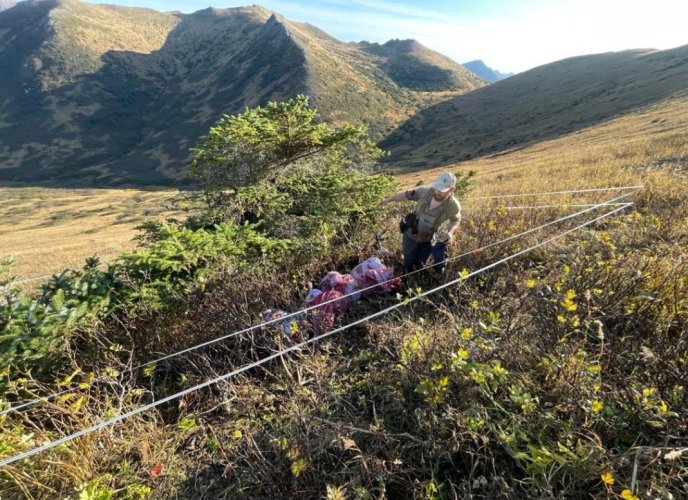
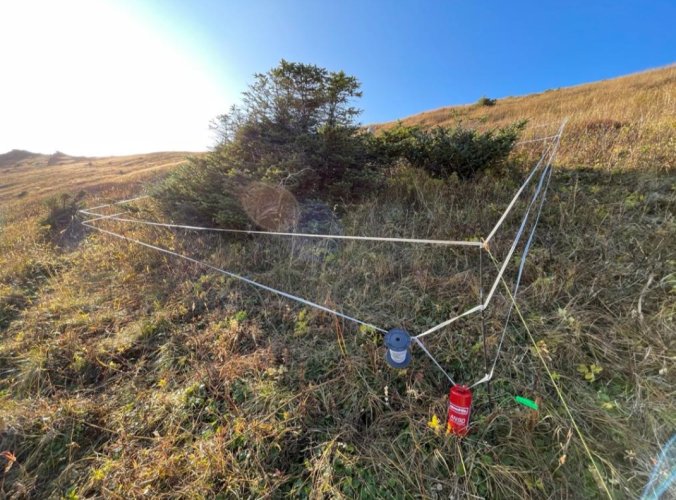
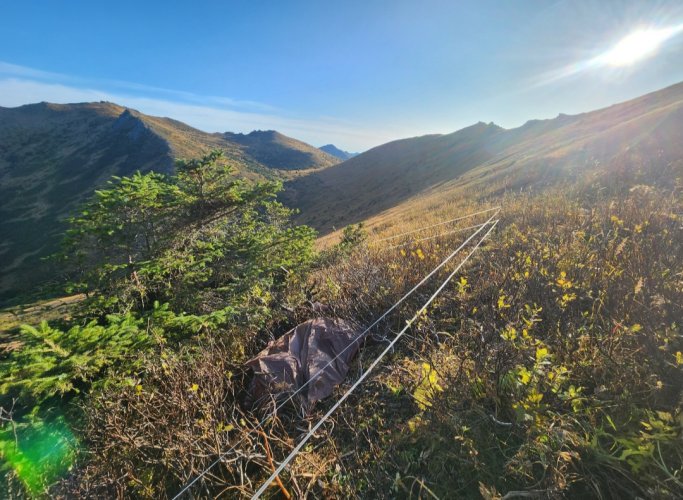
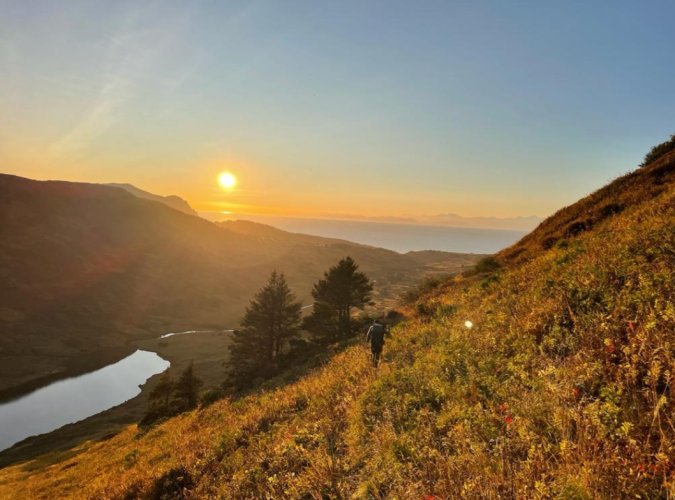
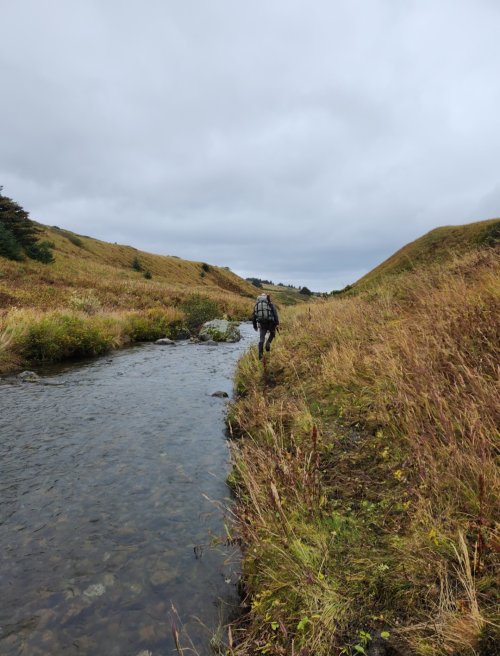
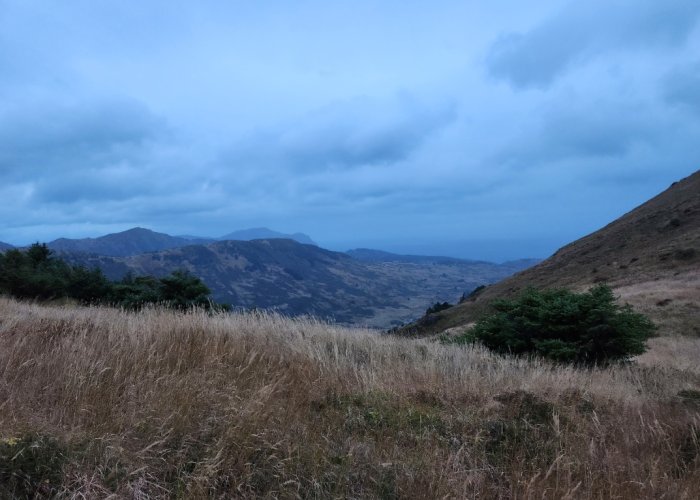
It takes about two hours to return to camp, but the weather is nice, and the evening sun sets a golden glow across the hillside.