I didn’t make points 1 & 2 to avoid those loans on principle. But you do make a good point on this ‘hybrid ecosystem’, especially in this century. There was a much clearer line back when I first started between federal and private loans.
Shopping is a good idea, you may find a private entity that will get you a better interest rate.
I don’t understand what you mean by gift. Are you referring to forgiveness? I’m all in favor for gaining every corner we can get but I don’t know that I’m reading this one correctly.
Unless a private loan has a significantly better rate like 2% better I’m not sure why you’d take private over public… even then I’d take a hard look.
If you’re leaving politics out of it and solely looking at the cost benefit for the loan recipient, today, there isn’t a good reason to touch a private loan or refinance.
Here is a comparison, with all the inputs, comparing all the federal student loan payment plans with a private 7 year term loan at the same interest rate. Under this model a couple has 2 kids, one parent went back to school and got a BA or BS with $100,000 in loans. Both parents work.
Scenario 1 is Married Filing Joint the second is Married Filing separate.
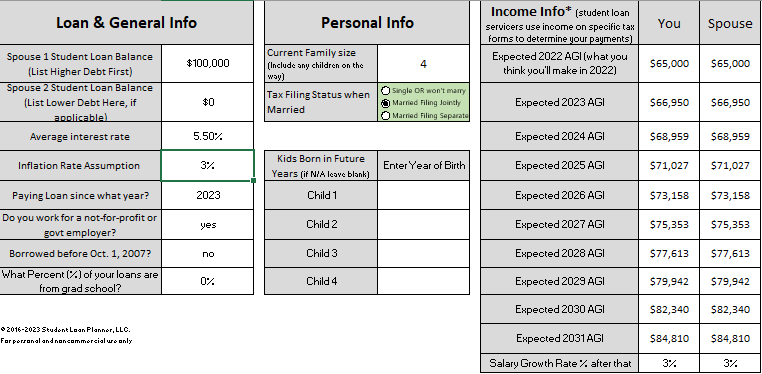
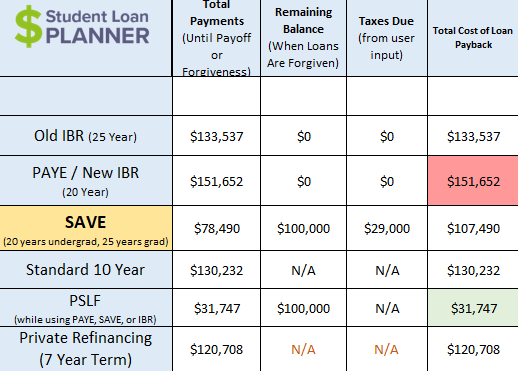
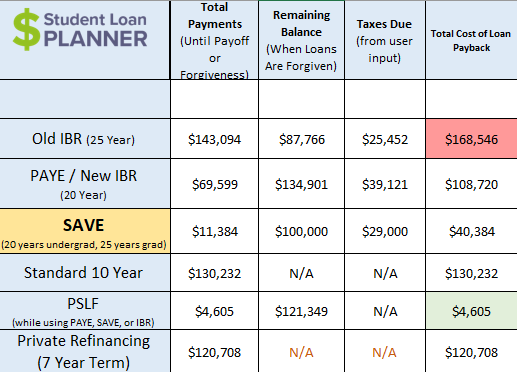
The private 10 and a public 10 year at the same interest rates are obviously the same, a 7 year obviously accrues less interest than a 10.
For the Income Driven Repayment plans (Old IBR, PAYE, New IBR, or SAVE) what's shown is the total pay back amount when you either pay off the loan or when you hit 20/25 years and get forgiveness. This column is inclusive of the tax bomb (Taxes Due) when you get your loans forgiven.
PSLF would be if you were a govt or nonprofit employee who qualified.
So if you're a nurse, a private loan is going to cost you
$116,103 more than if you had gotten a federal loan.
That’s not to say that the OP didn’t make the right decision at the time, or that there are folks that would do best with private loans. There are lots of variables and the plans are complicated and require very different strategies.