You never stay away. You can't help yourself. mtmuleyMy snark was simply in response to your snark - but I guess only MT & WY folks have opinions that matter and can argue what ever they wish. Us dirty NRs should just learn our place.
I'm out on this one - I avoided the first 17-18 pages on purpose, but was dumb enough to respond to a question mid-thread from another member.
Take care all - stay safe and shoot straight.



Navigation
Install the app
How to install the app on iOS
Follow along with the video below to see how to install our site as a web app on your home screen.
Note: This feature may not be available in some browsers.
More options

You are using an out of date browser. It may not display this or other websites correctly.
You should upgrade or use an alternative browser.
You should upgrade or use an alternative browser.
Non-resident Hunting and the North American Model
- Thread starter El Jason
- Start date
D
Deleted member 28227
Guest
I hope you won't hold it against me if I hope newcomers prefer Colorado to say,,,,,,,, Montana.
Not at all, but winter is coming, Bozeman has changed a ton since I left and that was only 5 years ago.

I hope you won't hold it against me if I hope newcomers prefer Colorado to say,,,,,,,, Montana.
I don’t think you have to hope on that one
but, lots of our newcomers that were escaping from wherever they came from are already starting to look for another place to escape to
shits out of control on the front range
bayoublaster7527
Well-known member
- Joined
- Aug 2, 2017
- Messages
- 852
That’s right, a personal attack would be one directed at an individual ie discounting an individual based on their occupation.Right, because calling State Residents of Montana and Wyoming welfare cases akin to kids living in their parents basements...isn't personal.
Friggin' hypocrite.
Any time a NR hunter expresses any concern with NR tag allocations or prices, you chalk it up to “bitching” “whining” or being “butt hurt” or a “cry baby”. However you are entirely sympathetic to the plight of the downtrodden WY resident hunters with their 15 tags a year, many purchased OTC.
That seems a bit hypocritical to me.....

El Jason
Well-known member
Yes.Am I wrong?
El Jason
Well-known member
Take it to PMs if you guys want to bitch at each other.
brocksw
Well-known member
People wading through the last couple pages of this thread.

I would like to hear your rationale for that opinion. It sure isnt economics.Yes.
You get what we are willing to give you. You have no right and no say. Let that sink in.That’s right, a personal attack would be one directed at an individual ie discounting an individual based on their occupation.
Any time a NR hunter expresses any concern with NR tag allocations or prices, you chalk it up to “bitching” “whining” or being “butt hurt” or a “cry baby”. However you are entirely sympathetic to the plight of the downtrodden WY resident hunters with their 15 tags a year, many purchased OTC.
That seems a bit hypocritical to me.....
I was a NR at one time. I moved to MT and dealt with the decrease in wages and high cost of living. Any of you guys could do the same if you think NR got it that bad.
Last edited:

shrapnel
Well-known member
- Joined
- Aug 27, 2015
- Messages
- 3,234
MT & WY are two of the least self-sufficient states. Montana could not have ended each year with a surplus without taking a disproportionately high amount of fed $$. For example, my wife and I could both quit our jobs and spend $900,000 a year and if the government gave us a million a year we would end each year with a surplus - but that would not be a sign of either hard work or frugality on our part.
What most people don’t know is how self sustaining Montana used to be.
“Montana pulled out of the Great Depression in the early 1940s with the United States’ sudden immersion into World War II (1941–1945). Montana agriculture recovered when the long drought cycle ended and a series of wet years produced bumper crops and robust livestock herds again. World War II markets demanded Montana’s natural resources—especially timber, copper, petroleum, hydroelectric power, and coal. An economy based on the extraction
and development of natural resources drove Montana’s golden eco- nomic age through the 1950s and 1960s. National markets and federal programs dictated Montanan’s economic course.”
Montana was the “Treasure State” and the “Bonanza State” before it became the “Big Sky State” due to the immensity and value of natural resources. That changed dramatically once the environmental movement started and put an end to most of the extraction industry, and agriculture became less viable as well.
When you eliminate the ability to collect the resources and kill the profitability of the agricultural market, you don’t have much left to bolster the economy. Montana didn’t ask for the deficit, the government forced it on Montana. That effect still languishes here and too few people understand what happened and now want to point the stink finger at Montana and not economic policies tied to environmental mandates.

BigHornRam
Well-known member
The beast gives and the beast takes away. Don't be dependent on the beast.What most people don’t know is how self sustaining Montana used to be.
“Montana pulled out of the Great Depression in the early 1940s with the United States’ sudden immersion into World War II (1941–1945). Montana agriculture recovered when the long drought cycle ended and a series of wet years produced bumper crops and robust livestock herds again. World War II markets demanded Montana’s natural resources—especially timber, copper, petroleum, hydroelectric power, and coal. An economy based on the extraction
and development of natural resources drove Montana’s golden eco- nomic age through the 1950s and 1960s. National markets and federal programs dictated Montanan’s economic course.”
Montana was the “Treasure State” and the “Bonanza State” before it became the “Big Sky State” due to the immensity and value of natural resources. That changed dramatically once the environmental movement started and put an end to most of the extraction industry, and agriculture became less viable as well.
When you eliminate the ability to collect the resources and kill the profitability of the agricultural market, you don’t have much left to bolster the economy. Montana didn’t ask for the deficit, the government forced it on Montana. That effect still languishes here and too few people understand what happened and now want to point the stink finger at Montana and not economic policies tied to environmental mandates.
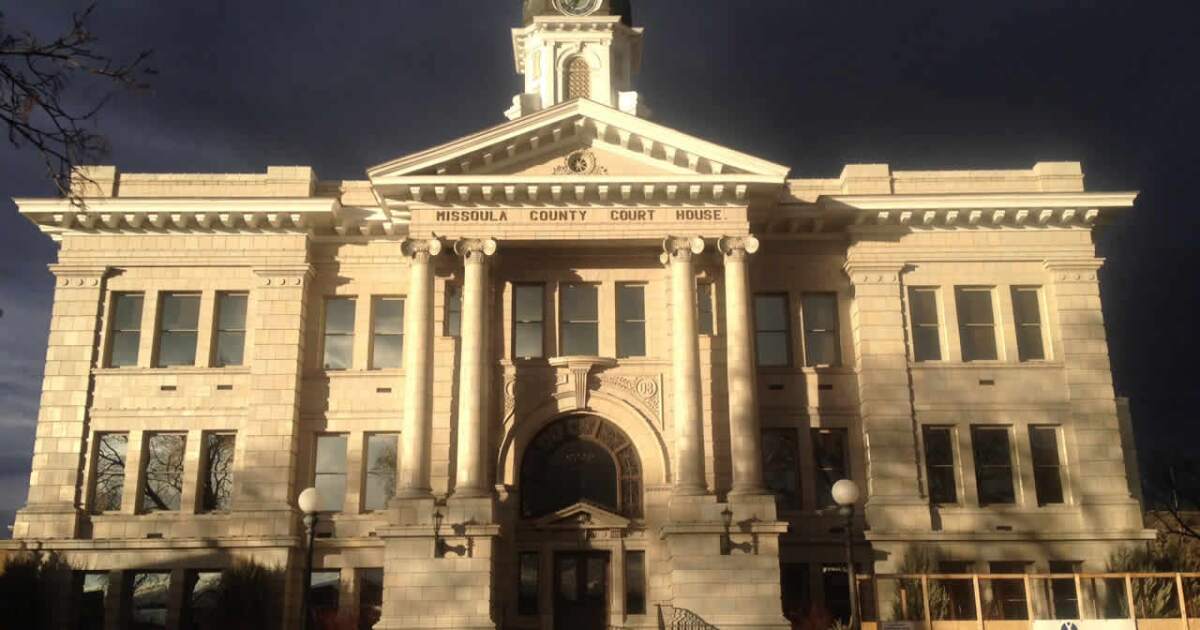
PILT distribution articles from 2015 and 2019. I would rather fund our local governments with a vibrant forest products economy than uncertain federal welfare checks. But that's just me.

Western Montana counties welcome federal Payments in Lieu of Taxes
Nine western Montana counties will share more than $7.8 million to compensate for non-taxable federal lands that sit within their boundaries, including $1.5 million for Missoula County and $1.9 million
Montana PILT Payments Drop
The federal government is awarding Montana $34 millon of PILT funding this year. That’s a 15-percent drop from last year’s record-high allocation.PILT…
www.mtpr.org
bayoublaster7527
Well-known member
- Joined
- Aug 2, 2017
- Messages
- 852
That’s strange because I seem to recall threads on this forum (SB143) where hunters (both resident and non-resident) are asked to weigh in on recent legislation that affects hunters and conservation in a negative manner. Why ask if NRs have no say and no voice? Yet when tag allocations and prices come up residents hunters continue to insult NR hunters and are told to “shut up and color”.You get what we are willing to give you. You have no right and no say. Let that sink in.
I was a NR at one time. I moved to MT and dealt with the decrease in wages and high cost of living. Any of you guys could do the same if you think NR got it that bad.
BigHornRam
Well-known member
Home property values have far outpaced Wyoming non-resident big game tag costs in that time frame, just for starters.Not at all, but winter is coming, Bozeman has changed a ton since I left and that was only 5 years ago.

Handlebar
Well-known member
- Joined
- Jul 15, 2014
- Messages
- 449
first time I went to Bozeman in 2005 I thought it was one of the nicest places I had ever been. Watched change over the last 15 years it is everything people thought they had left. Sad really. Happening all over my folks moved to Colorado Springs in 1982 to the Air Force Academy that was the greatest town I have ever been. I have seen it happen everywhere. Grew up in Savannah Ga. quinetesstinal southern town, now I wonder if Sherman should have burned it too.
D
Deleted member 28227
Guest
Totally... and to be honest that's where the system pressure is, at least in CO.Home property values have far outpaced Wyoming non-resident big game tag costs in that time frame, just for starters.
2005
104,020 R elk apps
87,977 NR Elk apps
2020
112,963 R Elk Apps
83,944 NR Elk Apps
So in the last 15 years, NR apps dropped 5% and R apps grew 8%, during that same time lots of units went to limited draw so less NR and those NR have a smaller portion of the pie and they pay more, and there STILL are lots of residents pissed at the slice of the pie they are getting.
BigHornRam
Well-known member
Imagine what California was like before the gold rush..........first time I went to Bozeman in 2005 I thought it was one of the nicest places I had ever been. Watched change over the last 15 years it is everything people thought they had left. Sad really. Happening all over my folks moved to Colorado Springs in 1982 to the Air Force Academy that was the greatest town I have ever been. I have seen it happen everywhere. Grew up in Savannah Ga. quinetesstinal southern town, now I wonder if Sherman should have burned it too.

Dougfirtree
Well-known member
Totally. Every time I go there, I think, 'I get why 80,000,000,000,000 people moved here'. At one point, it must have been the most beautiful and resource rich state in the west.Imagine what California was like before the gold rush..........
And to this day the same cabal of useful idiots fight tooth and nail any mine, pipeline, power plant or timber sale that comes up. Many of these types are on this very site. Of course they do this from the comfort of there wood homes using devices made from minerals that have to be mined. Hypocrisy at its best.What most people don’t know is how self sustaining Montana used to be.
“Montana pulled out of the Great Depression in the early 1940s with the United States’ sudden immersion into World War II (1941–1945). Montana agriculture recovered when the long drought cycle ended and a series of wet years produced bumper crops and robust livestock herds again. World War II markets demanded Montana’s natural resources—especially timber, copper, petroleum, hydroelectric power, and coal. An economy based on the extraction
and development of natural resources drove Montana’s golden eco- nomic age through the 1950s and 1960s. National markets and federal programs dictated Montanan’s economic course.”
Montana was the “Treasure State” and the “Bonanza State” before it became the “Big Sky State” due to the immensity and value of natural resources. That changed dramatically once the environmental movement started and put an end to most of the extraction industry, and agriculture became less viable as well.
When you eliminate the ability to collect the resources and kill the profitability of the agricultural market, you don’t have much left to bolster the economy. Montana didn’t ask for the deficit, the government forced it on Montana. That effect still languishes here and too few people understand what happened and now want to point the stink finger at Montana and not economic policies tied to environmental mandates.
D
Deleted member 16014
Guest
Say I agreed with this completely, what are MT/WY/ID/CO residents supposed to do about it?That’s strange because I seem to recall threads on this forum (SB143) where hunters (both resident and non-resident) are asked to weigh in on recent legislation that affects hunters and conservation in a negative manner. Why ask if NRs have no say and no voice? Yet when tag allocations and prices come up residents hunters continue to insult NR hunters and are told to “shut up and color”.
Opportunity for NR's is not even remotely on the radar for the average joe hunter; a few have friends or family that come from out of state. They know they don't like seeing UT plates and that's about where it ends. Shoot they don't even like seeing certain county plates.
I don't think there is any way an appreciable number of residents are going to get off the couch to go to bat for NR opportunity, even if it was 100% right and beneficial. The interactions I've had with hunters as a resident of MT and WY leads me to believe that the general resident hunting collective wouldn't even have the conversation. You could say if they had to pay more of their way they would, I'd be fine with that and maybe you'd be right...but what legislator is going to lead that charge in the absence of drastically reduced demand? They'd get destroyed for it.
I'm not saying that's the best thing for the NAM, I'm saying that's what NR's are up against. Not a couple hundred western state residents on HT, most of which are willing to at least have the conversation about the state of the union.
BuzzH
Well-known member
What irritates a lot of the Residents of resource rich states....is that they just arent too keen on giving their resources away and/or being on the hook for all the costs of remediation.And to this day the same cabal of useful idiots fight tooth and nail any mine, pipeline, power plant or timber sale that comes up. Many of these types are on this very site. Of course they do this from the comfort of there wood homes using devices made from minerals that have to be mined. Hypocrisy at its best.
Western States Legislatures and Politicians have a pretty clear history of getting hosed by the various businesses that extract our resources.
Certainly there are some that just oppose any kind of development, but IME/O its more a function of the what I already described. Tired of making peanuts and then expected to pick up the tab for cleaning up the mess.
Similar threads

- Replies
- 13
- Views
- 1K

- Replies
- 9
- Views
- 448
- Replies
- 5
- Views
- 602