Gerald Martin
Well-known member
- Joined
- Jul 3, 2009
- Messages
- 9,750



Follow along with the video below to see how to install our site as a web app on your home screen.
Note: This feature may not be available in some browsers.

I don’t really know how you get less of a selective harvest than there already is with deer and elk. Selective harvest is what happens with sheep. There is no way across the state that deer harvest is significantly selective (biologically) when comparing the number/relative rarity of large mature bucks to actual harvest. Also, not sure how to get less selective when the most vocal hunting consensus shames people for shooting smaller bucks. I also don’t know how an earlier season would necessarily ensure to survival of younger 4-pts vs older 2- to 3-pts. Assuming older deer are smarter, they’re more likely to evade harvest regardless of headgear.I don't think changing season structure is going change harvest rates. People that want to harvest are going to harvest, unless they are totally incompetent.
Lowering harvest rates is not a high priority of mine for season structure change.I have two main reasons and some lesser reasons for changing season structure. What I want is more of a random harvest and less of a selective harvest. As many have stated, it is not as easy to fill your tag when the bucks are not rutting and concentrated on winter range or hay fields. Hunters will still have their opportunities, but will risk tag soup if they try to be too selective. More young four point live, more older two and three points die. The more random the harvest, the better. Better for the deer herd, better for hunters long term.
Changing season structure, may not change the harvest rate, but it will change where the harvest occurs. Shooting a buck at the base of the mountain on winter range, not going to happen nearly as often. Driving around the river and creek bottoms in Eastern Montana is not going to be nearly as effective in Oct as it is in Nov. Changing where the harvest is the biggest reason why we need to change season structure. Since the farther up the mountain and the farther from the river and creek bottoms, the more likely the land is public, season structure change will result in more harvest on public and less on private. Lowering harvest rates is way down the list and likely will not happen any way.

Nothing to do with changing genetics. All about giving the bucks that all ready have the potential to grow bigger antlers the same chance at growing old as the ones with poor potential.Maybe.
I keep seeing this - but are you really sure that can have an impact genetically?
1. Theres no gaurantees that the bigger antlered buck that doesnt get shot automatically wins the right to breed. Ive seen otherwise.
2. The buck that has poor antlers might have great genetics - mothers nutrition while pregnant and his first year of life are bigger drivers (jim heffelfinger).
3. I doubt that taking the "top" probably less than 10% of bucks that could grow to 190 will affect the population genetics as a whole.
4. No one has any idea what kind of genetics the does have at all at producing antlers.
I would think thered bios/research out there that would confirm that if true. Do you know of any?

I think you simply make hunting harder to get a less selective harvest. For example if we were all packing trad gear we are way more likely to shoot whatever we can get to 20 yards or less from. By allowing rut hunting with a rifle for a long period of time we have made it as easy as possible which allows us to “window” shop for the “biggest” buck we can find. Which to @antlerradar point often may not be the oldest buck but could be a younger buck with those awesome genetics. By shifting the season dates you are making it harder. Lots of great discussion in this thread.I don’t really know how you get less of a selective harvest than there already is with deer and elk. Selective harvest is what happens with sheep. There is no way across the state that deer harvest is significantly selective (biologically) when comparing the number/relative rarity of large mature bucks to actual harvest. Also, not sure how to get less selective when the most vocal hunting consensus shames people for shooting smaller bucks. I also don’t know how an earlier season would necessarily ensure to survival of younger 4-pts vs older 2- to 3-pts. Assuming older deer are smarter, they’re more likely to evade harvest regardless of headgear.
I also thought part of the criticism for MT’s mismanagement was too many deer taken on public land (hence changes in doe tags), but is that not the case now, or a misunderstanding?
If someone wants more age class and larger antlers in a deer population, more bucks need to survive, and the population needs the nutrition/habitat to reach their potential. And then it’s a balance of competition, CWD, and all of the other things affecting and acting on a deer population. Season structure is only one part of that.
Not allowing doe harvest on public lands and getting rid of 2500 nr orphaned tags are two great changes instituted recently within our existing framework.
Well if you can slow down the social media folks who put out how to do this and that, application service folks, technology advancement such as turrets, waypoint setting binos, etc, get rid of onX you may just be able to make it harder imo. But let’s be real it’s 2026 and no one wants to earn something the hard way. Just my two cents.I think you simply make hunting harder to get a less selective harvest.
You can take my OnX from my cold, dead hands. But everything else is ok.Well if you can slow down the social media folks who put out how to do this and that, application service folks, technology advancement such as turrets, waypoint setting binos, etc, get rid of onX you may just be able to make it harder imo. But let’s be real it’s 2026 and no one wants to earn something the hard way. Just my two cents.
I have to disagree. Montana has the most selective harvest of any western state. There are three main reason why.I don’t really know how you get less of a selective harvest than there already is with deer and elk. Selective harvest is what happens with sheep. There is no way across the state that deer harvest is significantly selective (biologically) when comparing the number/relative rarity of large mature bucks to actual harvest. Also, not sure how to get less selective when the most vocal hunting consensus shames people for shooting smaller bucks. I also don’t know how an earlier season would necessarily ensure to survival of younger 4-pts vs older 2- to 3-pts. Assuming older deer are smarter, they’re more likely to evade harvest regardless of headgear.
What I have found the most difficult to over come when advocating for season structure change is that people default to it is all about more big bucks. Big bucks are not the most compelling reason we need to change the season.If someone wants more age class and larger antlers in a deer population, more bucks need to survive, and the population needs the nutrition/habitat to reach their potential. And then it’s a balance of competition, CWD, and all of the other things affecting and acting on a deer population. Season structure is only one part of that.

Great pointWhat I have found the most difficult to over come when advocoting for season structure change is that people defalt to it is all about more big bucks. Big bucks are not the most compellimg reason we need to change the season.
I think it is a good thing if we are killing for of the harvest on public land. It is all about who is getting to pull the trigger. Back in the 70's when I first started the current season structure was a good thing. When deer came down the mountain to winter range, it made them more accessible to the hunting public. Back then you could get premmison to hunt those ranch at the bottom of the mountain fairly easily. Now those same ranches are owned by billionairs and the general public has almost zero chance of hunting there. Now the seson is a good deal for the billionairs. Change the season and the billionairs has little chance of shooting a buck that is still up the mountain when the season ends.
I cann't say exaclty how many nice bucks I have located in the summer and fall well back on public, only to find out they were killed near the hay fields durring the rut. The number is easily in the dozens. Back when I first started hunting, this was not an issue. back then you could hunt all of those hay field by just asking. Not any more. Hunting on those field is going to cost you a pile of money. The current season is a real good deal for the rancher selling deer. Change the season and the rancher can not sell a deer that is not on thier propery during daylight hours.
For the last thirty years FWP has spent a pile of money and effort trying to regain access to those place. It is the number one issue of our time. For the most part for every step forward FWP has taken, there are two steps back. When it comes to access we are running north on a southbound train. To stop the train we need to try somthing different. We can still try to buy access, but we can also change the season to when more of the bucks are on the public land we already have access to. It is a good thing if we are killing more of the harvest on public land. It means we are solving the access issue.

Its great that you live in area where that is true. It simply isnt everywhere else.I think it is a good thing if we are killing for of the harvest on public land.
I can agree with this. Do you know whats a lot more expensive than deer though? Elk. And i think even a big doosher of an outfitter would acknowledge that more elk in more of the state will be in the private bottoms during a later season will be good for their bottom line. Theyd have rifles shooting at deer for a month on public and unaccessible when they retreat to thier private sanctuary. How does that same logic not apply with elk?Change the season and the rancher can not sell a deer that is not on thier propery during daylight hours.
Respectfully, I still disagree, but I think we are defining "selective" differently. Yes the rut makes bucks more visible, less alert, and more vulnerable. Yes, some hunters capitalize on that, and the long season plus abundant tag opportunity can encourage people to pass early and window shop more. Yes, in a group of 20 deer with 4 bucks, the largest of those 4 probably has a higher likelihood of being taken. But that still doesn't mean MT's deer harvest is highly selective. There are still 150-some odd pages here lamenting on how too many fork-horns, 3-points, young deer, etc. are taken and not enough are surviving to maturity or other certain measure of age/size. That is not what I think of as truly selective harvest in terms of driving age structure or determining what is left on the landscape after the season.I have to disagree. Montana has the most selective harvest of any western state. There are three main reason why.
I’m a little confused by this example. The takeaway I read is: “I usually hold out, but when I needed meat, I shot what I could." That is understandable, but I would not call that strong evidence of a selective harvest system. If anything, it sounds like someone who prefers a certain type of buck when circumstances allow, but will still fill the tag opportunistically when needed—which is how a lot of people hunt. Not what would happen if MT was among the most selective states for deer harvest.I have told this story before, but it is worth repeating here. Ten, maybe closer to fifteen years ago I was at my wife's work Christmas party. First part of Dec and with hunting season just over some of the other guys wanted to talk about hunting. I am a bit unconftrable talking to strangers about my hunting sucess, so I just kept my mouth shut. One of the other guys, not bashful at all. He pass aroung his phone and shows us the picture of the past five or six years worth of bucks. All two and three year old four points, except one clearly older two point. He sees me looking at the two and explains. I usualy hold out for a four point, but that was year there were not any doe tags and I didn't want to risk not getting any deer meat so I shot that one. He didn't belive me when I told him I thought it was the coolest buck of the lot. Freezer filler tags alow meat hunter to be selctive trophy hunters.
I think that question would be interesting, but it would also be highly confounded and difficult to interpret. Someone can pass on a buck because they are being selective, but they can also pass because a good shot opportunity wasn't presented, they didn't have time to get into range or position, it was too close to a boundary, etc. Someone can also pass on 10 bucks during a season but then shoot a forky on the last day because they didn't want to eat their tag. "Number of bucks passed" does not neatly translate into a degree of selectivity. It would make for interesting anecdotal information, but I doubt it would be clean or reliable enough to drive any sort of management, especially when this thread has also suggested how hard it is for some people to remember which HD they have hunted during these same surveys.I think I need to add another question to @R.K. list of surrvey questions. How many bucks do you pass on during the course of the season? If you answer none, we have a random harvest. The higher the number the more selective the harvest. I am getting the impression FWP would be shocked by the answer.
I keep talking in terms of bucks/old bucks/big bucks, because while you might not be using that measure alone, a large driver behind this thread appears to be that. I don't think it is all about big bucks, but it's what the vocal majority keeps coming back to, on and off HT, explicitly or implied. Changing the season to take the rut out, making deer less vulnerable, selectivity, etc., all speaks to buck harvest in general. Maybe I missed it, but outside of B-license quotas and the shift to B-licenses valid only on private land, I have not seen much else season-structure wise directed towards influencing the female segment.What I have found the most difficult to over come when advocoting for season structure change is that people defalt to it is all about more big bucks. Big bucks are not the most compellimg reason we need to change the season.
I think it is a good thing if we are killing for of the harvest on public land. It is all about who is getting to pull the trigger. ... Now the seson is a good deal for the billionairs. Change the season and the billionairs has little chance of shooting a buck that is still up the mountain when the season ends.
Again I'm a little confused. Previous 150-some odd pages speak to how there's too much harvest happening on public lands and how private land is sometimes the only saving grace for MT's mule deer. If that is true, shifting more harvest onto public land may make sense from an access/equity standpoint, but it does not automatically make sense from a biological/FWP mismanagement standpoint. Those are two different things, and I think this thread keeps going in circles by treating them (and other issues) as if they are the same. I too think it would be great if we had more huntable game on public land longer.For the last thirty years FWP has spent a pile of money and effort trying to regain access to those place. It is the number one issue of our time. For the most part for every step forward FWP has taken, there are two steps back. When it comes to access we are running north on a southbound train. To stop the train we need to try somthing different. We can still try to buy access, but we can also change the season to when more of the bucks are on the public land we already have access to. It is a good thing if we are killing more of the harvest on public land. It means we are solving the access issue.
I’m curious why you don’t think our season structure ie rut hunting drives age structure and what is left on the landscape? Are you seeing large older age class bucks make it to winter range? For 15 years, I have collected and sent in hunter harvested deer to Masons lab for age analysis. It backs up what @antlerradar has been saying about harvesting the young up and comers while passing for later years the bucks that don’t express nice antlers ie the old bucks aren’t the ones with nice antlers. I think a lot of the frustration you see in this thread with the season structure can be explained by that fact right there for better or for worse or right or wrong since I know when we start talking antlers everyone gets all hackled up but I think it’s worth understanding frustration points even if they are misplaced biologically speakingThere are still 150-some odd pages here lamenting on how too many fork-horns, 3-points, young deer, etc. are taken and not enough are surviving to maturity or other certain measure of age/size. That is not what I think of as truly selective harvest in terms of driving age structure or determining what is left on the landscape after the season.
To me, selective is what you see with things like sheep seasons and tightly managed LE units: low opportunity, low harvest relative to the population, and a clear skew towards removing the oldest/largest males, while the younger animals generally walk. That is not what Montana deer harvest looks like on the larger scale, especially across general HDs. On an individual level, sure, many hunters take the best buck they see. But across thousands of tags and general season, that is still mostly opportunistic harvest (with preference)
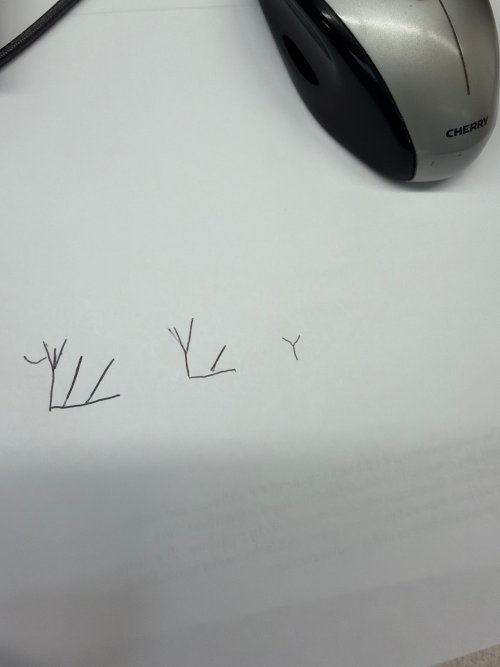
Mule deer Mona Lisa!!I think I can help.
View attachment 415608
These 3 bucks are all the same age and are rutting does which one are you shooting.
Now on your October hunt you only see one of the 3 bucks so you shoot the one you see. Which hunt did you get to be more selective on.
If you do that year after year you are left with cwd carrying old two points. That could potentially get shot in October if things were different.
Mule deer Mona Lisa!!

I think I can help.
View attachment 415608
These 3 bucks are all the same age and are rutting does which one are you shooting.
Now on your October hunt you only see one of the 3 bucks so you shoot the one you see. Which hunt did you get to be more selective on.
If you do that year after year you are left with cwd carrying old two points. That could potentially get shot in October if things were different.
I think a lot of the angst is the sheer amount of hunters and animals that we are pulling off the landscape and when we are doing it. I have literally bounced a rock off of a young 4 point that would not leave the side of the road on public. Couple that with never or very rarely seeing a good buck where there used to be good bucks. Roger has the age data the best bucks are 3.5 with the occasional 4.5 and the older bucks are scuz heads that nobody wants to shoot. Montanas season structure makes it nearly impossible for a buck with good genetics to live past 3.5 or 4.5 without very protected private land that the majority of hunters will never experience.I’ll be honest for me it is about seeing more quality animals. A 140-150” 4x4 just doesn’t get my heart pumping. But I won’t get my hopes up that Montana will make any meaningful changes to make that happen