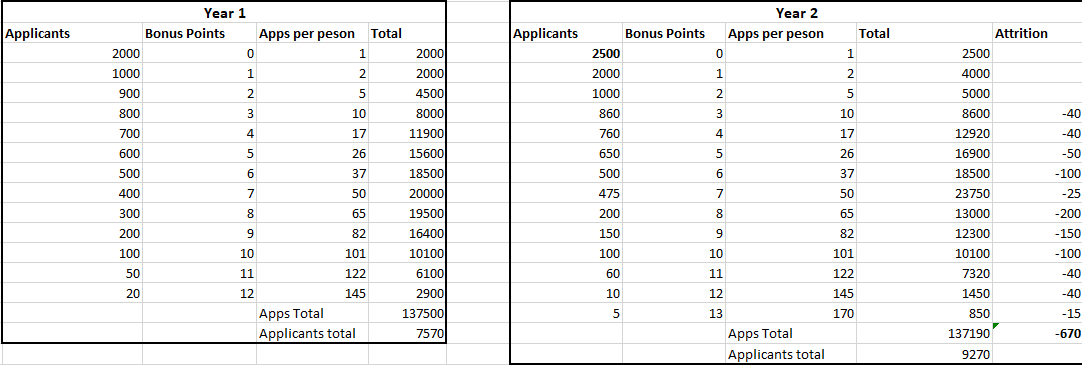
I think it is relevant that if you look at a typical point pool there is a pyramid of applicants (most at bottom and thinning toward top). If there were 100 people with each number of points like you mentioned as an example above, points squared has an advantage over flat points for high point holders but not as significantly.
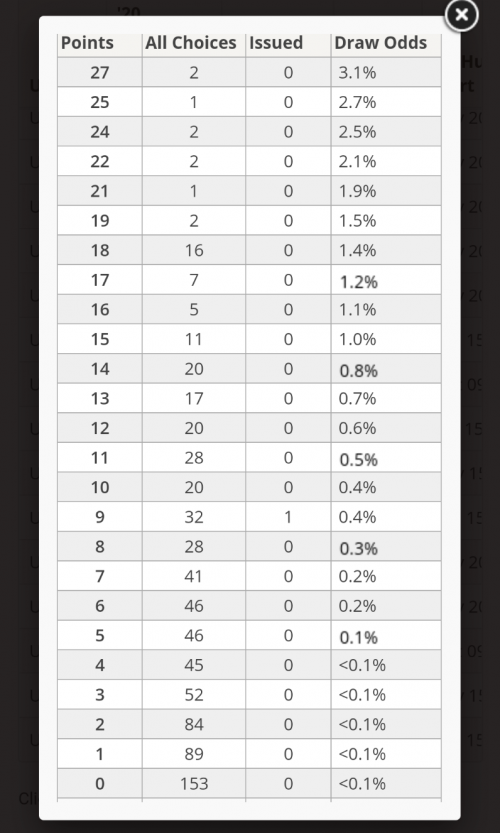
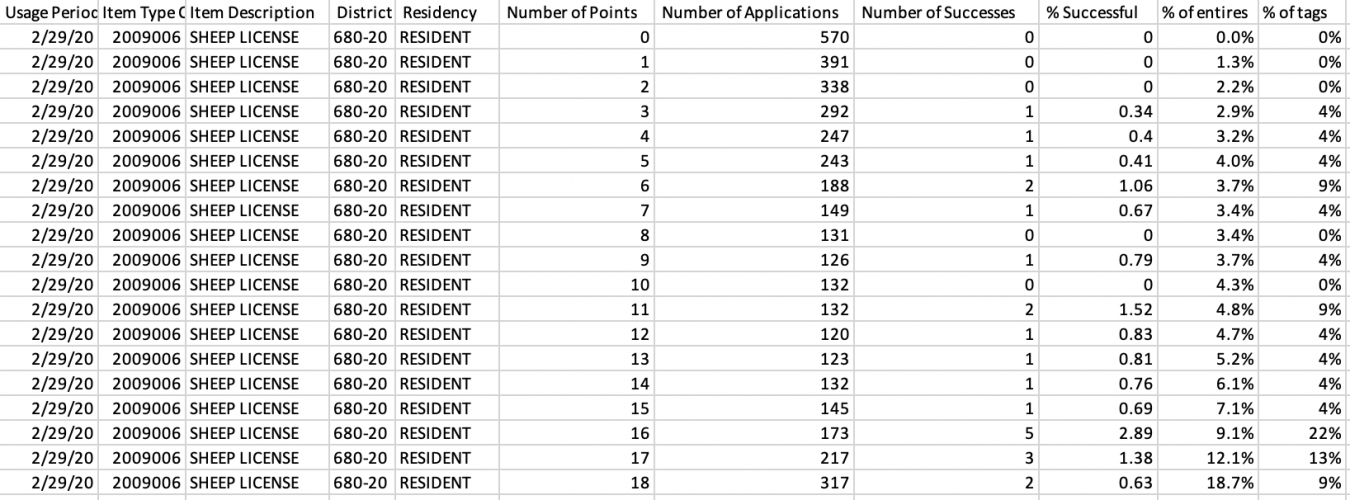
I attached odds for a Nevada desert sheep unit last year as an example. When you look at spreads like this generally they have the same pattern....more people on bottom, fewer on top. This is where bonus squared shines for top end point holders.
The two top point holders have 730 chances each to draw. So in this example, each of the two 27 point holders has virtually equal chance of drawing as the probability of one person drawing with 0,1, or 2 points (326 people with a total of 751 chances). In a flat bonus points scenario for that same group of applicants, the tag being drawn by one of those 326 people are 12 times more likely to draw than someone sitting at 27 flat points.
With increases in applicants each year and a point structure that has more at the bottom and fewer at the top, squaring points significantly helps keep the people in the top tiers with higher probability...in short, their time and money invested in the draw systems with points squared is more valuable than if it were flat points.
If high point holders in bonus squared situations think that getting a tag is an eventuality like a preference system because they are on top, they are mistaken. But, their odds will be better than others and each year that they stick with it helps keep them in a better spot than those below.
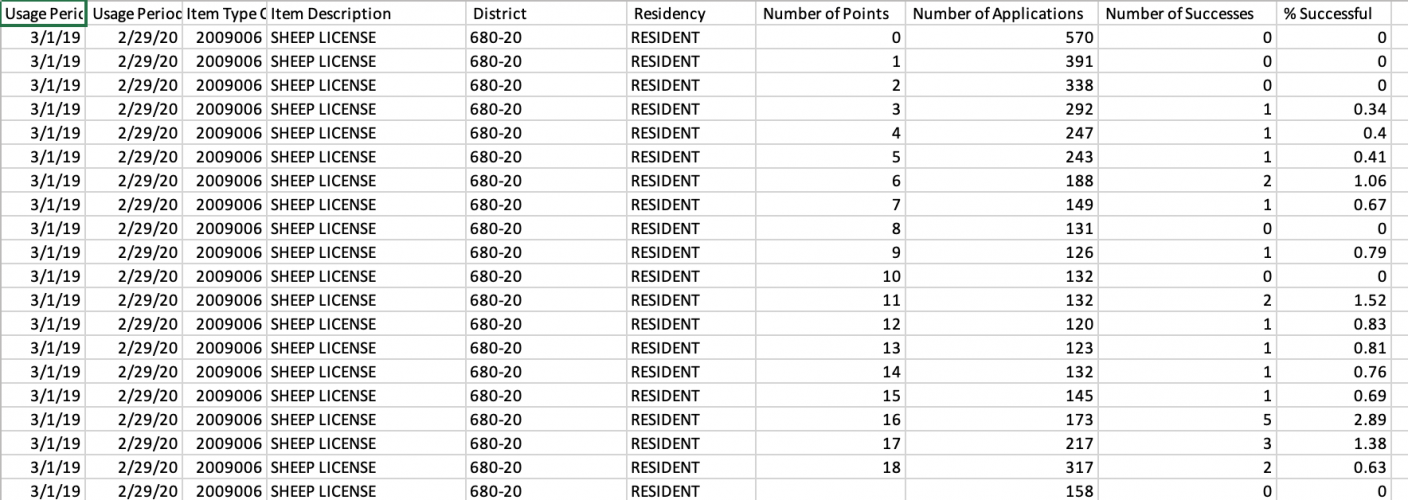
But more importantly, everyone has pretty crappy odds of a sheep tag.
View attachment 180692