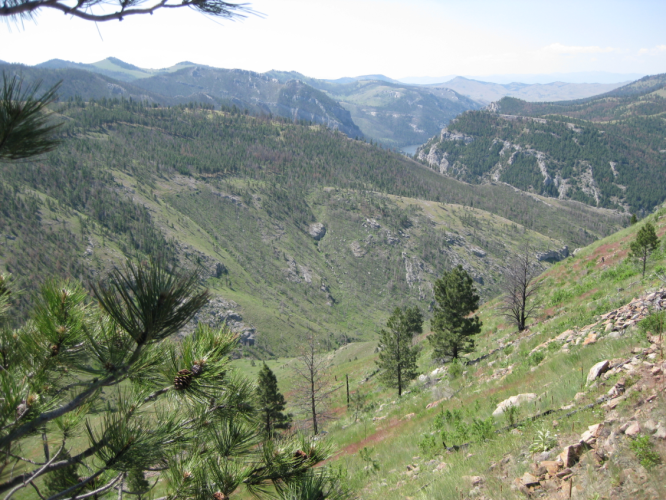
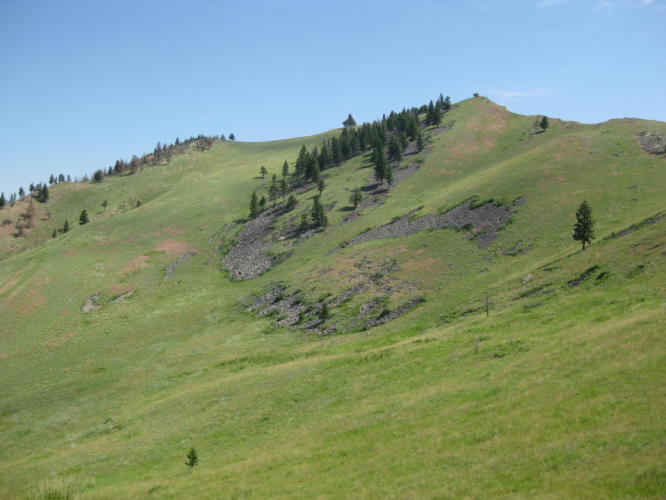
Though kids have slowed me down, I've read a lot over the years, and for me, it's the best nonfiction book I've ever read. "Best", being subjective on the level of music and food, which is different for everyone so it ain't objectivity against anyone else's preferences that I'm claiming.
I remember first reading the book when I was 16 or so, and every other page there'd be a sentence that would stop me in my tracks. I've read it many times since and still feel it. Most, having nothing to do with firefighting, which is an aspect of my life, but having everything to do with meaning and things I had felt and still feel in my own existence. I don't have the book with me, but do have a very small subset of those sentences in my notes on my phone, mostly from the last half of the book, and each being something a guy could spend a long damn time dissecting. A lot of them I feel like I should pay attention to.
-It is very important to a lot of people to make unmistakably clear to themselves and to the universe that they love the universe but are not intimidated by it and will not be shaken by it, no matter what it has in store. Moreover, they demand something from themselves early on in life that can be taken ever as a demonstration of this abiding feeling.
-It is the frightened and recessive grief suffered for one whom you hoped neither death nor any thing evil would ever touch. Afterwards, you live in fear that something might alter our memory of him and of all other things. I should know.
-Your best friend when you feel curious about what you are walking on is usually a good map.
-Just conflagration. What was happening was passing beyond legality and morality and seemingly beyond the laws of nature, blown into a world where human values and seemingly natural laws no longer apply. Such moments can occur the world over, sometimes even at home as well as on hillsides.
-I see better what happens in grass than on the horizon. Most of us do, and probably it is just as well, but what's found buried in grass doesn't tell us how to get out of the way.
-At the very end beyond thought and beyond fear and beyond even self-compassion and divine bewilderment there remains some firm intention to continue doing forever and ever what we last hoped to do on earth. By this final act they had come about as close as body and spirit can to establishing a unity of themselves with earth, fire, and perhaps the sky.
Here's and example of something I wrote in my phone notes:
In Young Men and Fire, Maclean wrote, “My guess is that my interest in this question of whether any good resulted from the Mann Gulch fire goes all the way back to a sentence of his (his father), which sounds as if it comes out of the Westminster Catechism but doesn’t. It is enough though, that it sounds like him, “One of the chief privileges of Man is to speak up for the Universe.” In A River Runs Through It he mentions quoting the Westminster Catechism and wrote "Man's chief end is to glorify God, and to enjoy Him forever." I find it interesting that “chief end” has, later in his life and in writing YMAF, been replaced with “chief privilege”. A synonym for end is purpose for which a synonym is meaning. I think one can get a lot more mileage out of questions like, “What is man’s purpose” or “What is my purpose”, if we replace the word purpose, with the word privilege. This switch takes what some would say is the foundational question of it all: “What is the meaning of life?” And frames it with utility and gratitude: “What is the privilege of life?”, and Maclean follows it.
There's a lot of nuggets like this throughout the book. Maybe they don't ring with others the way the do for me and that's ok. The section about Gisborne, or even the beginning story "Black Ghost", are powerful. It is a technically challenging book, insofar in that to absorb much of it, you have to build a very detailed map in your head and know it well. The whole story is a map, of earth and tragedy.
The story of the book's genesis, is a story about deeper things too. Who in the arts, produces masterpieces in their 70s and 80s? Maclean died trying to understand what he could have been and what he was and who others were. I admire it. I hope late in this life if I'm lucky enough, I'm still capable of giving it my all.
" The problem of identity is not just a problem of youth, it is a problem all the time. Perhaps the problem, it should haunt old age, and when it no longer does it should tell you that you are dead.”
Perhaps he was just a pretty writer, but I feel like he observed and connected things. I could ramble on and on, but I'll quit and say if you haven't read it, you should!