Very timely that you bring this up,
@Oak. With PERC based in Bozeman, I knew Terry quite well when he was the Executive Director. We would go to lunch and joust about these topics, never changing either person's mind. No doubt he's very intelligent. He is an avid hunter. His ideas in the WSJ piece are pretty toned down compared to past ideas he has proposed for public lands.
When I read that article it got me started on my treatise of the history of what I call the APL movement, or Anti-Public Land movement. I am about a third of the way through the history and why it is so relevant to what is going on now. Terry himself, and people I met through Terry, were a helpful window to what the goals were, and still are, of the APL movement; at least in my mind formed over almost forty years of engagement on this.
As a note, since Terry departed from PERC, PERC has moderated a lot and has shifted from "sell or transfer the public lands" to more of a "manage them better and here's how" approach to improving public lands. The new ED, Brian Yablonski, was the chairman of the Florida wildlife commission for the Jeb Bush administration. He has a much wider view of the issues at hand and complexities that come with managing public land.
That 1999 piece is not the only time Terry and others have proposed this idea. His writing is often used by the APL movement as support for what I call the 50-year liquidation strategy, the focus of my long-winded dissertation I hope to have done in a few weeks. From this "group think" comes Gayle Norton and William Perry Pendley, both from the Mountain States Legal Foundation and the latter being the unconfirmed Assistant BLM Director under the prior Trump administration.
Pendley, who is the author of the Project 2025 chapter dealing with public lands, has never hidden his desire to sell such.
In 2016, in the National Review, he wrote a long article as to why and how it should be done.
View attachment 361400
The APL movement got their asses handed to them in the 1980s when they came out with the idea to sell the public land. With that beating, the Republican party moved the APL folks to a darker corner of the room. Yet, they're not fools. They came up with a strategy of how they could use Congress to make the public lands of America a mess, mismanaged, underfunded, a liability, and a revenue loser for locals, such that the time would eventually come where Americans would show little opposition to liquidating these lands; the long-term goal of the APL movement.
The 50-year strategy as witnessed by those of us who have been in this since the 1980s, and confirmed from tidbits gathered in my discussions with people like Terry, strategy fully promoted in articles from Pendley and others, the directives called for in public land chapter of Project 2025, shows that the strategy goes something like this:
1. Defund the agencies - Don't give them the resources to properly manage. Since public lands are such a low priority in Congress, it is easy to use public lands and agency funding as bargaining chips in bigger debates. Since 1990, such has happened.
2. Defund the rural counties with large tracts of public land - Federal lands do not get taxed as our private lands get taxed. Instead, we have two programs to offset those lost taxes - PILT (Payment In Lieu of Taxes) and SRS (Secure Rural Schools). Both allow Congress to appropriate money to replace lost tax revenues. Yet, that assumes Congress would fully appropriate such amounts. They don't appropriate enough and stiff the counties. The APL movement pressure Congress to lower the appropriations for county payments that are supposed to replace lost tax revenues. Why? Because it is part of the 50-year plan to piss off rural folks, their County Commissioners, and their School Boards, by not allowing the Federal Government to pay the going rate on property taxes, resulting in lower collections and school funding, and causing locals to have a higher property tax burden than they should have. Since 1990, this plan has worked well and rural counties have lost a lot of Federal receipts.
3. Promote the idea of better land management, but pressure Congress to keep status quo - As I've stated in many videos, every single problem that frustrates us with Federal land management could be solved by Congress. Yet, Congress, as much as many of them complain, do nothing. For some in Congress who know little about public lands, it is a function of ignorance. For others, it is intentional disregard for their constituents interests.
4. Block every attempt to increase revenues from Federal lands - Some may not know that the Feds are to share with counties receipts from Federal lands of grazing, timber, O&G. Yet, when we try to get grazing lease rates somewhere above the 10% charged on adjacent state or private lands, these APL sympathizers in Congress squash any attempt that would increase the Federal revenues. That hurts counties, adding to #2 above, as there is now less revenue to share with Counties. O&G royalty rates increased recently, but they are still much lower than state or private royalty lease rates. Timber stumpage rates are below private stumpage rates. The Hard Rock Mining Act of 1872 exempt hard rock miners from any royalty payment on gold, silver, copper, and other minerals. When we ask Congress to impose a royalty on hard rock minerals, the biggest opponents are the APL sympathizers in Congress. In front of cameras they complain that Federal lands don't earn enough money, while in the dark room meetings they cut deals to make sure Federal land payments stay way below market rates.
There are more prongs to their approach, such as not funding backlogs, ignoring deferred maintenance, redirecting budgets to wildland fire, etc. . To their credit, they've been strategic, patient, and well funded. If you read the public land chapter in Project 2025, it gives you a clear picture of the road map they see ahead.
Their methods are far more nuanced. When Mark Kenyon was writing his book about public lands, he interviewed me while following on a bear hunt in 2017. We felt that the "State Transfer" idea was getting called out for what it was, an attempt to liquidate Federal lands. He asked me what I thought would be the next approach. I gave him my thoughts. He posted this on IG yesterday and I was surprised what a shitstorm it caused.
View attachment 361401
I stand by those words from 8 years ago. What I see over the last eight years and what I read in comments and proposals from the APL crowd and their sympathizers, confirms that even more today. I would say that even without the changes that will come to public land management resulting from terminating many important Federal employees.
Maybe I'm lost in a big conspiracy theory I've cooked up since my days of first encountering this movement in Nevada in the 1980s. Could be.
Maybe my epitaph will say, "Here lies Newberg, the dumbass who spent most of his adult life trying to prove a theory that Congress was compliant in the liquidation of public lands." Those are surely a possible outcome.
For now, with what I know, what I see, the criticisms I get for my distaste of political parties, and having seen this trend across many Congresses and many Administrations, I suspect I'm going to my grave believing in that theory, and believing in it more each day.
Shitter's full. Blame Congress.






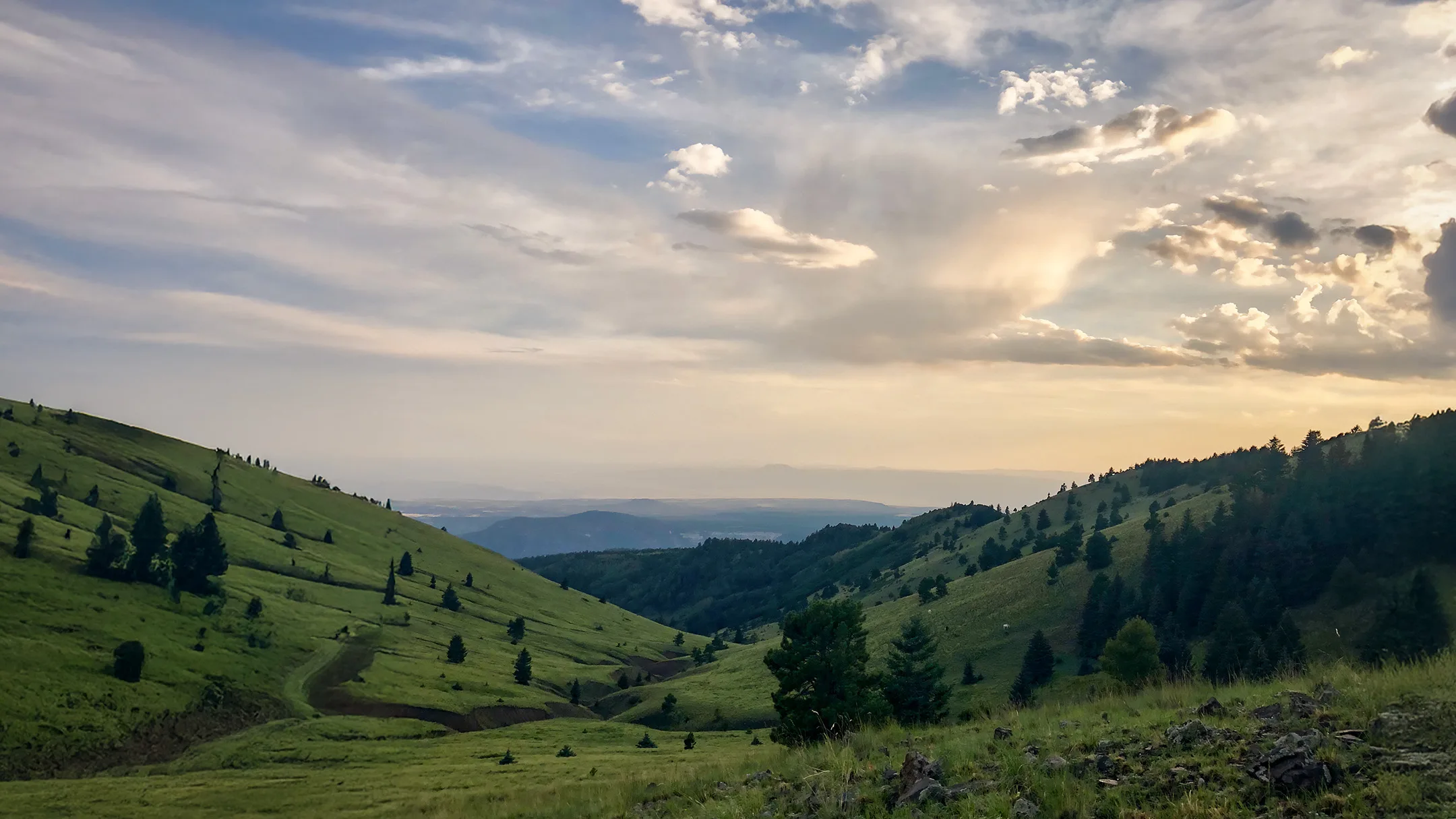

 ). Anywho, during that week every hotel, restaurant, grocery, etc was filled with hunters. That local economy and others like it thrive off hunters, and the reason is because there is such a vast area of public lands to hunt. (Please don't let this descend into griping about crowding