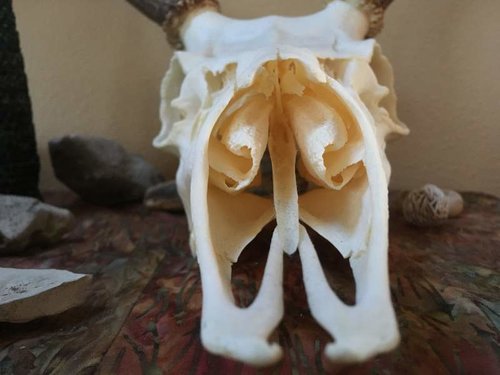
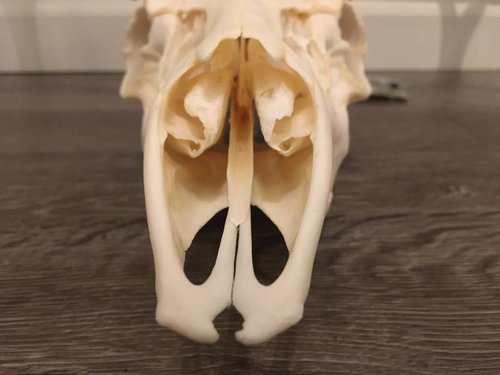
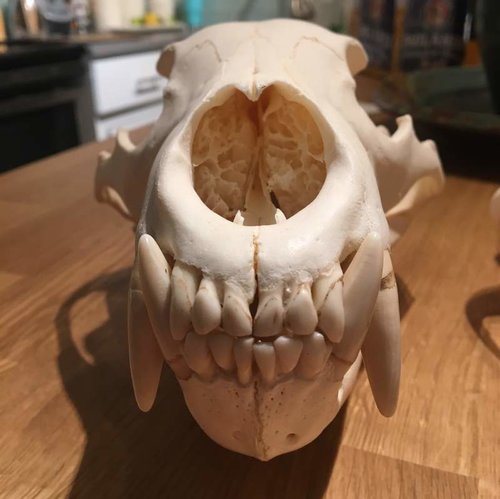
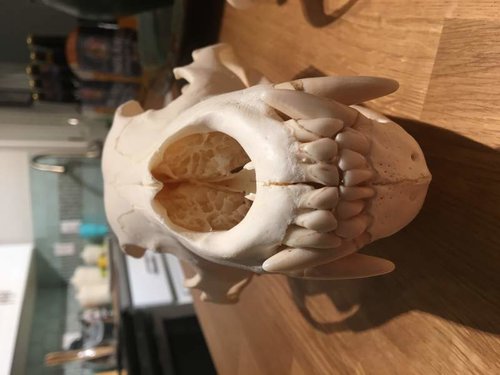
Interesting thread. I use Dermestid beetles because they're available at my place of work. Otherwise, no way I'd use them. They're finicky - need proper heat and humidity. I rough out the skull (remove flesh, eyes, skin, brain) after I'm done butchering, and leave it in my back yard tied to a tree so scavengers don't take it away. The flies get into it a bit, and clean out the nasal cavities pretty well, but usually it dries out too much for them here in New Mexico. The dermestids (or at least the ones I'm using) eat dry protein and actually do best with fresh jerky pink to brown in color, not half-rotted stinky green goo. If you have that, I'd probably leave it in a situation where the flies can get into it and keep it moist enough that the maggots will do the cleaning. Back to dermestids, I bug the skull the following June when the weather gets hot and the bugs are most active. They also get EVERYWHERE. They easily chew through cardboard, and seem to do quite a number on wooden containers over time. I use a rubbermaid tote with some 2" holes drilled in the side with mosquito netting over them to try to keep them mostly corralled. Unless you have a shop detached from your house, or have a box large enough to entirely seal up an antlered skull, you're going to find them crawling around the garage floor for the rest of the year until it gets cold enough to kill them. Not good if you have taxidermic mounts in your house or other forms of dried protein hanging on the walls or in drawers.
My predicament this year is trying to clean a velvet buck without damaging the velvet. I'm thinking if I wrap the antlers and apply a pesticide inside the bag, they should be safe while the beetles work on the skull.
Cold water maceration will definitely work, but needs to be checked regularly (weekly?) depending on temperature so that you get it cleaned. To try to keep the smell down a bit, pour off most of the liquor weekly and replace with fresh water (leave a little as a 'seed' to keep the bacteria going; kind of like sourdough). Don't go beyond the time necessary to get it cleaned of the flesh and soft tissue. After that, the bacteria start weakening the sutures and yeah, it really falls apart. Keep it in the dark if possible. Black bacterial growth is bad, I understand (I have never seen that happen though). Should be a turbid tan to tan-pink color in my experience.
I've also heard of folks in Alaska hanging them off a pier in a secure cage and letting the isopods clean them (in a matter of days).
npaden, what about using white gas? more expensive and extremely flammable, but should degrease better. Not sure how it would affect teeth or if it would dry things out too much, causing them to crack.






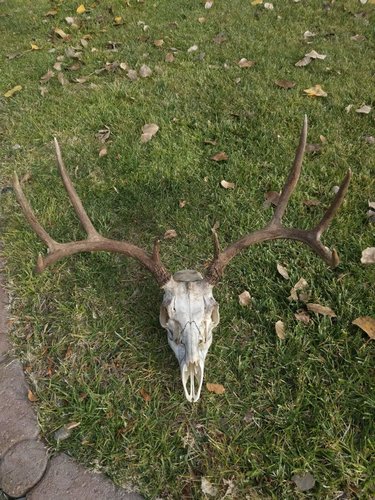


 my stupid hobbies and getting fired... bla bla bla...lol