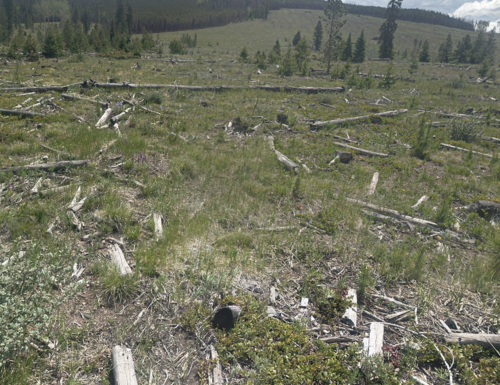
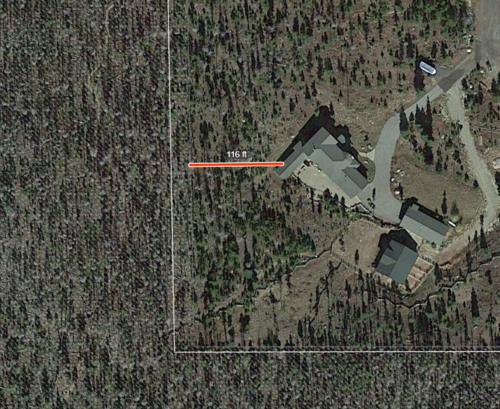
For every rule we have a propensity to justify an exception. Death by paper cut. Mechanized is mechanized and wilderness is wilderness. I'm just a curmudgeon on this but I don't see why we can't leave some places untouched. I get it that some may be influenced or potentially threatened by natural forces extending off the wilderness areas to adjacent development. That's the price of living/building where they have. Just like getting injured in a wilderness area, you accept the risk. I'm probably missing some language in the act that allows some uses in some situations. I don't mean to take things out of context.
SEC. 2. (a) In order to assure that an increasing population, accompanied by expanding settlement and growing mechanization, does not occupy and modify all areas within the United States and its possessions, leaving no lands designated for preservation and protection in their natural condition, it is hereby declared to be the policy of the Congress to secure for the American people of present and future generations the benefits of an enduring resource of wilderness. For this purpose there is hereby established a National Wilderness Preservation System to be composed of federally owned areas designated by Congress as "wilderness areas", and these shall be administered for the use and enjoyment of the American people in such manner as will leave them unimpaired for future use and enjoyment as wilderness, and so as to provide for the protection of these areas, the preservation of their wilderness character, and for the gathering and dissemination of information regarding their use and enjoyment as wilderness; and no Federal lands shall be designated as "wilderness areas" except as provided for in this Act or by a subsequent Act.
DEFINITION OF WILDERNESS (c) A wilderness, in contrast with those areas where man and his own works dominate the landscape, is hereby recognized as an area where the earth and its community of life are untrammeled by man, where man himself is a visitor who does not remain. An area of wilderness is further defined to mean in this Act an area of undeveloped Federal land retaining its primeval character and influence, without permanent improvements or human habitation, which is protected and managed so as to preserve its natural conditions and which (1) generally appears to have been affected primarily by the forces of nature, with the imprint of man's work substantially unnoticeable; (2) has outstanding opportunities for solitude or a primitive and unconfined type of recreation; (3) has at least five thousand acres of land or is of sufficient size as to make practicable its preservation and use in an unimpaired condition; and (4) may also contain ecological, geological, or other features of scientific, educational, scenic, or historical value.







 . On the other hand, a friend and I took hours to walk one mile through a "short cut" of old growth spruce deadfall in the Selway Bitterroot 25 years ago. Those trees were 4-6' or more in diameter. For that one they rerouted the trail.