

You know you married up? A sheep tale and more from a year to remember

Bryerific

Well-known member
Joined
Nov 7, 2021
Messages
165
Location
CO -> MT -> UT -> ID
On the road home after a weekend of summer scouting for bighorn sheep, my wife decided that we should make more of an effort in documenting her 2026 Idaho bighorn sheep hunt. After all, it is likely both the first and last chapter of our sheep hunting story. We both agreed we would take more pictures and videos and I decided I’d attempt to write down as much of the adventure as I could.

Until now, I’ve never posted a hunting story online, but I certainly enjoy reading the stories shared by others and appreciate the opportunity to learn from their experiences. So as motivation for finishing this tale, I am going to post it here. I am not sure if anyone will learn anything from this story, but hopefully it is at least worth skimming for sheep pictures, because fortunately, I’ve got a lot of them. Buckle up though, it’s going to be a while before we get to opening day.

I'll try my best to get it all posted in a timely fashion, but it may take a bit to finish selecting photos, uploading videos, and honestly - just trimming down this novel I'd like to share. Also, a few great folks on this forum provided excellent motivation and insight, you know who you are, and I really appreciated the support.

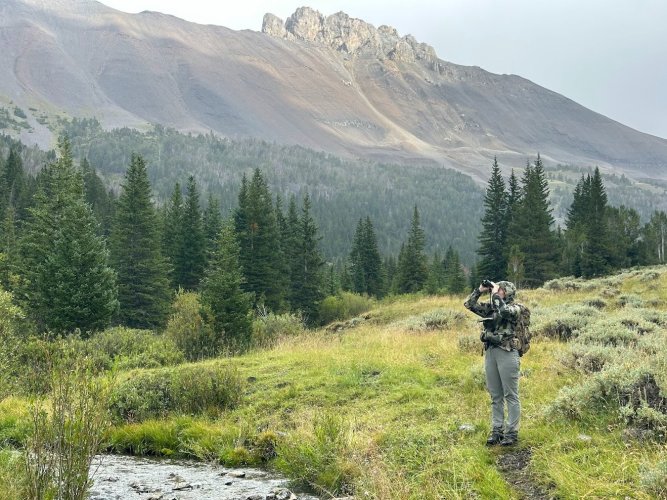
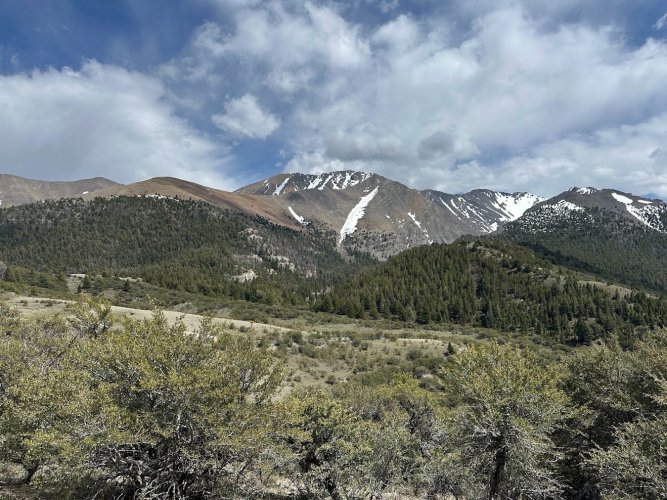
And if anyone reading this in 2027 and beyond thinks they have this same sheep tag, you are probably right as I am not exactly going to hide the landscape views and, honestly, I’d be happy to share what I can. But fair warning, I’ll expect photos and stories in return. IMG_2280.jpg
 
“You know you married up?”

I’ve heard it many times in numerous settings, but most recently one of my wife’s uncles casually mentioned it while he and I were setting up tables for a Fourth of July party occurring the next day at the family cabin. This statement wasn’t aimed at reducing me or anything like that, as he was only stating the obvious reality and aptly capturing our shared feelings following a conversation we’d just had with my wife about her expectations for her rapidly approaching bighorn sheep hunt. At this point, she and I were already a couple months into preparing for the hunt so she had a good idea of what kind of ram excited her, but her answer to his inquiries captured a mindset largely unpolluted by social media trophy shots or any obsession with inches. This was to be her hunt and success would be measured in units of adventure, hills climbed, and memories made. Fortunately, this hunt was certain to deliver on all three.

Backing up a bit, this story really gets going during application season.

I’ll be honest, I usually bully my wife into applying for a moose tag. I think most people who know me are familiar with my obsession with moose and desire to hunt them one day. Living in Idaho means that we each must choose between applying for controlled deer, elk, and pronghorn permits or applying for a single option of moose, goat, or sheep. I do the applications so she reluctantly agrees to it most years. However, in February, my in-laws decided they wanted to plan a cruise vacation and asked us, my sister-in-laws, and their partners to come along with them. I lacked interest in most cruises, so with limited PTO and a desire to avoid conflicts with hunting seasons, I eventually accepted that instead of putting my energy into fighting going on a cruise, I’d channel that energy into campaigning for a cruise trip that would work within our schedule and one that my wife and I would most enjoy. After a little research, I learned we could do a one-way cruise between Alaska and the PNW. A one way trip could also allow for my wife and I to tack on a couple extra days and go see Denali National Park and Preserve. We could call it our honeymoon and check that off the list, only three years late.

By March, a one-way cruise from Anchorage to Vancouver for the first week of August was booked, reservations were made outside Denali, and I accepted that I’d be taking less PTO to hunt than I’ve become accustomed to using. I adjusted our application strategy in NR states and only applied for the longest odds hunt codes. Back in Idaho, I felt undecided on how to apply. I knew I’d apply for a harder to draw moose tag than I’d normally apply for, but I had no idea what to do on her application. I laid out some options and she told me to put her in for a sheep tag. I asked if she was sure about it and if she had any preference where. She said she was absolutely sure and to make sure it was a good unit, as we really didn’t need to draw many tags this year. We also put her in for a MT general elk tag as we normally try to have one of us also hunt Montana. At the same time I was strategizing with my father on how to best use his two decades of Colorado pronghorn points and knew he’d draw a 3rd season deer tag.

My father and I have a lot of experience not drawing anything special as neither of us have ever drawn a once-in-a-lifetime type species even though we apply in multiple states and regularly purchase raffle tickets. So our expectations were appropriately low for all the Not Awarded results we received. Then on May 11th, I was sitting in a meeting when my phone lit up with an email preview from Idaho Fish and Game showing “Controlled Hunt Win”. I couldn’t wrap the meeting up fast enough, and just as I was opening Gmail and trying to process what I was reading, my wife called in a panic asking if it was real. Neither of us were especially productive at work the rest of the day as we pinched ourselves and told friends and family.

This was the day I learned how negative reactions can be. While some people were ecstatic to learn about her good fortune, many coworkers, family, and friends couldn’t help but voice their displeasure for their own poor luck and some really struggled to be excited that someone they knew drew. But I won’t dwell on that, we now had a sheep hunt in three and a half months.

And as it goes, in my year with reduced available PTO, my father would draw that CO pronghorn tag and my wife would draw Montana general elk and get lucky and pull the same CO deer tag as my father with one fewer point. It would be a lot to fit in.

In the coming days, I spent a lot of time scouring the internet for stories of past hunts and looking for helpful information. I found a few folks that had successfully hunted the tag and reached out to one of them. I spent a lot of time on Google Earth learning the unit and determining where previous rams were shot. As some of you on this forum know, I'm fairly decent at figuring out where a photo was taken, but this hunt would be the first time I’d actually consider using that kind of information in my hunting plans. But, there is also no reason to chase dead sheep. I just wanted some help getting some initial ideas and passing time until access would open up.

While on the topic of escouting and Google Earth, possibly the only piece of information in this entire story that may be valuable for other hunters was discovered while planning access routes in the 3D mode — alpine sheep trails are surprisingly easy to see in Google Earth, and can be easier to see online than in person from below. The more I looked, the more I realized we’d be looking over a lot of country as I could find good looking sheep trails in nearly every drainage. Summer scouting couldn’t come soon enough.

We wouldn’t have to wait long as winter was practically a no-show in this region and snow rapidly disappeared in the high country. Mentally, the month of May was actually the hardest month of the hunt. Having never actually seen a sheep in the hunt area and remembering past experience where dry, hot winters led to terrible fire seasons and closed access with unrelenting smoke, I became increasingly worried. The pressure to make the most of the hunt while so much felt out of my control was very difficult on me. For a few weeks I was constantly waking up from nightmares filled with burning mountains and unfilled tags. I knew I needed to get into the field and let the alpine views nudge away my worries.

Fortunately, the hunt area wasn't particularly far, and with access opening up ahead of schedule, we planned our first trip for Memorial Day weekend. We only did a day trip since we knew the sheep would still be far from their summer range, but we needed to start somewhere.
 
“Please be a sheep,” I kept telling myself as we scanned hillsides full of elk, deer, and pronghorn. Our first morning in the hunt area was packed full of wildlife sightings, but lacked the target species. I’ve always wanted hunts to start hard and end easier, as it builds a sense of growth and accomplishment, but I also couldn’t wait to see that first sheep. We had to remember that the primary focus of this initial expedition was just to learn more of the hunt area. We covered many miles and drove numerous roads I had never been on, many of which were incredibly rough and rocky. But more on that to come.
IMG_1400.jpg

Around midday, we were sitting on a knob enjoying the return of the summer songbirds and watching a herd of bull elk browse along a treeline, noticing that a couple were likely to become pretty darn impressive over the next couple months, when a high sagebrush hillside on a smaller isolated mountain escaped the shadow of the clouds passing above, its glow begging for our attention. Earlier, I had watched some pronghorn and elk cross it before turning around to glass the main mountain range. I wasn’t alone in noticing the helpful lighting, and before I got stable with the spotting scope my wife broke the silence with a question we’d been secretly trying to will the other to ask, “are those sheep?”
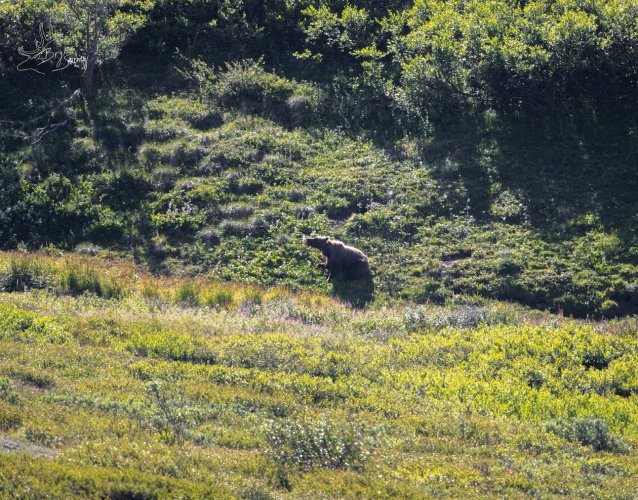
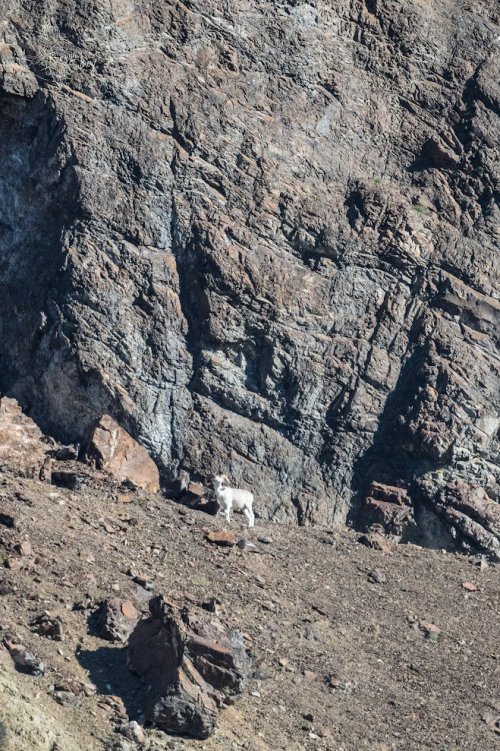
She was using her trusty 12x NL Pures on a tripod while I scanned with our bigger spotting scope. At nearly two miles, she didn’t want to be too optimistic, but I knew she was fairly confident they weren’t more pronghorn. The light colored dots came into focus in my scope and I immediately noticed the shine of horns.

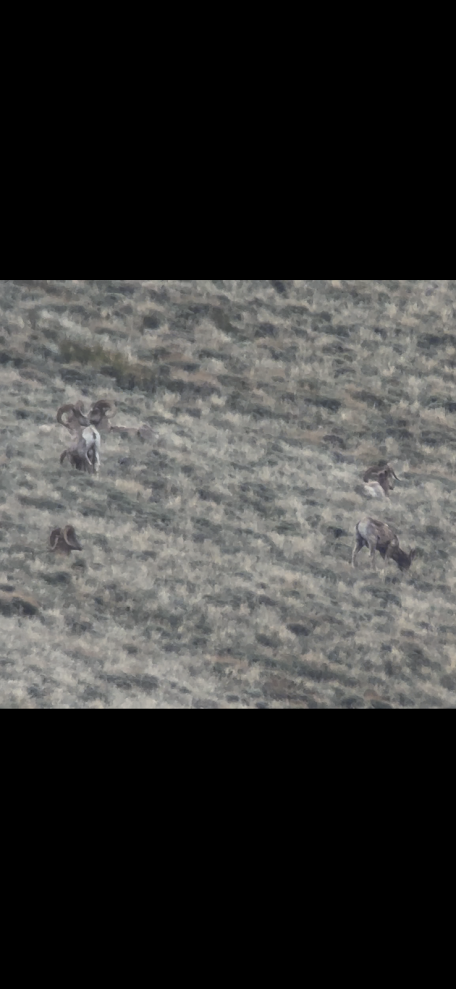
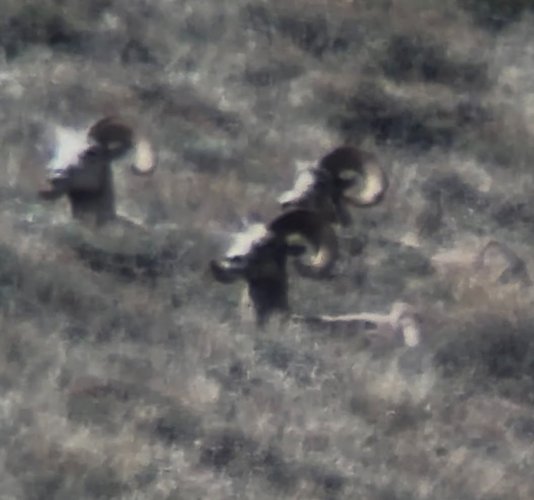
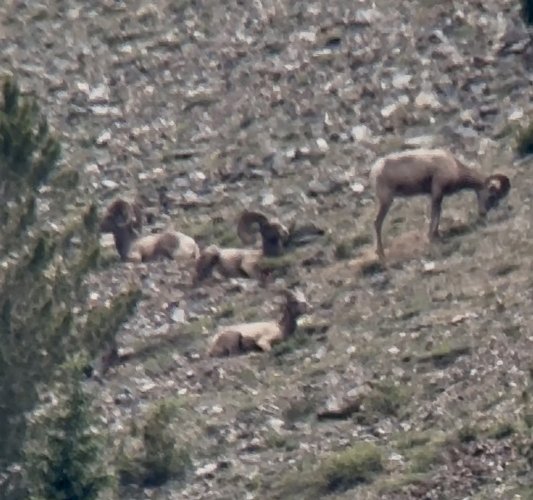
Twelve rams worked across the hillside and began bedding in small groups. It was too far to get a good look, so we packed up and drove towards the hillside. We cut it to about 800 yards and set up the scope. The rams watched us unconcerned from their beds near the top of the hill. I thought a few were pretty solid, but one ram was better than the rest. We watched the band of rams for the better part of an hour observing their behavior and enjoying their presence. I wondered how far these rams were from their eventual summer range? There was no way they’d hang out all summer in this middle elevation sagebrush on this smaller mountain, would they? The hillside they were located on had some escape terrain and water was available at a small lake on the backside, but only a mile-wide valley separated it from a major ridgeline extending out from the main mountain range. I figured they’d eventually cross and spend the summer somewhere higher. That would only make sense, right?
IMG_1417.PNGIMG_1414.jpg


Later that day we would also find our first group of ewes, two adults and a yearling. Fifteen sheep on the first trip felt like a major victory and we returned home in high spirits.
 
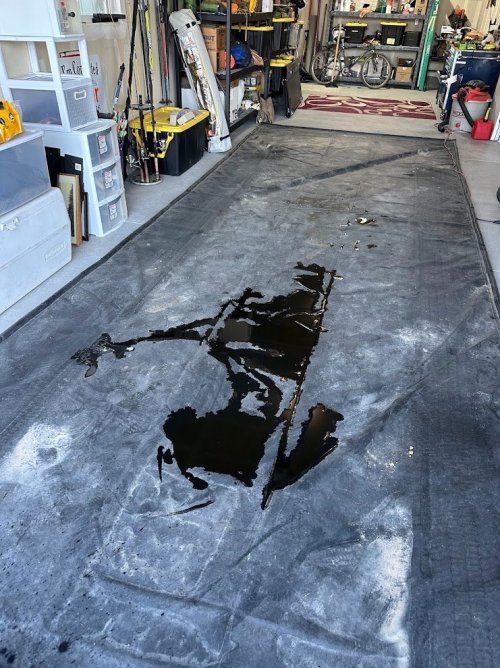
I work from home, but occasionally I do some site visits for work so a few days after our first scouting trip I walked into the garage at 5:30 AM to get ready to leave. The night before, my wife had mentioned an unsavory aroma in the garage and attributed it to the trash can. She was not exaggerating the smell and I pulled the trash can outside. After pulling the truck out of the third stall so I could load up my work gear, I noticed the true source of the smell… pooled on the floor mat was multiple quarts of transfer case fluid. Darn it!

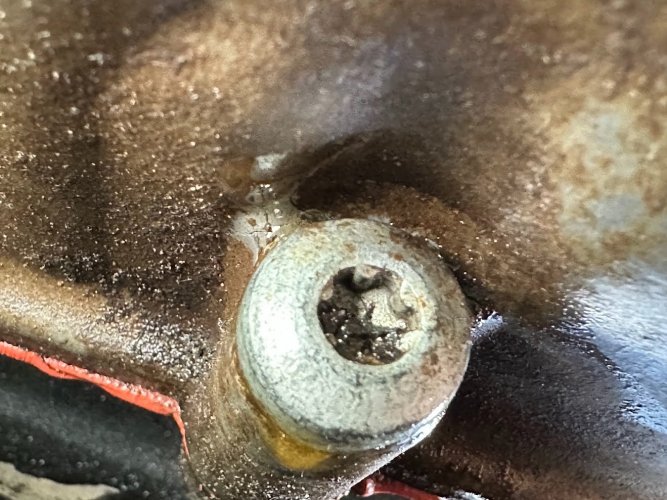
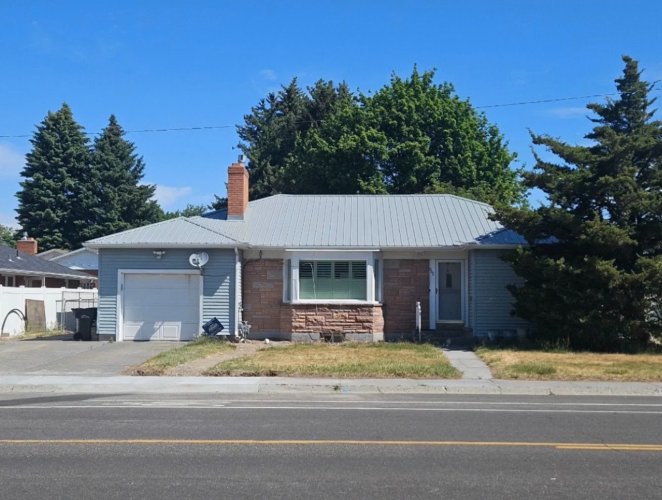
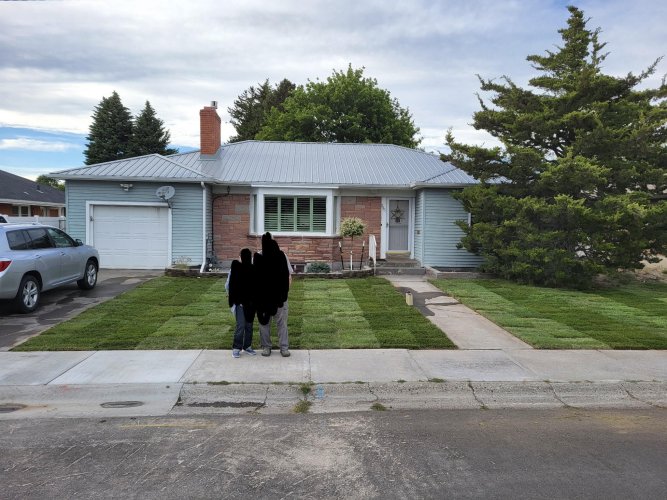
A closer inspection under the truck confirmed my fear. I had hit a rock, denting the protective plate, and making contact with one of the bolt heads along the bottom of the transfer case. A very small crack was visible and clearly the source of the leak. Long story short, it would be two weeks and $3,000 in repairs before a new (used) transfer case was installed. On the bright side, we had planned to redo the landscaping at my wife’s grandparent’s house the following weekend, so outside of the cost, it didn’t disrupt the scouting too much.IMG_1453.jpgIMG_1461.jpg

Here are also some side quest photos from the landscaping project. We removed over a dozen yards of dirt to bring the ground back down to the sidewalk. If anyone is considering one of those Oto sprinklers, they are pretty neat.
IMG_1509.jpgphoto 1510.jpg
 
Between sending the truck to the mechanic, the landscaping project, a work trip to NV, and an awesome trip to SE Montana for a fence project with a bunch of great North American Pronghorn Foundation (NAPF) volunteers, June slipped away and we wouldn’t be back in the hunt area until June 26th. During that period, I also found a solid deal on a Kowa 883, which would be a massive spotting scope upgrade. When I asked my wife if we should spend more money on top of the truck repair, she responded, "if not for a sheep hunt, when would we?”

IMG_1532.jpgIMG_1548.jpg

I feel fortunate that we are in a place where we can make the decision to upgrade gear without significant sacrifice, but as it became clear that we’d be spending quite a bit of cash to chase a sheep, I appreciated the recent hunting seasons where I didn’t feel like adding new gear was super impactful to the hunt. We live in such a gear driven industry and for this hunt I felt myself getting sucked into the marketing for new tripods, lighter trekking poles, new tents, and better scopes. I know, I know, I’m complaining about being able to purchase gear for a hunt most of us dream to do one day, I’ll go back to writing about our scouting trips.

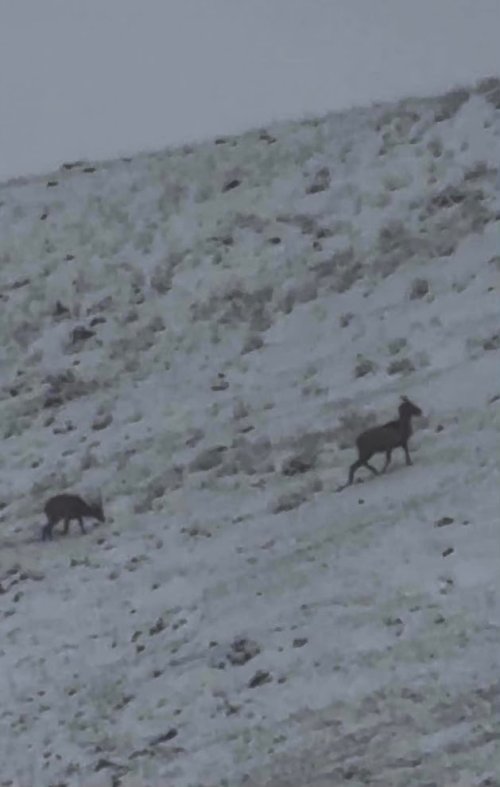
Being late June on a low snow year, I figured most of the rams would have already returned to the high basins we’d be chasing them in come August 30th. Little did I know, as if it was a well-rehearsed prank, June 26th would do its best January 26th impression and our second scouting trip was largely reduced to burning some expensive fuel as a foot of snow hit the hunt areas’s high peaks and the whiteout conditions dominated the weekend. My mother-in-law was also visiting, and sadly, the storm dashed our hopes of sharing views of the impressive mountains we’d be exploring in future hikes. The trip’s only sheep spotting was during a brief reprieve from heavy snowfall, when three ewes appeared on a nearby ridgetop and pawed through the fresh snow looking for summer forage. All things considered, we felt lucky just to find a sheep. bd44abed969f5fdb1b96b7e9c70d10a6.jpeg
 
Count me as one of those who would have been happy to hear your lovely bride drew a sheep tag, Montana elk and Colorado deer as well.
 
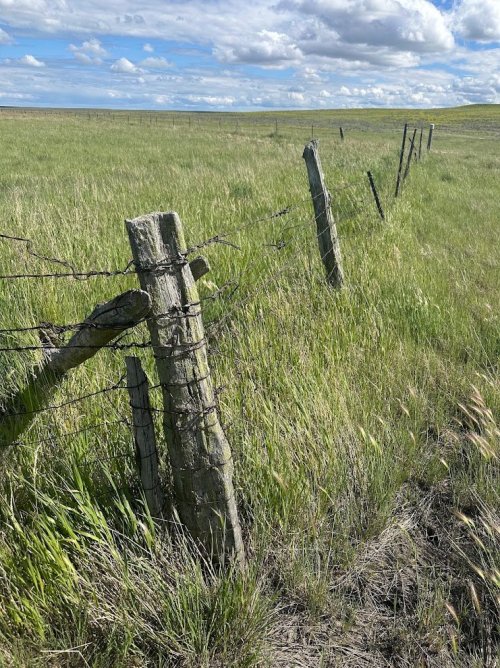
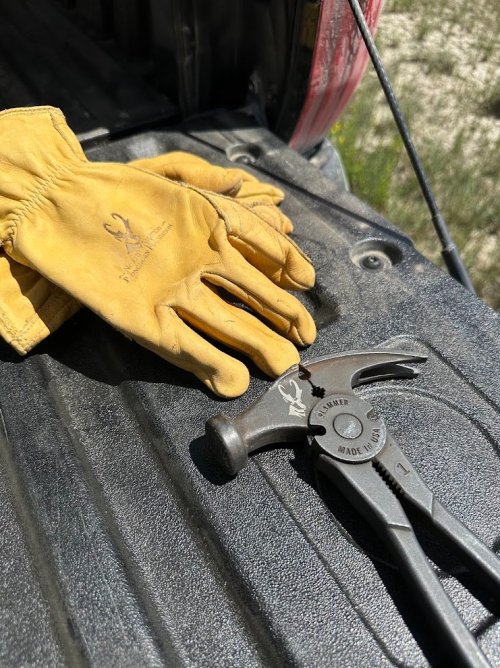
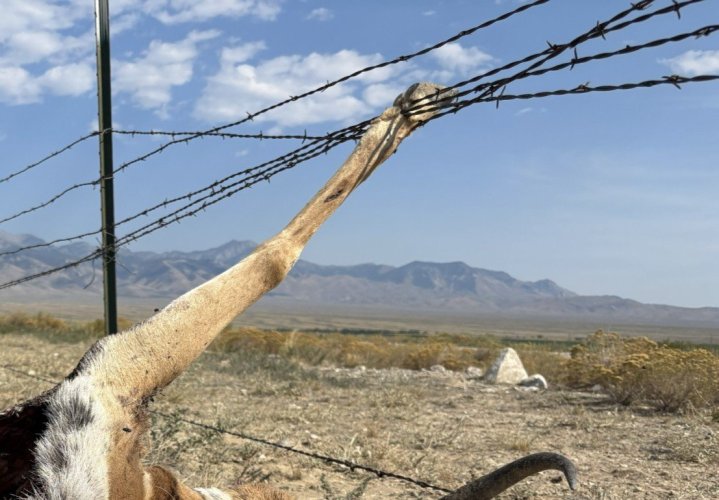
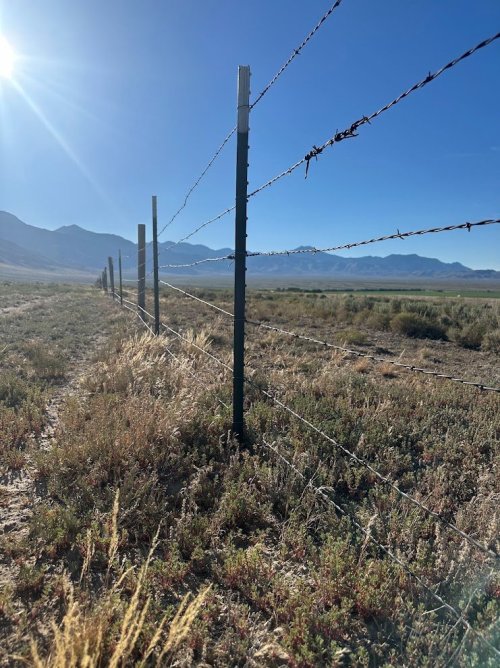
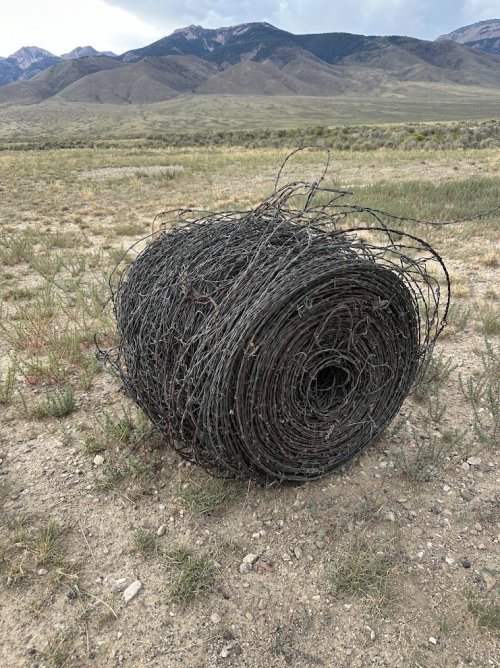
July was when we really hit our stride scouting. But first, I took a vacation day to work on another fencing improvement project with NAPF and Idaho Fish & Game. This project would involve removing a couple miles of mostly 6 strand fence that was largely impermeable to pronghorn and created a significant barrier along an important migration corridor.
IMG_1638.JPG

This photo was taken by the biologist at the project site. I've cropped out the more gruesome portion of the image, but it highlights the reality of what these fences do to pronghorn when they can't get under them.

IMG_1705.jpgIMG_1733.jpg

Once the old fence was removed, it was later replaced with a new, wildlife friendlier fence. The new one is fitted with a smooth bottom wire and strung 18” off the ground, allowing pronghorn to safely pass underneath. It was an awesome project that has yielded immediate results as trail cameras have captured successful crossings. You can see a video of pronghorn crossing on our Facebook account here - https://www.facebook.com/share/r/1V3681bTJh/?mibextid=wwXIfr. As a quick aside, thank you to Randy and the rest of the Hunttalk team for allowing NAPF to use this site to spread awareness of NAPF as so many of you on this site have trusted us with your time, money, and support. We are doing the best we can to further our Mission, and we wouldn't be where we are now without Hunttalk.

Lucky for my wife and me, the biologist who had reached out to me about doing this fence project is also an awesome resource when it comes to sheep. His energy for sheep, pronghorn, and other wildlife is contagious and a great reminder of the hard working and dedicated wildlife managers working inside state wildlife agencies. I understand that many of us hunters think about these agencies and have a hard time not focusing on frustrations with tag allocations, point structures, declining opportunity, and rising costs, but if you haven’t recently spent a day in the field with a wildlife manager, I strongly encourage you to get out there and do it. Volunteer at a fencing project, habitat improvement effort, or similar event and I promise you’ll work with amazing individuals who truly care about conservation and opportunity. And if you get lucky, they may just share valuable insights for your upcoming hunts. I know the information I was given was more valuable than we ever deserved.

We were actually looking at an area that hadn’t been on our radar until we got those tips when we ran into another sheep hunter. A very nice guy who would be fortunate to take a very nice ram a couple months later. We did find a band of rams in that area with one that was pretty solid.
IMG_1799.jpg
During our numerous July and August scouting trips we camped in many parts of the unit and mixed it up between driving around trying to cover lots of country and hiking into areas where we could get closer to sheep. We were finding significantly more sheep driving around and stopping at vantage points, but knew we needed to spend as much time as possible traversing the mountains and getting into areas a big ram might be hiding. We noticed we were getting substantially better at spotting sheep, especially at long distances (1.5-3.5 miles) and were usually finding quite a few rams each day. Confidence grew as we were finding 20-35 sheep a weekend and usually at least one solid ram. We were also finding more rams than ewes, a fact I am still a bit surprised by. We weren’t really visiting places multiple times so our list of potential rams started to grow, which felt good as we knew there would be a decent likelihood of one of the other hunters having their eyes on some of the same rams. At this point I also started to accept that I am not as good as I could be at estimating mass measurements and appreciated that my wife categorized rams as ones she liked, and ones she didn’t like. It was a simple system and one that avoided the stress of trying to score on the hoof, but I still wanted to find one with The Look.
 

Attachments

  • IMG_1803.jpg
    IMG_1803.jpg
    76.5 KB · Views: 9
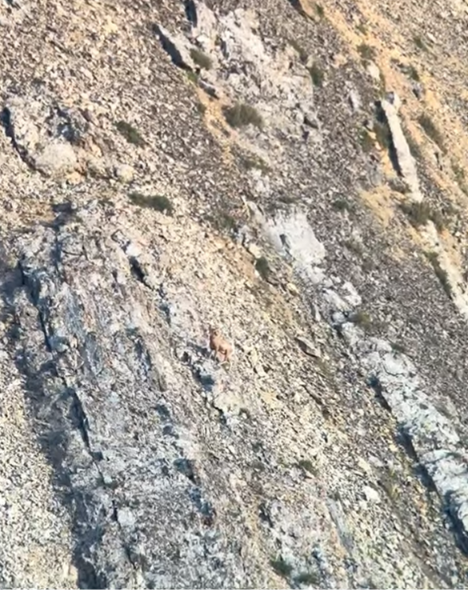
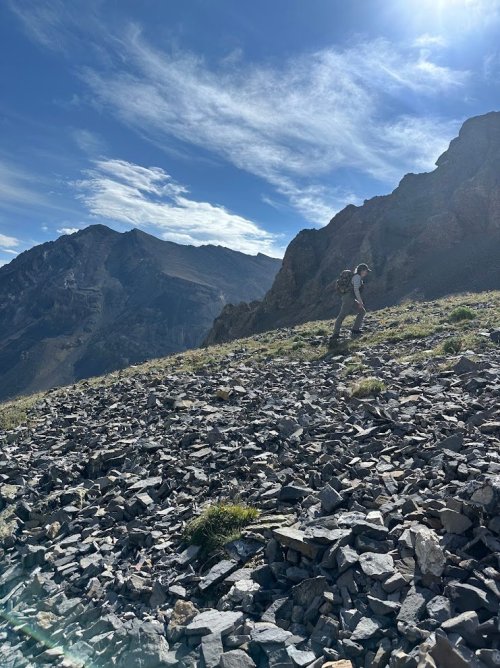
On the last weekend before our trip to Alaska, we went into a new area late in the evening. While driving up the bottom of a large drainage, we’d stop every ¼ mile or so to get out and glass the hillside above us. The mountains towering above us were truly large with expansive alpine terrain and shale slopes. At an initial glance, it would be really easy to assume that sheep would be easily spotted in this open country with just a quick scan of the binos. However, the distances can be deceivingly far, and regularly I’d be looking at a ram through the spotting scope for a long period of time, only to finally notice another nearby ram after it stood up to reposition and lay back into a bed. Lesson: A standing or moving sheep is easy to see, but a bedded sheep can feel like it melts into the hillside, leaving only its head and neck visible above the rocky surroundings. At one of the stops on this particular evening, I spotted a dot walking a high trail and went to pull out of the spotting scope, only to realize I was not looking at a sheep at all!

I first noticed the long tail swooshing back and forth and then the prowling walk instantly confirmed that I was looking at a much more effective sheep hunter than we will ever be — a lone mountain lion crossing the high basin. It was only the second mountain lion I’ve seen in the wild, and a first for my wife. I’ll be honest, I may have slightly lost my cool in that moment as my wife was asking for guidance on where to look and I realized I needed us to hop back in the truck and drive a short bit back to avoid the big cat getting blocked by a nearby ridge. I threw caution (and my new transfer case) to the wind and raced back down the trail. We got out and got to watch it descend a thousand feet down to a stand of timber. What a cool experience. But also a reminder that I become less of a helpful partner when I get too excited.


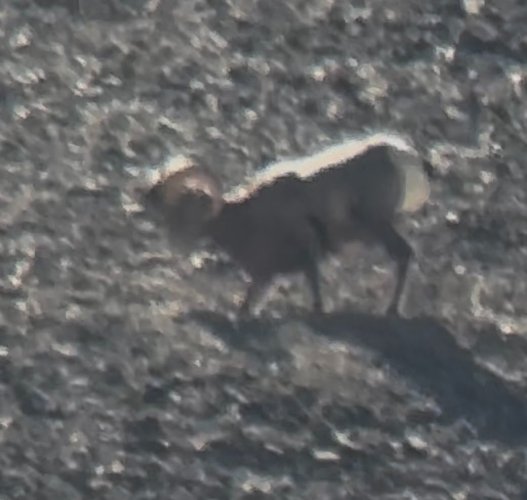
We drove down a little further and stopped along the creek as the evening light lit up the mountainside in a bright orange alpenglow. While I was still setting up the tripod for our new spotting scope, my wife shouted, “I see a ram! And he looks big!” I get set up and adjust to where she is looking. I quickly found a young ram standing atop a cliff face within this striking diagonal set of striped rock layers created by some serious tectonic folding and thought to myself, “how did she spot that guy? And why does she think he is big?” but then I realize there are five more rams below him on the open talus slope. Two are very nice, mature rams, both falling into the ‘like’ category. We both got excited again, but unlike the rushed mountain lion viewing, we knew these rams wouldn’t be going out of sight anytime soon.

smaller ram.png
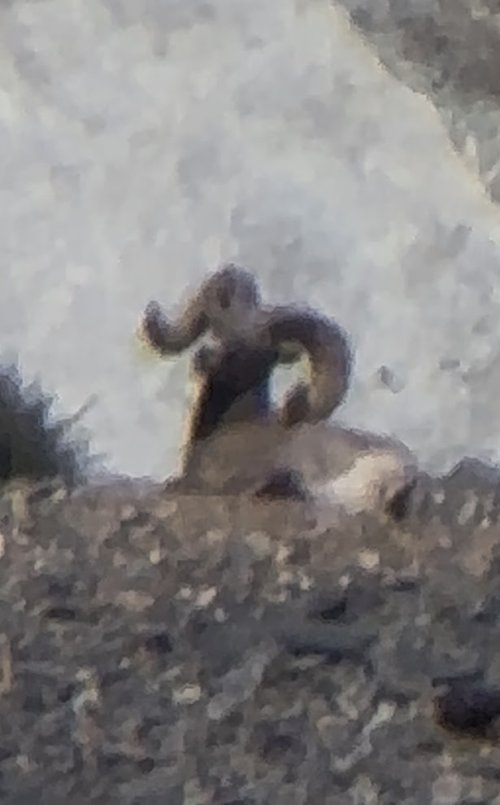
A less-than-stellar photo of the first ram I found. More footage of the big ram to come.
 
The one was a solid ram, and if he’d been on his own, I’d have a lot of video of him, but the other was just as long and carried noticeably better mass.


This feels like a good time to mention that to me, rams lit up with bright lighting always seem bigger than they do the rest of the time. Later, I’ll add some photos to hopefully make my case. But regardless of the favorable light, we knew this was a really nice ram.

The six rams worked their way up the mountain, covering ~2,000 feet of vertical in a short period even though they browsed as they went. I made a mental note of the obvious – we wouldn’t beat them up a hill. “Don’t even try it,” I told myself.

We stood there in deep appreciation of the events of the last hour. This was the adventure we craved and watching such a great ram scale this imposing mountain adorned in the deep orange of the setting sun was a sight I will never forget. I now understand why people fall for sheep hunting, as that was the evening it happened for us. If we are ever so lucky to go on a Dall sheep hunt, we can trace it back to this evening.

Before it got dark, we found another band of five younger rams and set up camp while enjoying our great fortune. With visions of one day hunting that big ram, it would be hard for me to fall asleep. In combination with my excitement, it was really hot that weekend and I could not cool off and settle down in the tent. The temps at 8,300 feet barely dropped to 70 degrees by daylight. I think because of my nighttime sweating, I struggled to stay hydrated and it caused me to continually cramp up on our hike the next day. Normally I don’t mind our dual sleeping bag, but it was killer that weekend.

IMG_1855.jpg

The next morning we found those same rams and a dozen or so other rams. One of which was broomed off on one side and well over full curl on the other. I recorded a lot of footage, but he bedded ~2,000 vertical feet directly above us and I believe the view from below is a ram’s worst angle. The curl looked tight, but the long side extended forward out to the tip of the nose and then up, so I knew he was pretty long on that side. But the one with the tag didn’t like him so off we went.


Later that day, we relocated that big ram bedded with a cliff face behind him which made it much easier to judge him even at nearly 1.5 miles and 2,000 feet of upward vertical. He certainly didn’t look any smaller, but I’ll let you decide if you like him.

IMG_1902.jpg

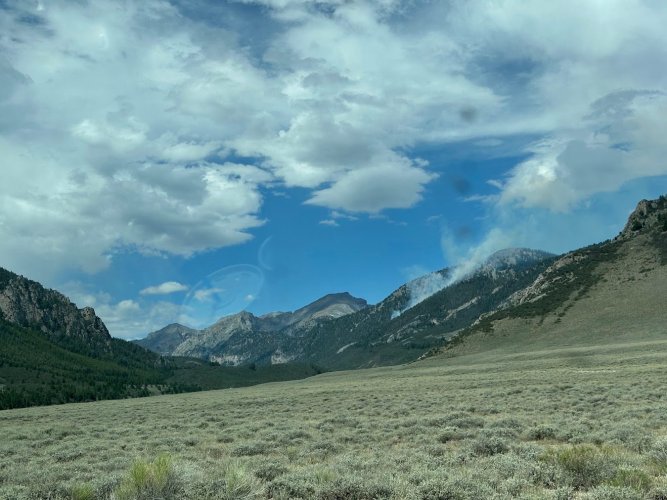
With one more day on the trip, we moved positions to another part of the unit. About an hour into the drive my wife pointed out smoke on a far hillside, it was a wildfire in the hunt area.

IMG_1907.jpg
 
Driving through smoke had already become common practice on this hunt, as our route to the hunt area passed through an area that seemed to have a new sagebrush fire each week, but this fire, clearly burning timber, was different. With no service, all we could do was watch the smoke build and discuss which parts of the hunt area might be impacted by this wildfire. We mentally blocked off the surrounding area and continued on to our planned destination many miles from the hillside aflame. Had my worries come to fruition? Or would this just help us decide to avoid one drainage in the entire hunt area? Only time would tell.

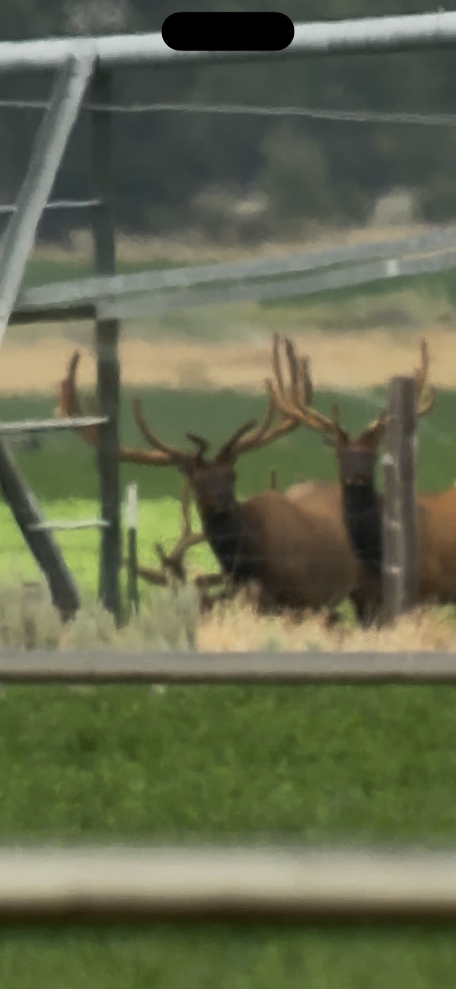
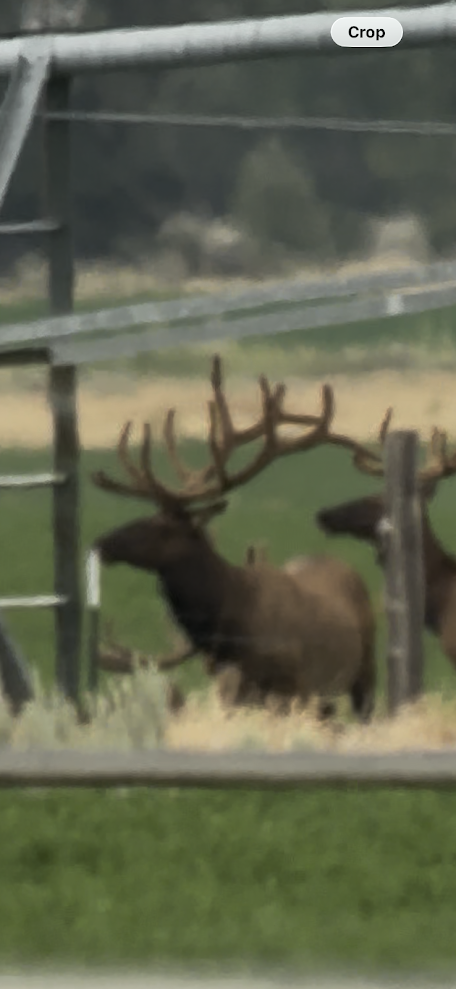
We found a few more rams that weekend and on the way home saw what was easily the largest bull elk I’ve seen in Idaho.

IMG_1922.PNGIMG_1924.PNG
 
The one was a solid ram, and if he’d been on his own, I’d have a lot of video of him, but the other was just as long and carried noticeably better mass.


This feels like a good time to mention that to me, rams lit up with bright lighting always seem bigger than they do the rest of the time. Later, I’ll add some photos to hopefully make my case. But regardless of the favorable light, we knew this was a really nice ram.

The six rams worked their way up the mountain, covering ~2,000 feet of vertical in a short period even though they browsed as they went. I made a mental note of the obvious – we wouldn’t beat them up a hill. “Don’t even try it,” I told myself.

We stood there in deep appreciation of the events of the last hour. This was the adventure we craved and watching such a great ram scale this imposing mountain adorned in the deep orange of the setting sun was a sight I will never forget. I now understand why people fall for sheep hunting, as that was the evening it happened for us. If we are ever so lucky to go on a Dall sheep hunt, we can trace it back to this evening.

Before it got dark, we found another band of five younger rams and set up camp while enjoying our great fortune. With visions of one day hunting that big ram, it would be hard for me to fall asleep. In combination with my excitement, it was really hot that weekend and I could not cool off and settle down in the tent. The temps at 8,300 feet barely dropped to 70 degrees by daylight. I think because of my nighttime sweating, I struggled to stay hydrated and it caused me to continually cramp up on our hike the next day. Normally I don’t mind our dual sleeping bag, but it was killer that weekend.

View attachment 422655

The next morning we found those same rams and a dozen or so other rams. One of which was broomed off on one side and well over full curl on the other. I recorded a lot of footage, but he bedded ~2,000 vertical feet directly above us and I believe the view from below is a ram’s worst angle. The curl looked tight, but the long side extended forward out to the tip of the nose and then up, so I knew he was pretty long on that side. But the one with the tag didn’t like him so off we went.


Later that day, we relocated that big ram bedded with a cliff face behind him which made it much easier to judge him even at nearly 1.5 miles and 2,000 feet of upward vertical. He certainly didn’t look any smaller, but I’ll let you decide if you like him.

View attachment 422651

With one more day on the trip, we moved positions to another part of the unit. About an hour into the drive my wife pointed out smoke on a far hillside, it was a wildfire in the hunt area.

View attachment 422653
This story is awesome!!! I feel like I am right there too.
 
At this point we had found a few rams she liked and one that really got her excited. Summer was quickly evaporating and all of a sudden it was time to fly to Alaska, and if you don’t mind, I’d like to talk a little bit about that adventure.

I’ve wanted to go to America’s Last Frontier for as long as I can remember. Mostly to find a big moose, as even as a little kid I was beyond obsessed, but also to explore one of the few places still largely untamed by man. Going into college I assumed I’d find my way up there for at least one summer job, but then I met my now wife and my priorities shifted. So I like to blame her for being the reason I’ll never get to live out of a chapter of my life living in Alaska. But instead, I’m getting to share a lifetime of adventure with someone I am truly lucky to be attached to. And frankly, I’m more likely to actually hunt a big Alaskan-Yukon moose with her bankrolling that silly endeavor.

I planned a very full itinerary for this brief honeymoon, we landed on Wednesday night and the plan was to pick up a rental car and head up to Denali on Thursday and come back down on Friday evening so we could take a bus to Whittier on Saturday morning, once there we would board the cruise ship.

20260731_095557.jpg

Our first hiccup was with the rental car. I’ve heard many tales of Alaskan rental car fiascos but figured the Toyota Corolla we had rented in Anchorage would be a safe play. I was wrong and cannot recommend avoiding Anchorage Car Rental enough. I had called the day before we left to confirm everything because there had been no email correspondence since I had booked and provided payment. They looked up my rental and assured me the car would be ready. I called again while on a layover in Portland and again they assured me it would be ready. I asked how I picked it up since they hadn’t sent any information and they told me to call when I landed and they’d come drop off the car at the front of the airport. We landed around 9 PM and quickly gave them a call. This time they had worse news, the car had a leak and wouldn’t be available. I asked what they’d be bringing as a replacement and they didn’t have one. None of the other rental car agencies at the airport had any either, but one of the Hertz employees told me about her friend who rented cars out of his house. I assumed I needed to call him the next day as it was now about 9:30 PM but she encouraged me to try a call. Half an hour later, and after texting with a guy nicknamed Spud, we were in an Uber driving up to an old dilapidated house with Kia Souls parked all over the yard. Spud was there getting one ready when we arrived. After a quick chat we learned that upon getting our call, he had driven over from the hospital where his wife was in the process of giving birth! Paperwork was quickly signed and we probably more than seeded his new child’s college fund with our credit card, but we were in Alaska with a car and he could go back to the hospital.

The car ended up being great and I am very grateful that he took the time to get us set up on such an important day of his life. I know I wouldn’t have picked up the call at that moment. And eventually, I had to dispute the credit card charge to recover the initial rental car money.

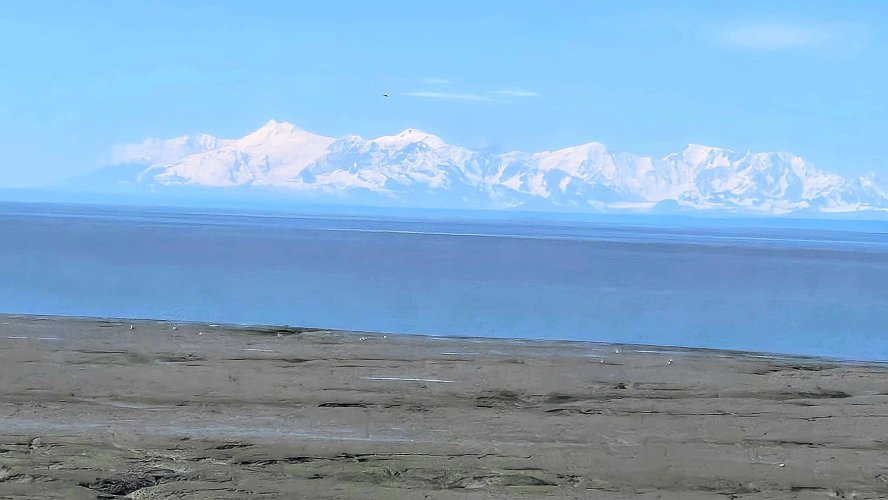
For our first night, I had booked a cheap motel out of town on the Turnagain Arm to save some money and hopefully see a Dall sheep or two off the Seward highway. We got some quick dinner and headed to the motel. No sheep on the drive. However, I was amazed at the number of fishermen out at 11PM at Bird Creek on a Wednesday, but it was still light out and I was tempted to try to join them. My wife on the other hand, while a major fan of hunting and wildlife viewing, is much less interested in fishing expeditions and was already committed to a fishing day out of Ketchikan. Focus would remain on seeing some incredible landscapes and hopefully some cool wildlife.

The next morning we got up pretty early due to the time change and headed back for Anchorage to get coffee and check out the town before heading north. On the way, we lucked into seeing our first sheep of the trip — a ewe and lamb. I was so excited.

BAS_1858.jpg
20260731_140526.jpg

Now we just needed to find a moose, caribou, grizzly, and a ram. I had no idea how likely we were to accomplish it in two partial days, but it sure seemed like we were getting lucky with the weather.
 
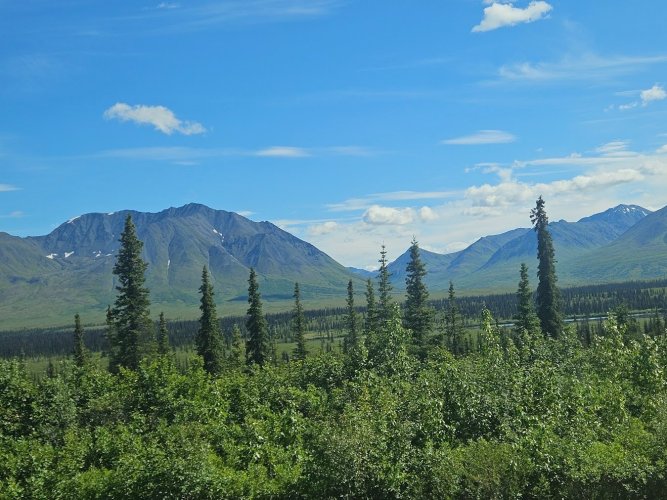
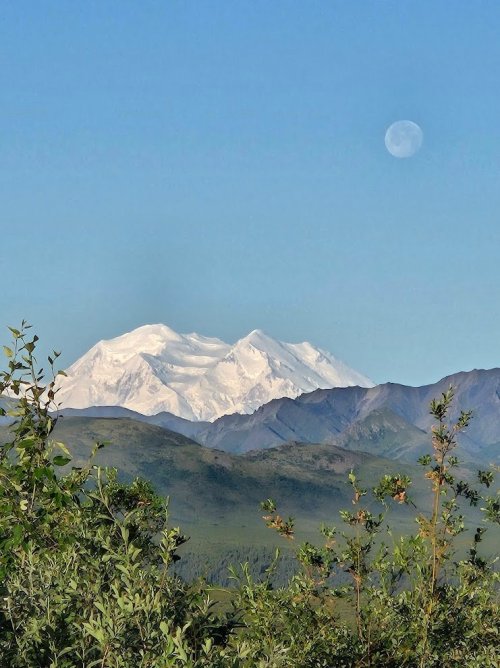
After checking out a few touristy spots in Anchorage and hanging out in Kincaid Park for a bit, we began the 250-mile drive northward. I decided I liked the Eagle River, Palmer, and Wasilla areas more than true Anchorage, but I think I’d need to do a little more exploration if we were ever considering a relocation. The weather was exceptional and pretty early into the drive, one mountain regularly peeked through the trees to expose its massive presence. I’d always heard how unlikely we were to actually see Denali but lo and behold there it was. Later that evening a few clouds blocked portions of it for short periods; but we actually had an unobstructed view of the mountain nearly the entire time we were there.

20260730_151723.jpg

We enjoyed the drive up, frequently stopping at excellent views and enjoying the fantastic weather. Just after passing Cantwell, standing in a bog about two hundred yards off the side of the highway was our first Alaskan-Yukon moose. I was stoked to see one, and my confidence in finding more began to increase.

We had tickets to ride on one of the green non-narrated transit park buses the next morning so our plan was to swing by our hotel and then head into the park for the evening, staying on the 15-mile stretch of paved road where personal vehicles could drive on their own.

We first checked into our hotel in Healy, grabbed an awesome meal at 49th State Brewing, and then headed for the park entrance. On our way, another cow moose crossed the highway in front of us and holy smokes, they are bigger than the Shiras moose back home. Now I just needed to see a bull.

An oversight I made was assuming Denali National Park and Preserve would be similar to all the other National Parks I regularly go to where there is a formal entrance station checking and selling passes. My last annual park pass expired earlier in the spring and since the rest of the summer was dedicated to sheep scouting, I’d only planned to buy a day pass. We were probably 5 miles into the 15 mile public road when I turned around to find somewhere to buy a pass. The website said the visitor center sold them but they closed at 6PM and it was now 6:30. Buried in the website were directions to a self-serve kiosk and we finally purchased our pass. “Well that wasted a bunch of time,” I thought to myself. Good thing there was still plenty of daylight. At that point I didn’t even fully appreciate how right I was. It is one thing to know it won’t get dark, and another to actually experience it.

20260731_070445.jpg
 
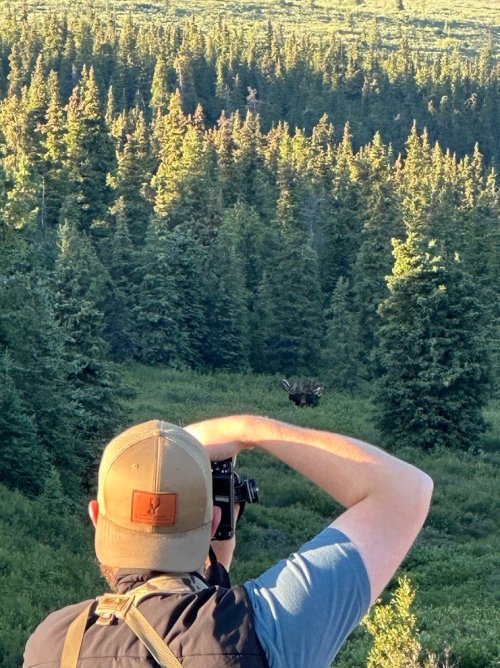
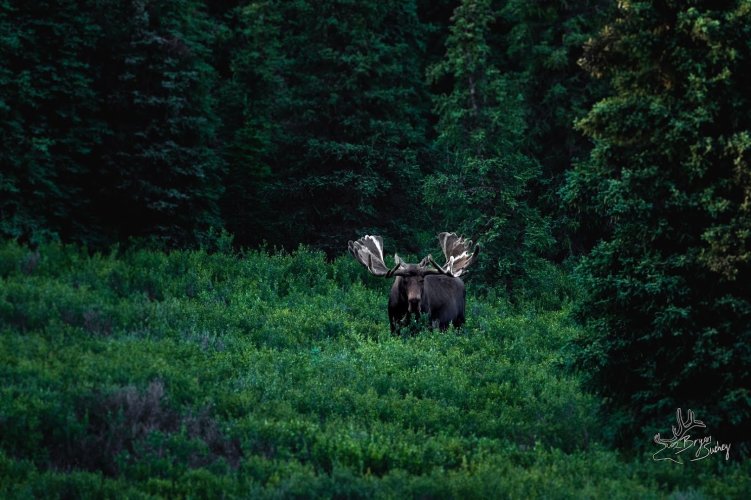
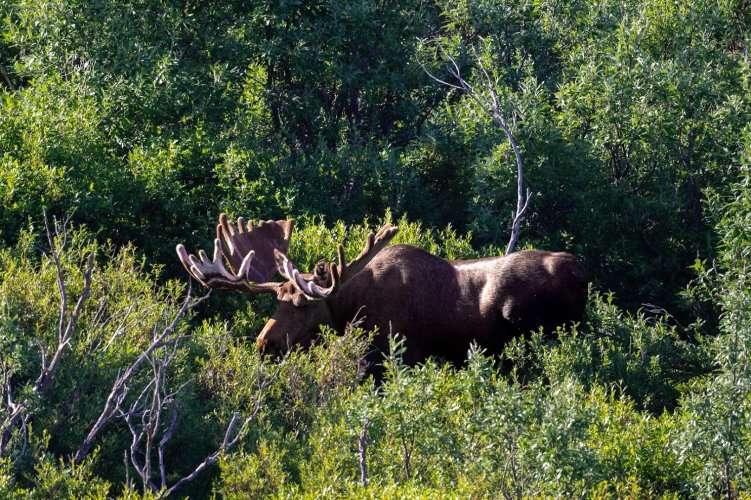
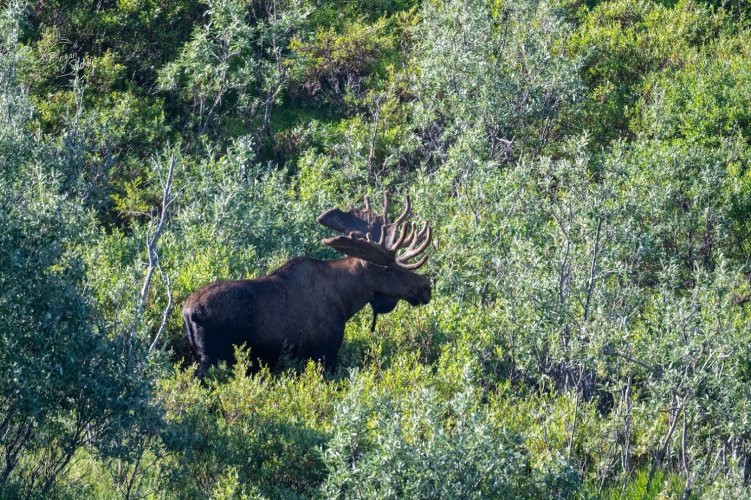
I know I’m doing everything I can to turn this sheep story into a moose story. I can’t help it, it’s who I am. Once we got into the park that evening, we strolled along enjoying the picturesque mountain views while searching for wildlife, especially a big old bull moose. I knew this country was low density being so far north, but with so much open space, it only felt like a matter of time before we’d find something cool. About two miles before the Savage River parking area, where we’d need to turn around, we came around a bend in the road and noticed two cars pulled over. As we pulled up a dark figure emerged from behind a stand of pine trees. It was a bull moose, and a big one at that. Cue the excitement. It was a moment I’d obsessed over for a quarter century and I tried desperately to keep my cool.

Back in college, I took an interdisciplinary class studying the wolf reintroduction in Yellowstone and it included a nature photography component. The professor was a wolf researcher and successful wildlife photographer and we even took field trips from Bozeman down to Yellowstone and I ended up finding a passion for wildlife photography. So on this trip, I had our smallest spotting scope and my big camera. I jumped out just as the car rolled back into park and I dashed to a spot where I could take photos. I was a little too far for good photos, but I couldn't just get closer to the bull or I’d be dropping down into the willows where I would lose sight of him. So I took the photos I could and focused on enjoying the moment.

IMG_2009.jpg

If anyone wants to guess the width, throw it out. I figured 67” but I am an amateur with these big beasts and could easily be way off. I really love the streaks of white velvet.

Moose.jpg

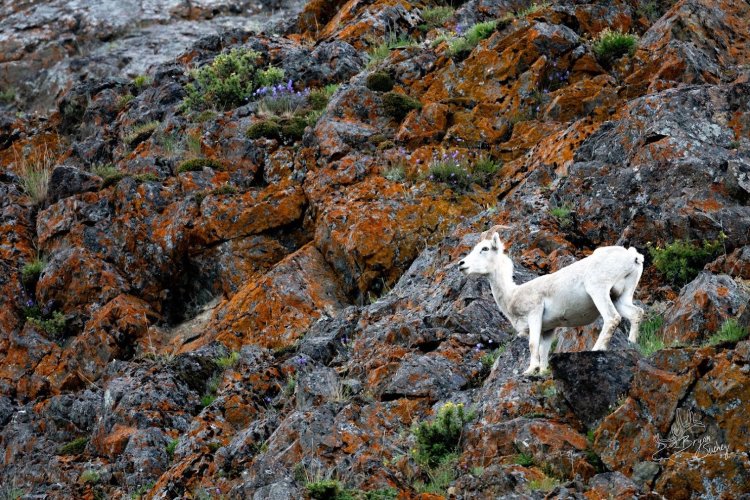
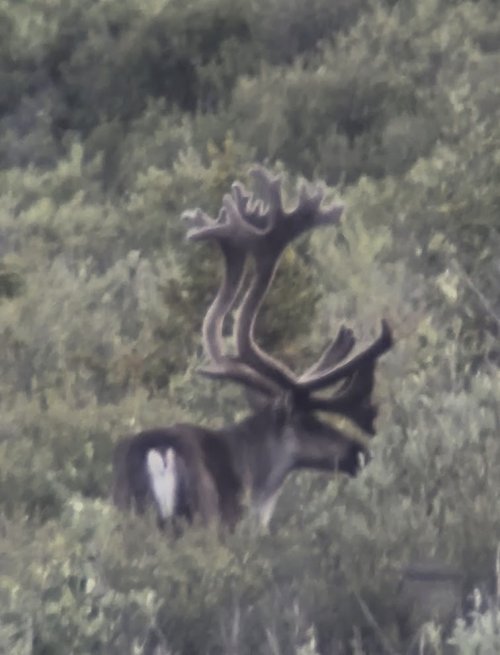
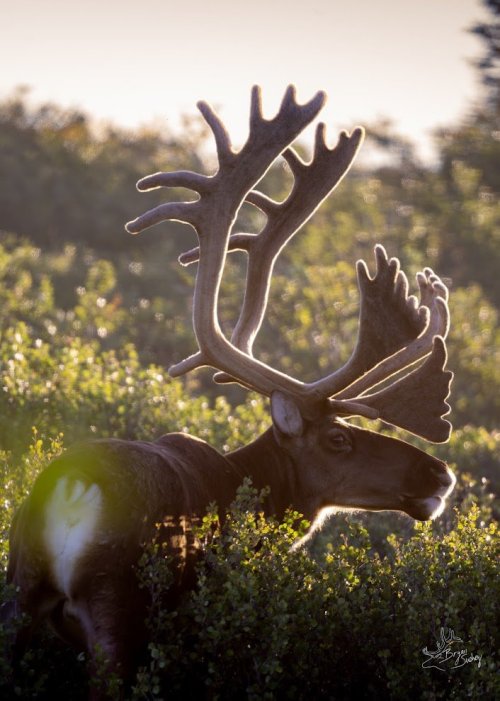
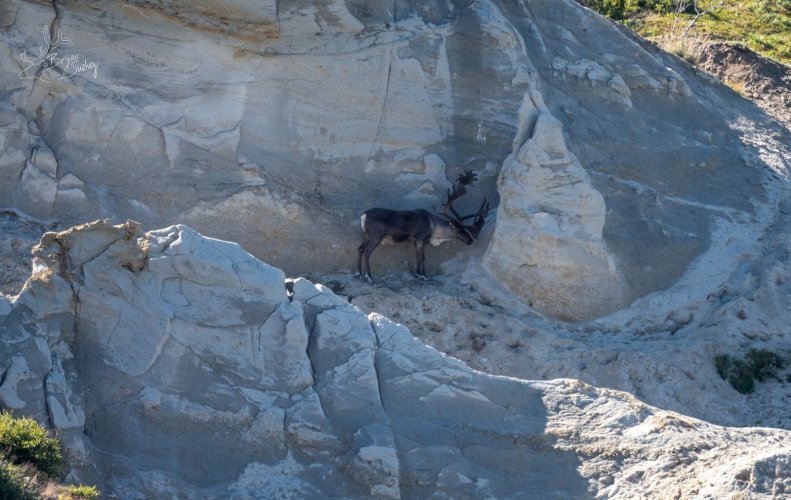
I could have spent all evening with the bull but he moved into more timber and it was time to keep going. Further down the road, we arrived at the Savage River and from a higher overlook we spotted our first caribou bulls. While I was videoing the biggest caribou, my wife was glassing around and noticed a Dall sheep at the very top of one of the closer mountains. The spotting scope confirmed he was a ram, but pretty clearly sub-legal (if he wasn’t in a park). I also began finding numerous sheep on the distant mountains to the north. It turns out these white sheep feel incredibly easy to spot after dozens of hours glassing for bighorns back in Idaho.

IMG_2020.jpg

Knowing we had tickets for the earliest bus the next morning, we decided to head back and get some rest. On our way back, we were again greeted by the big bull moose so we stopped and I took more photos. The rest of the way out we didn’t see anything else, but we were already full of memories for the day. In only a few hours, we had spotted nearly all of the wildlife I’d hoped we would see, what would the next day bring?

IMG_2021.JPG
 
The next morning we jumped the first bus and rode it deeper into the park. We didn’t see anything in the paved section but found two caribou bulls just a little further in. The buses do a good job of stopping for a quick photo, but bus windows and competing tourists make it a challenge to get quality photos, but I did get a couple photos I was satisfied with.

BAS_2203.jpg

At a rest stop overlooking another river, my wife spotted a sow and cub grizzly as they emerged out onto the rocky riverbed. The rest of the tour group was immensely excited and the driver struggled to get everyone back on the bus. We’d also spot a few more near Sable Pass. There were also quite a few sheep on the trip, including a large nursery of ewes and lambs on a nearby hillside and scattered bands of rams off on higher mountains. My wife and I actually stopped pointing out many of the sheep and even a few of the caribou to our fellow passengers, because each time we did, the bus would stop and most of the passengers would struggle to find the animals. At one of the stops, we received a compliment from the bus driver as he’d noticed we’d done all of the spotting. After sitting behind glass as much as we had over the summer, the compliment felt great. I lost track at around 100 white dots, or half a summer’s worth of sheep scouting back home.

BAS_2260.jpgBAS_2443.jpgBAS_2374.jpg

Since 2021, the buses have only driven to mile 43 of the 92 mile road as a persistent landslide has required an overhaul of the road. So we didn’t get to see the entire length of road through the park and ended up doing a short hike at the turnaround spot. On the way back we saw two more big bull moose, some more bull caribou, and plenty of sheep in the distance. Later we turned around and doubled back on another bus before riding it back to the park entrance. Too quickly it became time to jump back into the rental and head southward. I won’t lie, part of me wanted to abandon the cruise and hike off into the Alaskan bush like Chris McCandless, but the magnetism of an upcoming sheep hunt, the satisfaction of our viewing success, and possibly the understanding of how McCandless’ story concluded, allowed me to leave without too much disappointment.

BAS_2335.jpgBAS_2341.jpg
BAS_2447.jpg
 
Last edited:
On Saturday, we met up with my wife's family and took a bus ride to Whittier. At a photo stop on the Turnagain Arm I spotted a mountain goat. I was initially disappointed as I hoped to show my father-in-law a Dall sheep but its walk was clearly that of a goat. This bus driver thought I was crazy and looking at a snow patch, but after giving him my binos, he too could see it moving.

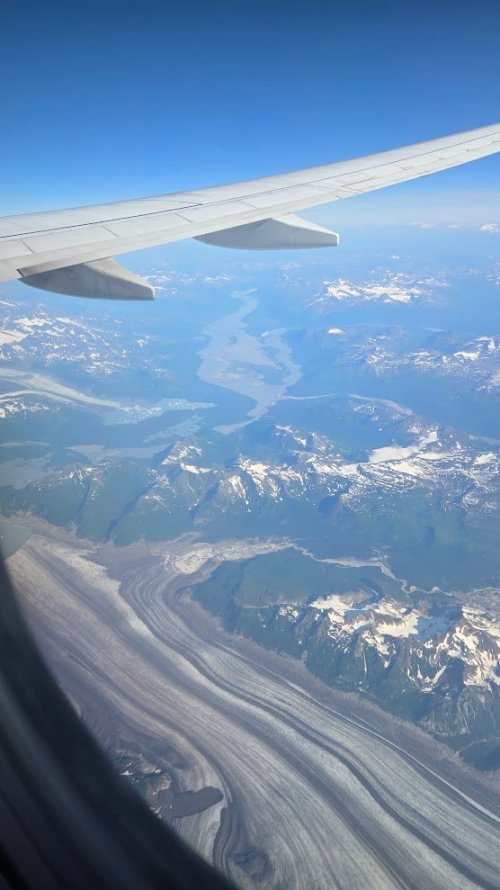
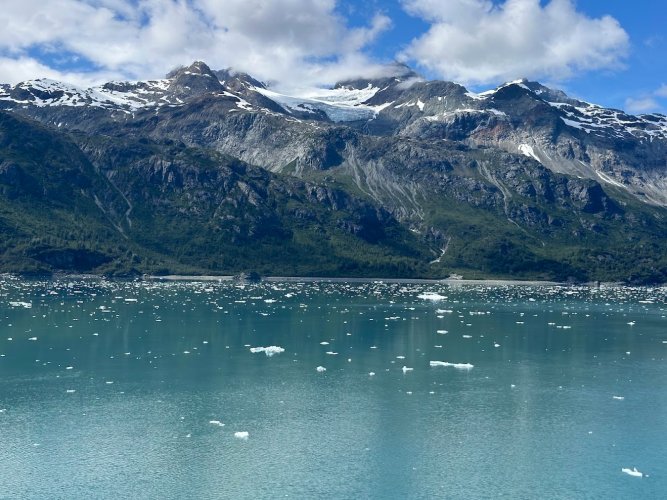
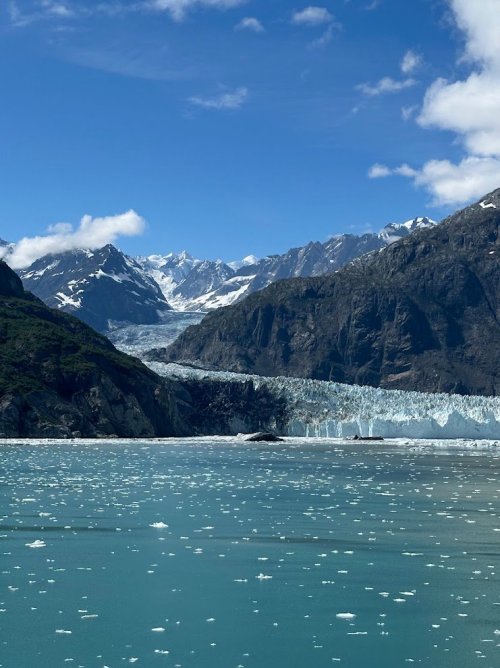
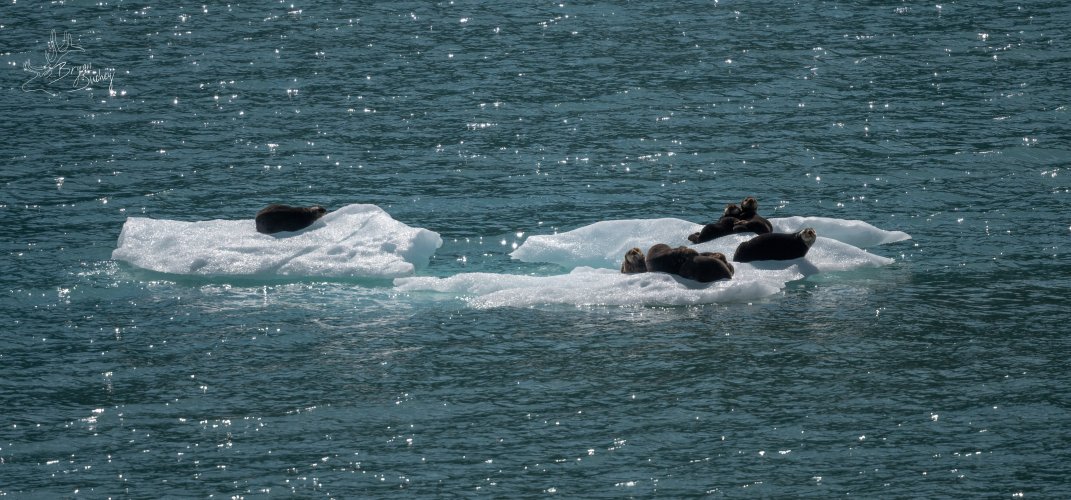
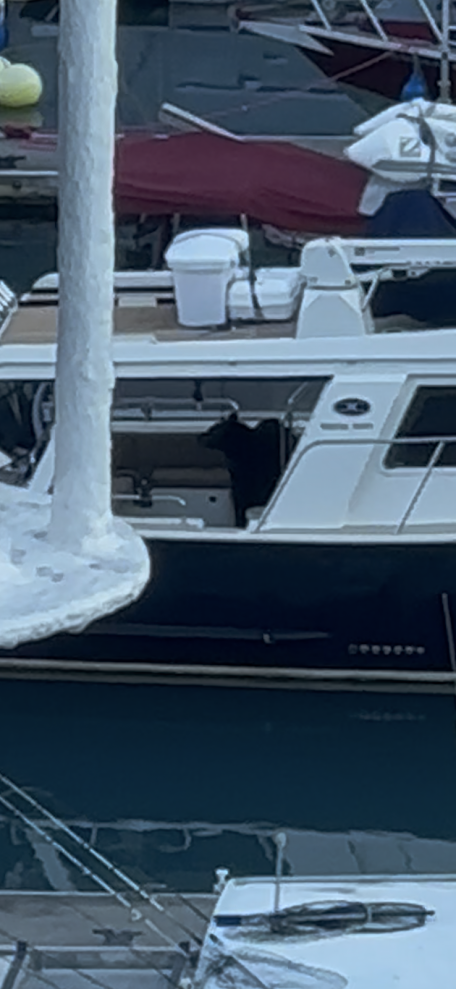
I won’t bore everyone with endless ramblings about the cruise, and will try to get back to the main story soon, but as much as I am still not a cruise person, it was a really fun trip. Our itinerary included Hubbard Glacier, Glacier Bay, Skagway, Juneau, and Ketchikan. The glaciers were quite impressive and we were able to see a lot of calving and lots of wildlife in Glacier Bay National Park. I did make friends with the ship’s naturalist as my father-in-law and I spent a lot of time standing on a front facing viewing platform where we spotted humpbacks, orcas, seals, sea lions, mountain goats, and coastal brown bears. We also saw a black bear sneak into a marina and hop into a fishing boat. I convinced my father-in-law to purchase some of the Sig image stabilized binos for the trip and they were awesome for scanning the beaches and spotting distant whale spouts.

IMG_2096.jpg

IMG_2104.jpg
BAS_3054-2.jpg
IMG_2166.PNG

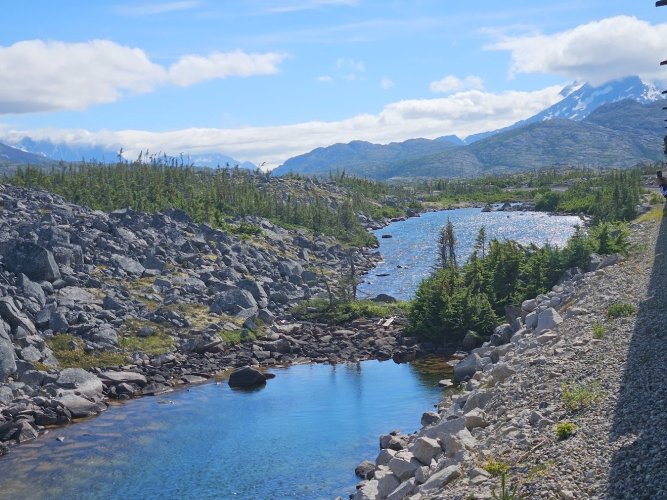
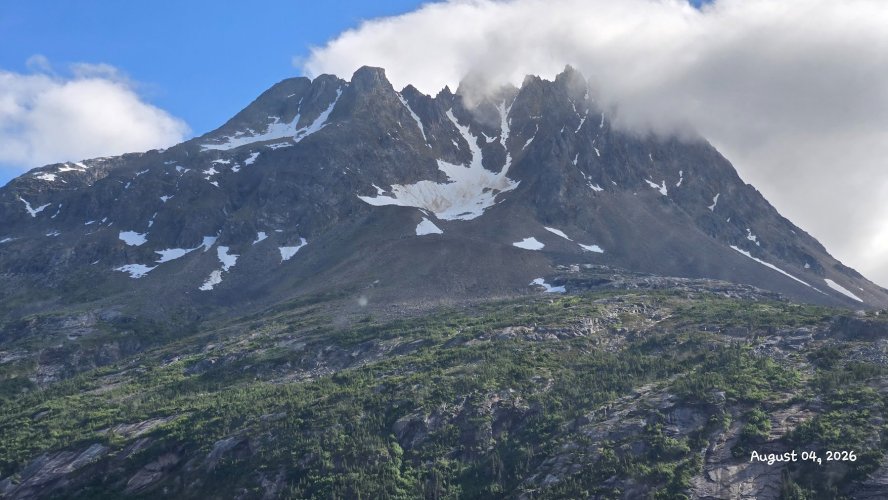
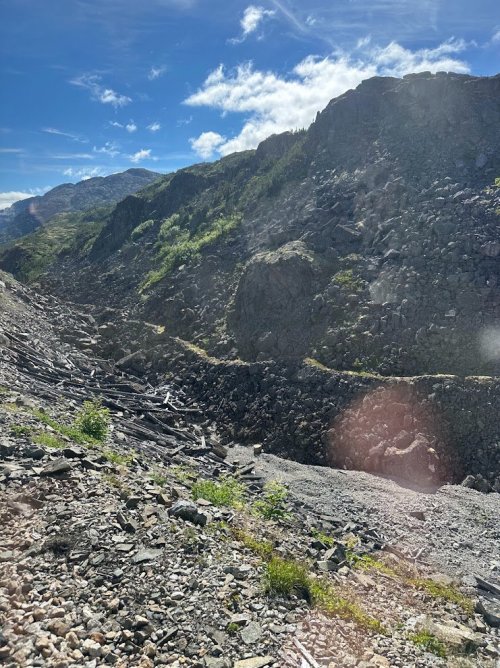
At Skagway we took a train and bus combo ride over White Pass, through northern BC, and into the Yukon Territory ending at Carcross. As we crossed the Tormented Valley, a place aptly described as hauntingly beautiful, I tried to imagine what it would have been like to be one of those gold prospectors shuttling heavy loads of mining gear and a yearlong supply of food, as required by the Canadian Border Authority, as they made their way towards the Klondike, driven by the idea of future success and fortune. At work, I have a project supporting a modern gold mine development effort, and the contrast could not feel more drastic. Thinking about the poor souls trudging northward towards Dawson City, knowing that most would fail, actually helped provide perspective on the challenges in my life. Not only does the wilderness of modern mining permitting feel trivial compared to the harsh landscape of these northern mountains, but the personal pursuit of my goals feels incredibly achievable compared to the near certain disappointment that awaited those hopeful miners. As I thought about this, the train crossed a small bridge where a creek cloudy with glacial silt passed underneath and just along the water’s edge was the perfect silty substrate to capture an impressively large set of brown bear tracks. Yeah, failing to shoot a big sheep wouldn’t be the same as losing everything during the goldrush, or worse, meeting our demise at the paws of one of those big bruins. As we got further from the coast, the mountains became more arid and we spotted some Dall sheep both in BC and around Carcross in the Yukon. It was quite the ride.

20260804_153735.jpg20260804_170511.jpgIMG_2136.jpg

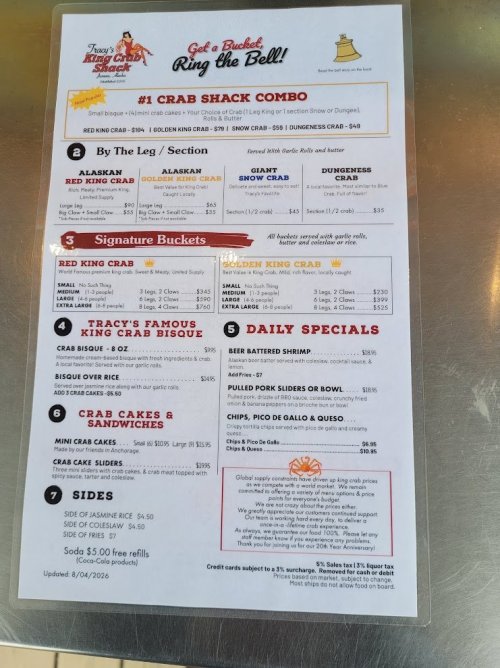
The next day in Juneau, we decided to hang around town and go get some king crab legs. I was aware that the king crab fisheries were in rough shape, so I was well prepared for it to become the most expensive two-person meal I’ve ever paid for, and the bill didn’t disappoint, but it was very delicious.

20260805_130019.jpg

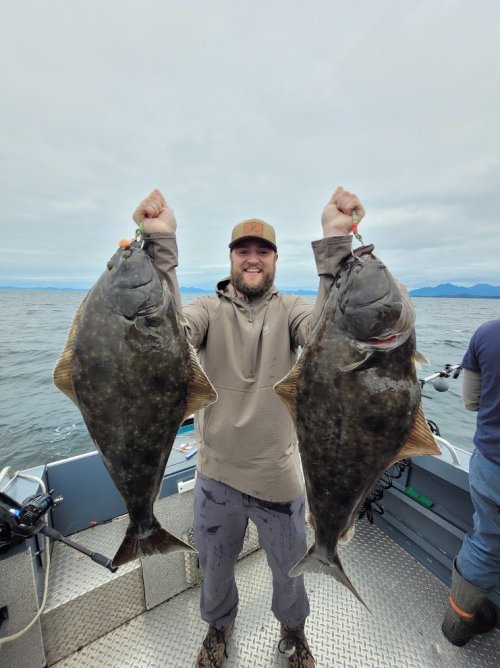
In Ketchikan, we went fishing and had a blast. I could really get used to chasing big halibut and schools of rockfish, and definitely preferred those over trolling for salmon. The chum salmon run was in full force along Creek Street in town, and a few kids were having a blast hooking up one after another. I almost went down and joined them.

20260806_125606.jpg

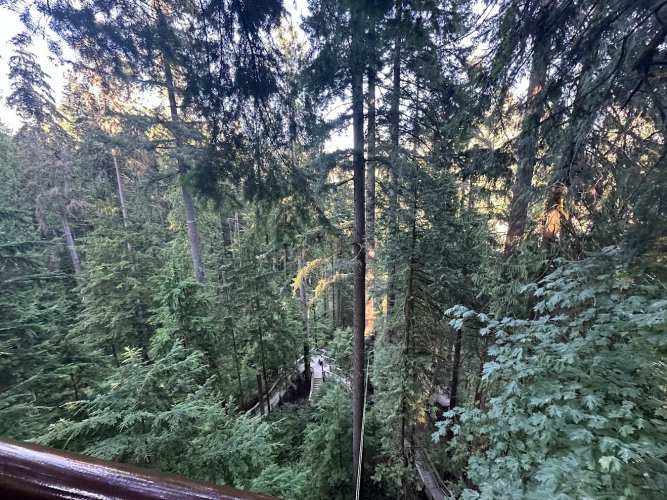
Overall, the cruise ship itself was fine and I would probably go again as I could sit and watch the Coast Mountains float by all day. The final activity we did on the trip was the Capilano Suspension Bridge and I would recommend that to anyone looking for an outdoorsy activity near downtown Vancouver.

IMG_2186.jpg

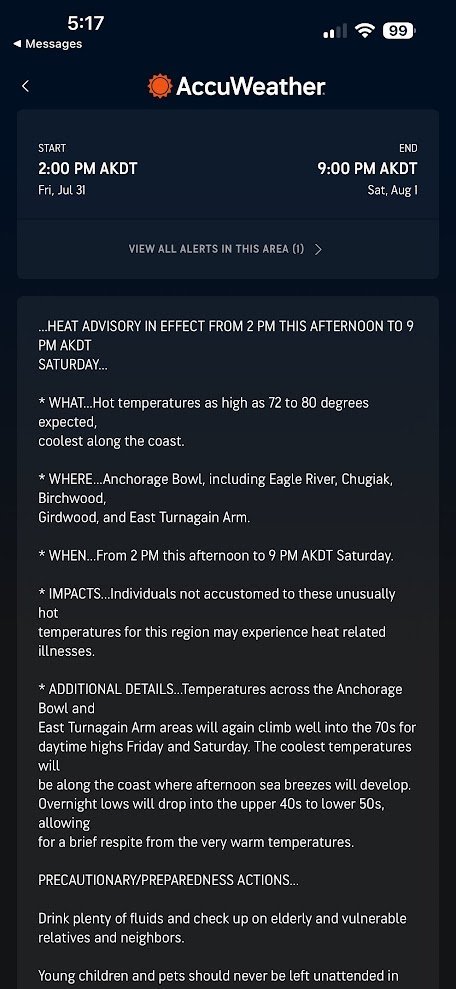
To summarize Alaska, I can’t wait to go back, and have already further developed some of my hunting, fishing, and vacationing plans for return visits. And at least partially due to the amazing weather we had, my wife is all in on planning future trips. Some of you may not believe me when I say this, but in our 10 days traveling through and along Alaska and BC, we never actually got rained on and barely had any clouds/fog obstructing the views. We couldn’t have been more lucky with the weather and probably have a rude awakening awaiting us on our next trip. I’ll probably spend most of a future moose hunt sheltering from the rain. I did get a kick out of the weather advisory we received while driving back to Anchorage – it was a heat warning that cautioned the possibility of heat-related illness for sensitive groups that weren’t used to hot weather as parts of south-central Alaska would approach 80 degrees.

IMG_2023.jpg
 
Back
Top