


You know you married up? A sheep tale and more from a year to remember

Bryerific

Well-known member
Joined
Nov 7, 2021
Messages
157
Location
CO -> MT -> UT -> ID
On the road home after a weekend of summer scouting for bighorn sheep, my wife decided that we should make more of an effort in documenting her 2026 Idaho bighorn sheep hunt. After all, it is likely both the first and last chapter of our sheep hunting story. We both agreed we would take more pictures and videos and I decided I’d attempt to write down as much of the adventure as I could.

Until now, I’ve never posted a hunting story online, but I certainly enjoy reading the stories shared by others and appreciate the opportunity to learn from their experiences. So as motivation for finishing this tale, I am going to post it here. I am not sure if anyone will learn anything from this story, but hopefully it is at least worth skimming for sheep pictures, because fortunately, I’ve got a lot of them. Buckle up though, it’s going to be a while before we get to opening day.

I'll try my best to get it all posted in a timely fashion, but it may take a bit to finish selecting photos, uploading videos, and honestly - just trimming down this novel I'd like to share. Also, a few great folks on this forum provided excellent motivation and insight, you know who you are, and I really appreciated the support.

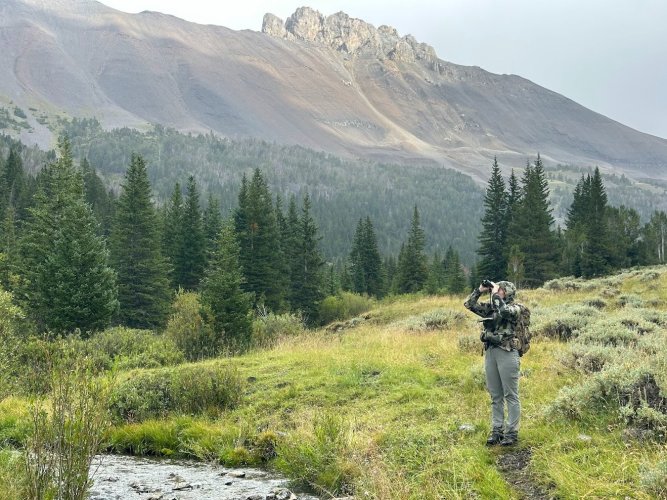
And if anyone reading this in 2027 and beyond thinks they have this same sheep tag, you are probably right as I am not exactly going to hide the landscape views and, honestly, I’d be happy to share what I can. But fair warning, I’ll expect photos and stories in return. IMG_2280.jpg
 
“You know you married up?”

I’ve heard it many times in numerous settings, but most recently one of my wife’s uncles casually mentioned it while he and I were setting up tables for a Fourth of July party occurring the next day at the family cabin. This statement wasn’t aimed at reducing me or anything like that, as he was only stating the obvious reality and aptly capturing our shared feelings following a conversation we’d just had with my wife about her expectations for her rapidly approaching bighorn sheep hunt. At this point, she and I were already a couple months into preparing for the hunt so she had a good idea of what kind of ram excited her, but her answer to his inquiries captured a mindset largely unpolluted by social media trophy shots or any obsession with inches. This was to be her hunt and success would be measured in units of adventure, hills climbed, and memories made. Fortunately, this hunt was certain to deliver on all three.

Backing up a bit, this story really gets going during application season.

I’ll be honest, I usually bully my wife into applying for a moose tag. I think most people who know me are familiar with my obsession with moose and desire to hunt them one day. Living in Idaho means that we each must choose between applying for controlled deer, elk, and pronghorn permits or applying for a single option of moose, goat, or sheep. I do the applications so she reluctantly agrees to it most years. However, in February, my in-laws decided they wanted to plan a cruise vacation and asked us, my sister-in-laws, and their partners to come along with them. I lacked interest in most cruises, so with limited PTO and a desire to avoid conflicts with hunting seasons, I eventually accepted that instead of putting my energy into fighting going on a cruise, I’d channel that energy into campaigning for a cruise trip that would work within our schedule and one that my wife and I would most enjoy. After a little research, I learned we could do a one-way cruise between Alaska and the PNW. A one way trip could also allow for my wife and I to tack on a couple extra days and go see Denali National Park and Preserve. We could call it our honeymoon and check that off the list, only three years late.

By March, a one-way cruise from Anchorage to Vancouver for the first week of August was booked, reservations were made outside Denali, and I accepted that I’d be taking less PTO to hunt than I’ve become accustomed to using. I adjusted our application strategy in NR states and only applied for the longest odds hunt codes. Back in Idaho, I felt undecided on how to apply. I knew I’d apply for a harder to draw moose tag than I’d normally apply for, but I had no idea what to do on her application. I laid out some options and she told me to put her in for a sheep tag. I asked if she was sure about it and if she had any preference where. She said she was absolutely sure and to make sure it was a good unit, as we really didn’t need to draw many tags this year. We also put her in for a MT general elk tag as we normally try to have one of us also hunt Montana. At the same time I was strategizing with my father on how to best use his two decades of Colorado pronghorn points and knew he’d draw a 3rd season deer tag.

My father and I have a lot of experience not drawing anything special as neither of us have ever drawn a once-in-a-lifetime type species even though we apply in multiple states and regularly purchase raffle tickets. So our expectations were appropriately low for all the Not Awarded results we received. Then on May 11th, I was sitting in a meeting when my phone lit up with an email preview from Idaho Fish and Game showing “Controlled Hunt Win”. I couldn’t wrap the meeting up fast enough, and just as I was opening Gmail and trying to process what I was reading, my wife called in a panic asking if it was real. Neither of us were especially productive at work the rest of the day as we pinched ourselves and told friends and family.

This was the day I learned how negative reactions can be. While some people were ecstatic to learn about her good fortune, many coworkers, family, and friends couldn’t help but voice their displeasure for their own poor luck and some really struggled to be excited that someone they knew drew. But I won’t dwell on that, we now had a sheep hunt in three and a half months.

And as it goes, in my year with reduced available PTO, my father would draw that CO pronghorn tag and my wife would draw Montana general elk and get lucky and pull the same CO deer tag as my father with one fewer point. It would be a lot to fit in.

In the coming days, I spent a lot of time scouring the internet for stories of past hunts and looking for helpful information. I found a few folks that had successfully hunted the tag and reached out to one of them. I spent a lot of time on Google Earth learning the unit and determining where previous rams were shot. As some of you on this forum know, I'm fairly decent at figuring out where a photo was taken, but this hunt would be the first time I’d actually consider using that kind of information in my hunting plans. But, there is also no reason to chase dead sheep. I just wanted some help getting some initial ideas and passing time until access would open up.

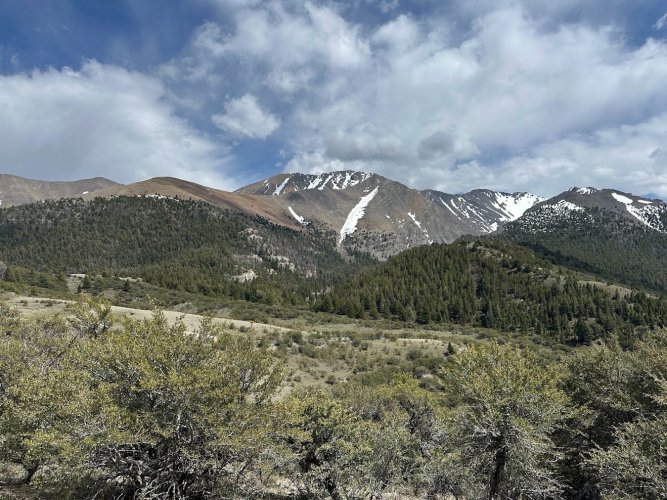
While on the topic of escouting and Google Earth, possibly the only piece of information in this entire story that may be valuable for other hunters was discovered while planning access routes in the 3D mode — alpine sheep trails are surprisingly easy to see in Google Earth, and can be easier to see online than in person from below. The more I looked, the more I realized we’d be looking over a lot of country as I could find good looking sheep trails in nearly every drainage. Summer scouting couldn’t come soon enough.

We wouldn’t have to wait long as winter was practically a no-show in this region and snow rapidly disappeared in the high country. Mentally, the month of May was actually the hardest month of the hunt. Having never actually seen a sheep in the hunt area and remembering past experience where dry, hot winters led to terrible fire seasons and closed access with unrelenting smoke, I became increasingly worried. The pressure to make the most of the hunt while so much felt out of my control was very difficult on me. For a few weeks I was constantly waking up from nightmares filled with burning mountains and unfilled tags. I knew I needed to get into the field and let the alpine views nudge away my worries.

Fortunately, the hunt area wasn't particularly far, and with access opening up ahead of schedule, we planned our first trip for Memorial Day weekend. We only did a day trip since we knew the sheep would still be far from their summer range, but we needed to start somewhere.
 
“Please be a sheep,” I kept telling myself as we scanned hillsides full of elk, deer, and pronghorn. Our first morning in the hunt area was packed full of wildlife sightings, but lacked the target species. I’ve always wanted hunts to start hard and end easier, as it builds a sense of growth and accomplishment, but I also couldn’t wait to see that first sheep. We had to remember that the primary focus of this initial expedition was just to learn more of the hunt area. We covered many miles and drove numerous roads I had never been on, many of which were incredibly rough and rocky. But more on that to come.

IMG_1400.jpg

Around midday, we were sitting on a knob enjoying the return of the summer songbirds and watching a herd of bull elk browse along a treeline, noticing that a couple were likely to become pretty darn impressive over the next couple months, when a high sagebrush hillside on a smaller isolated mountain escaped the shadow of the clouds passing above, its glow begging for our attention. Earlier, I had watched some pronghorn and elk cross it before turning around to glass the main mountain range. I wasn’t alone in noticing the helpful lighting, and before I got stable with the spotting scope my wife broke the silence with a question we’d been secretly trying to will the other to ask, “are those sheep?”

She was using her trusty 12x NL Pures on a tripod while I scanned with our bigger spotting scope. At nearly two miles, she didn’t want to be too optimistic, but I knew she was fairly confident they weren’t more pronghorn. The light colored dots came into focus in my scope and I immediately noticed the shine of horns.

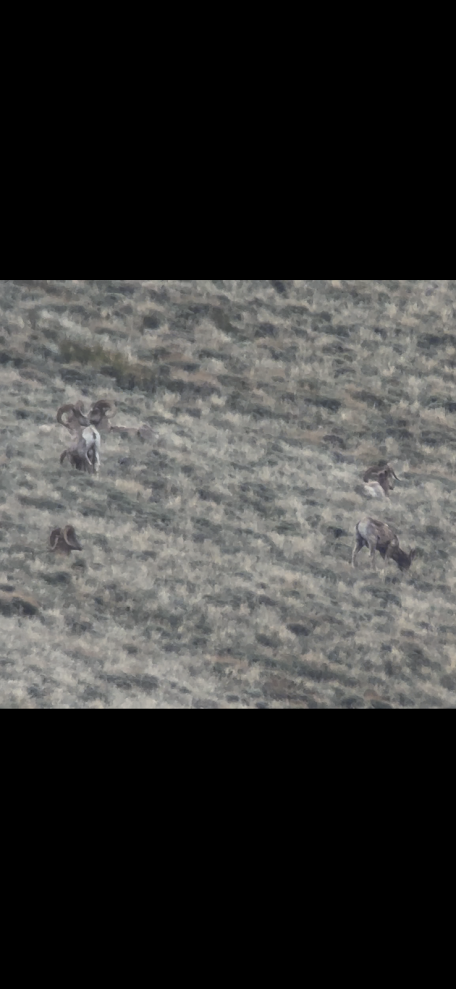
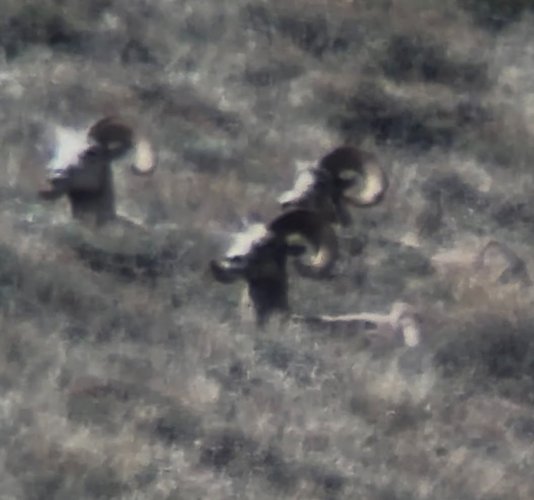
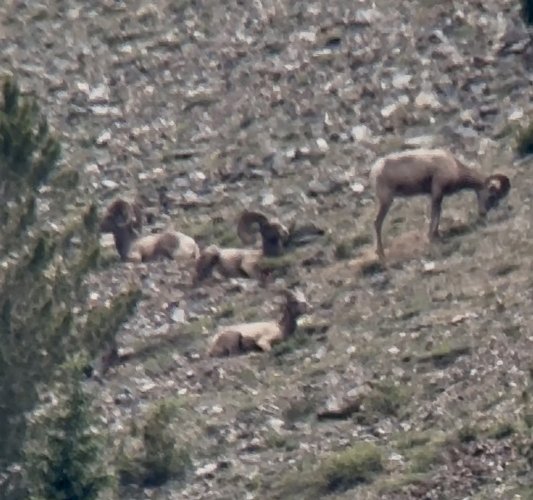
Twelve rams worked across the hillside and began bedding in small groups. It was too far to get a good look, so we packed up and drove towards the hillside. We cut it to about 800 yards and set up the scope. The rams watched us unconcerned from their beds near the top of the hill. I thought a few were pretty solid, but one ram was better than the rest. We watched the band of rams for the better part of an hour observing their behavior and enjoying their presence. I wondered how far these rams were from their eventual summer range? There was no way they’d hang out all summer in this middle elevation sagebrush on this smaller mountain, would they? The hillside they were located on had some escape terrain and water was available at a small lake on the backside, but only a mile-wide valley separated it from a major ridgeline extending out from the main mountain range. I figured they’d eventually cross and spend the summer somewhere higher. That would only make sense, right?
IMG_1417.PNGIMG_1414.jpg


Later that day we would also find our first group of ewes, two adults and a yearling. Fifteen sheep on the first trip felt like a major victory and we returned home in high spirits.
 
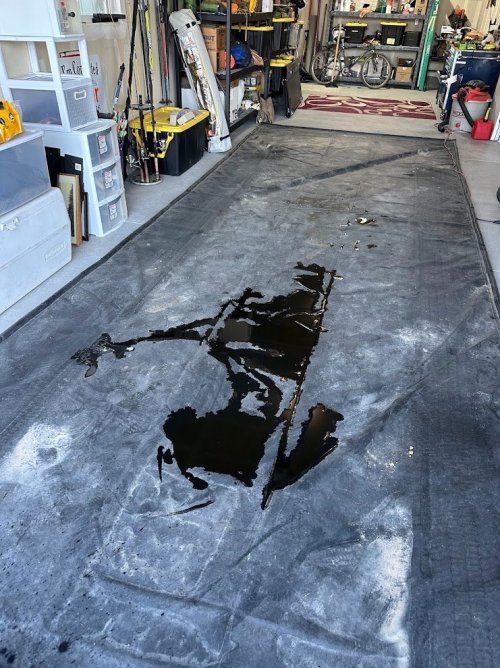
I work from home, but occasionally I do some site visits for work so a few days after our first scouting trip I walked into the garage at 5:30 AM to get ready to leave. The night before, my wife had mentioned an unsavory aroma in the garage and attributed it to the trash can. She was not exaggerating the smell and I pulled the trash can outside. After pulling the truck out of the third stall so I could load up my work gear, I noticed the true source of the smell… pooled on the floor mat was multiple quarts of transfer case fluid. Darn it!

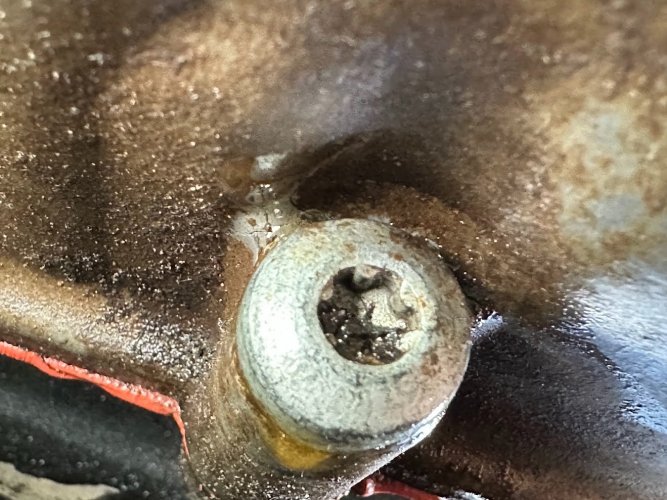
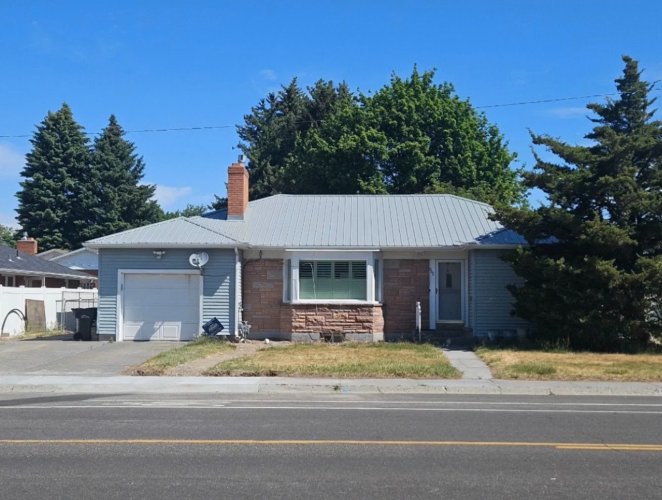
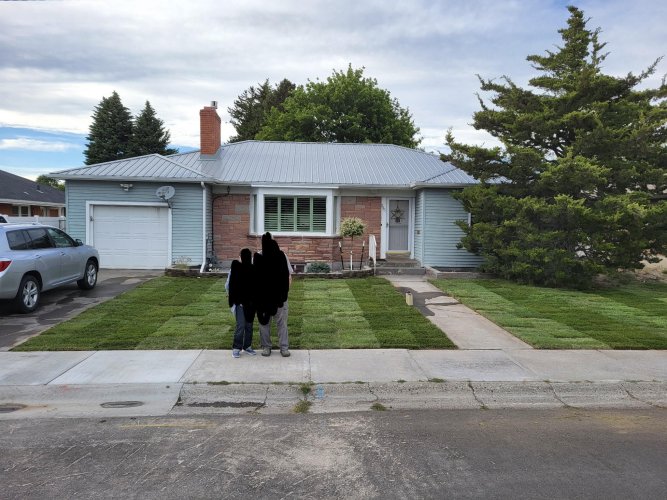
A closer inspection under the truck confirmed my fear. I had hit a rock, denting the protective plate, and making contact with one of the bolt heads along the bottom of the transfer case. A very small crack was visible and clearly the source of the leak. Long story short, it would be two weeks and $3,000 in repairs before a new (used) transfer case was installed. On the bright side, we had planned to redo the landscaping at my wife’s grandparent’s house the following weekend, so outside of the cost, it didn’t disrupt the scouting too much.IMG_1453.jpgIMG_1461.jpg

Here are also some side quest photos from the landscaping project. We removed over a dozen yards of dirt to bring the ground back down to the sidewalk. If anyone is considering one of those Oto sprinklers, they are pretty neat.
IMG_1509.jpgphoto 1510.jpg
 
Between sending the truck to the mechanic, the landscaping project, a work trip to NV, and an awesome trip to SE Montana for a fence project with a bunch of great North American Pronghorn Foundation (NAPF) volunteers, June slipped away and we wouldn’t be back in the hunt area until June 26th. During that period, I also found a solid deal on a Kowa 883, which would be a massive spotting scope upgrade. When I asked my wife if we should spend more money on top of the truck repair, she responded, "if not for a sheep hunt, when would we?”

IMG_1532.jpgIMG_1548.jpg

I feel fortunate that we are in a place where we can make the decision to upgrade gear without significant sacrifice, but as it became clear that we’d be spending quite a bit of cash to chase a sheep, I appreciated the recent hunting seasons where I didn’t feel like adding new gear was super impactful to the hunt. We live in such a gear driven industry and for this hunt I felt myself getting sucked into the marketing for new tripods, lighter trekking poles, new tents, and better scopes. I know, I know, I’m complaining about being able to purchase gear for a hunt most of us dream to do one day, I’ll go back to writing about our scouting trips.

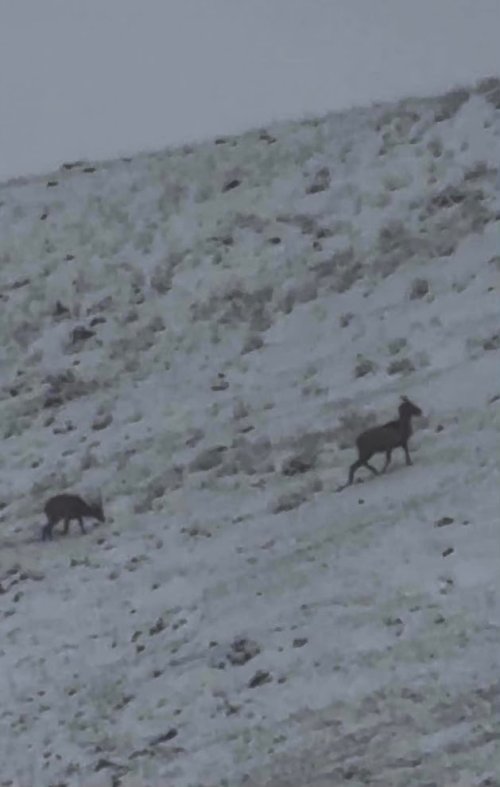
Being late June on a low snow year, I figured most of the rams would have already returned to the high basins we’d be chasing them in come August 30th. Little did I know, as if it was a well-rehearsed prank, June 26th would do its best January 26th impression and our second scouting trip was largely reduced to burning some expensive fuel as a foot of snow hit the hunt areas’s high peaks and the whiteout conditions dominated the weekend. My mother-in-law was also visiting, and sadly, the storm dashed our hopes of sharing views of the impressive mountains we’d be exploring in future hikes. The trip’s only sheep spotting was during a brief reprieve from heavy snowfall, when three ewes appeared on a nearby ridgetop and pawed through the fresh snow looking for summer forage. All things considered, we felt lucky just to find a sheep. bd44abed969f5fdb1b96b7e9c70d10a6.jpeg
 
Count me as one of those who would have been happy to hear your lovely bride drew a sheep tag, Montana elk and Colorado deer as well.
 
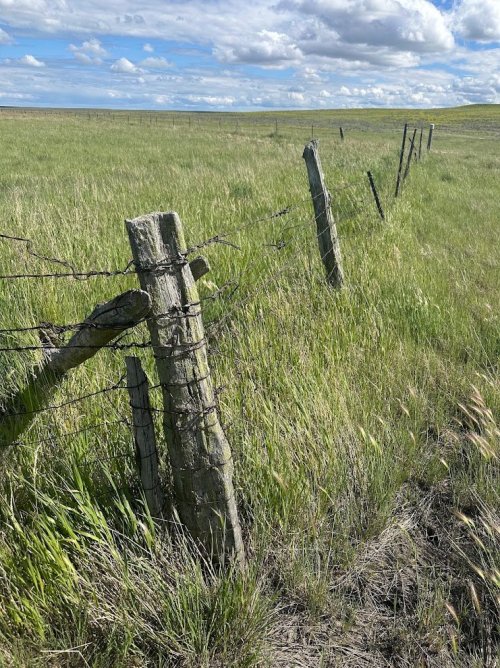
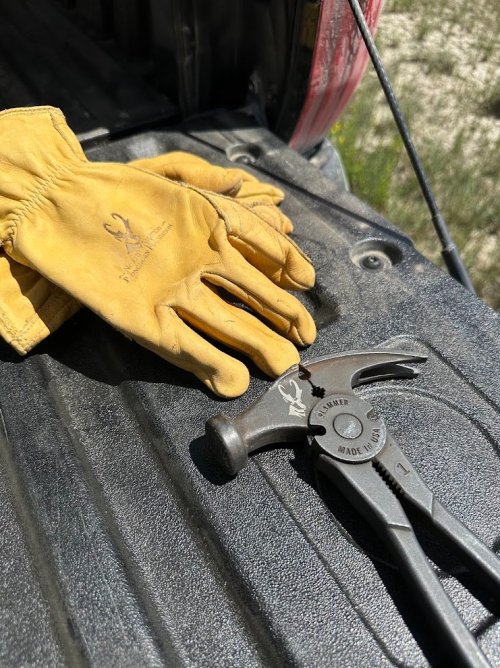
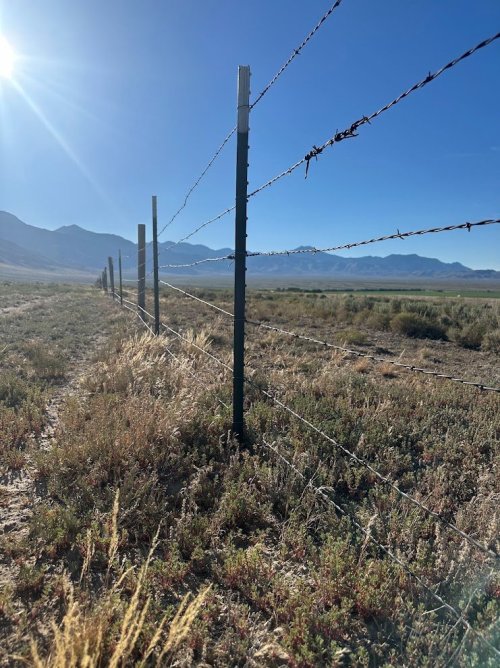
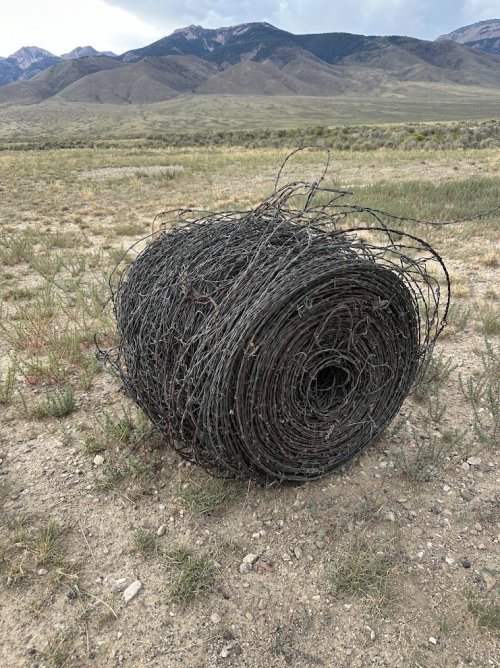
July was when we really hit our stride scouting. But first, I took a vacation day to work on another fencing improvement project with NAPF and Idaho Fish & Game. This project would involve removing a couple miles of mostly 6 strand fence that was largely impermeable to pronghorn and created a significant barrier along an important migration corridor.
IMG_1638.JPG

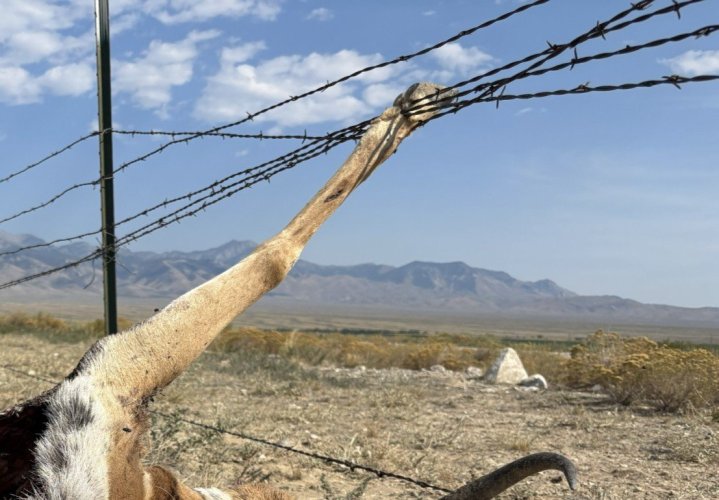
This photo was taken by the biologist at the project site. I've cropped out the more gruesome portion of the image, but it highlights the reality of what these fences do to pronghorn when they can't get under them.

IMG_1705.jpgIMG_1733.jpg

Once the old fence was removed, it was later replaced with a new, wildlife friendlier fence. The new one is fitted with a smooth bottom wire and strung 18” off the ground, allowing pronghorn to safely pass underneath. It was an awesome project that has yielded immediate results as trail cameras have captured successful crossings. You can see a video of pronghorn crossing on our Facebook account here - https://www.facebook.com/share/r/1V3681bTJh/?mibextid=wwXIfr. As a quick aside, thank you to Randy and the rest of the Hunttalk team for allowing NAPF to use this site to spread awareness of NAPF as so many of you on this site have trusted us with your time, money, and support. We are doing the best we can to further our Mission, and we wouldn't be where we are now without Hunttalk.

Lucky for my wife and me, the biologist who had reached out to me about doing this fence project is also an awesome resource when it comes to sheep. His energy for sheep, pronghorn, and other wildlife is contagious and a great reminder of the hard working and dedicated wildlife managers working inside state wildlife agencies. I understand that many of us hunters think about these agencies and have a hard time not focusing on frustrations with tag allocations, point structures, declining opportunity, and rising costs, but if you haven’t recently spent a day in the field with a wildlife manager, I strongly encourage you to get out there and do it. Volunteer at a fencing project, habitat improvement effort, or similar event and I promise you’ll work with amazing individuals who truly care about conservation and opportunity. And if you get lucky, they may just share valuable insights for your upcoming hunts. I know the information I was given was more valuable than we ever deserved.

We were actually looking at an area that hadn’t been on our radar until we got those tips when we ran into another sheep hunter. A very nice guy who would be fortunate to take a very nice ram a couple months later. We did find a band of rams in that area with one that was pretty solid.
IMG_1799.jpg
During our numerous July and August scouting trips we camped in many parts of the unit and mixed it up between driving around trying to cover lots of country and hiking into areas where we could get closer to sheep. We were finding significantly more sheep driving around and stopping at vantage points, but knew we needed to spend as much time as possible traversing the mountains and getting into areas a big ram might be hiding. We noticed we were getting substantially better at spotting sheep, especially at long distances (1.5-3.5 miles) and were usually finding quite a few rams each day. Confidence grew as we were finding 20-35 sheep a weekend and usually at least one solid ram. We were also finding more rams than ewes, a fact I am still a bit surprised by. We weren’t really visiting places multiple times so our list of potential rams started to grow, which felt good as we knew there would be a decent likelihood of one of the other hunters having their eyes on some of the same rams. At this point I also started to accept that I am not as good as I could be at estimating mass measurements and appreciated that my wife categorized rams as ones she liked, and ones she didn’t like. It was a simple system and one that avoided the stress of trying to score on the hoof, but I still wanted to find one with The Look.
 

Attachments

  • IMG_1803.jpg
    IMG_1803.jpg
    76.5 KB · Views: 3
Back
Top