I hope it's a fair and not skewed look at actual cuts and Forest Service overall performance fiscally. I think it will impact some aspects of recreational management but I also firmly believe now the default answer of things not getting done will become "they terminated those employees ".
I think it will be fair. Let's face it, there have been many administrations that have had full control of both houses of Congress and the White House, yet they didn't do the things that would have improved Federal land management. Shame on them. (And edited to add: Shame on us for not demanding more accountability.)
I'm a smaller government, lower taxes kind of guy. Lowering tax bills is how I made a very comfortable livelihood that allows me to do this gig without any regard for profits. I also know a thing or two about how to run a business. Cutting contracts and waste might work and should work. Cutting personnel costs will show some benefit if, and that's a big IF, done with some sanity and strategy.
There once was a push to force the Federal Government to use "Zero-based budgeting." Carter had considered it and so did Reagan. Every agency budget would start at zero and be justified from there, rather than "take last year's numbers and add 10%." None of that took hold, as the Beltway lobbyists and both parties saw that as problematic to the folks paying their salaries. So, it died, and with it died much chance of the US Government operating more efficiently.
In my thirty years of engaging in hunting and conservation politics, I've learned that both sides are good at capitalizing on the political moments without much concern of the long-term consequences. Just the way politics and lack of accountability have morphed in this country. Madison wrote in great detail his concerns about "factions" and their ability to disregard the rights of the people. Even with all of his wisdom and foresight, I suspect he could have never predicted what we are witnessing the last 30 years.
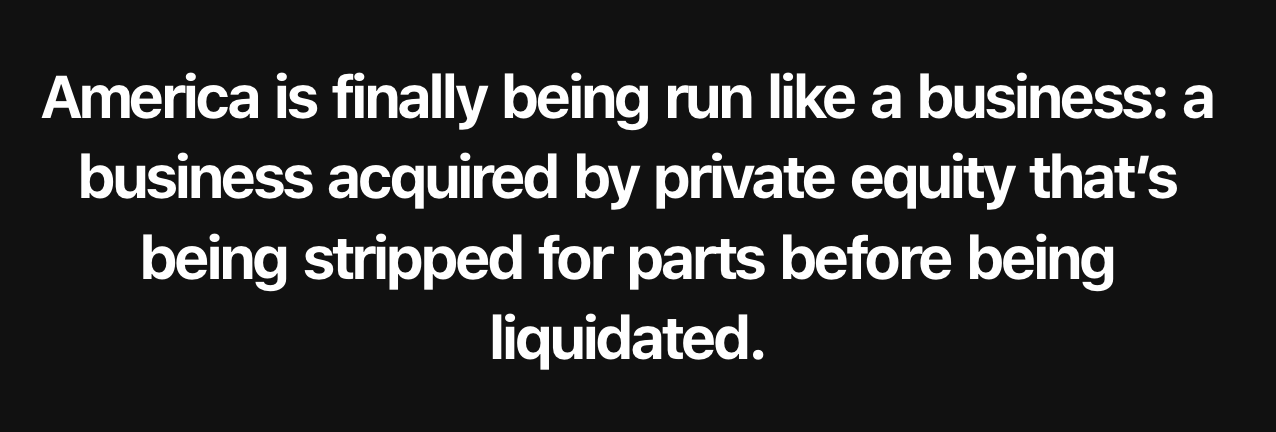
It is hard to argue that you want better land management when you come in with a sledgehammer where in the business world a knife or scalpel would be used. Nobody would run a business by firing everyone who meets a certain employment status (probationary, even if you are a long-time employee whose promotion put you in a probationary status). You wouldn't implement a hiring freeze when using seasonal workers get you the best return on your assets and does the best job of keeping your assets from going up in smoke.
You can't cut essential programs and essential employees necessary for better land management and then bitch that their isn't better land management. You can't claim the Federal lands are not getting a good return on their money, yet in other votes you refuse to change the Hard Rock Mining Act of 1872 and charge a royalty to mining companies. You can't complain about Federal ROI on those lands, yet vote to keep grazing rates 5-10% of grazing rates on adjacent state and private lands; or vote to keep Federal O&G royalties way below what states and private land owners charge.
And in this instance, the folks cheering on these personnel cuts "in the name of efficiency" are likely to be the ones bitching when they see less land management. That has been the mode of operation since I've been involved and I don't expect it to be a different mode of operation.
This will have consequences. Will it reduce the waste and inefficiency in Federal agencies? I doubt it, given the way they are going about it. Could they have done it in a way that does reduce waste and inefficiency? Absolutely, but that would have required application of a lot more business ideas, none of which would allow for the headline grabbing soundbites.
If the history that has formed my crystal ball has provided any insight, this will likely go down as one of the greatest lost opportunities in my lifetime. It will be used as a continuance of the "defund, demoralize, and devalue" approach the anti-public land crowd has used since the 1980s. Their goal always has been, and always will be, to make the public lands such a burden through defunding and lack of Congressional leadership, that eventually Americans will lose much interest in these lands and view them as a liability to get rid of. Seeing the far fringes be given the wheel on public lands, it's hard for me to see this as any thing other than a huge squandered opportunity and a fulfillment of the dreams of those who've been strategic in their fifty-year plan to rid Americans of their public lands.
I know the hyper-partisans, or even the mildly partisans, will criticize that assessment. That's fine. I expect such from folks trained to use party politics as their first level of filter. As the political pendulums have swung in my lifetime, neither party has really cared for the interests that exist mostly in the middle, rather they want to use any opportunity, in this case public lands and conservation funding, as spoils of political victory, and in the process limiting any forward progress to those few instances when the political stars align for a week or two.
Not sure I can fit all of that into a 20-minute segment. Summary will be, "Shitter's full; that's what the majority of us voted for, right?"