First, there are a hundred viable answers to your question - It's the old, "ask 10 hunters what bullet to use and you will get 12 answers" scenario.
From my perspective I would first choose lead or lead-free. If lead then Nosler Accubonds are hard to beat, but lots of other good options including Nosler Partitions, Federal Fusions and Hornady Interbond. If you go lead-free then Barnes TTSX are a top choice in my book, but Barnes TSX, Barnes LRX, Nosler e-Tip and Hornady GMX are options.
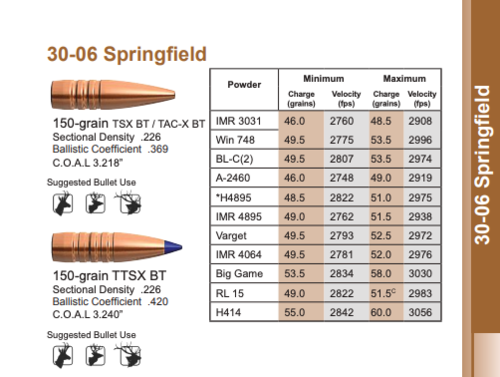
If you go lead you should be looking at 165 grain bullets (Some will suggest 180 grain). If you go non-lead you want to go down a size to get better speed (which helps the mono-bullets expand) and because with 100% retention you don't need as much weight as with lead. I would go with 150grain in TTSX, but the 165grain is an option too.
All the bullets I mentioned above are available in quality factory loaded ammo. You might want to buy a few boxes of different ones and see if you gun has a preference (yes, guns do vary in preferred bullet shape/weight/velocity/cartridge length).
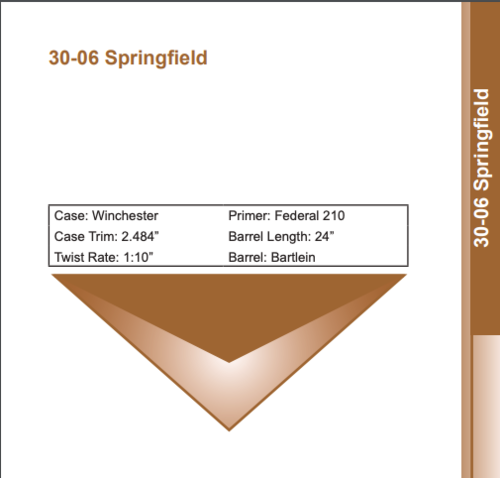
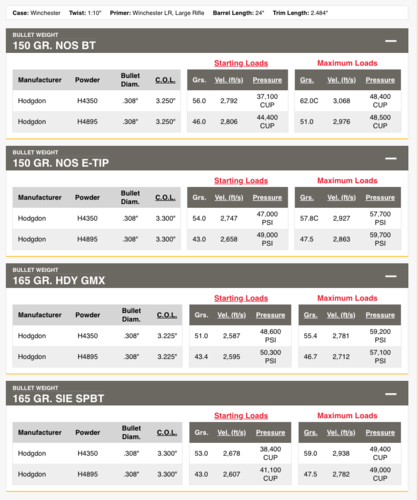
If you want to hand load, I would pick the desired bullet and then get the load data from that manufacturer. That load data will give you powder options that have proven useful for your bullet in that cartridge. They will also provide a primer type. Then I like a "second opinion" and I look up the load data for the chosen powder manufacturer and compare it to similar composition, weight, shape bullets.
In general any of the big three brand (CCI, Federal, Winchester) Large Rifle Primers will work. Some like Magnum Large Rifle primers even though not required. I started with CCI primers and have stuck with them for all my hand loads - but I am sure the others would have been fine too. I only use magnum primers for magnum cartridges.
Common "go to" powders for 30-06 include H4350, H4831SC and H4895. I prefer to stick to these three as I like the temperature insensitivity of the Hodgdon Extreme powders. RL 16, RL 17, RL 19, IMR 4350 and IMR 4895 are common options too. But definitely look at the bullet vendor load data.
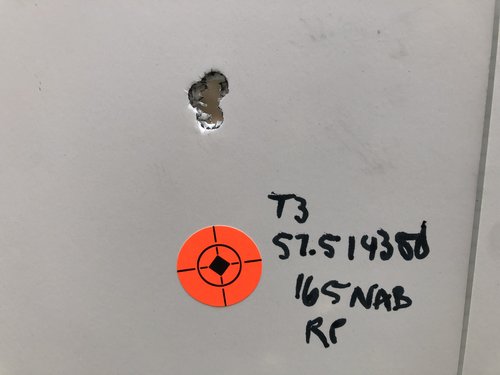
200 yard zero is pretty typical.