

"Super Range"

JMG

Well-known member
Joined
Jul 1, 2011
Messages
933
Location
MONTANA
Before I get "gas-lighted" for bringing this up ... I'm just as patriotic as any American. I've lived in Montana for 52 years and care deeply about hunting, fishing, and outdoor recreation in Montana.

President Trump announced at the Kalispell rally that Montana will be getting a "Super Range". This "super range" would be an area set aside to test potential military weapons. The specific location of such a target range and a timeline to develop the project remains unknown since the announcement. But there is mention it would be located in north-central or eastern Montana.

This "announcement" has me thinking ... a range of this size will require a large tract of land. With this being said, this would mean more land in Montana becoming inaccessible to outdoor recreation. Even if the military allowed hunting, do you think there would be any wildlife in the area after setting off a weapon such as the "mother of all bombs" or a hypersonic bomb.

I have to admit, upon this announcement ... I'm not thrilled with the idea of a "super range" and more land becoming inaccessible in Montana, since many residents already feel there is a sense of overcrowding.

Thoughts?
 
I was thinking about this "promise" when I was driving to antelope camp. Ya know, I've heard a lot of bullshit promises from real estate developers over the years. But this one takes the cake. It is words in the wind, spoken to hype up a crowd of potential voters. Let's check back in a year and two to see if any Montana super range is ever spoken of again.
 
I can envision 1 real possibility, similar to Nevada.

We have the NTTR, Fallon NAS bombing ranges, Hawthorne Army Depot, and a few others.

There are very few instances where they are open to the public. For very specific time frames, in very specific units, for specific species.

Some places, such as the Fallon NAS proper, Hawthorne, and major parts of the NTTR are off limits all the time.

Sheep units 171, 253, 280-282, do have access, with varying age limits, party size restrictions, season length and date adjustments, and training requirements.

The rest of the time those areas are off limits.

Not too long ago, there was a push to expand the Fallon bombing range. I don't think it expanded much if at all.
 
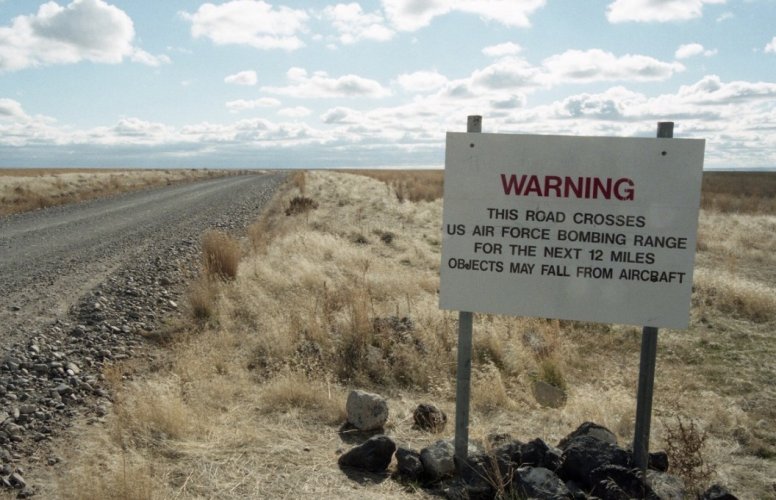
Idaho’s Saylor Creek Bombing Range is 110,000 acres with an exclusive use area of 12,200 acres (6x3 miles) for live fire practice. I’m not sure how the animals are doing. I’d rather they move the range elsewhere.IMG_6439.jpeg
 
It's hypothetical at this point. Sheehy said there is $10 million for a feasibility study for the 2027 Authorization Act. There is definitely a lot of land in Montana that isn't the best for hunting, and some military bases allow hunting. It wouldn't necessarily make the land unavailable for recreation.

In any case, I asked Grok how many acres it would be. It also mentions the current amount of land controlled by the military at this point. It's smaller than I would have thought.

What Grok found ...

There is no published acreage requirement yet for the proposed Montana “super range.” President Trump announced it on October 14, 2026, at a Kalispell rally as a Department of War facility for testing autonomous weapons, space/electronic warfare systems, and supersonic/hypersonic technologies, but gave no location, size, cost, or timeline. Sen. Tim Sheehy noted that the pending FY2027 National Defense Authorization Act includes $10 million for a feasibility study.

What comparable ranges actually need​

Existing major U.S. open-air test and training ranges that support advanced weapons give a practical sense of scale:

  • Nevada Test and Training Range: ~2.9 million acres of land + thousands of square miles of restricted/shared airspace. Used for advanced combat training, munitions, and tactics development.
  • White Sands Missile Range: ~2.2–2.3 million acres (~3,200 square miles). The DoD’s largest fully instrumented open-air missile/rocket test range; airspace can expand further for long-range tests.
  • Utah Test and Training Range: ~1.7 million acres of land with very large associated airspace.
  • Naval Air Weapons Station China Lake: ~1.1 million acres.
  • Yuma Proving Ground: >1,300 square miles (roughly 800,000+ acres).
  • Dugway Proving Ground: ~800,000 acres.
  • Eglin AFB range: ~464,000 acres of land (~724 square miles) plus ~100,000+ square miles of Gulf air/water ranges.
For hypersonics, long-range precision fires, autonomous systems, and electronic warfare, ranges typically require:

  • Large contiguous land or long flight corridors (tens to hundreds of miles) for safety buffers, tracking, and recovery.
  • Extensive restricted or special-use airspace (often more important than pure surface acreage).
  • Low population density and limited encroachment so testing is not constrained by noise, safety, or land-use conflicts.
Montana’s current total military-managed land is only about 64,000 acres. A true “super range” capable of supporting the technologies Trump described would almost certainly need to be in the hundreds of thousands to multi-million-acre class (or rely heavily on existing large airspace complexes such as the Powder River Training Complex, which spans tens of thousands of square miles of Military Operating Area airspace across Montana and neighboring states, though that is primarily airspace rather than surface test land).

In short, no official number exists yet—the feasibility study will have to determine the actual requirements based on the specific missions. Comparable high-end ranges already in use show that “super” typically means well over a million acres of land plus substantial airspace.
 
  • Like
Reactions: JMG
It's hypothetical at this point. Sheehy said there is $10 million for a feasibility study for the 2027 Authorization Act. There is definitely a lot of land in Montana that isn't the best for hunting, and some military bases allow hunting. It wouldn't necessarily make the land unavailable for recreation.

In any case, I asked Grok how many acres it would be. It also mentions the current amount of land controlled by the military at this point. It's smaller than I would have thought.

What Grok found ...

There is no published acreage requirement yet for the proposed Montana “super range.” President Trump announced it on October 14, 2026, at a Kalispell rally as a Department of War facility for testing autonomous weapons, space/electronic warfare systems, and supersonic/hypersonic technologies, but gave no location, size, cost, or timeline. Sen. Tim Sheehy noted that the pending FY2027 National Defense Authorization Act includes $10 million for a feasibility study.

What comparable ranges actually need​

Existing major U.S. open-air test and training ranges that support advanced weapons give a practical sense of scale:

  • Nevada Test and Training Range: ~2.9 million acres of land + thousands of square miles of restricted/shared airspace. Used for advanced combat training, munitions, and tactics development.
  • White Sands Missile Range: ~2.2–2.3 million acres (~3,200 square miles). The DoD’s largest fully instrumented open-air missile/rocket test range; airspace can expand further for long-range tests.
  • Utah Test and Training Range: ~1.7 million acres of land with very large associated airspace.
  • Naval Air Weapons Station China Lake: ~1.1 million acres.
  • Yuma Proving Ground: >1,300 square miles (roughly 800,000+ acres).
  • Dugway Proving Ground: ~800,000 acres.
  • Eglin AFB range: ~464,000 acres of land (~724 square miles) plus ~100,000+ square miles of Gulf air/water ranges.
For hypersonics, long-range precision fires, autonomous systems, and electronic warfare, ranges typically require:

  • Large contiguous land or long flight corridors (tens to hundreds of miles) for safety buffers, tracking, and recovery.
  • Extensive restricted or special-use airspace (often more important than pure surface acreage).
  • Low population density and limited encroachment so testing is not constrained by noise, safety, or land-use conflicts.
Montana’s current total military-managed land is only about 64,000 acres. A true “super range” capable of supporting the technologies Trump described would almost certainly need to be in the hundreds of thousands to multi-million-acre class (or rely heavily on existing large airspace complexes such as the Powder River Training Complex, which spans tens of thousands of square miles of Military Operating Area airspace across Montana and neighboring states, though that is primarily airspace rather than surface test land).

In short, no official number exists yet—the feasibility study will have to determine the actual requirements based on the specific missions. Comparable high-end ranges already in use show that “super” typically means well over a million acres of land plus substantial airspace.
Stuff thats in the - MILLIONS of acres is "smaller than you thought"?

Did i misunderstand?
 
Stuff thats in the - MILLIONS of acres is "smaller than you thought"?

Did i misunderstand?

I thought it must be millions, too. But from what I found and Grok did too, it's 64,000 acres controlled by the military. That's probably not enough for a Super Range depending on what that is.

Fyi, if we count all land controlled by federal govt in Montana it goes up around 27 million with 17 million in NFS.
No - what grok told you was that current military installations are 64k acres in Montana, and a new super one is likely to be in the hundreds of thousands or millions of acres.

Thank your for further proving my point, though.
 
The Powder River MOA is partially in Montana and as a whole encompasses some 15+ million acres.

The Hays MOA is roughly 3.5 million acres. And all of that over the Missouri River Breaks including significant public land.

These are just MOAs so the military doesn't own or control the land, but these are airspace designations.
 
No - what grok told you was that current military installations are 64k acres in Montana, and a new super one is likely to be in the hundreds of thousands or millions of acres.

Thank your for further proving my point, though.

I think we (I, grok, and you) agree. The military doesn't control enough to build a super range when they only currently control 64,000 acres.
 
I think we (I, grok, and you) agree. The military doesn't control enough to build a super range when they only currently control 64,000 acres.

The military doesn't have to control the land to train on it. Sometimes they do, sometimes they don't. They use public land all the time.
 
The military doesn't have to control the land to train on it. Sometimes they do, sometimes they don't. They use public land all the time.
Granted, but one of the first points in the thread was about the impact on hunting.
 

Forum statistics

Threads
120,258
Messages
2,254,485
Members
39,115
Latest member
greenstate
Back
Top